
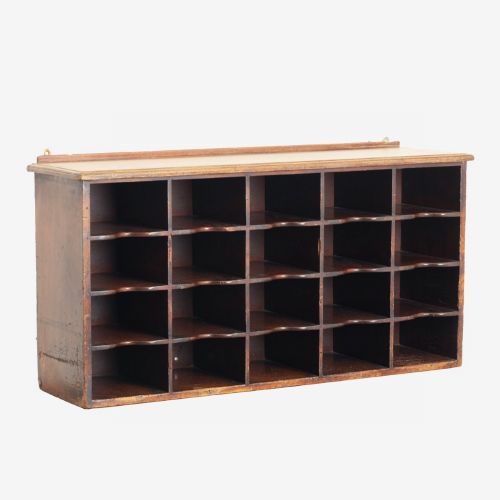


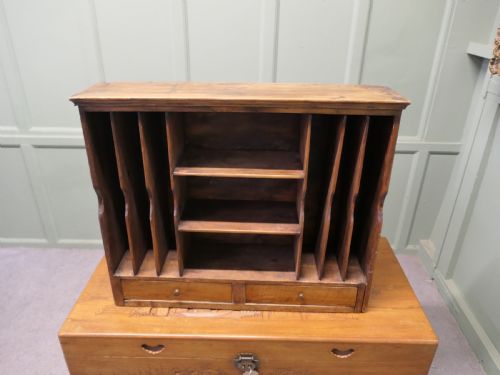


Vintage Lettering Cabinet
These vintage lettering cabinet pieces organise correspondence and display goods, bringing period utility and timber character directly to the desk or wall.
Vintage Lettering Cabinet
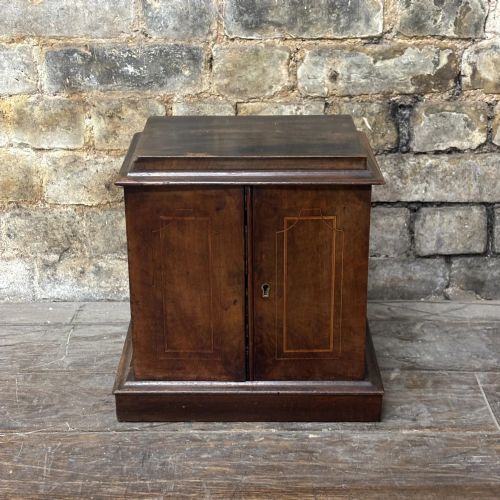
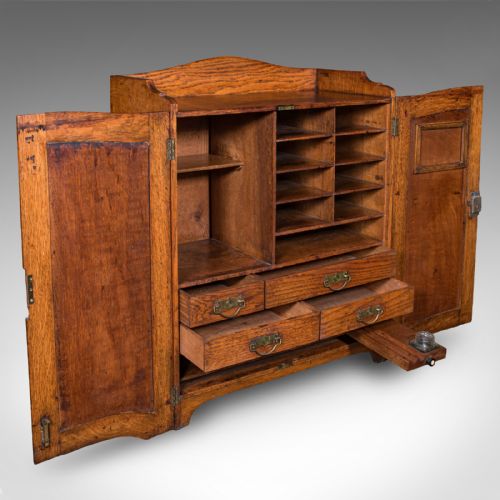
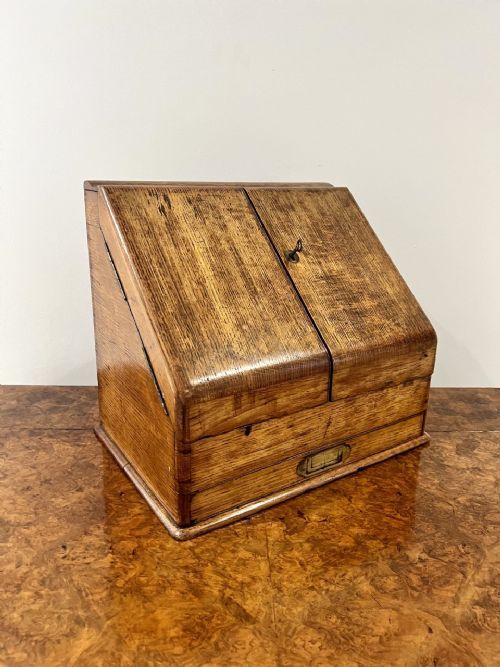
A vintage lettering cabinet encompasses desktop stationery boxes, fall-front organisers, wall letter boxes, and commercial display cases designed for sorting correspondence or merchandising goods. You will frequently encounter compact oak and mahogany stationery cabinets from the Victorian and Edwardian eras, alongside institutional filing chests and advertising glazed shopfitting units.
The selection spans domestic country house postboxes and desktop pigeon holes to commercial Fry's chocolate and Rowntree's confectionary cases. Pieces originate from British institutional, domestic, and shopfitting contexts, with occasional French country and post office variants appearing among the oak and mahogany forms.
Materials and Construction
Cabinet makers relied predominantly on solid oak, mahogany, and pine, constructing carcases with dovetailed joints and hinged lids or fall-front panels. Interiors often incorporate pigeon holes, letter slots, and leather-lined writing surfaces designed for daily correspondence.
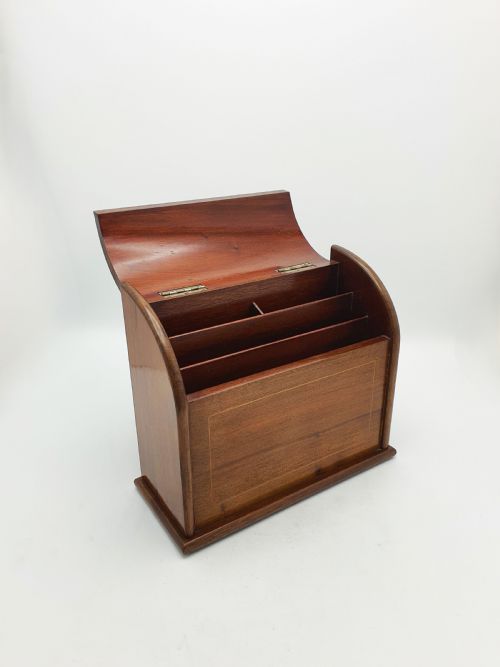
Details include brass hardware, glass panels for display units, and boxwood or satinwood inlay work on Edwardian desk tidies. Commercial and institutional pieces utilise hand sign-writing, patent letter-filing mechanisms, and sturdy shelving built to withstand heavy administrative use.
Listings feature oak, mahogany, pine, and brass across Victorian and Edwardian periods.
Evaluating Execution
Quality rests in the selection of timber grain, the precision of internal pigeon-hole joinery, and the integrity of original brass fittings or patent mechanisms. Superior pieces display thoughtful marquetry inlay and well-balanced proportions rather than plain utility construction.
Commercial and institutional examples are elevated by authentic hand sign-writing and intact original glazing rather than later restorations. The distinction lies in whether the piece was built for a refined country house library or a standard commercial office.
Amberg·Houghton & Gunn·Ermen & Roby
The Vintage Lettering Cabinet Glossary
- Stationery cabinet
- A desk accessory or small piece of furniture designed to hold writing paper, envelopes, and inkwells. These often feature fall-front panels and internal pigeon holes.
- Fall-front
- A hinged front panel that drops down to reveal internal compartments or a writing surface. It allows quick access to correspondence while keeping contents enclosed when shut.
- Pigeon holes
- Small, open compartments arranged in rows for sorting letters, documents, and stationery. They form the core interior layout of desk tidies and cabinet letter files.
- Marquetry
- Decorative veneer work forming patterns or pictures on timber surfaces using contrasting woods such as boxwood and satinwood. It appears on finer Edwardian desk accessories.
- Shopfitting cabinet
- Commercial display cabinetry built for retail environments such as sweet shops and chemists. These units frequently incorporate glass panels and sign-written advertising.
Vintage Lettering Cabinet: Frequently Asked Questions
What is a stationery cabinet used for?
These cabinets organise writing paper, envelopes, and correspondence implements within desktop or wall-mounted compartments. They keep a desk tidy by enclosing loose letters behind hinged lids or fall-front doors.
Historically, they served as the primary administrative hub for household management or commercial correspondence before modern digital filing systems replaced them.
How do I date a vintage cabinet?
Dating relies on identifying timber choices, construction techniques, and decorative styles associated with Victorian, Edwardian, or later twentieth-century periods. Solid oak and mahogany dominance usually points toward the nineteenth century, while lighter satinwood inlay often indicates the Edwardian era.
Patent mechanisms, such as Amberg letter files, and commercial advertising lettering also provide specific chronological markers pointing to the late nineteenth or early twentieth centuries.
Where were these cabinets placed originally?
Domestic examples sat on library desks, hall tables, or bureau surfaces within country houses and town residences. They provided immediate access to writing materials for daily letter writing.
Commercial variants stood on shop counters or hung on walls in post offices, confectionary shops, and schools to merchandise goods or organise institutional post.
Are patent filing cabinets different?
Patent filing cabinets incorporate specific mechanical sorting systems designed for high-volume document storage rather than simple stationery organisation. Amberg systems represent this industrial approach to administrative efficiency.
These pieces prioritise functional metal hardware and systematic indexing over decorative domestic timberwork.