
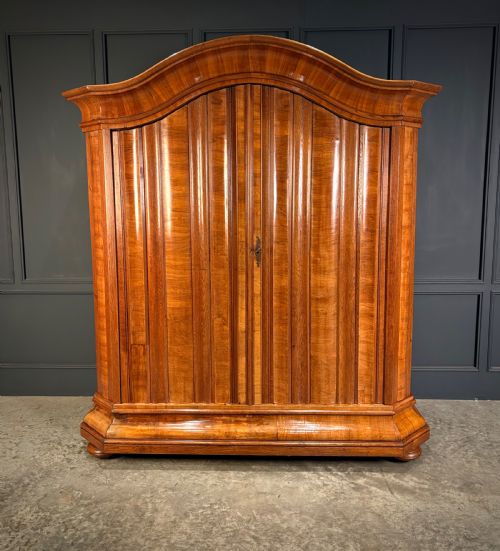

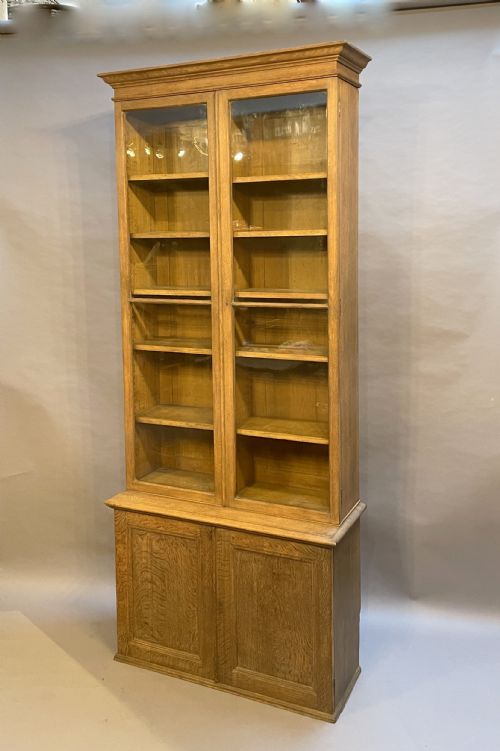

Large Oak Cupboard
A large oak cupboard provides substantial storage and anchors a room with its enduring timber grain and historic presence.
Large Oak Cupboard
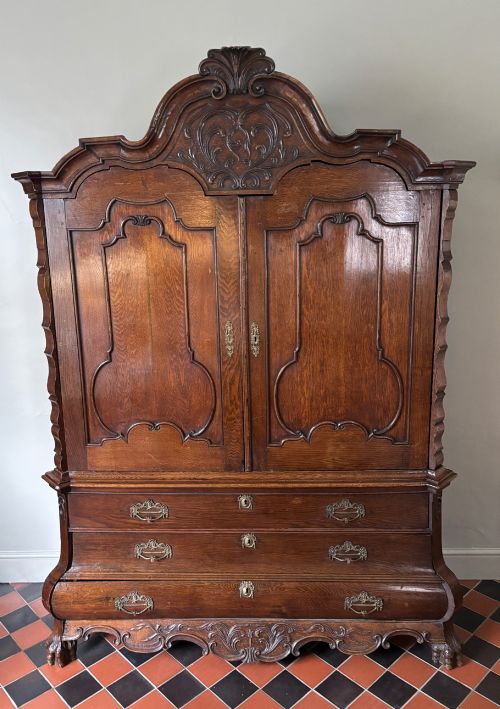
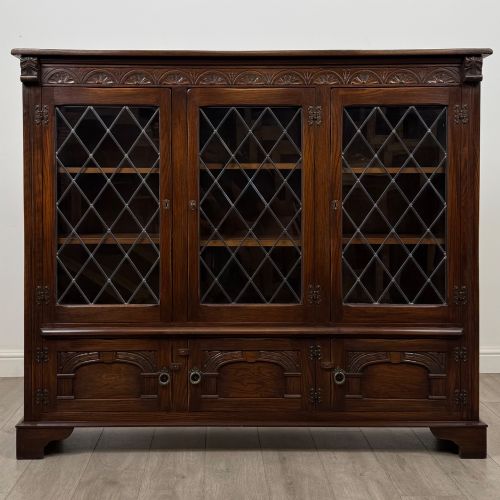
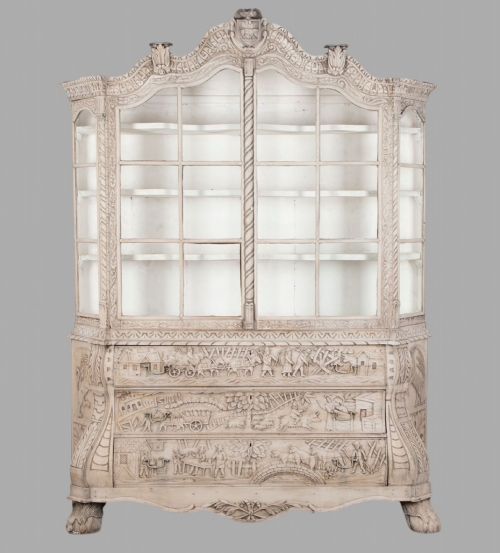
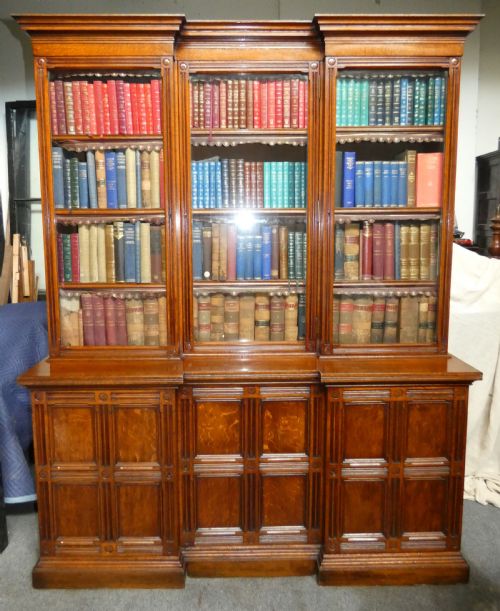
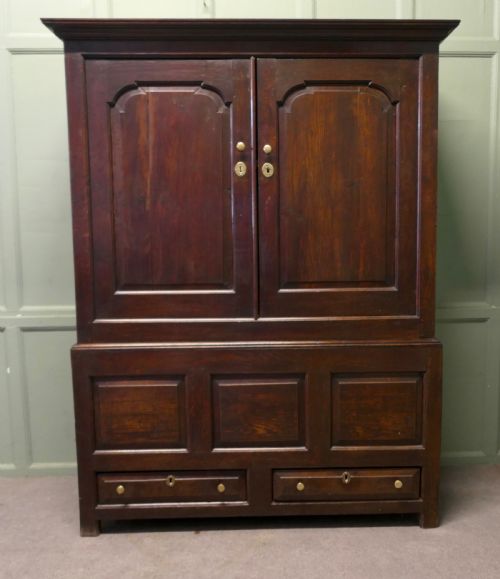
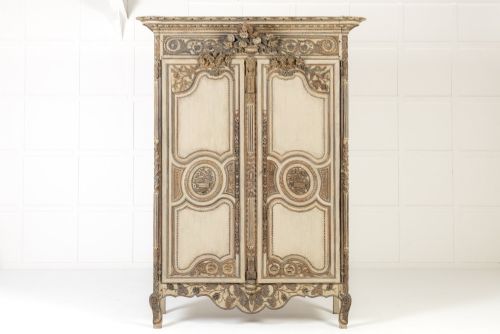
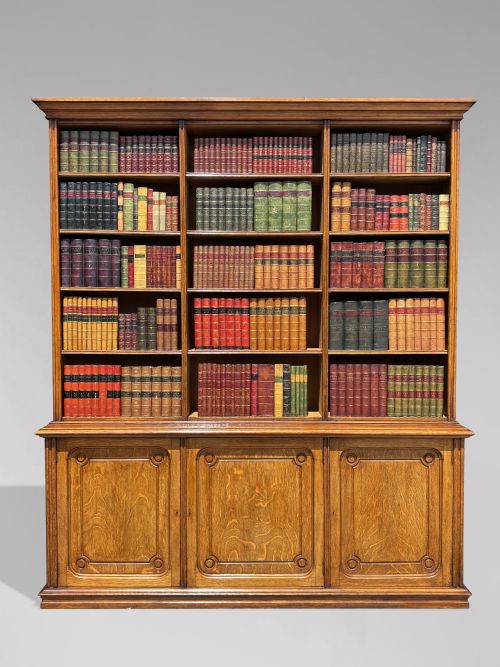
A large oak cupboard serves as a substantial storage piece, encompassing housekeepers' cupboards, linen presses, court cupboards, and bookcases originating from periods including the eighteenth century, Georgian, and Victorian eras.
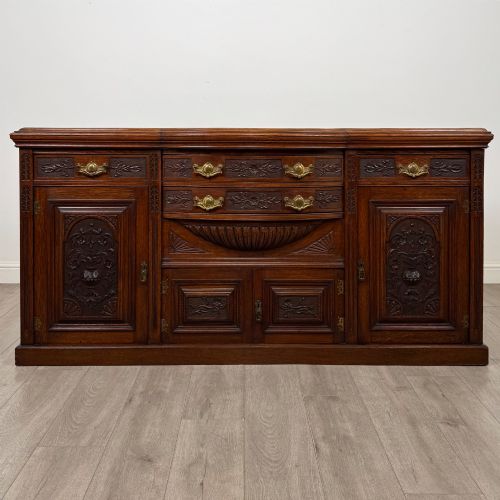
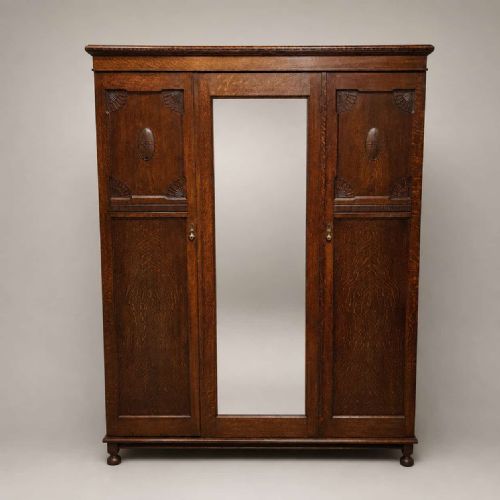
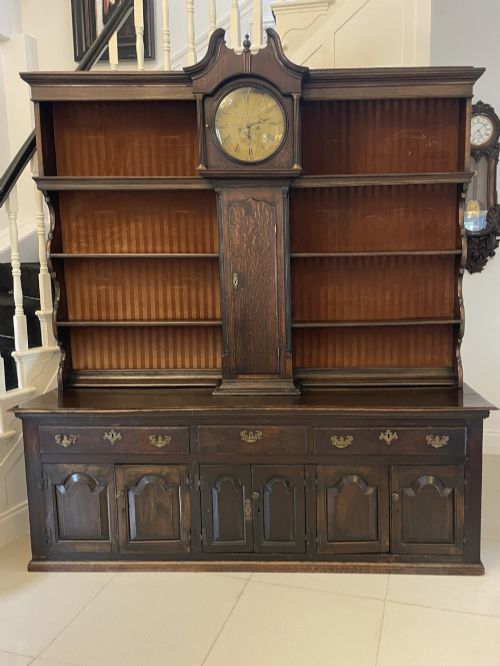
Buyers seeking a large oak cupboard most frequently encounter sturdy floor-standing items, ranging from seventeenth-century Welsh deuddarn designs to later nineteenth-century sideboards, wardrobes, and breakfront bookcases.
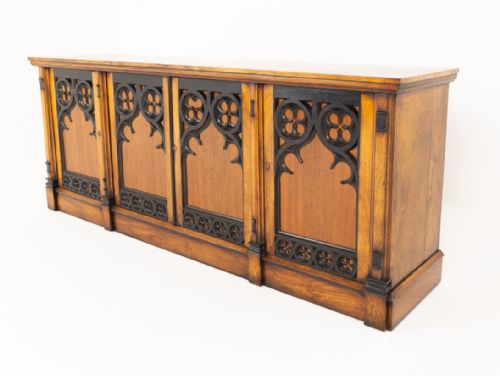
These forms reflect domestic and institutional evolution, moving from utilitarian estate storage and school cupboards to decorative Victorian Gothic revivals and early twentieth-century Arts and Crafts interpretations.
What varies in quality
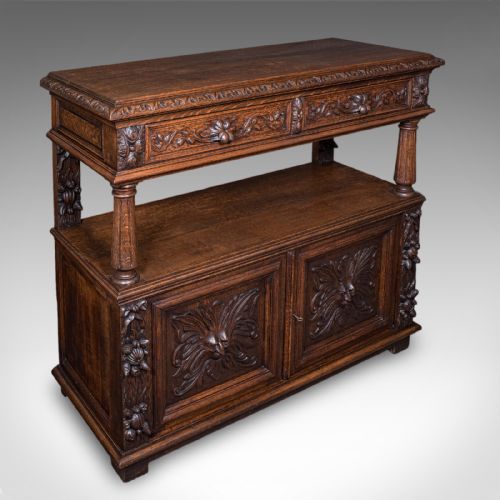
Quality rests in the selection of the timber grain, such as figured pollard oak or dense quarter-sawn boards, alongside the depth and crispness of hand-carved ornamentation.
Construction integrity distinguishes superior examples, evident in the tight fit of pegged mortise and tenon joints, smooth operation of panelled doors, and originality of brass or iron hardware.
Green Man carvings peer out from Victorian cupboard doors, keeping a watchful wooden eye on the hallway.
Howard And Sons·Maple And Co·Heals
The Large Oak Cupboard Glossary
- Deuddarn
- A traditional Welsh two-tier oak cupboard originating in the seventeenth century, featuring enclosed cabinetry above and below.
- Linen Press
- A tall piece with upper sliding trays or shelves enclosed by doors, traditionally used for storing pressed textiles.
- Housekeeper Cupboard
- A large utility storage unit often fitted with multiple internal doors and drawers for domestic provisions.
- Court Cupboard
- An antique open-shelved or enclosed sideboard structure, frequently ornamented with carved supports.
- Bombé
- A swelling, convex furniture profile seen on continental European case pieces of the eighteenth and nineteenth centuries.
Large Oak Cupboard: Frequently Asked Questions
How do I date a large oak cupboard?
Dating relies on examining construction methods, such as hand-cut dovetails, pegged joints, and timber preparation marks. Hardware styles and secondary woods also provide reliable chronological markers.
Earlier pieces from the seventeenth and eighteenth centuries often display vernacular tool marks and heavier framing, whereas Victorian and Edwardian examples incorporate machine-sawn components and standardised fittings.
Where were these cupboards originally used?
These large storage pieces served demanding practical roles in country houses, farmhouses, schools, and ships. They held provisions, linens, estate records, and household goods.
Domestic spaces utilised housekeepers' cupboards in working quarters, while grander libraries and halls accommodated breakfront bookcases and display cabinets for collections.
How do I care for historic oak furniture?
Preserving antique oak requires stable indoor humidity levels and protection from direct sunlight, which dries and fades the timber. Regular dusting with a dry cloth maintains the surface.
Applying traditional beeswax occasionally nourishes the grain and protects the patina without sealing the wood pores or attracting dust.