


Vintage Leather Library Armchair
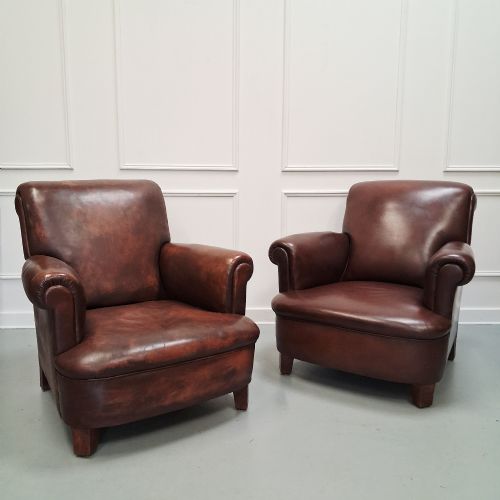
A vintage leather library armchair anchors a room with deep seating and enduring hide upholstery suited for long hours of reading.
Vintage Leather Library Armchair
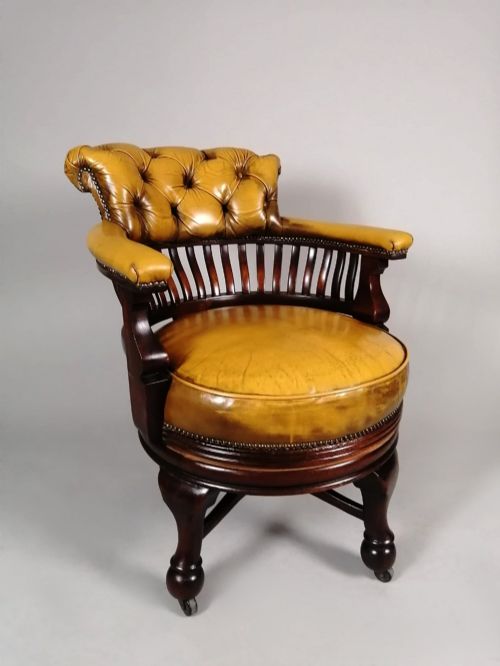
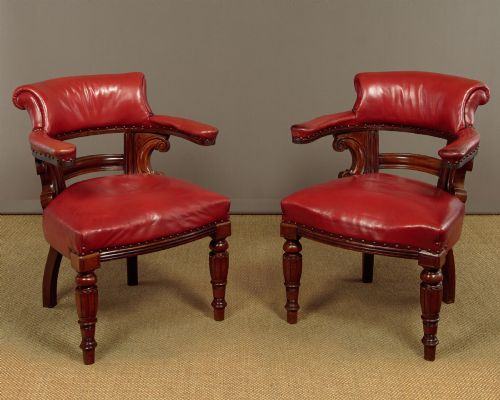
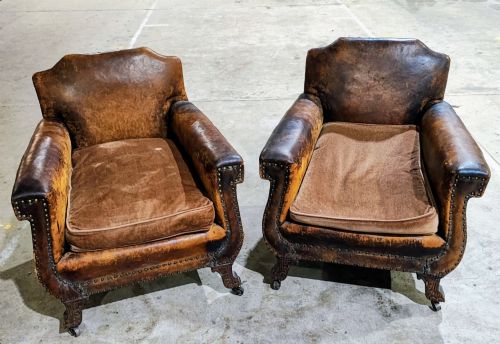
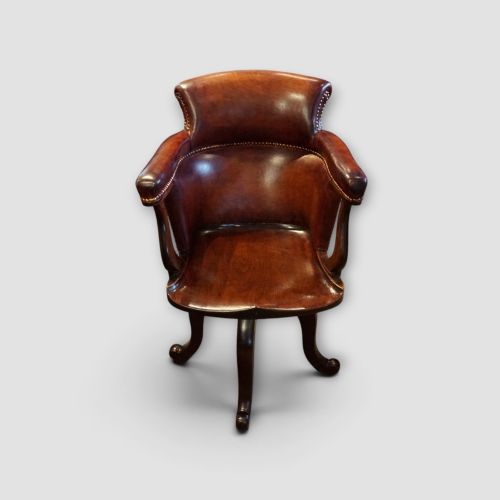
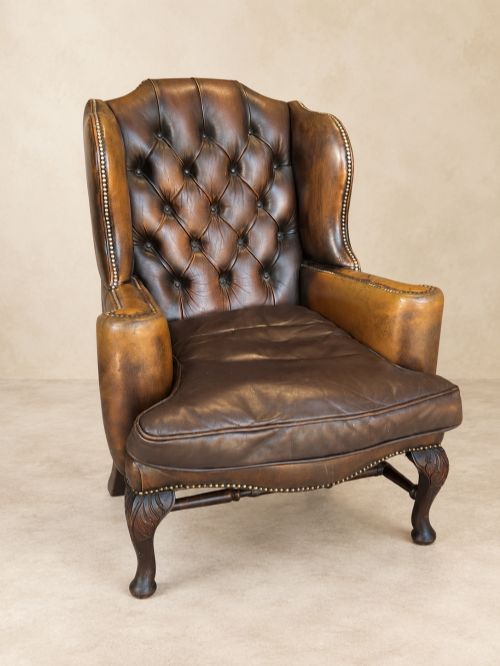
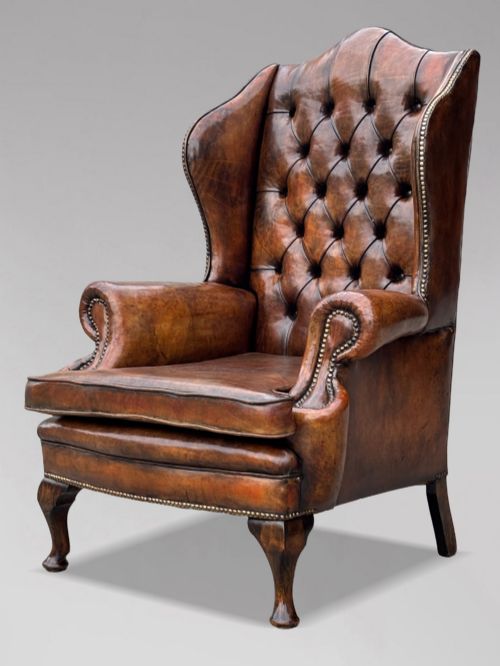
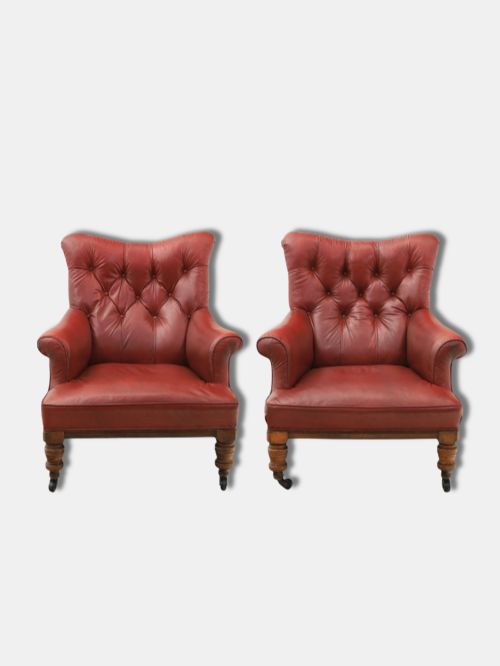
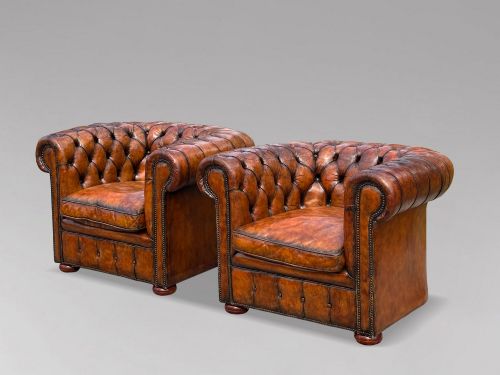
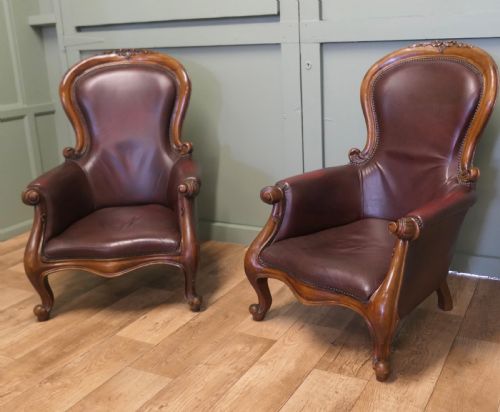
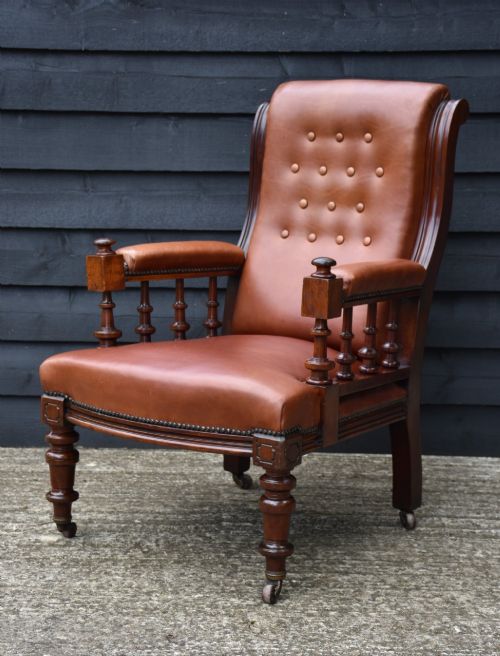
A vintage leather library armchair encompasses robust seating built for study, reading, and desk work across multiple British and continental periods. Buyers encounter heavy wingbacks, open armchairs, revolving desk chairs, and low club chairs designed for comfort and utility.
The selections span the Georgian, Victorian, and Edwardian eras alongside later twentieth-century styles. Mahogany frames, oak structures, and walnut supports underpin the heavy hide upholstery found throughout the inventory.
Materials and Construction
Makers utilised durable hardwoods such as mahogany, oak, walnut, and rosewood to construct the structural frames of these seats. Brass tacks, cane panels, and hand-dyed hides complete the construction of the frame and upholstery.
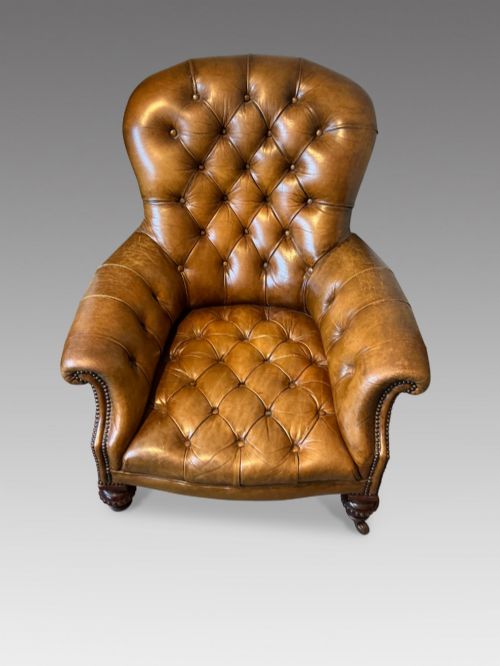
Joinery techniques ranged from traditional cabinetmaking on mahogany frames to steam-bent wood and sturdy corner-blocked supports for heavy club chairs. Leather was stretched over padding and secured with individual brass nails or button-tufting.
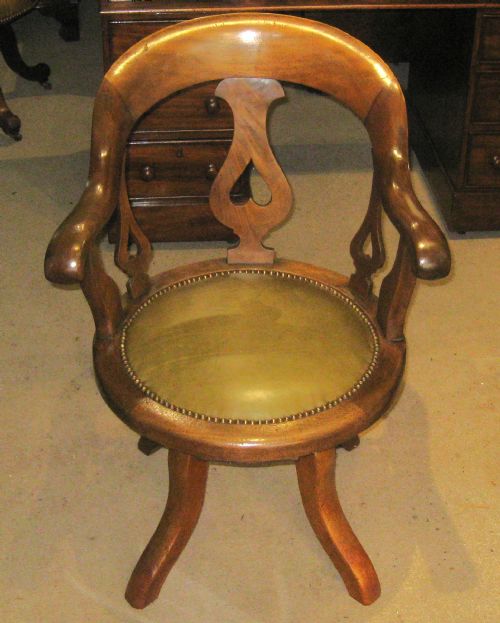
Several armchairs incorporate revolving mechanisms designed for nineteenth-century scholars who needed to pivot smoothly between multiple heavy desk volumes.
Design and Proportion
Quality rests in the balance of proportion, the depth of the carved woodwork on the frame, and the weight of the timber. Finer examples display meticulous blind carving on mahogany rails and well-defined wing profiles.
The grade of the hide and the integrity of the original framing dictate the longevity and presence of the piece. Substantial mahogany frames and patinated hand-dyed leather elevate the stature of an armchair above standard utility seating.
The Vintage Leather Library Armchair Glossary
- Gainsborough
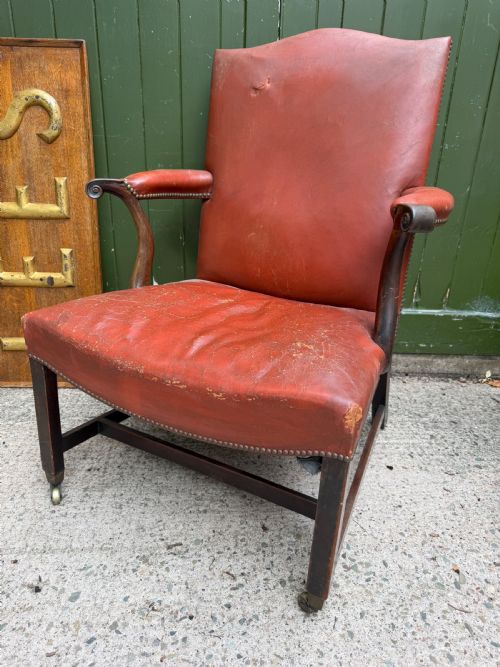
- An upholstered armchair with an open-framed mahogany structure, short cabriole or straight legs, and padded armrests popular in the eighteenth century.
- Bergère
- An enclosed armchair with cane or upholstered sides and back, typically featuring a loose seat cushion.
- Wingback
- A high-backed chair with side panels designed to shield the sitter from drafts and retain heat from a fireplace.
- Rexine
- A brand of artificial leather made from cloth coated with cellulose nitrate, seen on mid-century office and club seating.
- Caning
- Woven rattan or split cane used to form breathable panels on the backrests and seats of library chairs.
Vintage Leather Library Armchair: Frequently Asked Questions
How do I distinguish a Victorian library chair from a Georgian one?
Victorian library chairs often feature heavier proportions, darker golden mahogany or oak frames, and deeper button-tufted upholstery. Georgian models tend to display lighter mahogany frames with finer carved details such as blind fretwork.
Examination of the undercarriage and stretcher arrangement also helps reveal the manufacturing methods characteristic of each distinct period.
Where were these armchairs originally placed?
These armchairs sat primarily in private libraries, studies, and writing rooms of large country houses and town residences. They provided comfortable seating for reading heavy folios, writing correspondence, or resting by the fireside.
Revolving versions were specifically engineered for placement beside large partners desks and bureau bookcases.
Are these chairs suitable for daily sitting?
Most vintage library armchairs are built with sturdy hardwood frames and robust leather upholstery that withstands regular daily use. Their ergonomic designs were originally intended for prolonged periods of reading and desk work.
Placing them in modern living spaces offers both practical seating and a distinct historical focal point.