
Vintage Lavalier Necklace
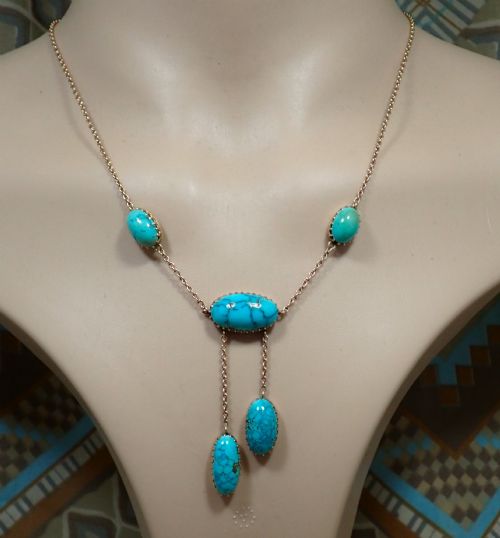
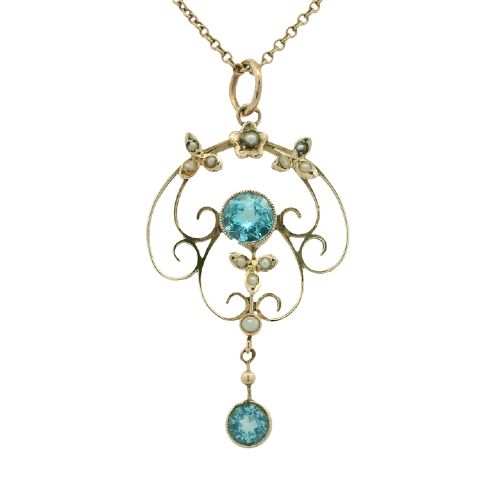
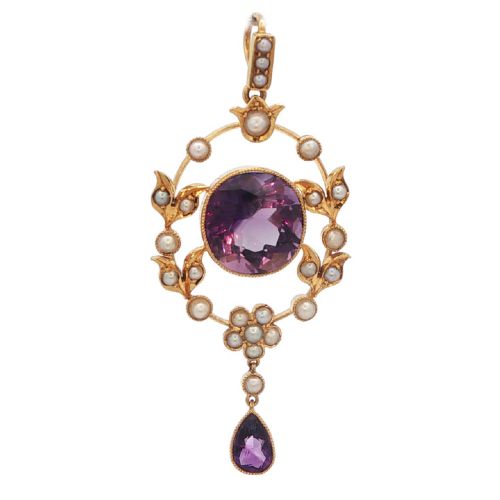
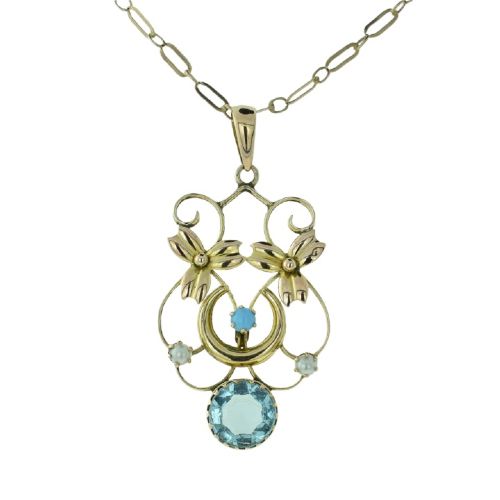
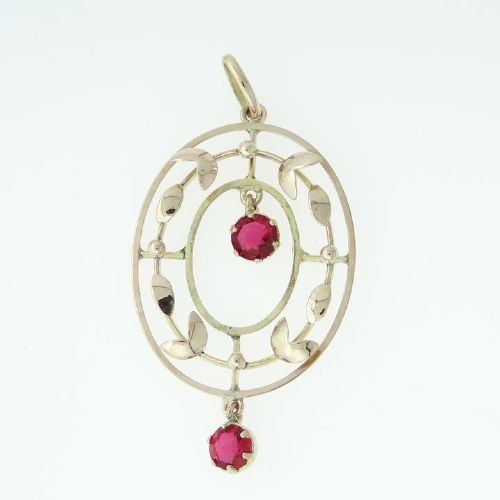
A vintage lavalier necklace brings delicate pendant drops and flowing lines together, offering the characteristic grace of early twentieth-century jewellery.
Vintage Lavalier Necklace
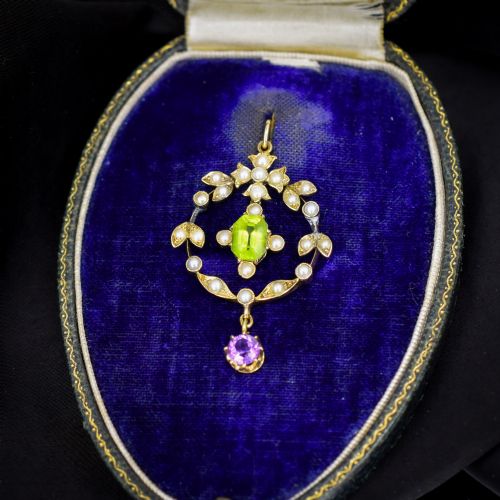
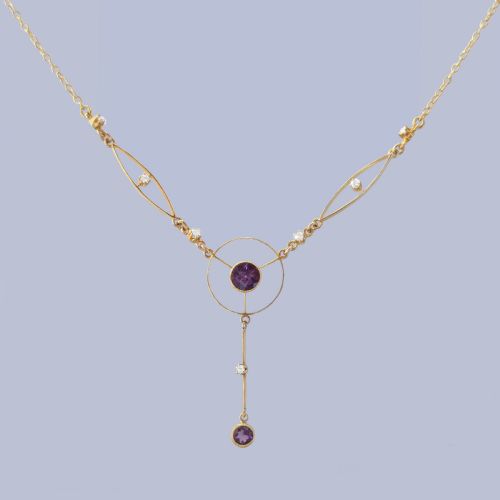
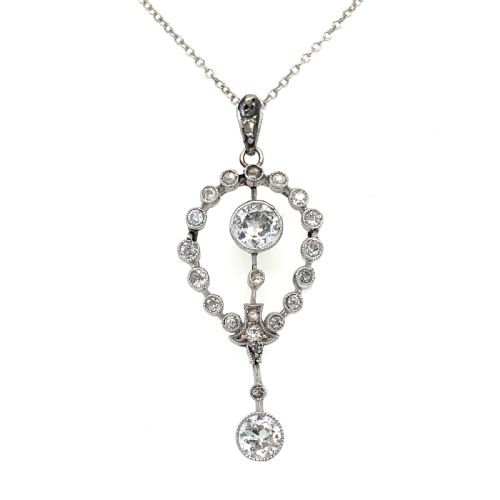
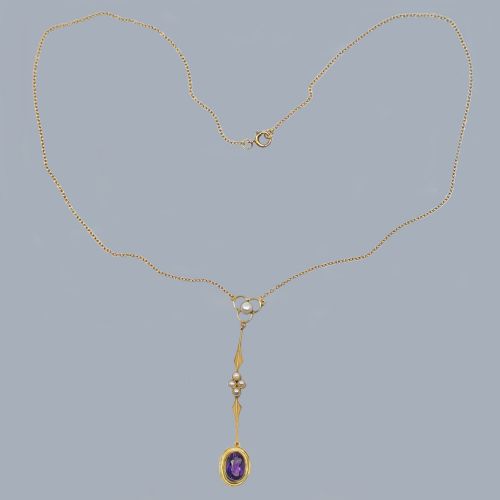
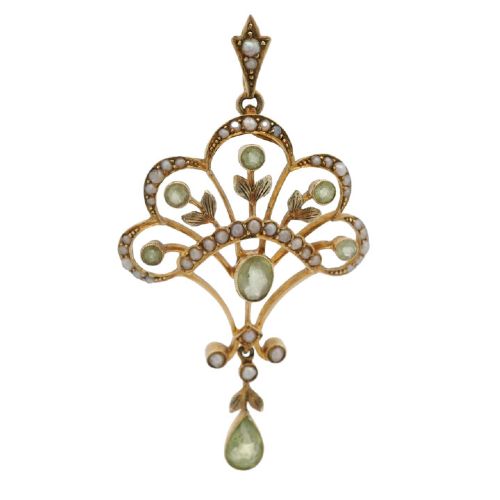
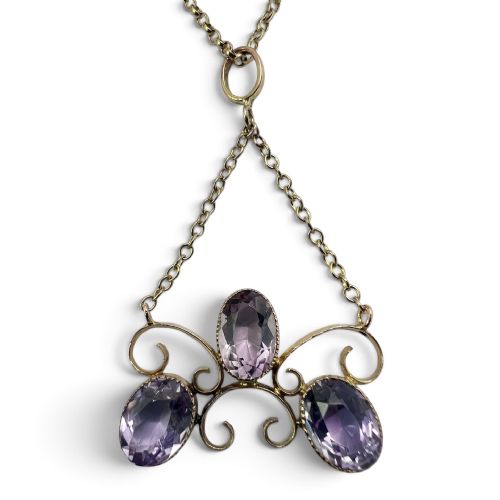
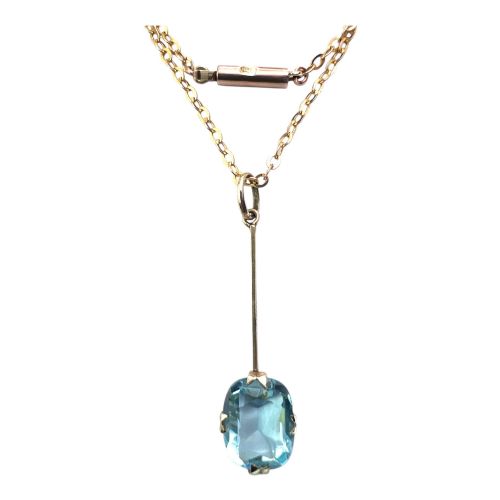
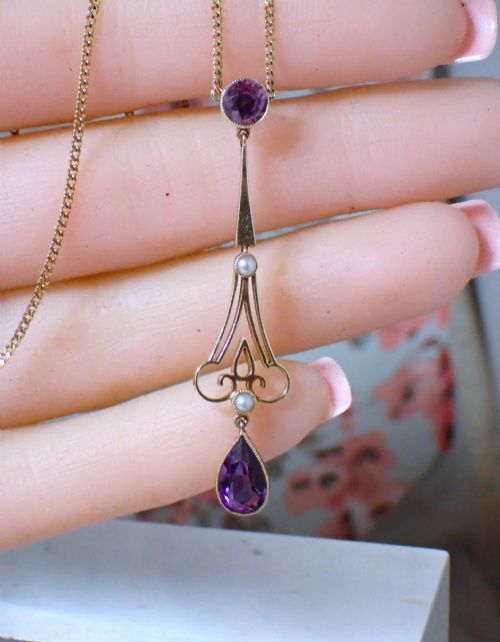
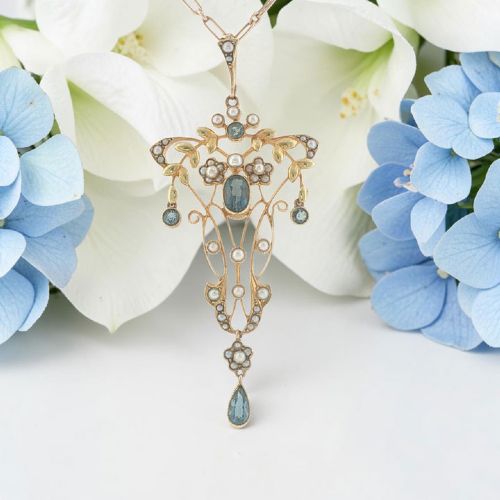
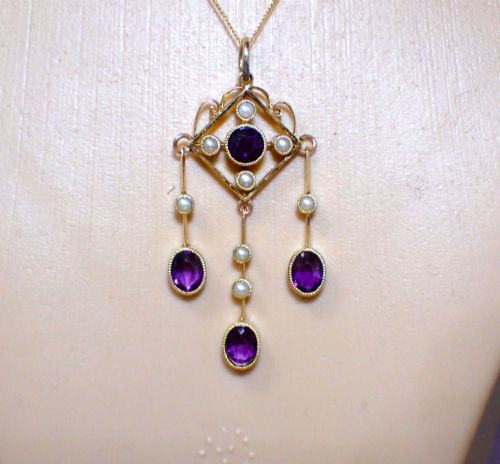
A vintage lavalier necklace is defined by its central pendant suspended from a fine chain, often featuring secondary swinging drops that catch the light with movement. These pieces trace their origins predominantly through the Edwardian, Art Nouveau, and Victorian periods, carrying the delicate aesthetic of the early twentieth century.
How they were made
Makers utilised 9ct and 15ct gold alongside platinum and silver to form the delicate wirework and settings characteristic of the period. Metal was drawn into fine chains and shaped into openwork frames designed to hold suspending stones without heavy backing.
Gems such as amethyst, peridot, aquamarine, and turquoise were cut en cabochon or faceted and secured alongside seed pearls strung on fine thread or pinned with tiny wire collets. The construction relies on meticulous hand-assembly, joining minute articulated hinges and jump rings to allow the pendant drops to sway independently.
Many Edwardian makers hid tiny seed pearls inside delicate gold wreaths where only the closest inspection would reveal them.
What varies in quality
The distinction between tiers rests upon the complexity of the goldsmithing and the selection of materials. Higher quality items display intricate pierced openwork, balanced proportions in the drop elements, and cleanly matched gemstones without visible inclusions.
Proportion and fluidity dictate the elegance of the piece. Superior examples integrate the chain and pendant into a cohesive design where every articulated drop moves freely and the metalwork shows no sign of hasty repair or heavy-handed soldering.
S. Blanckensee & Son
The Vintage Lavalier Necklace Glossary
- Lavalier
- A pendant necklace featuring one or more swinging drops suspended below the main centrepiece. This style gained immense popularity during the Edwardian era.
- Seed Pearl
- A very small, naturally formed or cultured pearl used extensively in clusters and borders on Edwardian and Art Nouveau jewellery. They are typically half-drilled and glued or pegged onto tiny gold pins.
- Art Nouveau
- A stylistic movement spanning the late nineteenth and early twentieth centuries characterised by organic, flowing lines and asymmetrical floral motifs. This style heavily influenced the design of pendant drops.
- Collet
- A small metal collar or band that holds a gemstone in place within a setting. In fine antique work, these are often hand-formed to follow the exact contour of the stone.
- Old Cut
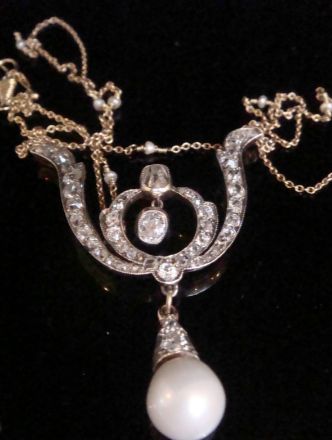
- A diamond cutting style preceding modern brilliant cuts, featuring a smaller table, higher crown, and open culet. These stones exhibit a soft, candlelit sparkle rather than harsh modern brilliance.
Vintage Lavalier Necklace: Frequently Asked Questions
What is a vintage lavalier necklace?
A vintage lavalier necklace is a pendant necklace featuring one or more swinging drops hanging from a central motif, originating mostly from the Edwardian and Art Nouveau eras.
These pieces are celebrated for their delicate goldwork and use of coloured gems like amethyst and peridot combined with seed pearls.
How do I date a lavalier necklace?
Dating relies on stylistic clues such as the whiplash curves of Art Nouveau or the symmetrical garlands of the Edwardian period, alongside hallmarks stamped on the gold.
Materials also offer guidance, as platinum mountings and specific gold carat marks like 15ct point directly to the early twentieth century before legal standards changed.
How were these necklaces worn?
These necklaces were designed to sit high on the chest, often resting on the collarbone to complement the high-collared fashions of the Edwardian period.
The articulated pendant drops were intended to catch the light and sway gently with the movement of the wearer.
Are the pearls genuine natural pearls?
The small pearls seen on these pieces are typically seed pearls, gathered from freshwater or saltwater molluscs and utilised extensively in Edwardian cluster designs.
They are valued for their creamy lustre and tiny scale, which allowed makers to create intricate floral and geometric borders.