


Vintage Lanterns
These vintage lanterns bring warm illumination and period character to halls and porches, spanning Victorian iron to Arts and Crafts copper.
Vintage Lanterns
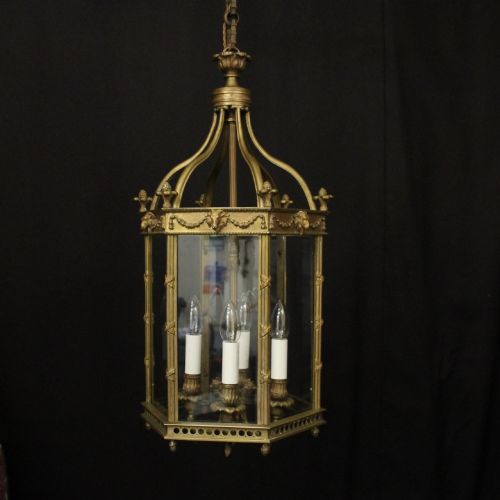
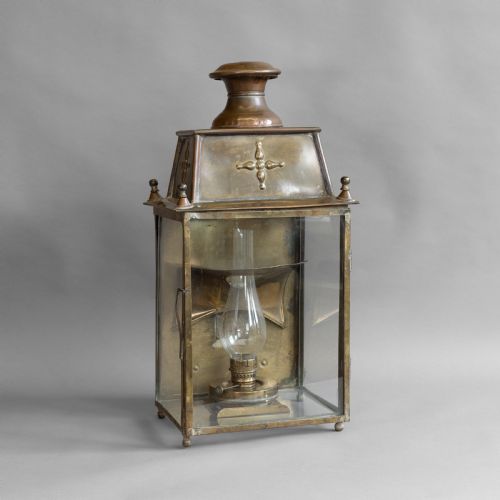
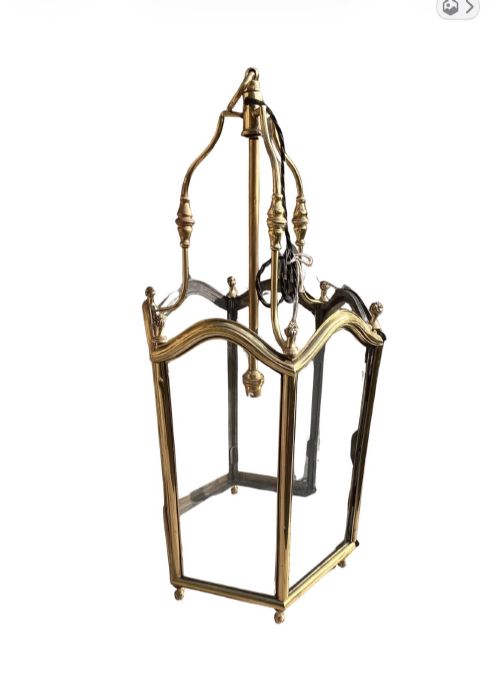
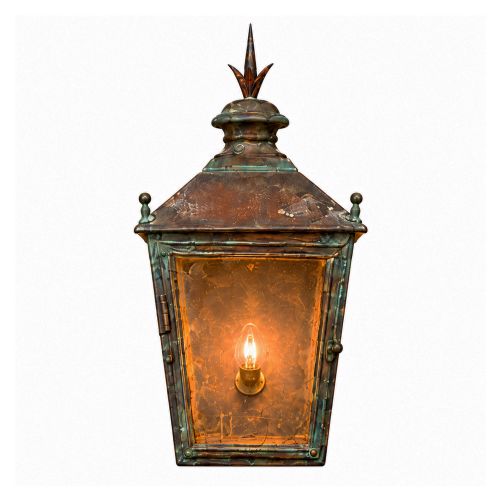
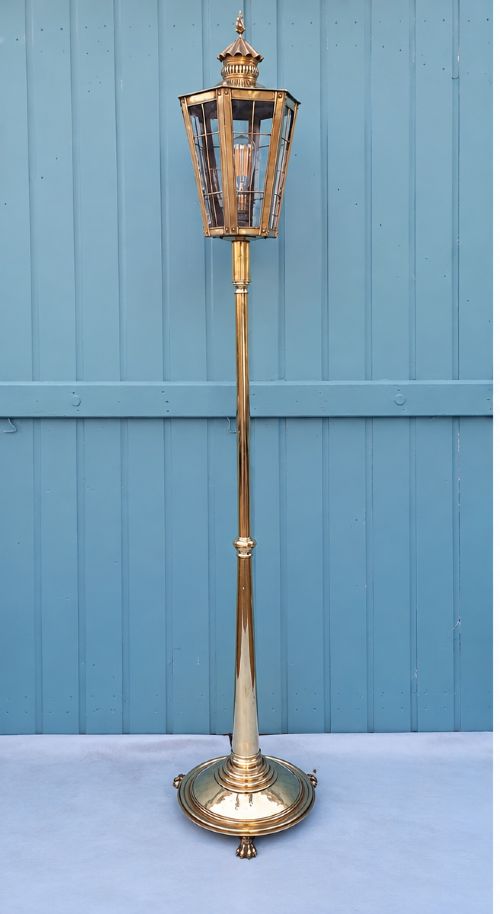
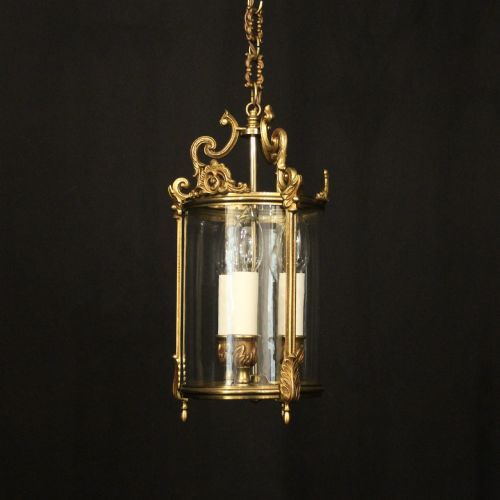
Vintage lanterns encompass hanging ceiling lights, hall pendants, and wall-mounted fixtures designed to illuminate transitional spaces. When searching for vintage lanterns, buyers encounter diverse forms ranging from domestic hall lanterns to substantial exterior street lights.
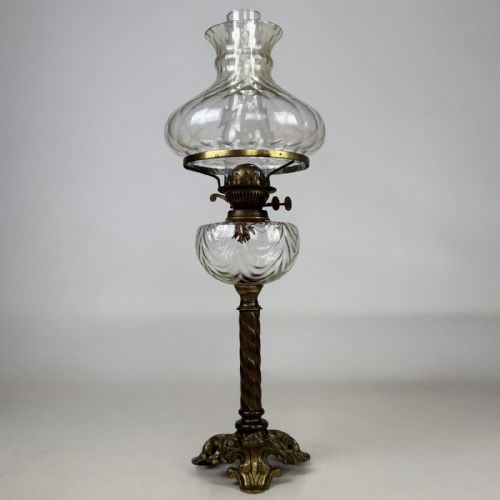
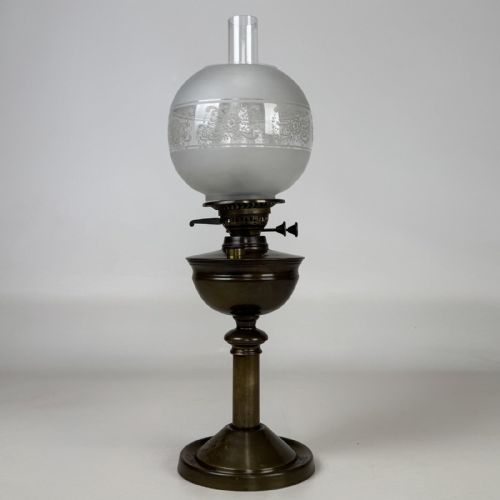
Common configurations include ceiling lighting, wall lights, and floor standing models fitted for oil or electricity. Buyers frequently discover brass, copper, and iron housings paired with glass panels or shades.
How vintage lanterns were made
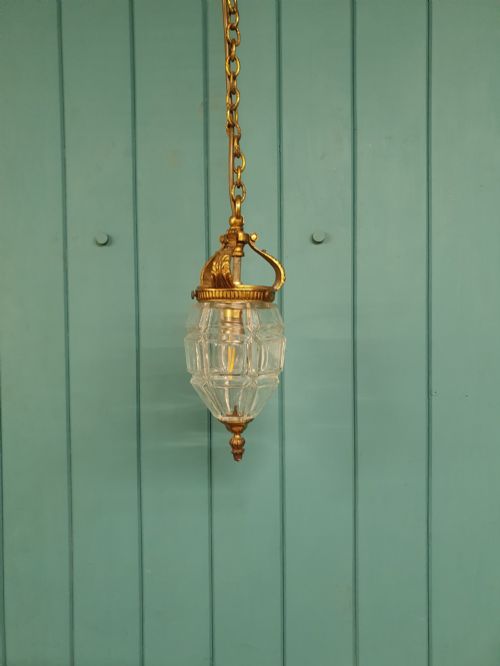
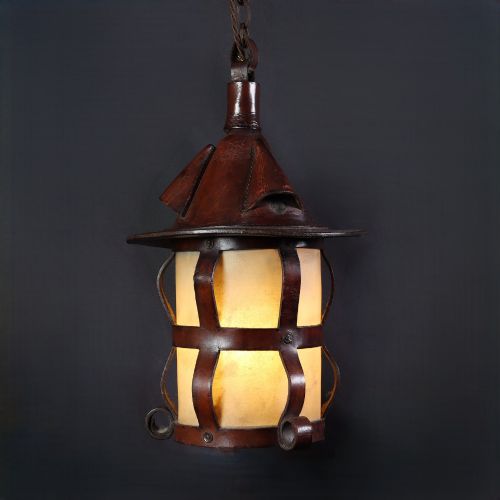
Metal fabrication forms the backbone of these pieces, utilising cast brass, beaten copper, wrought iron, and gilded bronze. Artisans shaped structural frames to house glass panels, frosted shades, or moulded glass globes.
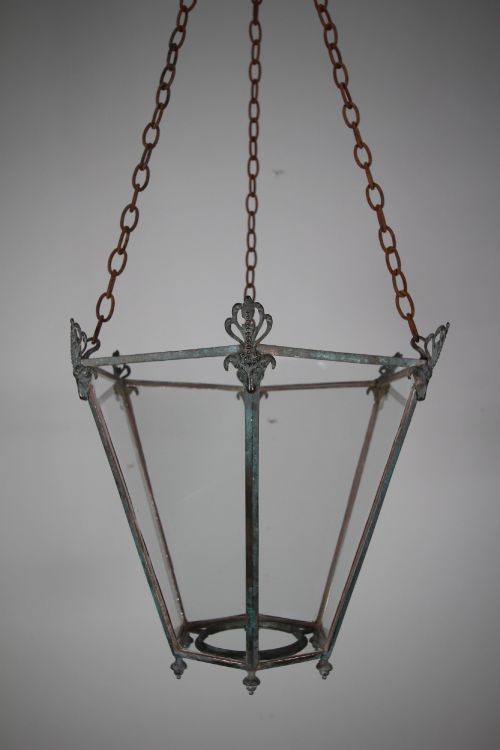
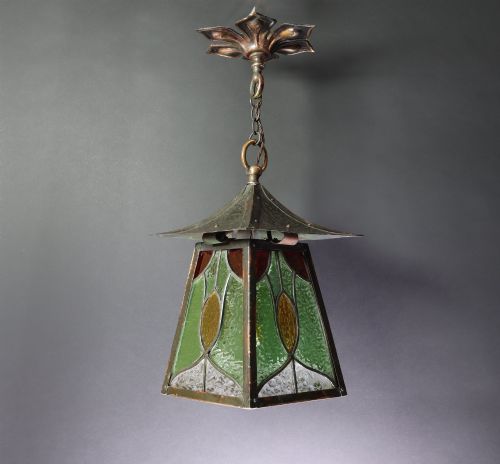
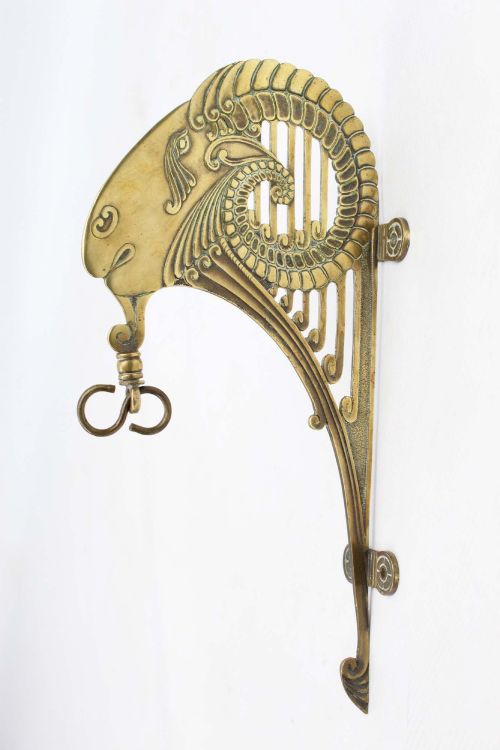
Surface treatments and decorative detailing varied by workshop, incorporating planished copper finishes, hand-stitched leather panels, and intricate ram's head castings. Metalwork was assembled with rivets, solder, or structural joints to support the weight of multiple bulb fittings and heavy glass.
Vintage Lanterns Retail Price Guide 2026
Typical asking prices for vintage lanterns among the pieces listed under this phrase on Sellingantiques today, from the lower quarter to the upper quarter. They describe what is for sale here now, not the wider market.
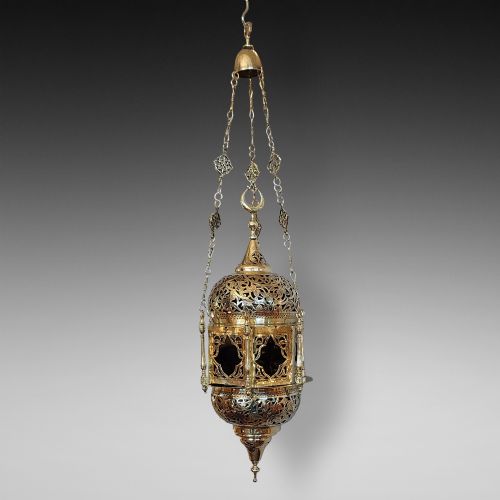
Materials across these listings span brass, copper, iron, gilded bronze, and silver-plated elements combined with frosted, stained, and moulded glass.
What varies in quality
The distinction between tiers rests upon the weight of the metal cast and the hand execution of decorative elements. Heavier gauges of brass, bronze, and copper provide structural integrity that lighter stamped metals lack.
Finishing work on the frame dictates the overall refinement, from crisp ram's head castings to hand-beaten planished surfaces. The clarity, thickness, and moulding of the glass panels further distinguish standard production pieces from finer examples.
The Vintage Lanterns Glossary
- Hall lantern
- A hanging light fixture designed specifically for entrance halls and corridors, often featuring glass panels enclosed in a metal frame. These pieces provide directional downward illumination.
- Planished copper
- A metal surface finished by methodical hammering with a round-faced tool, creating a textured pattern of small facets. This technique hardens the copper while adding decorative visual interest.
- Gilded bronze
- Bronze metal coated with a thin layer of gold or gold leaf to give a rich, reflective surface finish. It resists tarnishing better than plain brass.
- Frosted glass
- Glass treated by acid-etching or sandblasting to diffuse light and reduce glare. It softens the output of interior oil lamps or electric bulbs.
- Convex half lantern
- A wall-mounted lighting fixture with a curved front profile that projects outward from a flat backplate. This design suits narrow corridors and exterior porch walls.
Vintage Lanterns: Frequently Asked Questions
Where should I hang a hall lantern?
Hall lanterns suit entranceways, stairwells, and narrow corridors where ceiling height permits a hanging drop. They provide clear, directional light while establishing a distinct period character right at the doorway.
Ensure adequate clearance beneath the fixture for foot traffic and door swings. Scale the size of the lantern to match the proportions of the hallway space.
Can these antique lanterns be wired for electricity?
Most antique lanterns are readily adapted for modern electrical circuits by professional electricians. Internal wiring is routed through the original suspension loops and can house standard lamp holders.
Original oil lamps and candle holders remain intact on certain models while discreetly accommodating internal electrical wiring. Consultation with a specialist ensures safe installation.
How do I clean brass and copper frames?
Dust metal frames gently with a soft dry cloth to remove surface particles without disturbing the aged patina. Avoid harsh chemical cleaners that strip the historical finish from copper and brass surfaces.
Glass panels can be removed carefully for washing with mild soapy water before being dried and refitted. Regular gentle maintenance preserves the character of vintage metalwork.
How do I distinguish Victorian from Edwardian designs?
Victorian lanterns typically display heavier, more ornate cast metalwork with Gothic Revival or classical decorative motifs. Iron and brass dominate these mid to late nineteenth-century pieces.
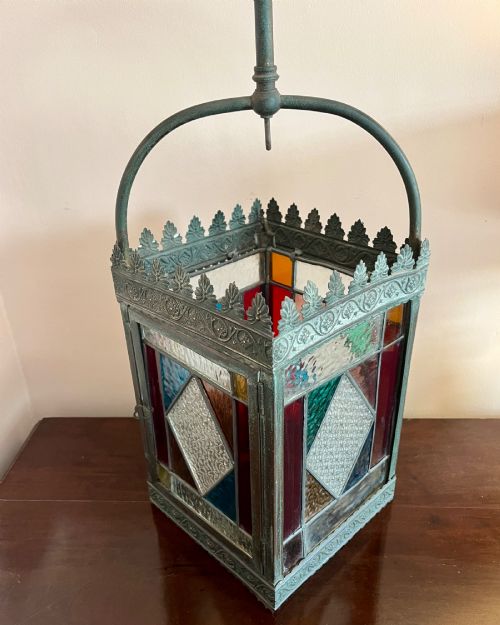
Edwardian and Arts and Crafts examples often feature cleaner lines, planished copper surfaces, and stained glass. Lighter framing and geometric forms reflect the turn-of-the-century shift in aesthetic taste.