


Vintage Lakai Suzani Embroidery
Vintage Lakai suzani embroidery brings Central Asian textile heritage into modern rooms through intricate needlework created by tribal makers.
Vintage Lakai Suzani Embroidery
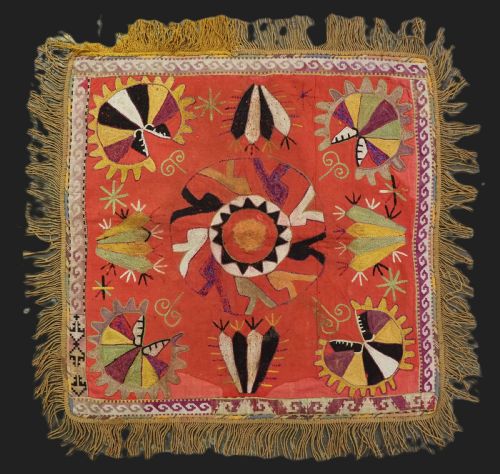
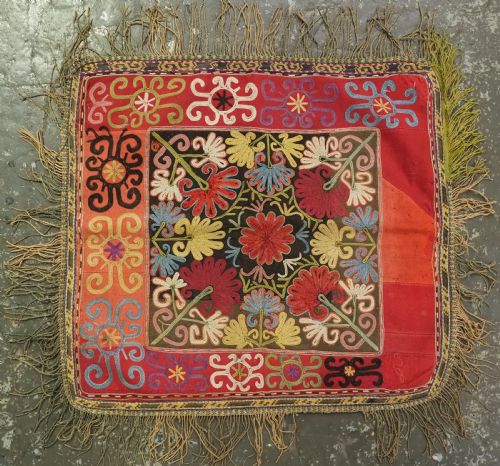
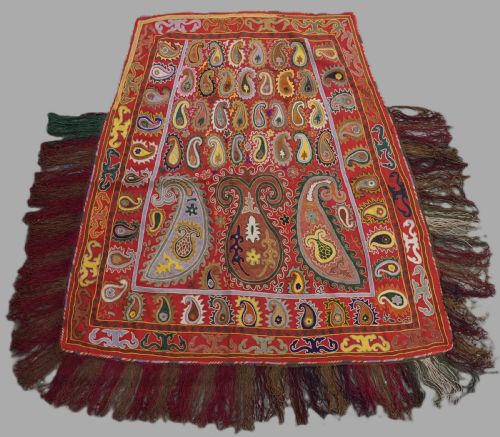
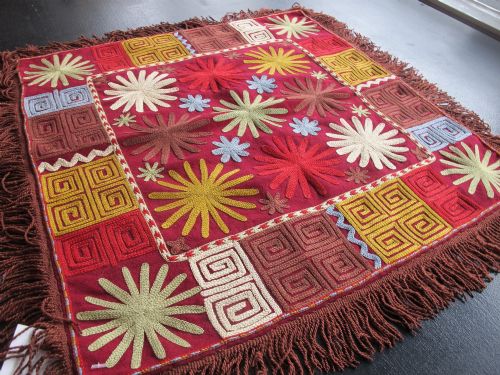
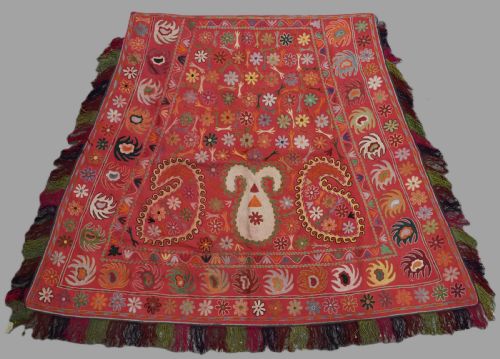
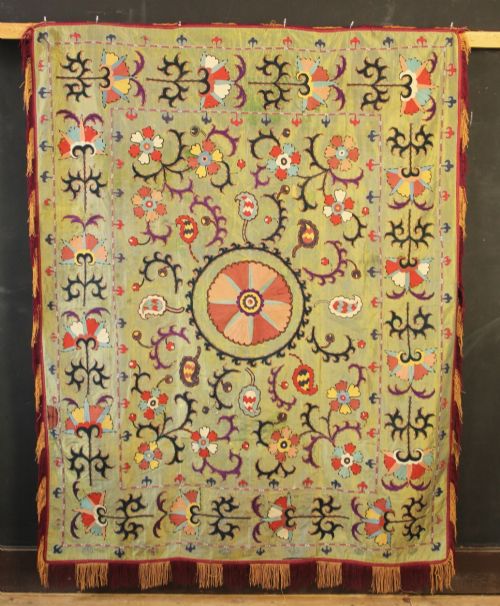
Vintage Lakai suzani embroidery encompasses textiles originating from Central Asia, specifically created by the Uzbek Lakai tribe. These works appear as wall hangings, panels, and domestic items that once served as ceremonial horse covers or dowry pieces.
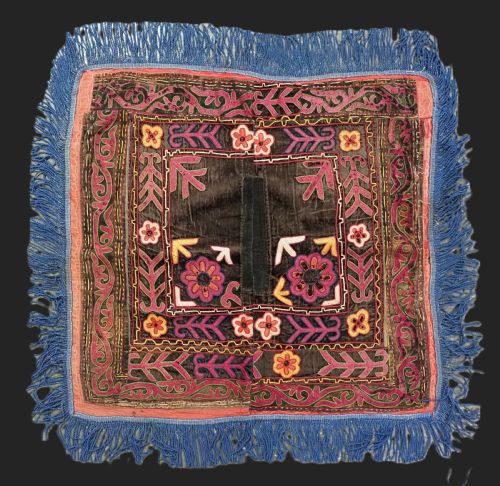
The objects present diverse formats ranging from square saddle rugs and amulets to larger wall hangings and bed decorations. Most examples found here date from the late nineteenth century through to the early decades of the twentieth century.
How they were made
Artisans constructed these textiles by applying silk thread needlework onto various foundation fabrics such as cotton, wool, and velvet. Many pieces incorporate wool fringe or contrasting coloured grounds to define the geometric and figurative patterns characteristic of tribal workshops.
Needleworkers employed dense stitching techniques to cover the base material entirely, creating rich surface textures and vibrant colour contrasts. The combination of fine silk threads on sturdy woven grounds ensured the durability of objects intended for domestic use or ceremonial display.
What varies in quality
Quality in these textiles depends heavily on the tightness of the stitchwork and the complexity of the design arrangement. Finer examples display meticulous control over the silk threads, creating precise geometric motifs and harmonious colour balances across the surface.
The condition of the ground fabric and the preservation of the original silk embroidery also dictate the standing of a piece. Strong structural integrity in the underlying cotton or wool supports the longevity of the intricate surface needlework.
The Vintage Lakai Suzani Embroidery Glossary
- Suzani
- A type of embroidered tribal textile originating from Central Asia. These pieces often served as decorative wall hangings or dowry items.
- Ilgich
- A specific form of wall hanging or dowry embroidery produced by Central Asian tribes. These textiles frequently display distinctive regional motifs.
- Nim suzani
- A smaller version of the traditional suzani textile. These half-scale panels were used for domestic decoration or smaller display areas.
- Torba
- A small storage bag or hanging piece woven and embroidered by tribal groups. They served both practical and decorative functions within the home.
- Saye gosha
- A traditional bed decoration or hanging associated with Uzbek tribal interiors. These textiles bring specific cultural contexts to the selection.
Vintage Lakai Suzani Embroidery: Frequently Asked Questions
What is Lakai embroidery?
Lakai embroidery refers to traditional needlework produced by the Lakai tribe of Uzbekistan. These pieces feature distinct geometric and figurative designs executed in silk on woven grounds.
Historically, these textiles functioned as dowry items, wall hangings, and ceremonial horse covers. Today, collectors value them for their vibrant colours and rich cultural history.
How were these textiles used?
These textiles served multiple purposes within Central Asian domestic and ceremonial life. Many functioned as wall hangings or decorative panels inside tribal dwellings.
Others formed part of a bride's dowry or served as ornate covers for horses during important community events. Their current appeal lies in their ability to function as striking wall art.
How do I date a suzani?
Dating these embroidered works involves examining the materials, dyes, and stitching techniques used in their construction. Earlier pieces often display natural dye palettes and fine, dense silk threadwork.
Stylistic elements and the condition of the foundation fabric also help determine the approximate period of origin. Most examples date from the late nineteenth or early twentieth centuries.
How do I care for antique embroidery?
Preserving antique textiles requires keeping them away from direct sunlight to prevent fading of the silk threads. Gentle mounting behind UV-protective glass helps protect fragile foundation fabrics from dust and physical strain.
Avoiding excessive moisture and handling pieces minimally ensures the long-term stability of the historic needlework. Professional textile conservation offers the safest approach for delicate or damaged items.