




Vintage Kilim Bag
A vintage kilim bag brings flatweave nomadic textiles into daily interiors as cushions, storage bags, and wall panels.
Vintage Kilim Bag
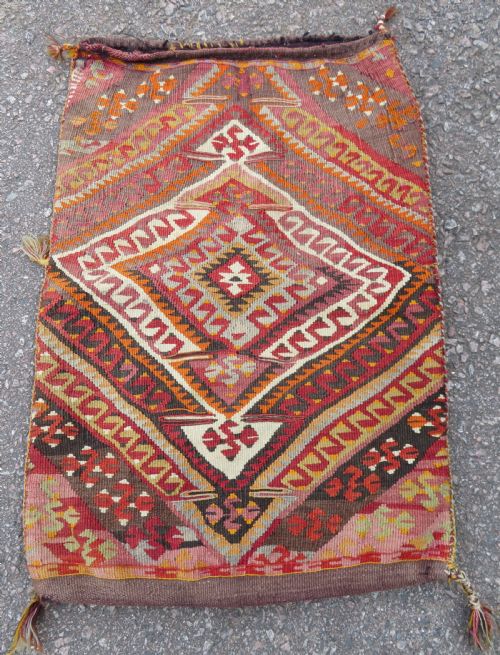
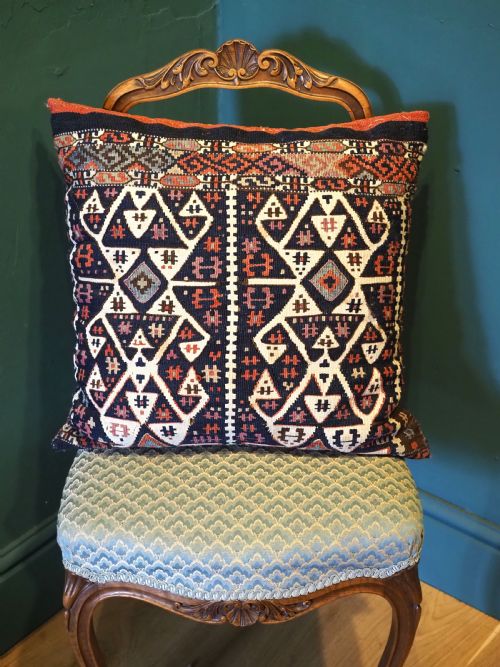
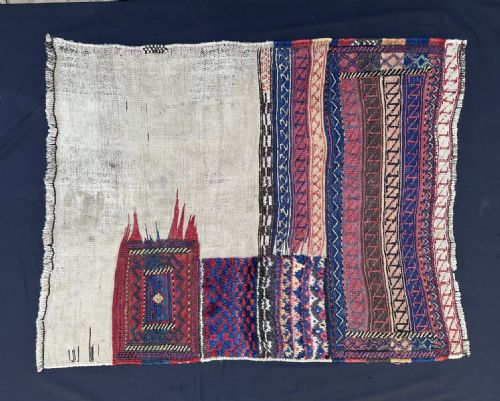
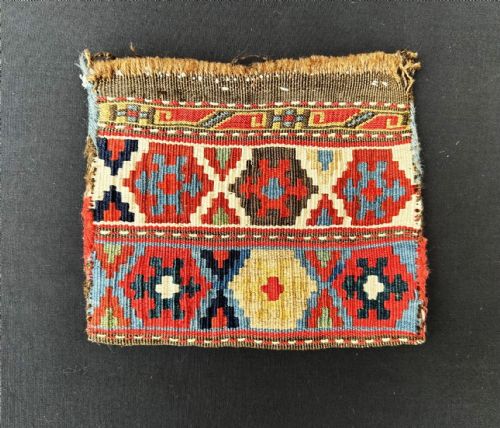
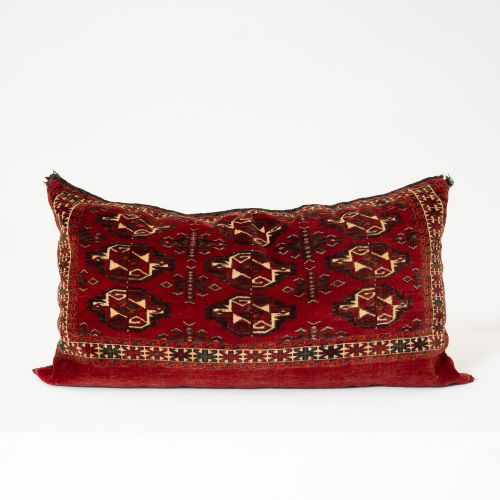
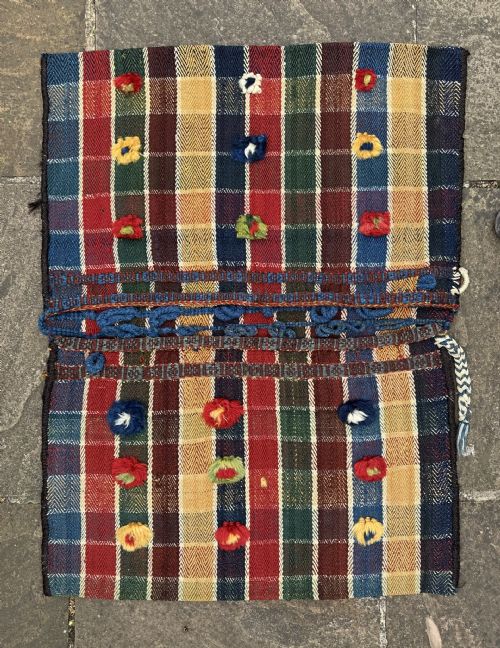
A vintage kilim bag encompasses utilitarian tribal items such as saddle bags, storage sacks, and wheat sacks that were originally woven by nomadic groups across Persia, Anatolia, and the Caucasus. When buyers search for a vintage kilim bag, they encounter functional fragments and complete pouches adapted into cushions and decorative soft furnishings.
The pieces appearing on this page span from the mid-nineteenth century through the early twentieth century, representing weaving traditions from tribes including the Shahsevan, Bakhtiari, Qashqa'i, and Turkmen. These objects served practical purposes for transport and storage before finding new life as interior textiles.
Materials and Construction
Makers utilised hand-spun wool, cotton, goat hair, and leather, combining structural durability with flatweave artistry. Natural dyes imparted rich colour palettes to the geometric and banded weft work designs characteristic of nomadic textiles.
The construction relies on flatweaving techniques where the pattern is created by tightly packing the coloured weft threads over the warp. Many surviving examples retain original wool foundations or incorporate leather components from their functional pasts.
Many of these textiles started life strapped to the side of a camel, carrying grain across the mountains of Western Persia.
Distinguishing Quality in Flatweaves
The fineness of the weave and the clarity of the tribal motifs dictate the upper tier of these textiles. Tighter tension in the flatweave structure and intact original backs or borders demonstrate superior craftsmanship by the nomadic maker.
The depth and integrity of natural dyes contribute significantly to a piece's standing, alongside the preservation of authentic tribal iconography. Greater complexity in banded or geometric layouts separates exceptional examples from standard utilitarian pieces.
The Vintage Kilim Bag Glossary
- Kilim
- A flatwoven textile produced without a pile by tightly interweaving warp and weft strands. This technique results in a lightweight, durable fabric used traditionally for rugs, bags, and hangings.
- Chuval
- A large storage bag made by Turkmen tribes, often featuring distinctive guls or repeated geometric medallions. Surviving examples frequently survive as cushion faces or complete pouches.
- Mafrash
- A large rectangular storage container or bedding bag woven by nomadic tribes using flatweave or soumak techniques. They were designed in pairs for camel or horse transport during seasonal migrations.
- Tacheh
- A traditional storage sack or wheat sack woven by western Persian groups such as the Bakhtiari and Luri tribes. These utilitarian items often feature striking banded designs.
- Warp
- The stationary vertical threads stretched upon a loom that form the structural foundation of the textile. The coloured wefts are tightly packed across these structural threads.
Vintage Kilim Bag: Frequently Asked Questions
What is a kilim bag?
A kilim bag is a functional nomadic textile, such as a saddle bag or wheat sack, woven flat without a pile. These pieces were made by tribal groups for storage and transport during migrations.
Today, these textiles are collected as cushions, wall hangings, and decorative interior elements, preserving centuries of nomadic weaving traditions.
How are they used in interiors?
These flatweave textiles are frequently utilised as cushions, pillows, and decorative floor or wall pieces. Their durable wool and flat structure suit modern soft furnishings.
Interior designers place them to introduce geometric patterns, warm natural dyes, and historical texture into contemporary or traditional spaces.
How do I identify tribal origins?
Tribal origins are identified through specific geometric motifs, colour combinations, and weaving structures characteristic of groups like the Qashqa'i, Shahsevan, or Turkmen. Regional preferences in design set different groups apart.
Examining the handling of wool, cotton, and goat hair alongside the dye palette helps link a piece to areas such as Western Persia or Anatolia.
Are these bags antique?
The pieces listed date from the nineteenth and early twentieth centuries, encompassing periods from the 1860s through the 1920s. They represent historic nomadic craftsmanship.
Older examples display traditional natural dyes and hand-spun materials that reflect authentic tribal manufacture before synthetic alternatives became widespread.