


Vintage Jockey Wall Art
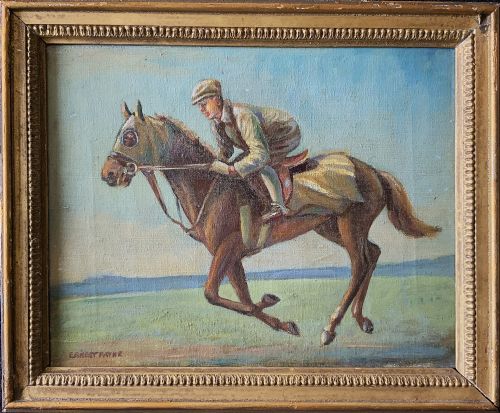
These vintage jockey wall art pieces capture the speed and history of the turf through paintings and prints.
Vintage Jockey Wall Art
Vintage jockey wall art comprises framed paintings, drawings and prints celebrating horse racing history. These works range from Georgian prints to mid-century pastels and gouache.
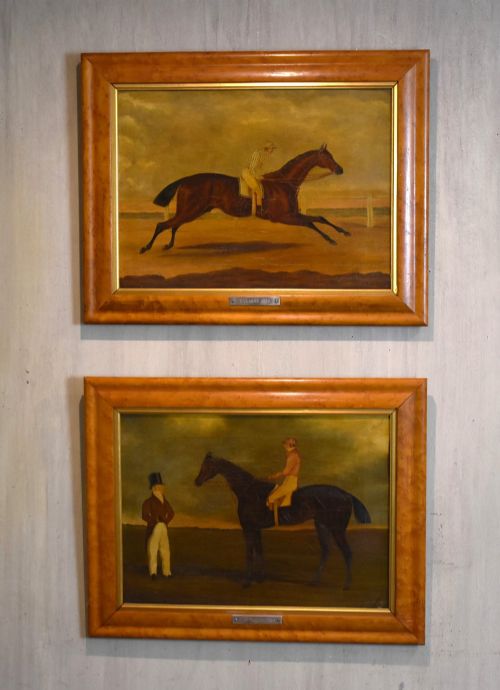
Oil paintings form a substantial part of the selection, depicting famous racehorses with named jockeys up. Framed antique prints and watercolours provide alternative ways to bring equestrian subjects into a room.
How they were made
Artists employed oil paint on canvas or panel to capture the gloss of horse coats and silks. Watercolours, pastel on coloured paper and gouache offered lighter mediums for detailed racing scenes.
Printmakers utilised paper to reproduce sporting works, often framing them behind glass for protection. Wooden frames house many of these pieces, complementing the traditional mediums.
Several pieces preserve the exact names of nineteenth-century sporting figures and their victorious mounts for posterity.
What varies in quality
Quality rests in the handling of movement and the accuracy of equine and human anatomy. Works by documented artists display superior control over light, atmosphere and the tension of a race.
The condition of the paper, canvas and original framing material influences desirability. Strong provenance, such as named mounts, winning horses and recorded riders, elevates individual pieces.
Ernest Payne·John Frederick Herring Snr·John Rattenbury Skeaping·Gabriel Dauchot·Alfred Wheeler·John Atkinson·Snaffles
The Vintage Jockey Wall Art Glossary
- Gouache
- An opaque water-based paint that dries to a matte finish, allowing for vibrant colour and sharp detail in works on paper.
- Pastel
- A dry medium of powdered pigment used to create rich, textured drawings often mounted under protective glass.
- Equestrian
- Pertaining to horses and horse riding, forming the central theme of sporting art.
- Lithograph or Print
- A method of reproducing images on paper, often hand-finished or published in limited editions during the Victorian and Edwardian eras.
Vintage Jockey Wall Art: Frequently Asked Questions
What periods do these pieces cover?
The selection spans from the Georgian era through the Victorian period and into the mid-twentieth century. Works reflect the evolving styles of sporting art across these centuries.
Earliest examples include mid-eighteenth-century prints, while later items feature mid-century French expressionism and twentieth-century watercolours.
Are the jockeys and horses usually identified?
Many oil paintings and prints name specific winning horses and their riders in the titles or inscriptions. Famous mounts like Persimmon and Diamond Jubilee appear alongside notable jockeys.
Unidentified subjects also feature, representing general racing scenes or traditional steeplechase events from the nineteenth century.
How should I hang framed pastels and watercolours?
Works on paper executed in pastel, gouache or watercolour require protection from direct sunlight to prevent fading. Framing behind glass shields these delicate mediums from atmospheric moisture and dust.
Display them on interior walls away from direct heat sources to preserve the paper and pigments.
What is the difference between an oil painting and a print?
Oil paintings are unique original works created with pigment suspended in oil on canvas or panel. They show distinct brushwork and texture unique to the artist's hand.
Prints are mechanically or manually reproduced images on paper, sometimes hand-tinted, produced in multiple copies after an original work.