




Vintage Japanese Porcelain Pair
These vintage japanese porcelain pair selections bring together matched vessels and plates finished in traditional glazes and enamel.
Vintage Japanese Porcelain Pair
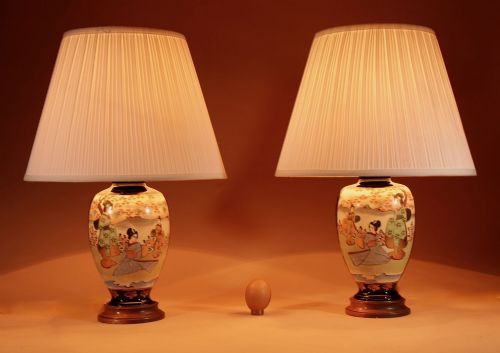
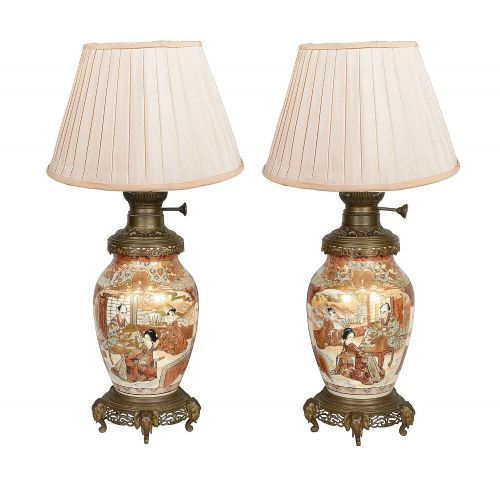
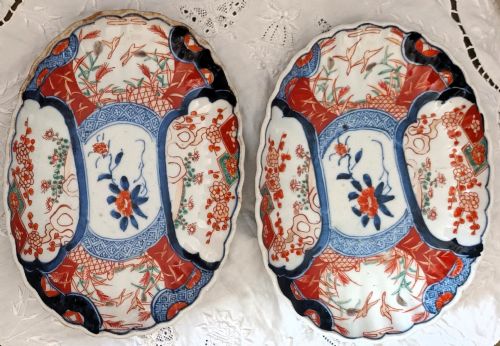
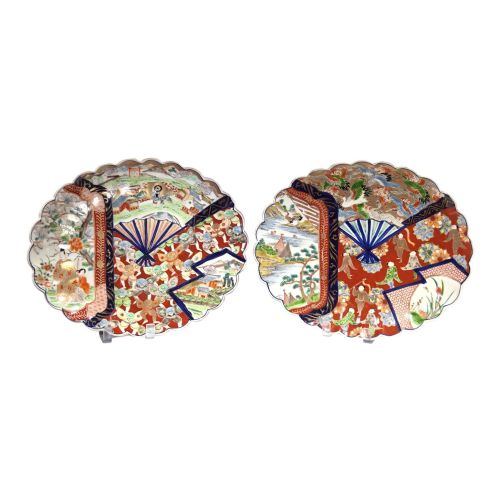
A vintage japanese porcelain pair consists of matched sets intended for display or utility, commonly found in forms such as chargers, vases, and table lamps. The selection draws primarily from nineteenth-century production alongside pieces from the eighteenth century up to the nineteen-thirties.
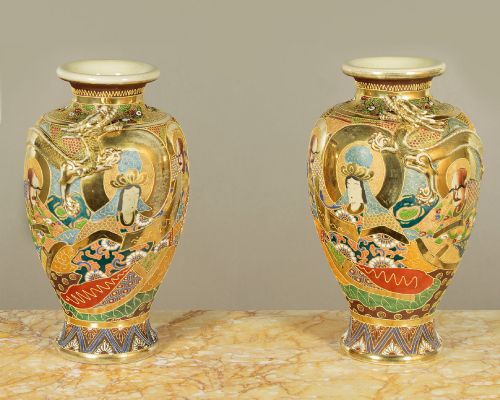
Buyers encounter styles spanning Imari, Satsuma, Kutani, and blue and white porcelain. These items originate from periods including the Edo, Meiji, and Showa eras, reflecting diverse regional kilns and decorative traditions.
Materials and manufacturing techniques
The objects are constructed from porcelain and earthenware bodies, shaped by hand or wheel in kilns across Japan. Artisans applied cobalt blue underglaze and polychrome enamel decoration directly to the ceramic surface.
Many examples incorporate gold leaf accents and detailed hand painting. Structural components like brass fitments appear on pieces adapted into table lamps.
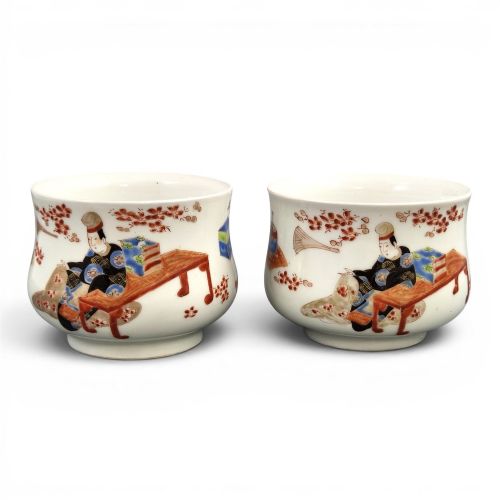
The selection includes functional tea cups alongside large decorative chargers, garden jardinieres, and converted table lamps.
Differences in quality across the range
Quality rests upon the precision of the hand-painted brushwork and the complexity of the enamel and gold leaf detailing. Pieces with crisp cobalt definition and balanced composition stand apart from simpler production items.
The preservation of the glaze and the harmony of the matched pair dictate desirability. Consistency in size, pattern alignment, and firing condition between both items determines the overall standing of the set.
Ginshōtei Gyokushi·Fuku Mark
The Vintage Japanese Porcelain Pair Glossary
- Imari
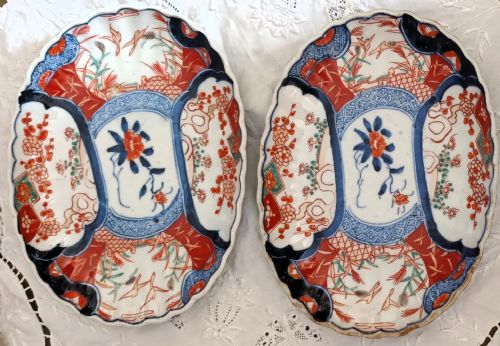
- A style of Japanese porcelain featuring a palette of cobalt blue, iron red, and gold. It was produced in Arita and exported widely to Europe.
- Satsuma
- A type of earthenware with a fine, ivory-coloured crackle glaze, often heavily decorated with enamel and gilt. Many pieces were made for export during the Meiji period.
- Kutani
- A style of Japanese porcelain and pottery recognised by vibrant colour schemes, frequently employing rich greens, reds, and golds. The tradition originated in Ishikawa Prefecture.
- Charger
- A large decorative plate intended for display on a wall or sideboard rather than for dining use. These items showcase the most ambitious painting in a kiln's output.
- Fuku mark
- A recurring cobalt blue character mark found on the base of Japanese ceramics, denoting prosperity or luck. It appears on quality Arita wares from the nineteenth century.
Vintage Japanese Porcelain Pair: Frequently Asked Questions
What is an Imari pair?
An Imari pair consists of two matched decorative vessels or plates sharing the characteristic blue, red, and gold palette associated with Arita kilns.
These items were produced for both domestic use and export, designed to sit symmetrically on mantelpieces or cabinets.
How do I date Satsuma ware?
Satsuma ware is dated by examining the crackle in the glaze, the weight of the earthenware body, and the complexity of the enamel work. Pieces from the Meiji period typically display dense, intricate gilding.
Later twentieth-century examples often show different potter marks and cleaner, whiter clay bodies beneath the glaze.
What is the difference between Kutani and Imari?
Kutani ceramics rely on an assertive palette dominated by greens, purples, and reds, often depicting pictorial scenes. Imari pieces are defined by the strict combination of underglaze cobalt blue and iron red.
Both styles originated in different regions and utilised distinct clay compositions and firing methods.