
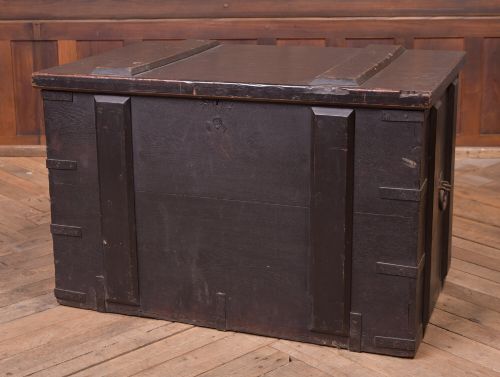
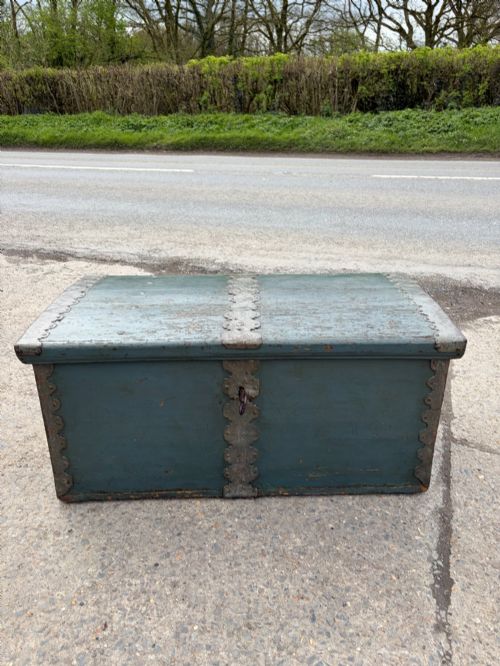


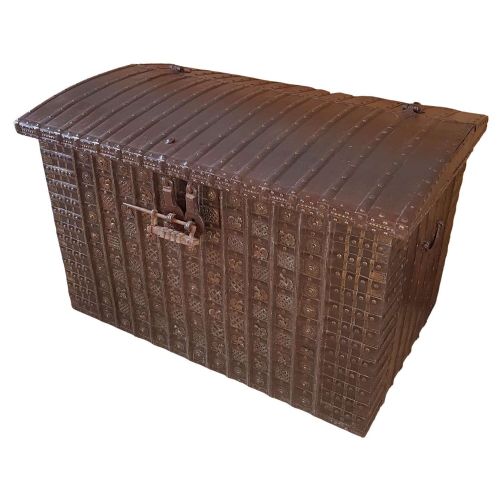


Vintage Iron Strapped Coffer
These heavy storage pieces, known as a vintage iron strapped coffer, offer robust utility and historic character for modern spaces.
Vintage Iron Strapped Coffer
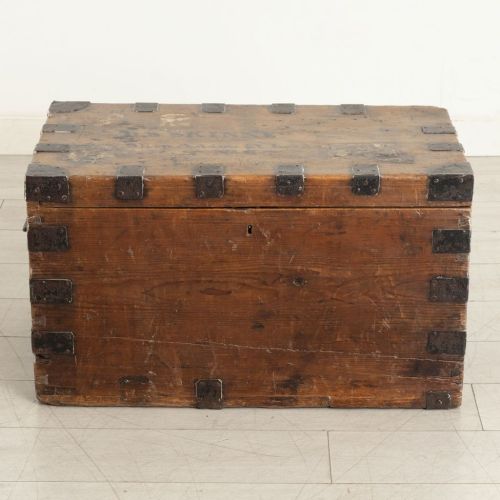
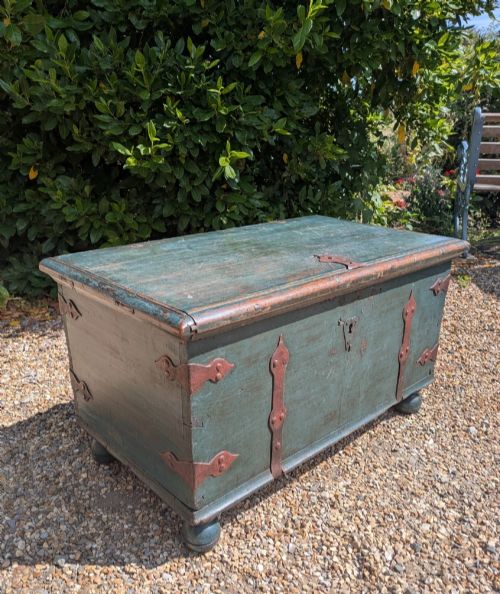
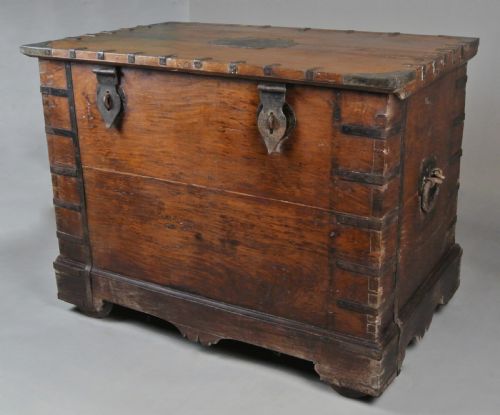
A vintage iron strapped coffer serves as a sturdy storage box reinforced with metal bands for travel or domestic use. These heavy receptacles appear in various regional forms, ranging from British pine and oak travel trunks to Scandinavian painted dome top chests and Indian dowry boxes.
Buyers browsing this selection will encounter numerous examples originating from the nineteenth century alongside earlier seventeenth and eighteenth-century specimens. Woods such as pine, teak, oak, and mahogany form the primary body, secured by hand-forged iron work and strapwork.
Forms span from dome top coffers and blanket boxes to specialised silver chests and marriage boxes. These utilitarian objects carried personal belongings, valuables, and domestic goods across distances before finding a permanent place in homes.
Assessing quality
The distinction between standard utility boxes and superior examples lies in the integrity of the original materials and surface preservation. Pieces retaining their initial paint finishes, hand-forged strapwork, and original working locks command greater interest from collectors.
Construction methods also dictate grade, with robust dovetail joints and heavy gauge iron bands separating master-built travel trunks from simpler provincial storage boxes. The presence of documented provenance or specialised fitted interiors further elevates the standing of an individual chest.
Some chests retain travel paperwork and commissary labels that whisper of long-forgotten sea voyages and colonial postings.
Sir Randolph Isham Routh KCB·Jessie Degan Cole
The Vintage Iron Strapped Coffer Glossary
- Cofer
- A large wooden chest used for storing valuables or clothing. These heavy receptacles typically feature reinforced lids and sturdy carrying handles.
- Strapwork
- Flat metal bands fixed across the exterior of a chest to reinforce the wooden structure. Blacksmiths hammered these iron strips by hand to add both strength and visual division.
- Dome top
- A rounded lid profile designed to shed water during travel. This curved construction also allowed for increased internal volume.
- Silver chest
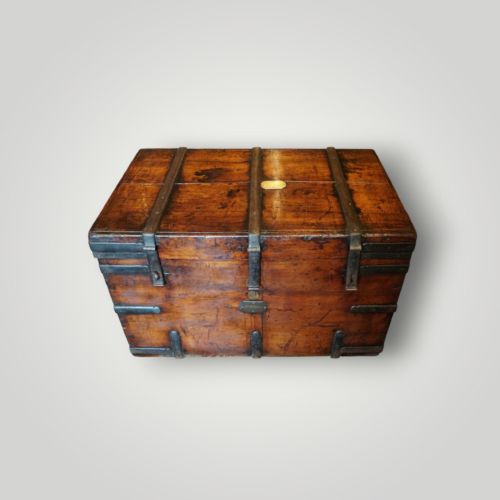
- A specialised reinforced box lined to protect table silver or plate. These heavy oak and iron trunks often include fitted internal trays.
- Damchiya
- A traditional Indian dowry chest featuring carved wooden panels and iron banding. These marriage pieces served to hold household textiles and valuables.
Vintage Iron Strapped Coffer: Frequently Asked Questions
What were iron strapped coffers used for?
These robust chests transported personal possessions, valuable silver, and household goods during travel by land or sea. In domestic settings, families used them to store blankets, linens, and dowry items securely.
The heavy iron straps and working locks protected contents from theft, moisture, and the rigours of transit. Over time, their function shifted from utilitarian travel gear to decorative home storage.
How do I date a vintage coffer?
Dating relies on examining the timber species, construction joints, and ironwork techniques used by the maker. Nineteenth-century examples often display machine-sawn elements alongside hand-forged straps, while earlier seventeenth-century pieces show entirely hand-riven boards.
Paint finishes, regional hardware styles, and any original labels or inscriptions provide further chronological clues. Comparing the form to documented regional furniture types helps narrow the decade of origin.
How do I care for an old pine chest?
Protect the wood and ironwork by keeping the chest away from direct heat sources and sudden humidity changes. Apply a gentle wax polish occasionally to nourish dry timbers without harming original painted surfaces.
Avoid harsh chemical cleaners on the metal straps to preserve their historic patina. Regular dusting with a soft, dry cloth keeps the surface clean.
Where should I place a heavy trunk at home?
These substantial pieces anchor large living spaces well when used as a coffee table or at the foot of a bed. Their flat or dome tops provide practical surface area alongside internal storage for bulky items.
Ensure the floor can support the combined weight of dense hardwoods like teak or oak paired with iron reinforcement. Positioning the chest away from damp exterior walls protects the timber over time.