
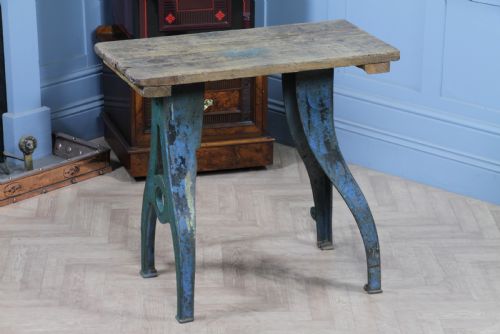


Vintage Iron Base Table
These vintage iron base tables bring industrial weight and utility into modern rooms, pairing durable metal supports with timber or stone tops.
Vintage Iron Base Table
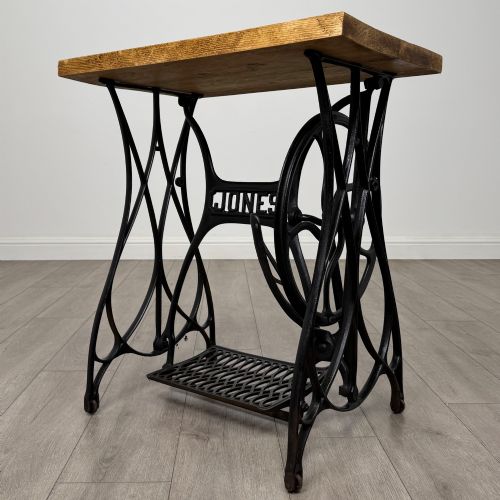
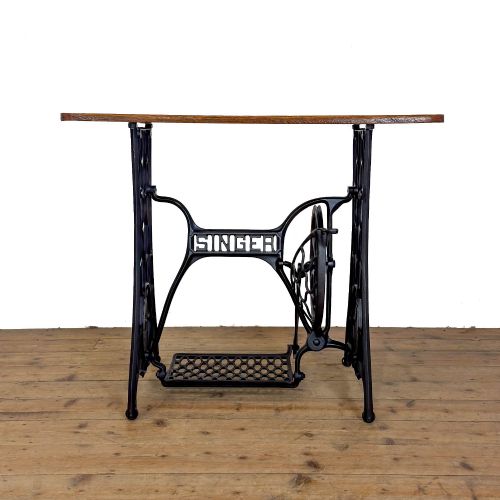
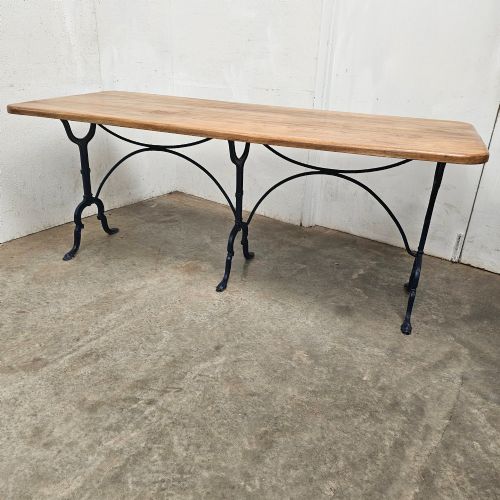
A vintage iron base table combines a heavy metal foundation with a wooden, marble, or glass surface to create a durable piece of functional furniture. These items draw on designs from the Victorian, Edwardian, and Art Deco periods, ranging from pub and bistro tables to work tables and sewing machine conversions.
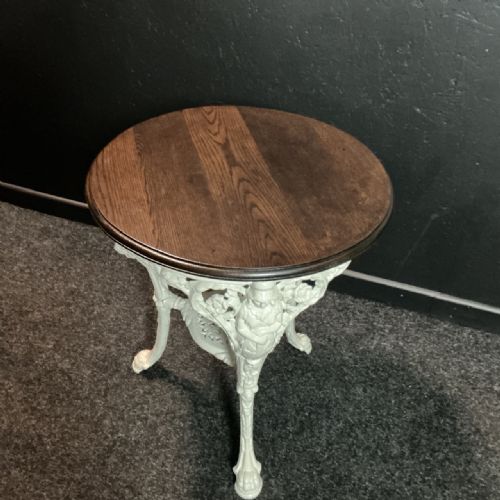
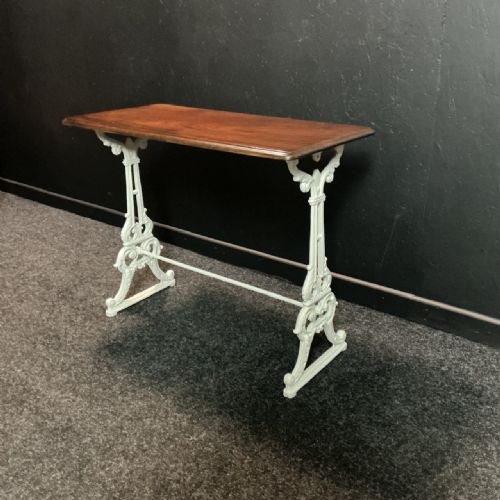
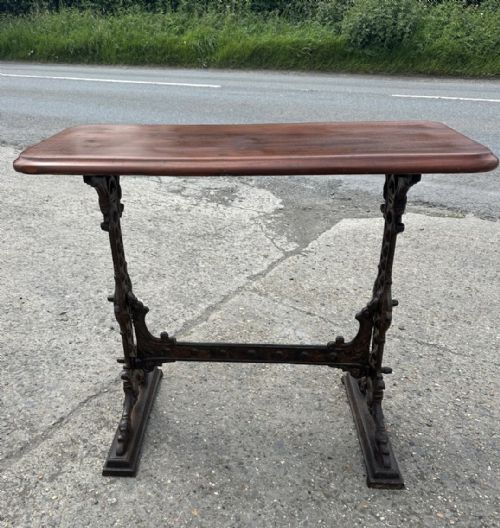
The most frequent examples found here pair cast iron or wrought iron supports with mahogany, oak, or pine tops. Originating from utilitarian settings such as taverns, factories, and gardens, they often feature adjustable mechanisms or robust tripod legs intended for daily labour.
Industrial and Victorian styles dominate the selection, showing how structural ironwork was adapted for domestic dining, coffee, and console use. Pieces span the nineteenth and early twentieth centuries, reflecting changing manufacturing capabilities from standard foundry castings to decorative forged work.
How they were made
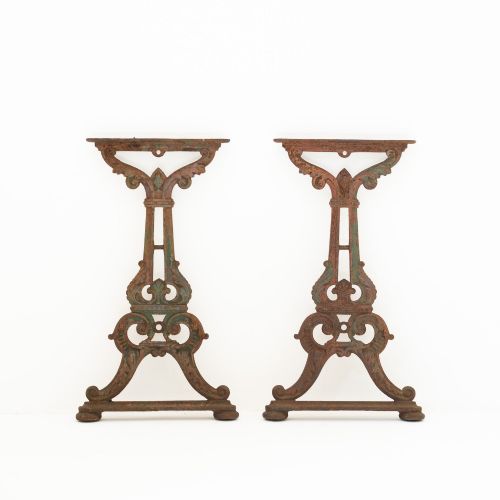
Foundries produced the heavy metal supports using cast iron or wrought iron, pouring molten metal into sand moulds or shaping it manually at the forge. This created rigid, load-bearing frames capable of supporting substantial timber or stone surfaces without warping.
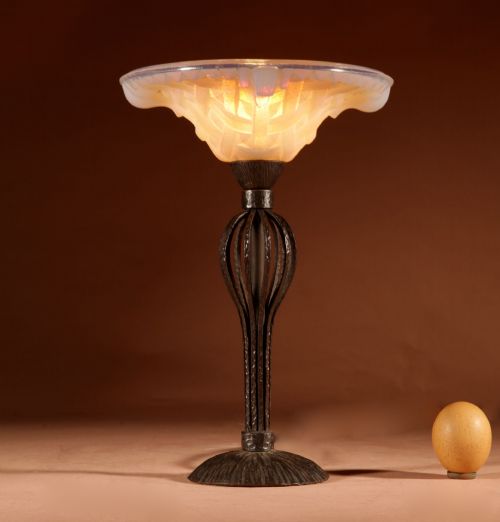
Tops were fashioned from dense hardwoods such as oak and mahogany, or softer pine and elm, secured directly to the metal frame via screws or brackets. In French provincial and Art Deco examples, black or green marble slabs and opalescent glass were integrated directly into the iron structure.
Footrests on pub tables often show polished wear from generations of tavern patrons kicking their heels.
What varies in quality
The distinction between standard utility items and finer examples rests on the crispness of the iron casting and the integrity of the original top. Tables retaining their factory markings or maker details demonstrate a higher grade of nineteenth-century industrial production.
Proportion and material pairing dictate the overall success of the piece, particularly where repurposed machine bases meet reclaimed timber. Original matching components carry more weight than later marriages of disparate tops and bases.
Carters of London·Singer
The Vintage Iron Base Table Glossary
- Cast iron
- A hard, brittle iron alloy poured into moulds to create intricate bases and decorative frames. It defined Victorian pub and garden furniture through its heavy weight and durability.
- Wrought iron
- Tough, malleable iron beaten and shaped by hand into decorative scrolls and structural supports. It appears frequently in Art Deco and French provincial table designs.
- Mahogany
- A durable, reddish-brown tropical hardwood prized for table tops. It provides a stable, polished surface that contrasts against industrial metal bases.
- Trestle
- A structural support system consisting of horizontal beams connected to vertical legs. This form allowed sturdy work tables to carry heavy loads in nineteenth-century workshops.
- Gimbal
- A pivoted ring ring suspension system that keeps objects level regardless of movement. It appears on marine and naval lamps from the early twentieth century.
Vintage Iron Base Table: Frequently Asked Questions
What are vintage iron base tables?
These are durable items of furniture that pair heavy cast or wrought iron supports with timber, marble, or glass surfaces. They originate from various nineteenth and early twentieth-century settings, including pubs, workshops, and gardens.
Over time, many industrial and utilitarian bases have been paired with reclaimed or original wooden tops. They function today as robust dining, coffee, and side tables in contemporary interiors.
How were they used originally?
Many of these pieces served practical roles in commercial and industrial environments, functioning as tavern pub tables, draper display stands, and factory work benches. Their heavy iron frames prevented tipping during heavy daily use.
Others were designed for domestic conservatories, gardens, or sewing tasks. The robust construction allowed them to withstand constant movement and heavy loads.
How do I live with one?
Their heavy iron construction makes them exceptionally stable, though you should protect sensitive floors with felt pads under the feet. Balance the industrial weight of the metal base by pairing the table with softer textiles or upholstered seating.
Maintenance involves keeping the iron clean and treating wooden or marble tops according to their specific material needs. Avoid placing unsealed timbers in damp environments to prevent movement in the grain.
How can I tell the periods apart?
Victorian examples often feature ornate cast iron legs with floral motifs, lion paws, or manufacturer stamps associated with pub and garden furniture. They frequently use solid mahogany or pine tops shaped for heavy use.
Early twentieth-century and Art Deco pieces lean towards geometric lines, simpler industrial forms, or French provincial styling. These later designs sometimes incorporate marble or specialised glass alongside black enamelled iron.