
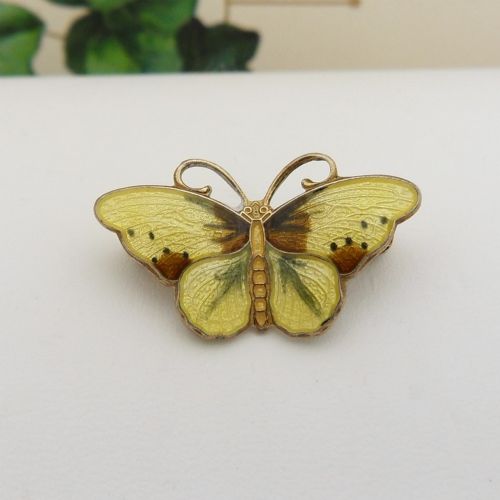


Vintage Insect Lapel Pin
A vintage insect lapel pin brings a touch of natural history to a lapel, offering delicate craftsmanship in silver, enamel, and stone.
Vintage Insect Lapel Pin
When searching for a vintage insect lapel pin, buyers encounter an array of brooches, hatpins, and smaller dress pins shaped as butterflies, dragonflies, frogs, and scorpions. These pieces span from the Victorian and Edwardian eras through the Art Nouveau and Art Deco periods, extending into mid-century Scandinavian and Chinese export work.
Butterflies and dragonflies dominate the available forms, often rendered in sterling silver with colourful enamel or iridescent butterfly wing panels. Collectors will also find rarer specimens incorporating moonstones, marcasite, and diamonds, reflecting changing aesthetic tastes across the decades.
Materials and construction
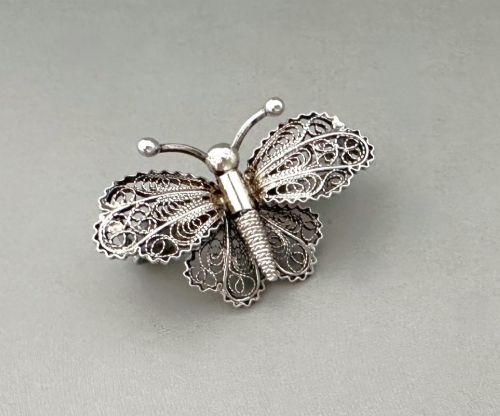
Silver forms the backbone of these pieces, appearing as plain sterling, gilt finishes, or intricate filigree wirework. Craftsmen combined these metal foundations with fired vitreous enamel, guilloche patterns, and polished gemstones such as marcasite and moonstone.
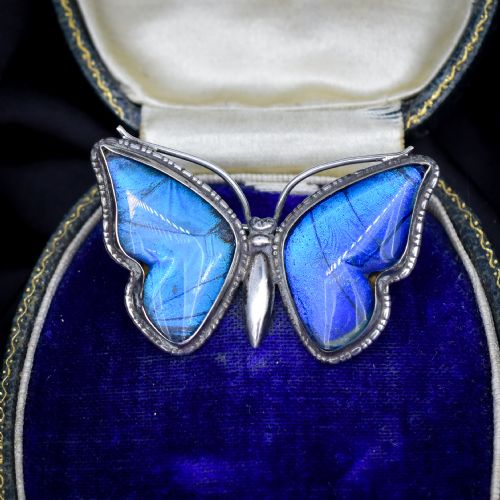
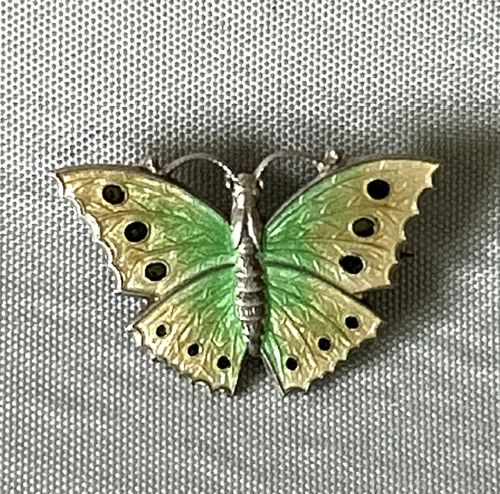
Specialised techniques include the setting of natural butterfly wings beneath bevelled glass panels, a method popular in early twentieth-century souvenir and decorative jewellery. Enamelling requires precise firing to achieve smooth transitions of colour across delicate insect wings and bodies.
Listings feature items from seven distinct periods, ranging from the Victorian era through Art Nouveau, Art Deco, and mid-century Scandinavian design.
Judging quality in insect jewellery
Quality rests primarily on the crispness of the metalwork and the preservation of fragile decorative elements like enamel and wing panels. Finer examples display meticulous hand-applied filigree or clean guilloche engraving that catches the light evenly.
The sophistication of the design execution separates standard production from superior work. Makers who achieved naturalistic proportions and secure stone settings produced pieces that retain their visual appeal decades later.
Hroar Prydz·Rene Lalique
The Vintage Insect Lapel Pin Glossary
- Filigree
- Delicate ornamental work made of fine silver wire twisted and soldered together to form openwork patterns. It creates a lightweight, lace-like structure on insect wings.
- Guilloche
- A decorative engraving technique in which a precise, intricate pattern is mechanically cut into a metal surface under translucent enamel. This adds depth and shimmering texture.
- Marcasite
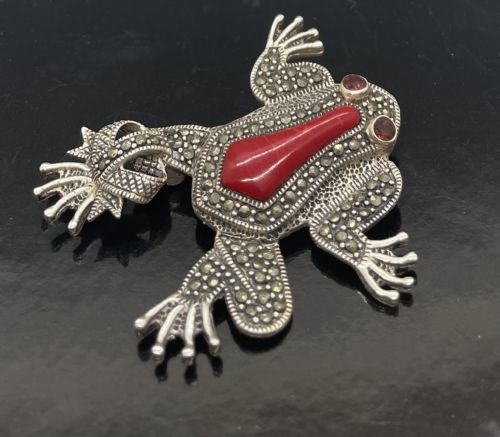
- Small, faceted pyrite stones cut and set closely together into silver mounts to resemble sparkling diamonds. They provide dark metallic glitter around the insect bodies.
- Butterfly wing
- Iridescent wing scales preserved under glass panels, displaying brilliant natural blue and green hues. Popular in early twentieth-century decorative pieces.
- Sterling silver
- An alloy consisting of silver and other metals, usually copper, to add strength while maintaining a high purity standard. It serves as the primary structural metal for these pins.
Vintage Insect Lapel Pin: Frequently Asked Questions
How do I wear a vintage insect pin?
These pieces function well on lapels, collars, scarves, and hats, adding a distinctive decorative accent to everyday and formal attire.
Secure fastening requires checking the pin stem and catch to ensure the piece remains safely anchored on heavier fabrics.
Are butterfly wing pins fragile?
The natural wing material is sealed beneath protective glass, but moisture and harsh chemicals can still damage the delicate organic components over time.
Careful handling and storage away from direct sunlight help preserve the vibrant colours within the glass panels.
What periods are represented?
The selection spans from the Victorian and Edwardian eras through the Art Nouveau, Art Deco, and mid-century movements.
Each era brought distinct materials, from heavy sterling silver and moonstones to bright Scandinavian enamels and Chinese filigree.