
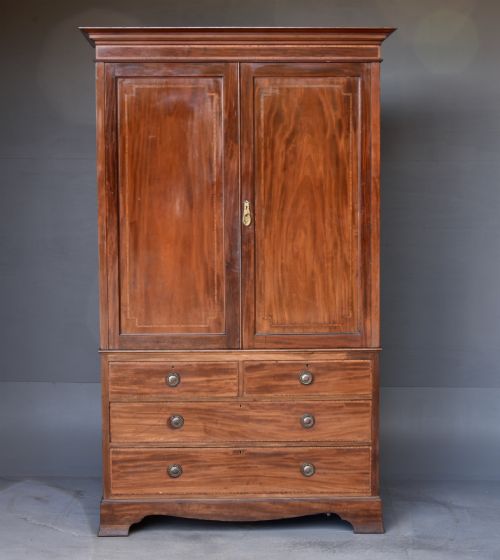
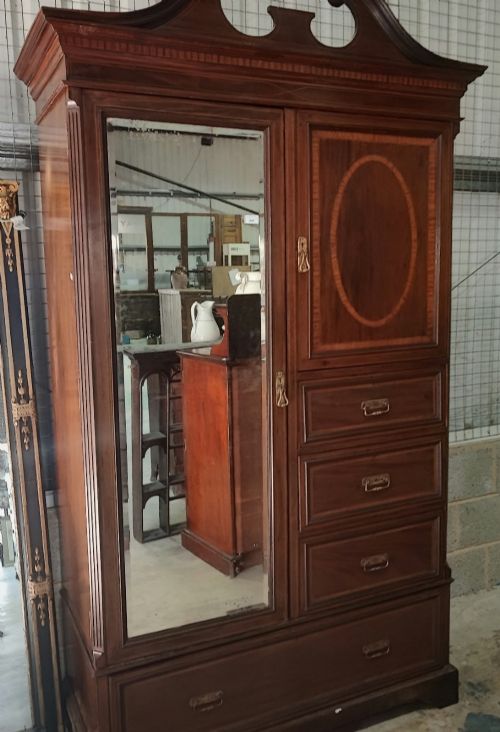
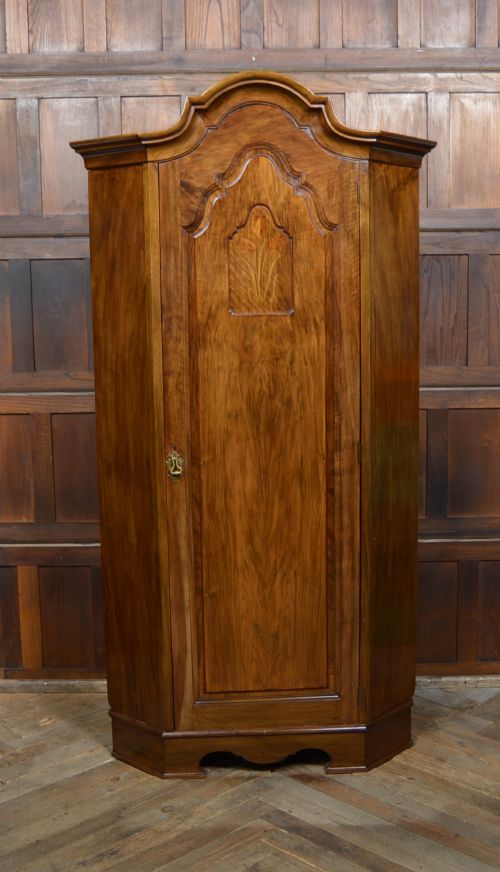
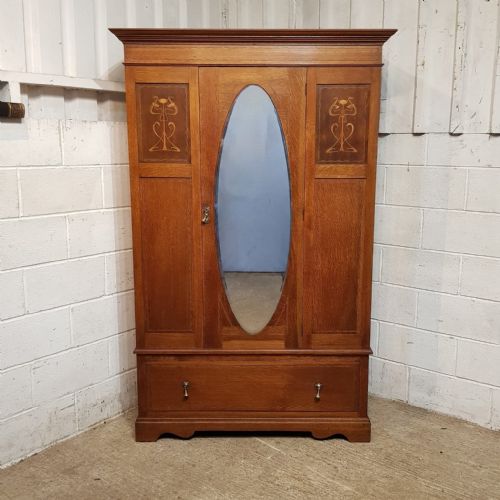
Vintage Inlaid Wardrobe
A vintage inlaid wardrobe brings architectural presence to a bedroom, combining generous storage with the subtle geometry of contrasting timbers.
Vintage Inlaid Wardrobe
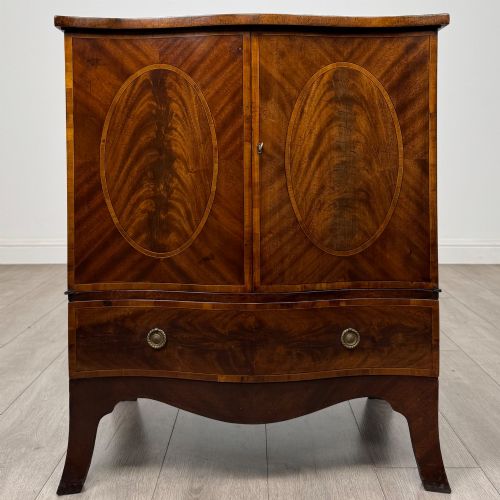
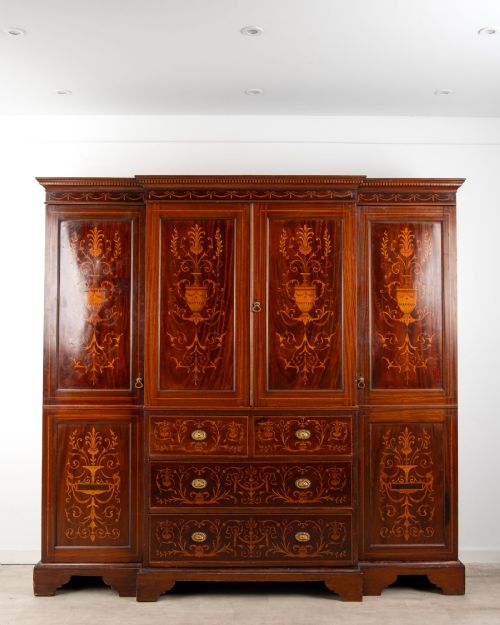
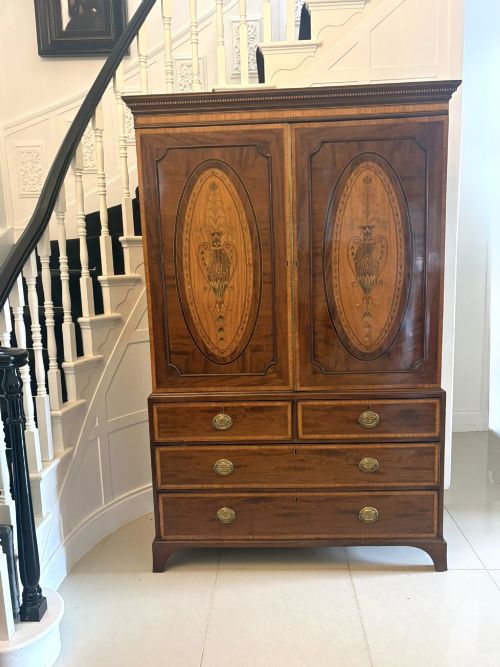
A vintage inlaid wardrobe encompasses substantial bedroom furniture designed for hanging and folding clothes, frequently appearing here in Edwardian and Georgian iterations. Buyers seeking this phrase encounter grand mahogany and satinwood armoires, compactums, and linen presses featuring intricate decorative banding.
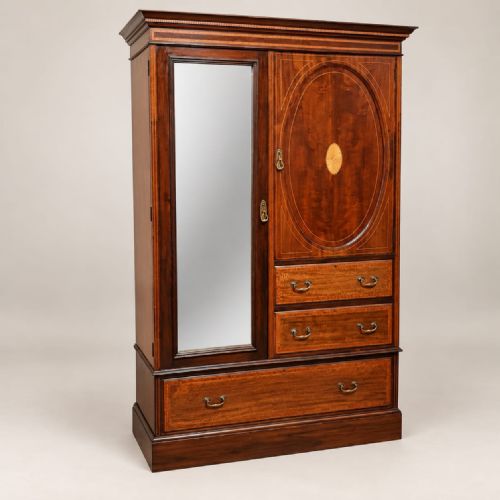
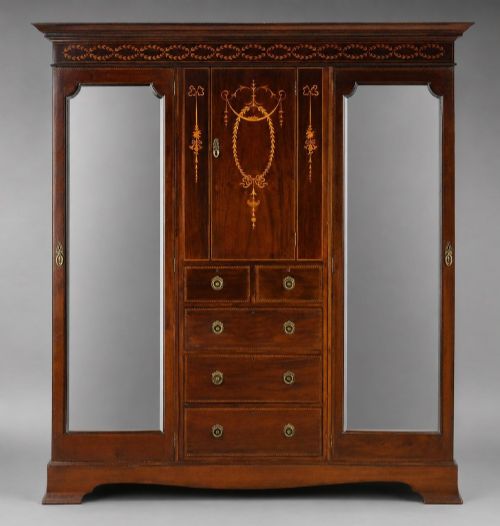
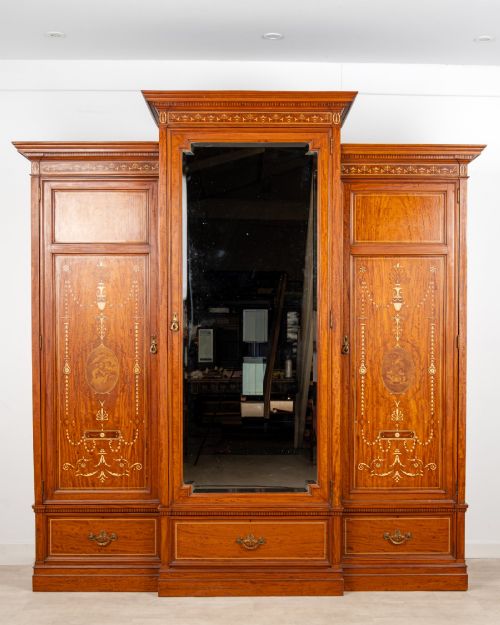
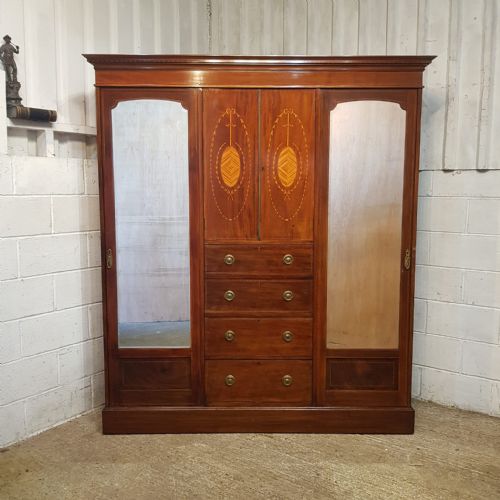
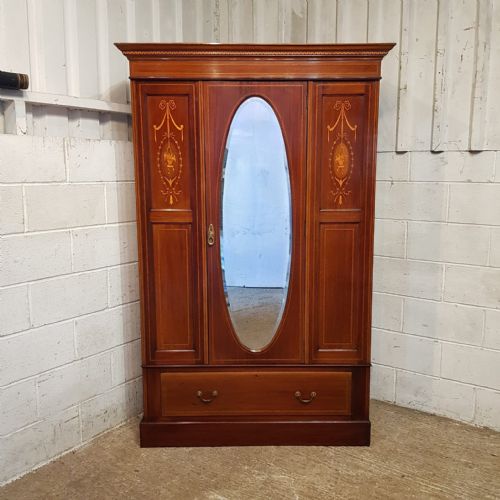
The most common form on this page is the Edwardian mahogany wardrobe, often enhanced with satinwood and boxwood inlay alongside mirrored doors. These pieces reflect a transition from the heavier proportions of the nineteenth century into lighter, more refined bedroom suites.
How they were made
Cabinet makers constructed these wardrobes using a foundation of solid mahogany, oak, or walnut, frequently faced with figured veneers such as flame mahogany or satinwood. The structural integrity relied on traditional joinery techniques, ensuring large panels remained stable over centuries.
Inlay and stringing utilised contrasting pale timbers like boxwood, meticulously hand-cut and fitted into precision channels carved directly into the primary wood. Finishing involved polishing to accentuate the natural grain patterns and protect the delicate wood marquetry.
Several gentlemen's wardrobes still harbour discreet coat hooks and tie rails designed for Edwardian morning dress.
What varies in quality
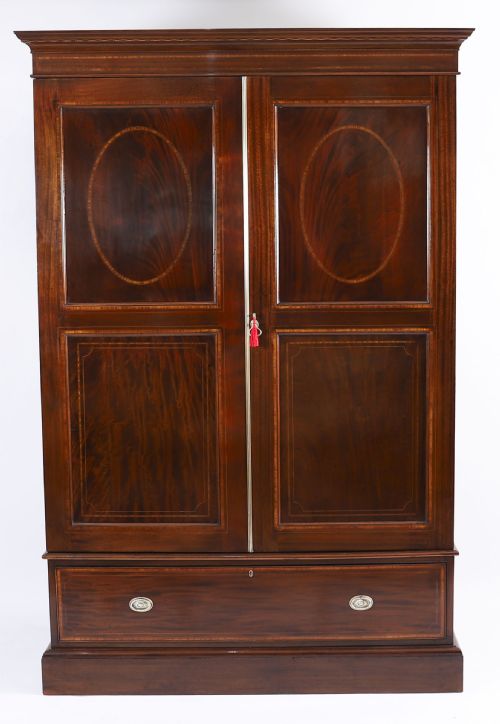
The distinction between ordinary and exceptional examples rests upon the depth of timber selection and the precision of the marquetry work. Finer wardrobes display matched flame mahogany veneers and intricate, crisp boxwood inlays that remain perfectly flush with the surrounding surface.
Structural complexity also defines the upper tier of the range, evidenced by breakfront cornices, panelled interiors with original sliding trays, and integrated brass hardware. Lesser examples rely on simpler carcasses and painted rather than inlaid decorative motifs.
maples & co·Edwards and Roberts·Druce & Co.·Waring & Gillow·B Cohen & Sons
The Vintage Inlaid Wardrobe Glossary
- Compactum
- A multi-section wardrobe combining hanging space, linen drawers, and shelving within a single unified carcass. This configuration maximises storage efficiency in large bedrooms.
- Linen Press
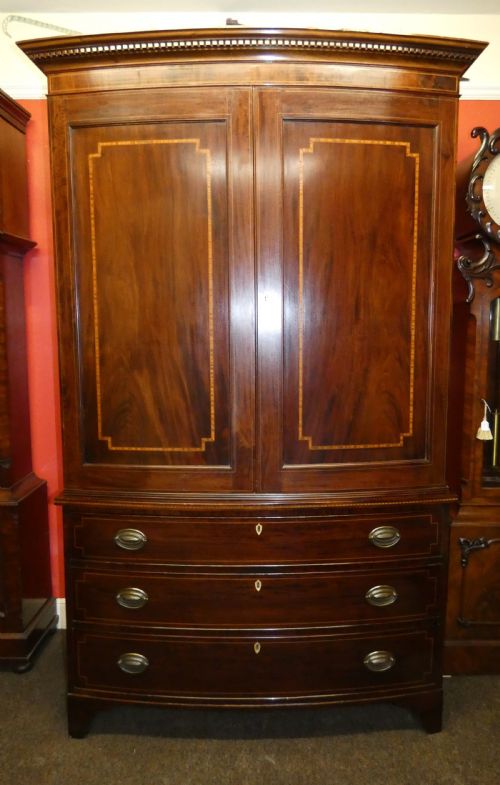
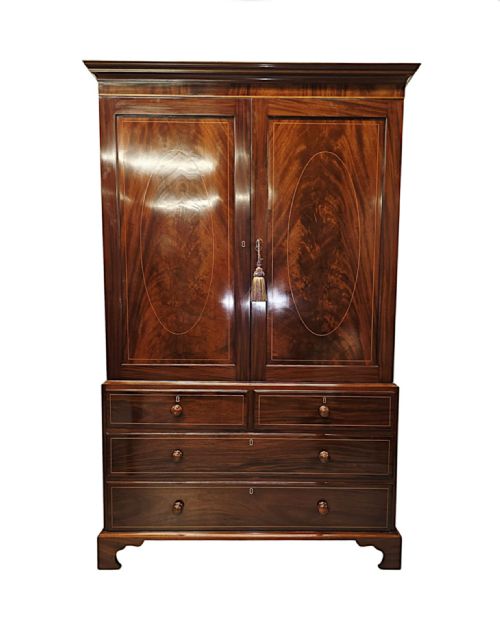
- A tall cabinet featuring upper doors enclosing sliding shelves for folded textiles, placed above a base chest of drawers. They are often constructed in mahogany with boxwood inlay.
- Inlay
- A decorative technique where pieces of contrasting wood are inserted into depressed areas of a base panel to form patterns. Boxwood and satinwood are frequently utilised for this purpose.
- Marquetry
- Elaborate veneer work assembled to form pictorial or geometric designs across large cabinet surfaces. It requires considerable skill from the artisan.
- Stringing
- Thin lines of contrasting timber inlaid around the borders of drawer fronts and panel edges. This linear detail defines the proportions of Edwardian and Georgian case pieces.
Vintage Inlaid Wardrobe: Frequently Asked Questions
How do I fit a large wardrobe in a modern bedroom?
Many larger examples, particularly compactums and triple wardrobes, were designed to dismantle into modular sections for ease of transport and assembly. Checking the construction reveals whether the cornice, base, and flanking wings separate.
Measuring ceiling height and clearance for opening doors ensures the proportions complement the room without overwhelming the floor space.
How do I care for polished mahogany and satinwood?
Maintaining the finish requires regular dusting with a soft, dry cloth and avoiding placement near direct heat sources or strong sunlight. These precautions prevent the timber from drying out and safeguard delicate veneers.
Occasional application of traditional beeswax nourishes the grain and preserves the warm lustre without building up synthetic residues.
Can I distinguish an Edwardian reproduction from a Georgian original?
Examining the secondary timbers used inside drawer linings and back panels offers clear clues to the period of manufacture. Oak and pine appear frequently in older pieces, whilst later Edwardian carcasses often incorporate modern plywood or deal.
Hardware fixings, screw types, and the crispness of the boxwood inlay further distinguish the Edwardian revival period from eighteenth-century craftsmanship.