
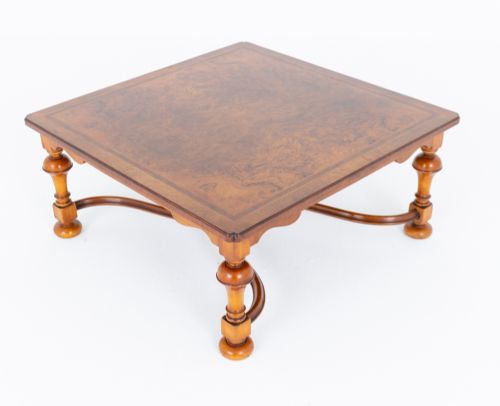
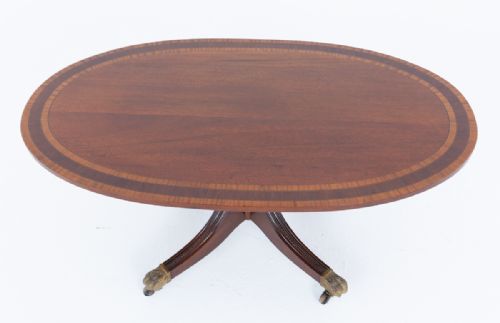

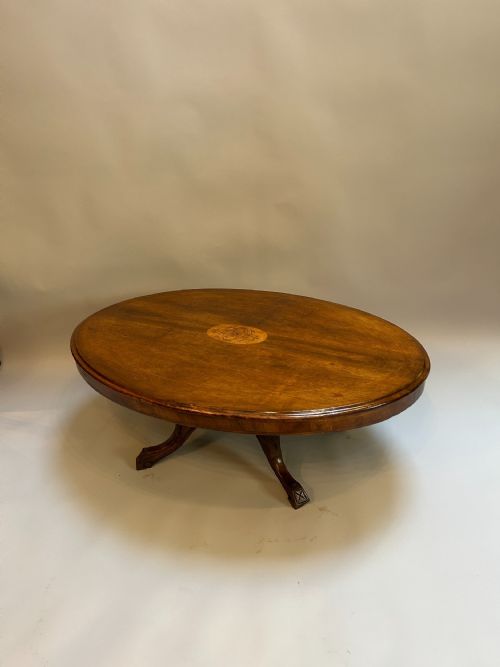
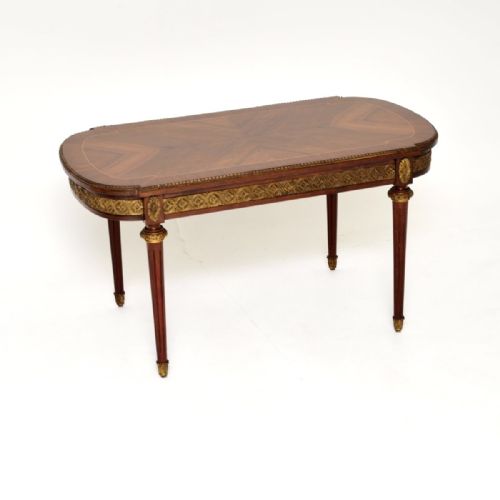


Vintage Inlaid Low Table
These vintage inlaid low table examples bring low surfaces into sitting spaces with rich timber veneers and decorative marquetry.
Vintage Inlaid Low Table
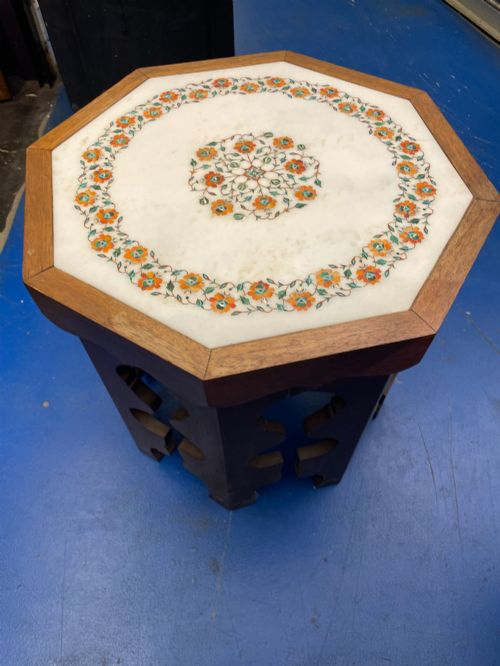
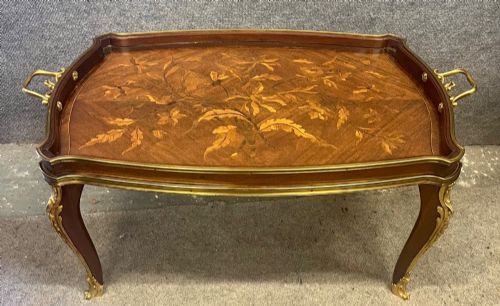
A vintage inlaid low table brings low surface utility into sitting rooms through compact forms designed for coffee or lamps. You will encounter coffee tables, occasional tables, and side tables spanning periods from the nineteenth century through the 1930s. The selection includes French tray top designs, Italian Sorrento specimens, and Anglo-Indian variants alongside revival styles.
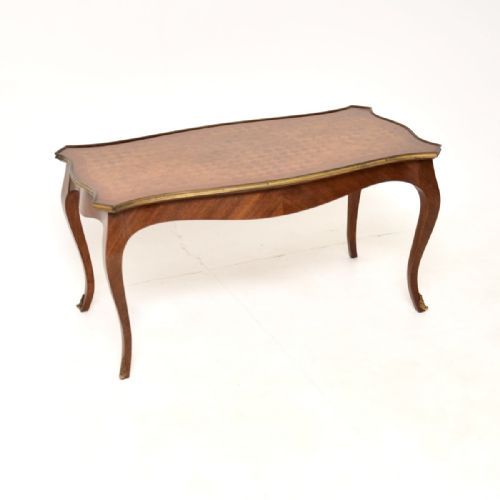
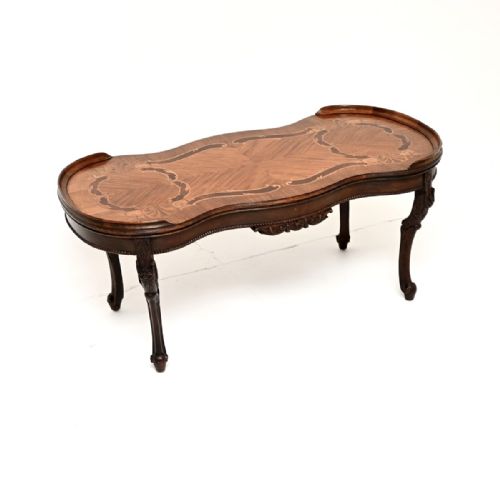
Makers and workshops produced these pieces in walnut, burr walnut, mahogany, and rosewood, incorporating parquetry, marquetry, and brass mounts. Many examples reflect French Louis XV revival tastes or Art Deco aesthetics, offering distinct surface ornamentation. Buyers find both round and oval shapes suited to domestic placement before modern upholstery.
How they were made
Cabinetmakers constructed these tables using timber frames faced with veneer, applying walnut, burr walnut, kingwood, fruitwood, and mahogany. Surfaces frequently display parquetry or marquetry patterns formed from contrasting timber pieces laid in geometric or pictorial arrangements. Ormolu mounts, brass details, and marble tops provide structural accents and heavy decorative contrast to the timber carcasses.
Techniques relied on hand-cut wood veneers glued to solid timber bases, finished with polished surfaces that highlight grain variations. Ebonised finishes and specialised inlay work, such as Sorrento or Indian decorative traditions, required precise hand assembly. Structural integrity depended on jointing methods appropriate to occasional and coffee table forms.
Some tables arrive with miniature galleries designed to stop your afternoon tea cups sliding off during lively salon debates.
What varies in quality
Quality rests in the precision of the veneer work and the complexity of the parquetry or marquetry patterns across the top. Finer examples display harmonious timber selection, such as burr walnut or kingwood, paired with refined ormolu mounts and stable underlying timber construction. Lesser pieces show simpler surface decoration and standard timber framing without specialised decorative borders.
The integration of materials like marble tops or detailed brass work elevates the execution of the piece. Craftsmanship appears in the flush fit of the inlay and the depth of the polished finish, distinguishing standard commercial production from elevated cabinetmaking.
Majorelle
The Vintage Inlaid Low Table Glossary
- Marquetry
- Decorative veneer work forming pictures or designs using small pieces of wood. This technique creates detailed pictorial surfaces on table tops.
- Parquetry
- Geometric wood inlay forming repeating patterns such as cubes or chequers. It provides a structured decorative scheme across the surface.
- Ormolu
- Gilt bronze mounts applied for architectural and decorative embellishment. These metal fittings accent the corners and edges of the wooden structure.
- Sorrento work
- Inlaid woodwork originating from an Italian coastal town known for micro-mosaic and pictorial wooden panels. Such tops feature intricate floral or architectural scenes.
- Tray top
- A surface with raised edges designed to contain objects safely. This feature appears on French occasional and coffee tables.
Vintage Inlaid Low Table: Frequently Asked Questions
What is a vintage inlaid low table used for?
These tables function as central coffee surfaces or lamp tables in living spaces, holding everyday items close to seating. Their low height accommodates traditional and contemporary room layouts.
Historically, many started life as taller occasional tables or were adapted to suit modern lounging habits, retaining their decorative surfaces for display.
How do I identify Art Deco examples?
Art Deco pieces from the 1930s tend to display streamlined silhouettes, exotic veneers like rosewood, and minimal ornamentation compared to earlier revival styles. Their geometry focuses on clean lines rather than elaborate floral marquetry.
Signatures or stamps from workshops occasionally verify this period, distinguishing them from nineteenth-century productions.
Are marble-topped tables heavy?
Yes, inset marble slabs add significant weight to the overall structure, requiring care when moving the furniture. The stone provides a cool, durable surface resistant to liquid rings.
Frames supporting marble must be robust to bear the load, often incorporating solid timber or reinforced aprons.
What is the difference between marquetry and parquetry?
Marquetry employs varied wood veneers to create pictorial scenes, florals, or figurative designs across the table top. It prioritises organic and artistic composition.
Parquetry sticks strictly to geometric tiling, creating repeating patterns like cubes or bricks using contrasting timber species.