
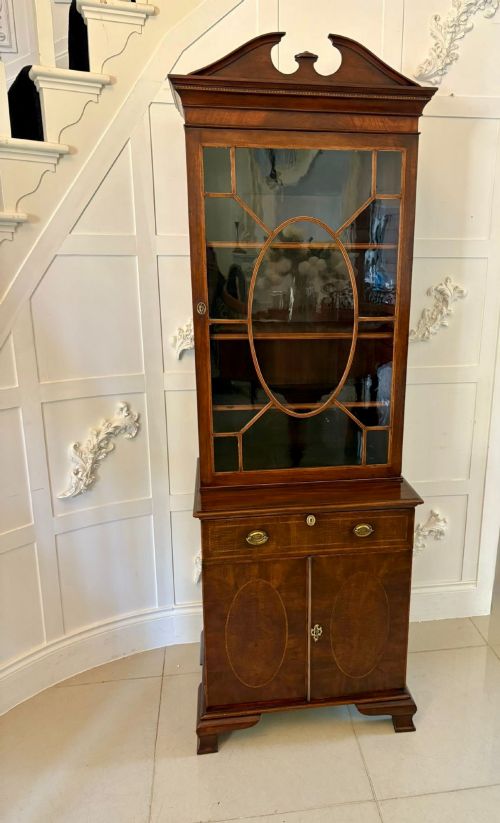

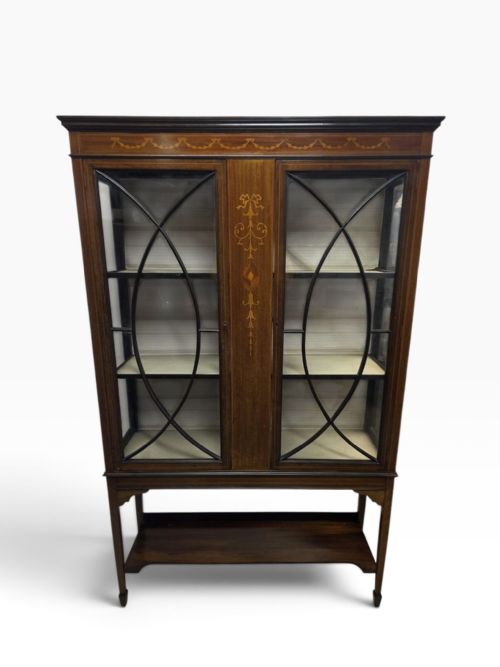
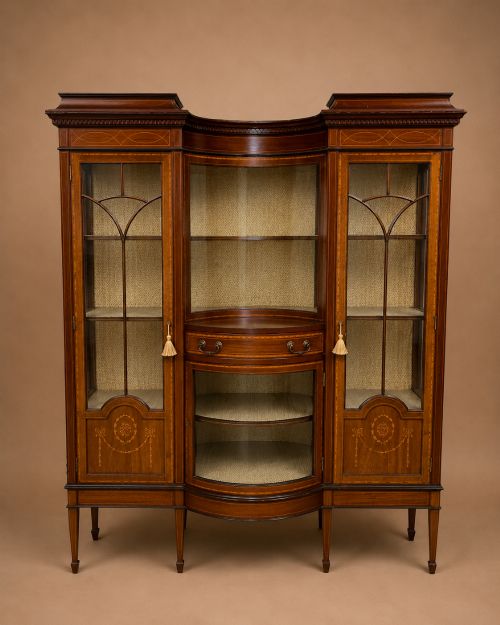
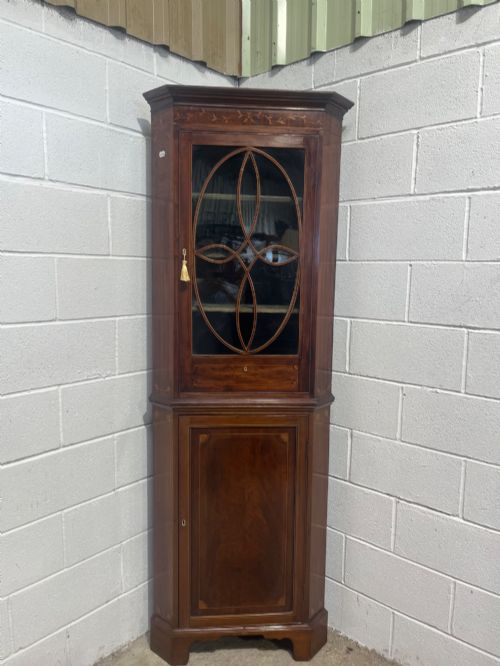
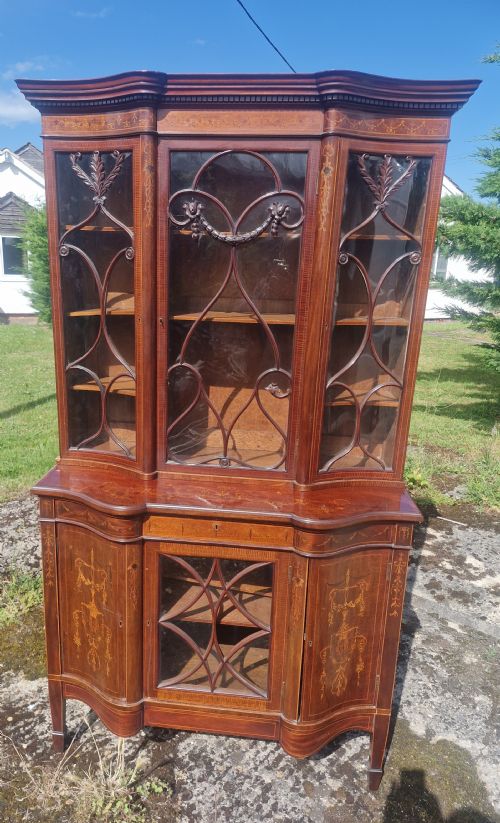
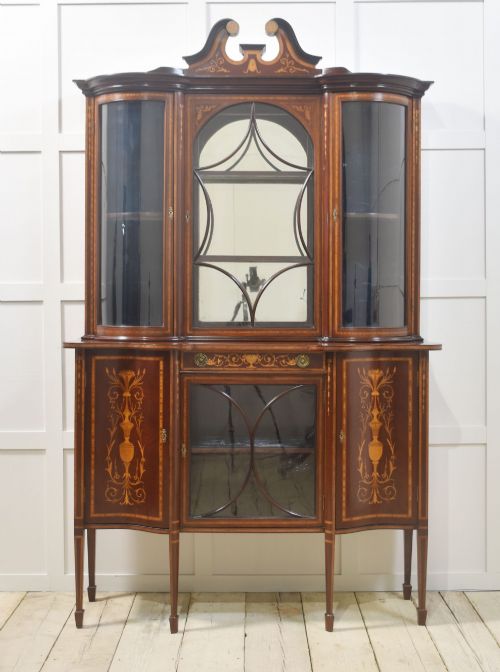
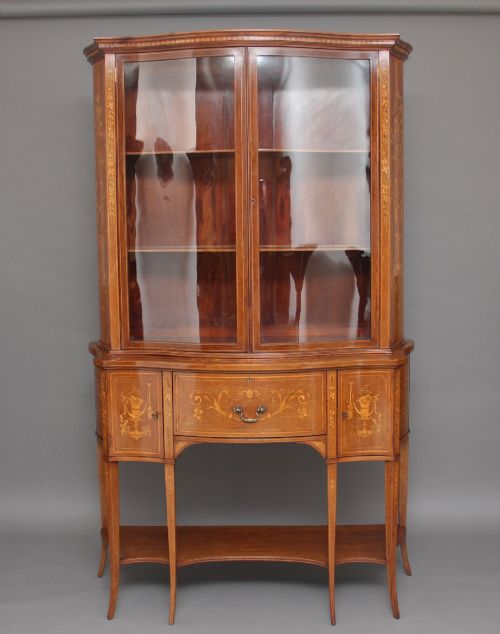
Vintage Inlaid China Cabinet
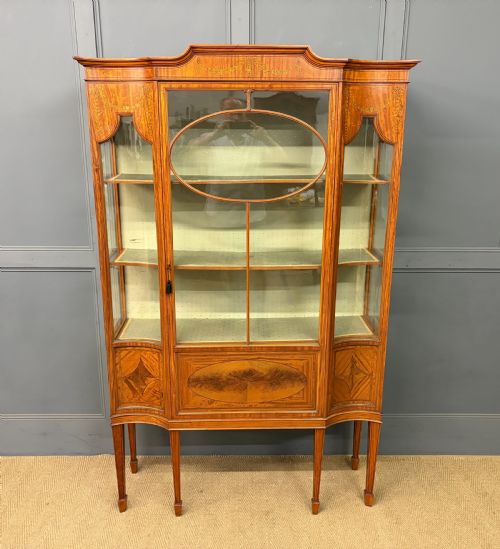
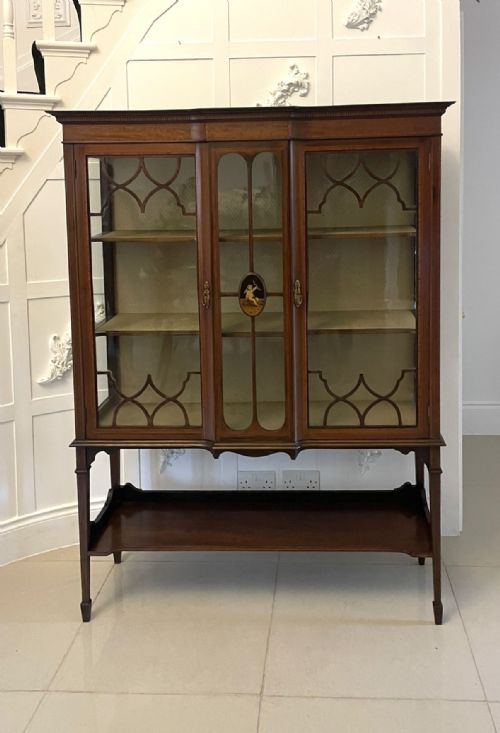
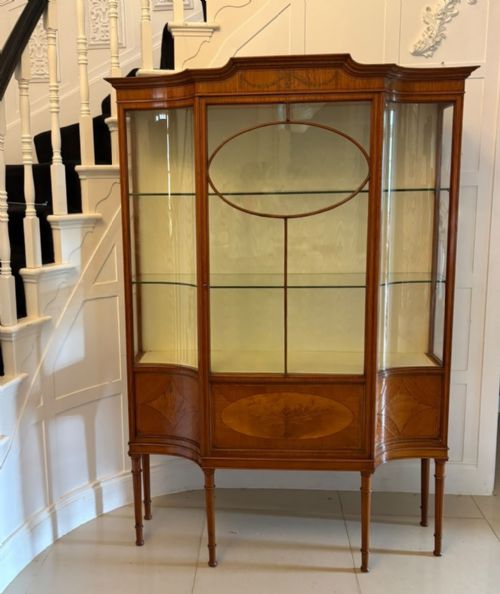
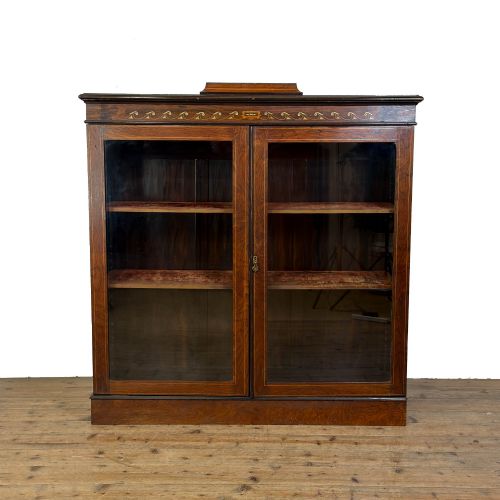
A vintage inlaid china cabinet brings glass, mahogany and satinwood together to show porcelain in the drawing room.
Vintage Inlaid China Cabinet
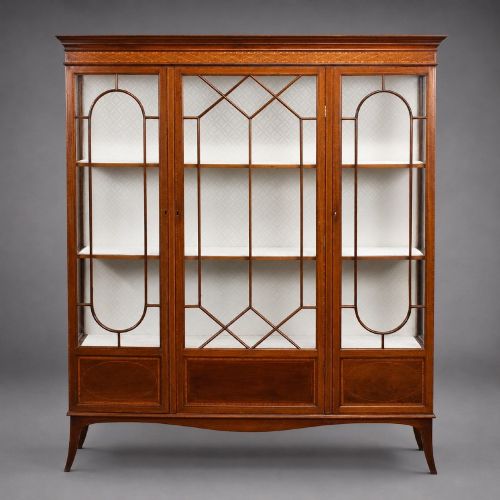
A vintage inlaid china cabinet is primarily found from the Edwardian period, drawing heavily on Sheraton Revival and Hepplewhite Revival styles. These pieces function as display cabinets, vitrines and bookcases, designed to hold ceramics and books behind glazed doors.
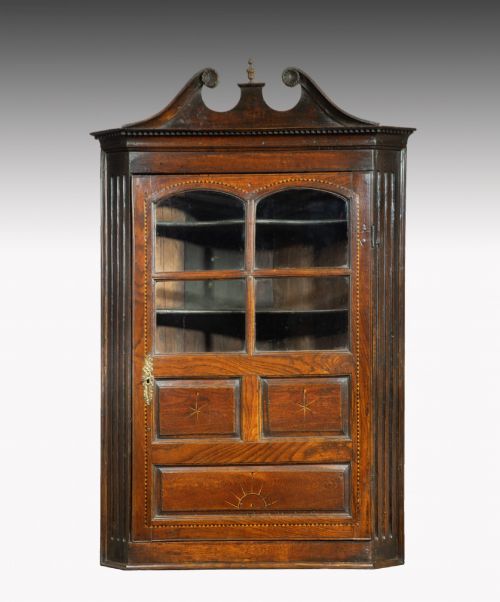
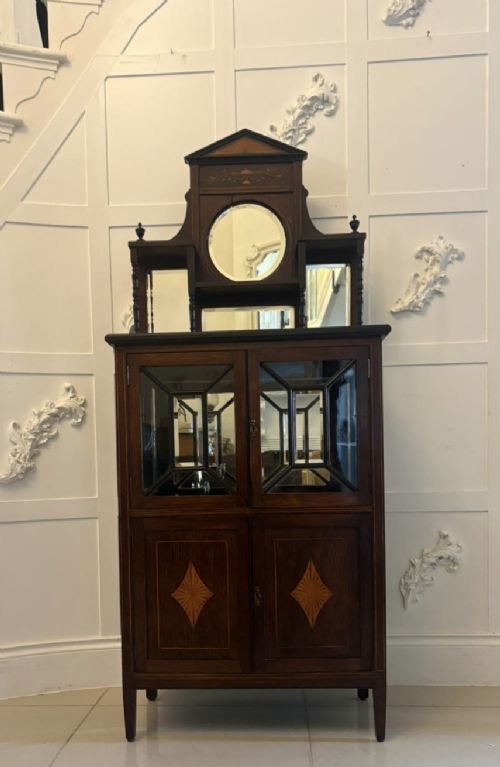
You will most commonly meet Edwardian mahogany cabinets featuring satinwood inlay, glass panels and mirror backs. Corner cupboards and floor-standing display pieces make up a large portion of the forms available on the market.
Earlier examples stretch back through the nineteenth century into Victorian and Georgian eras, utilising oak, walnut and kingwood alongside traditional mahogany forms. These older variants often present bolder architectural lines or richer marquetry than their lighter Edwardian counterparts.
Materials and Construction
Makers built these cabinets using solid mahogany, walnut and oak for the primary carcase, often applying fine veneers of satinwood and exotic timbers to the surfaces. Glass provided the front viewing panels, while mirror glass was frequently set into the interior back to reflect light through displayed items.
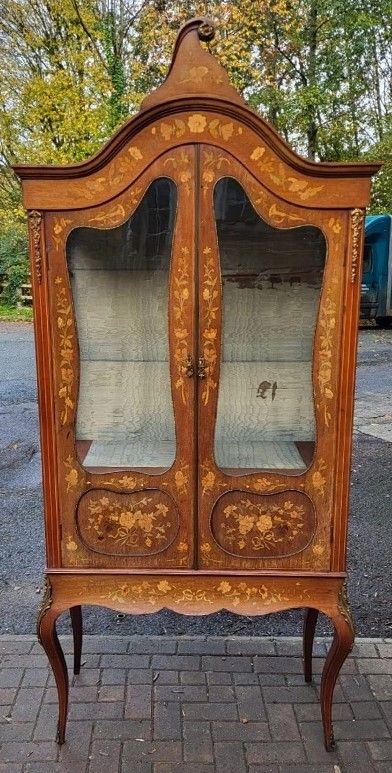
Wood inlay and floral marquetry formed the core decorative vocabulary, executed with contrasting timber strips and fruitwood details. Brass hinges, locks and handles completed the construction, securing glazed doors and cupboards.
Listings feature Edwardian, Victorian, Georgian and nineteenth-century periods, constructed in mahogany, satinwood, oak, walnut and kingwood.
Judging Quality
The distinction between ordinary and superior cabinets rests upon the crispness of the wood inlay and the selection of the timber grain. Pieces with finely cut satinwood banding and intricate floral marquetry demonstrate a higher level of cabinet-making skill than those with stamped or sparse decoration.
Structural harmony also defines the better examples, where proportions remain balanced and glass panels are properly secured within rebated frames. The use of secondary timbers inside drawers and cupboards reveals the underlying integrity of the workshop that built the piece.
Maple & Co.
The Vintage Inlaid China Cabinet Glossary
- Sheraton Revival
- A late nineteenth and early twentieth-century style reviving the classical lightness and satinwood inlay of eighteenth-century designer Thomas Sheraton. It dominated Edwardian cabinet-making.
- Marquetry
- The art of applying decorative pieces of veneer to a structure to form pictorial or geometric patterns. It relies on contrasting wood colours rather than paint.
- Vitrine
- A glass-fronted cabinet specifically designed for displaying fine objects or china. The term originates from the French word for glass.
- Bow Front
- A convex, curved front to a cabinet or chest of drawers that softens room lines. This shape appears frequently in Victorian and Edwardian display pieces.
- Breakfront
- A piece of furniture whose central section projects forward from the flanking wings. It creates a subtle architectural rhythm across large bookcases and cabinets.
Vintage Inlaid China Cabinet: Frequently Asked Questions
What is a vintage inlaid china cabinet?
A vintage inlaid china cabinet is a glazed wooden furniture piece designed to display porcelain and decorative objects. Most examples date from the Edwardian era and incorporate contrasting wood inlays.
These cabinets usually feature glass doors, wooden shelving and sometimes mirror backs. They serve both storage and decorative functions in domestic rooms.
How do I date an Edwardian display cabinet?
Dating relies on examining the timber species, construction methods and stylistic revivals present in the piece. Edwardian cabinets frequently display Sheraton Revival motifs and satinwood banding.
Look at the interior woodwork and backboards for clues about machine-cut versus hand-finished elements. Eighteenth and nineteenth-century precursors show heavier timbers and different construction tolerances.
Where should I place a corner cabinet?
Corner cabinets fit directly into room angles to utilise dead space effectively. They work well in dining rooms or drawing rooms where floor space is limited.
Ensure the cabinet does not block natural light sources so the glazed doors can properly illuminate the interior shelves.
Are these cabinets suitable for modern interiors?
These cabinets suit modern interiors by introducing warm mahogany and satinwood tones alongside reflective glass surfaces. They provide functional storage while breaking up plain wall spaces.
Pairing traditional wood grain with contemporary room schemes creates a balanced interior contrast.