



Vintage Inlaid Buffet Table
A vintage inlaid buffet table brings timeless dining room utility and refined surface detail together through periods spanning the Georgian era to the Edwardian years.
Vintage Inlaid Buffet Table
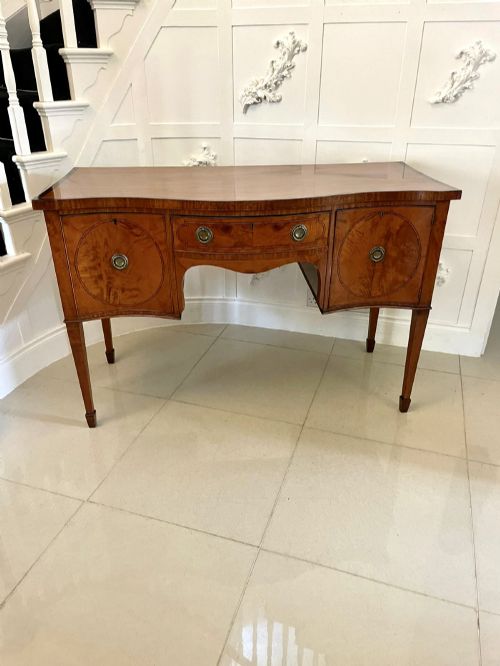
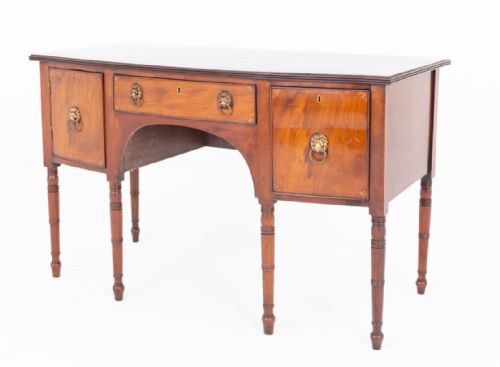
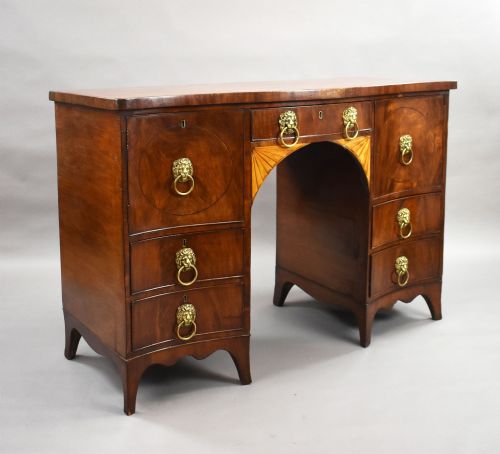
When searching for a vintage inlaid buffet table, collectors encounter formal dining furniture predominantly designated as sideboards, servers, and console tables. These pieces span periods from the 18th century through the Georgian, Victorian, and Edwardian eras.
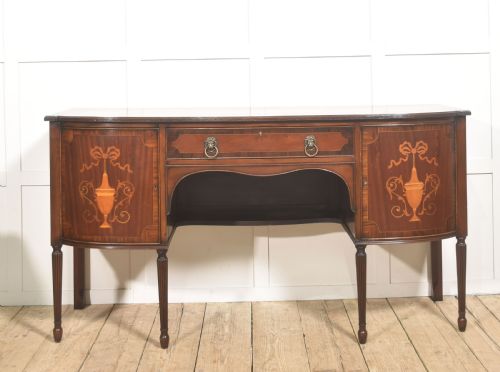
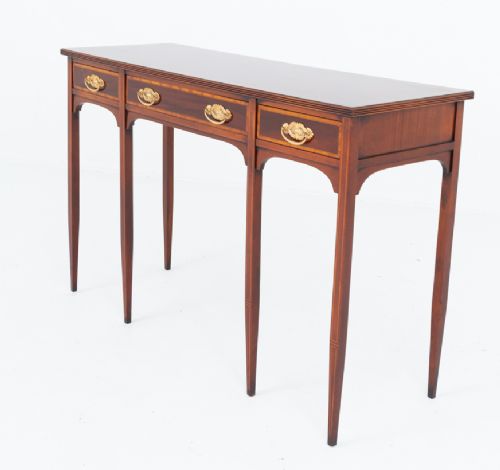
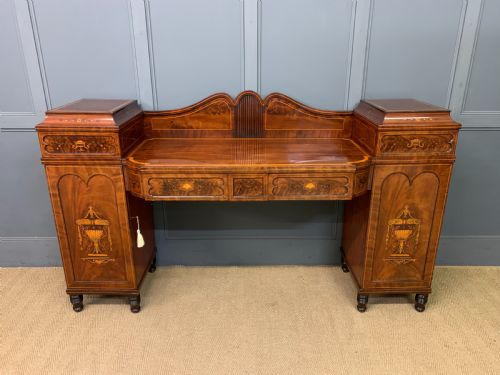
The most common forms on this page are mahogany sideboards featuring decorative wood inlay, satinwood details, and brass hardware. They appear in straight, bow front, and serpentine configurations designed for serving and storage.
Origins range from Georgian workshops to Edwardian revival houses, uniting practical dining room architecture with delicate decorative banding.
How they were made
Cabinet makers constructed these pieces primarily from solid mahogany and mahogany veneer, often incorporating figured timbers for visual depth. Structural elements frequently rely on secondary woods suited to long-term stability.
Decorative surface enrichment relies on intricate wood inlay and banding utilising satinwood, boxwood, and marquetry techniques. Brass fittings provide functional pulls and mounts that complement the contrasting light and dark wood veneers.
Listings span the 18th century, Georgian, Victorian, and Edwardian periods, featuring mahogany, satinwood inlay, and marble.
What varies in quality
The standard of a piece rests heavily on the crispness of its inlay and the figure of its mahogany timber. Superior examples exhibit fine, tight grain patterns and precise contrasting wood banding without clumsy repairs.
Proportion and silhouette also dictate value, with serpentine and bow front shapes requiring greater cabinet making skill than flat fronts. Original brass hardware and well-fitted drawers elevate a piece above later adaptations.
Robson And Sons·Howard And Sons
The Vintage Inlaid Buffet Table Glossary
- Bow front
- A cabinet front that curves outward in a convex shape. This configuration appears frequently in Georgian and Edwardian sideboards.
- Serpentine
- A gracefully undulating front edge featuring a convex centre flanked by concave curves. It demands advanced woodworking skill to achieve properly.
- Satinwood
- A luminous hardwood with a golden yellow sheen often utilised for contrasting stringing and decorative panels. It provides a bright focal point against darker mahogany.
- Marquetry
- The art of forming decorative patterns using fitted pieces of wood veneer. This technique creates pictorial or geometric designs across the surface.
- Pedestal sideboard
- A form comprising two distinct pedestals connected by a central serving table or board. These substantial dining pieces date primarily to the George III period.
Vintage Inlaid Buffet Table: Frequently Asked Questions
What is a buffet table used for?
These pieces served historically in dining rooms for holding food dishes, silverware, and linens during large meals. Today they function as versatile storage furniture and display surfaces in living spaces.
Their substantial top surfaces and interior drawers accommodate modern storage needs while retaining period presence.
How do I tell Georgian from Edwardian pieces?
Georgian pieces date from the 18th and early 19th centuries, showcasing hand-cut joinery and restrained proportions. Edwardian pieces often reflect Sheraton Revival styles with lighter construction and brighter satinwood inlay.
Examining the secondary woods and interior drawer construction helps clarify the manufacturing era.
Are marble top sideboards common?
Marble top variants appear selectively among Victorian examples, offering a cool, durable surface for serving drinks or food. This stone addition protects the underlying wood from moisture and heat.
Such tops are usually supported by robust mahogany frames built to bear the extra weight.
How should I care for mahogany veneer?
Keep these items away from direct sunlight and extreme humidity fluctuations to prevent the wood veneer from lifting or splitting. Regular dusting with a soft, dry cloth preserves the finish.
Apply quality wax sparingly when the timber appears dry to maintain its natural lustre.