
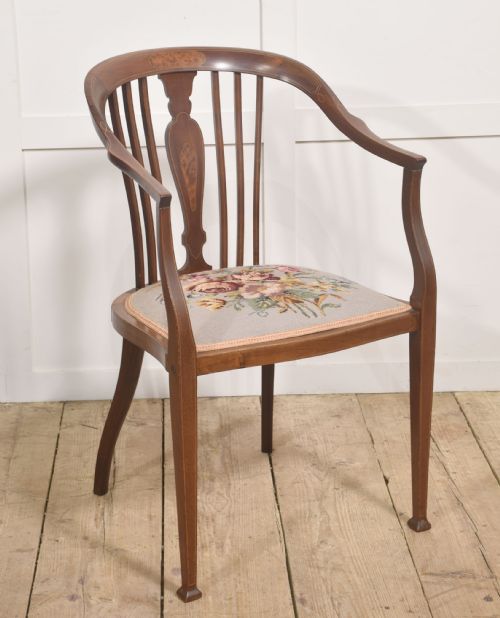


Vintage Inlaid Armchair
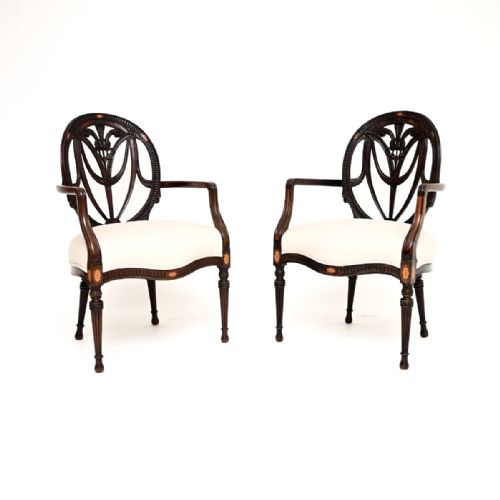
A vintage inlaid armchair brings tactile warmth and precise cabinetwork to a room through contrasting timbers and upholstered comfort.
Vintage Inlaid Armchair
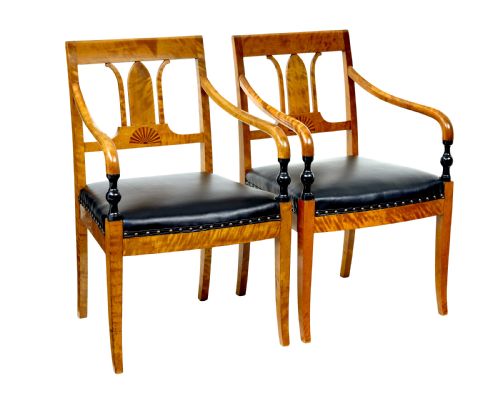
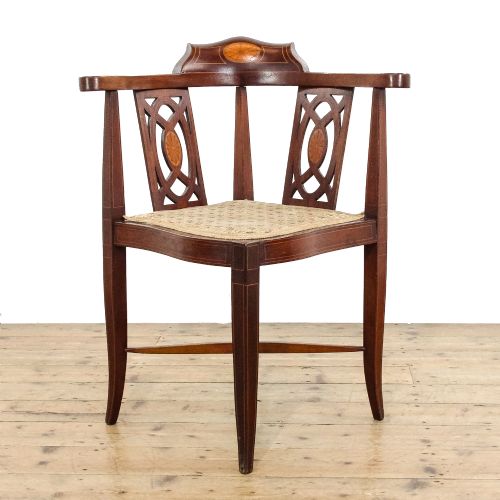
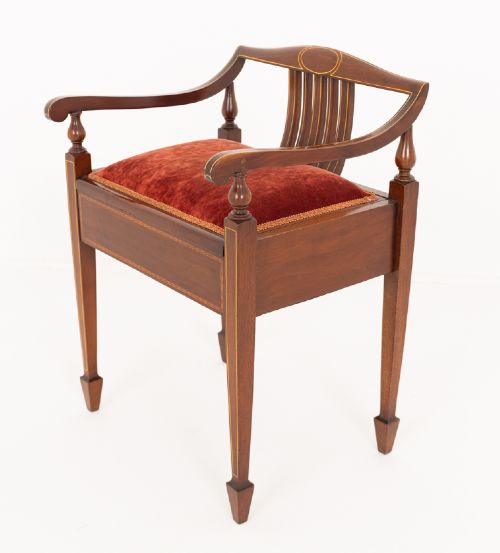
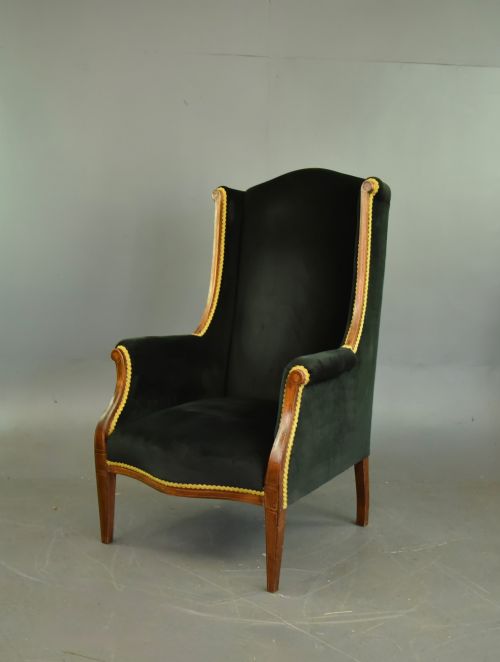
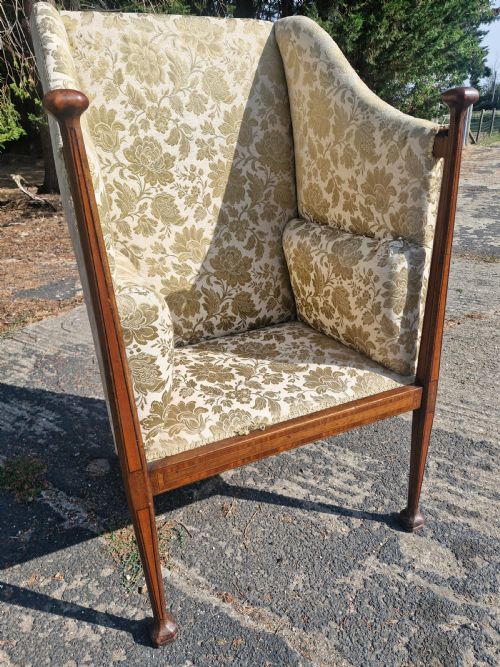
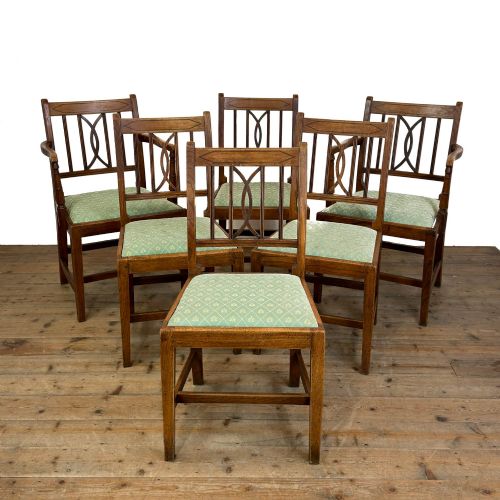
A vintage inlaid armchair encompasses a wide spectrum of seating forms designed for parlours, salons, desks, and libraries. The selection spans the Edwardian period, the nineteenth century, and the nineteen-thirties, reflecting various domestic settings from formal rooms to country houses.
Stylistic influences range from Sheraton Revival and Art Nouveau to Art Deco and Regency, showing how makers reinterpreted historical motifs throughout the decades. The diversity of frames includes X-frame armchairs, bergere chairs with cane seats, and open arm styles designed for daily use.
How they were made
Construction relies heavily on dense timbers such as mahogany, walnut, satinwood, and rosewood, which provide stable frames capable of supporting intricate decorative work. Cabinetmakers embedded contrasting veneers like boxwood and lighter fruitwoods directly into the primary wood surfaces to create geometric lines and floral motifs.
Detailing often incorporates brass inlays, cane panels, and leather or fabric upholstery secured with traditional stuffing techniques. Joinery methods varied according to the period, utilising tight mortise and tenon joints for structural endurance.
Mahogany and satinwood dominate the timber selection across these listings, accompanied by brass, leather, and fabric.
What varies in quality
The distinction between standard and superior pieces rests on the crispness of the cabinetwork and the integration of the inlay. Sharply defined veneer work that sits flush with the surrounding timber denotes greater skill than stamped or painted substitutes.
Proportion and wood selection also dictate the standard of an armchair, with finely grained mahogany and carefully matched satinwood marking out finer workshop output. The integrity of the original frame structure and the quality of the secondary timbers used underneath determine long-term durability.
Shoolbred
The Vintage Inlaid Armchair Glossary
- Inlay
- A decorative technique where pieces of contrasting material are inserted into a recessed surface to form a flat design. This method was widely used in cabinetmaking to create geometric borders.
- Satinwood
- A durable, lustrous timber native to India and Ceylon, prized for its golden yellow colour and fine grain. It frequently serves as a contrasting veneer in lighter decorative panels.
- Bergere
- An enclosed upholstered armchair with a wooden frame and cane sides or back panels. These seats date back to French eighteenth-century designs but appeared in later British revivals.
- Sheraton Revival
- A late nineteenth and early twentieth-century design movement inspired by the neoclassical furniture of George Sheraton. It is characterised by slender proportions and delicate marquetry.
- Tub chair
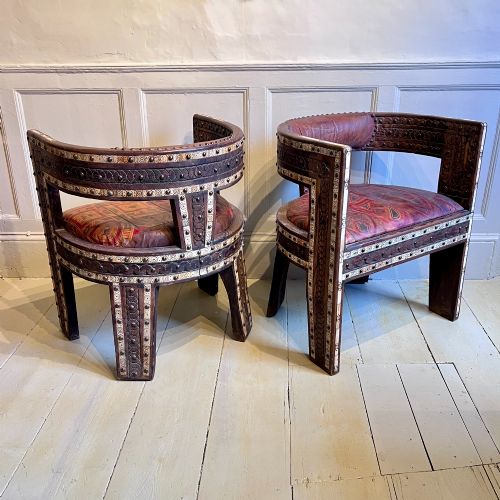
- An armchair featuring a rounded back that wraps continuously into the arms to form a sheltered enclosure. They are frequently upholstered fully in leather or fabric.
Vintage Inlaid Armchair: Frequently Asked Questions
How do I identify an Edwardian inlaid armchair?
Edwardian armchairs typically combine lightweight mahogany frames with delicate boxwood stringing and satinwood banding. They often exhibit Sheraton Revival influences and lighter upholstery than their Victorian predecessors.
Examine the underside and joints to confirm period construction methods alongside the characteristic decorative motifs of the early twentieth century.
What is the difference between an occasional chair and a library chair?
Occasional chairs are lighter, smaller seating forms intended to be moved easily around a parlour or drawing room as needed. They prioritise decorative inlay and delicate frames over heavy, sustained comfort.
Library chairs are built substantially heavier from robust hardwoods like walnut or mahogany, designed for prolonged reading and often upholstered in leather or thick fabric.
Can I use a vintage desk chair daily?
Many vintage desk and salon chairs remain structurally sound for regular modern use, provided the frame joints are secure and stable. Periodic checking of the underframe helps maintain their integrity under daily loads.
Replacement of modern protective glides or careful cleaning of the leather and fabric surfaces will keep the chair functional in a contemporary study.
How should I care for wood inlay?
Keep inlaid wooden furniture away from direct sunlight and sudden temperature shifts to prevent the natural veneers from drying and lifting. Regular dusting with a soft, dry cloth preserves the polished finish without introducing excess moisture.
Avoid silicone-based polishes, opting instead for traditional microcrystalline wax applied sparingly to nourish the timber and protect the delicate contrasting borders.