





Vintage Inkwell and Pen
Vintage inkwell and pen sets combine practical writing vessels with integrated rests, bringing tactile nineteenth and early twentieth-century desk culture into modern rooms.
Vintage Inkwell and Pen
A vintage inkwell and pen collection brings together desk accessories, inkstands, and inkwells spanning the Victorian, Edwardian, and Art Deco periods. Buyers search for these pieces to anchor a writing desk with functional history, ranging from simple glass reservoirs to elaborate multi-piece desk tidies.
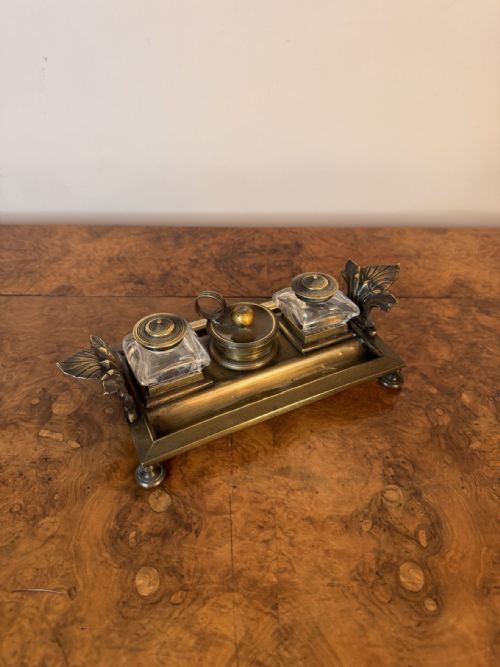
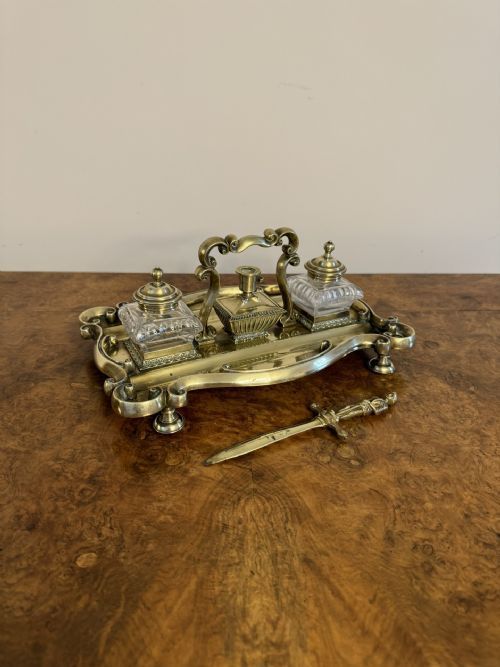
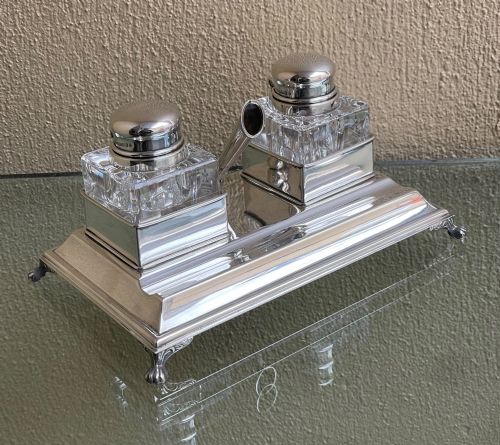
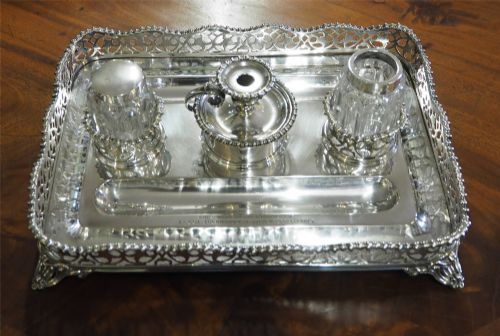
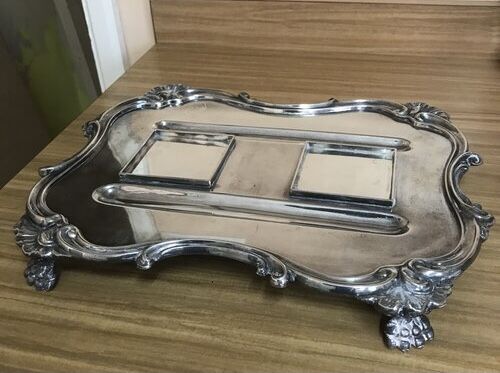
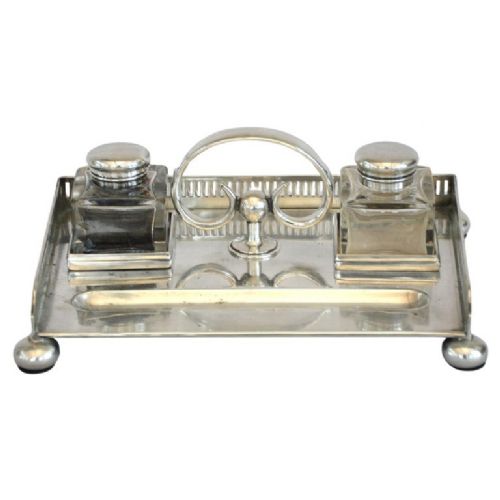
The most common versions met on this page include brass and cut-glass combinations, silver-plated desk stands, and solid oak or mahogany tidies. These pieces frequently incorporate dedicated rests designed to hold a pen alongside the central ink reservoir.
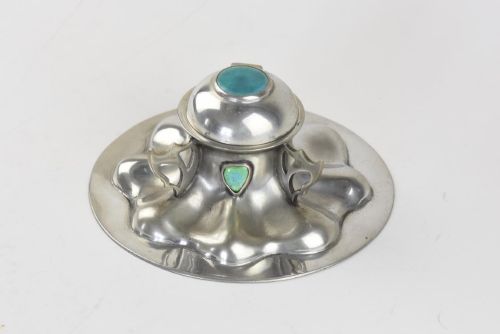
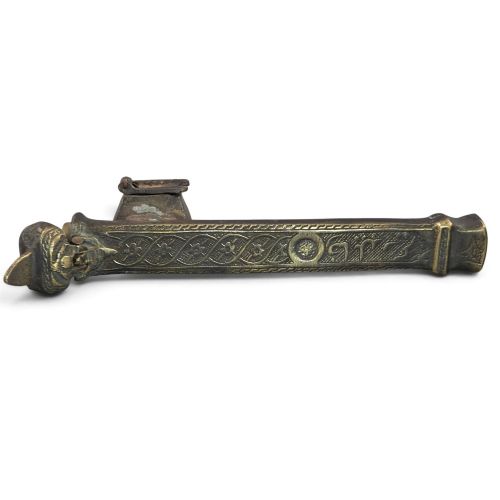
Origins vary widely across the selection, encompassing English metalwork, French champlevé enamel, Dutch Delft faience, and Asian brassware. Stylistic influences stretch from ornate Rococo Revival and organic Art Nouveau to geometric Art Deco and functional Arts and Crafts designs.
Materials and construction
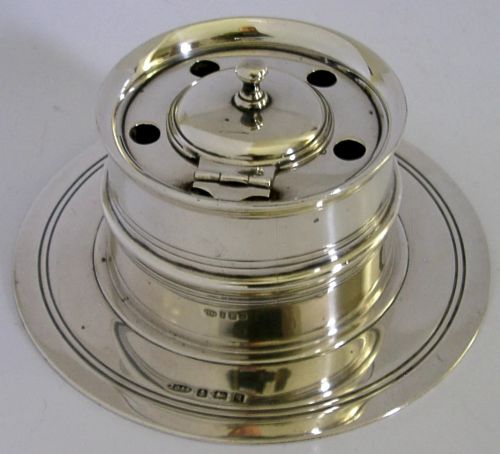
Metalworking dominates the evidence, utilising cast and polished brass, solid sterling silver, silver plate over base metals, bronze, and copper. Artisans shaped these metals into structural frames, hinged lids, and integrated pen rests, sometimes applying champleve enamel or gilding for decorative effect.
Ceramic and pottery techniques appear through Staffordshire earthenware, Dutch Delft blue and white faience, and decorative cabochons such as Ruskin ceramics set into metal frames. Papier-mâché also forms structural desk sets, offering a smooth painted surface for intricate ornamentation.
Vintage Inkwell and Pen Retail Price Guide 2026
Typical asking prices for vintage inkwell and pen among the pieces listed under this phrase on Sellingantiques today, from the lower quarter to the upper quarter. They describe what is for sale here now, not the wider market.
Listings feature desk accessories spanning the nineteenth and twentieth centuries, utilising materials from cut glass and brass to marble, onyx, and carved wood.
Assessing quality and execution
Quality rests primarily on the integrity of the materials and the crispness of the manufacture. Heavy cast bronze, thick cut glass, and solid hardwoods command greater regard than lighter plated alternatives or composite substitutes.
The sophistication of decorative details separates standard desk accessories from superior examples. Hand-carved wooden animal forms, intricate champleve enamel work, and signed pieces by known metalworkers demonstrate a higher tier of period craftsmanship.
Completeness and cohesion elevate a desk set. Pieces that retain their original matched ink inserts, working hinged lids, and integrated pen rests preserve the maker's intended harmony.
Elkington·William Hutton·Walker And Hall·Harrods·Marson And Jones·James Cartland And Sons·Albert Marionnet
The Vintage Inkwell and Pen Glossary
- Inkstand
- A complete desk tray or stand incorporating one or more inkwells alongside compartments for pens, stamps, or sand.
- Desk tidy
- A compartmentalised desk accessory designed to organise writing implements, letters, and ink reservoirs in one place.
- Faience
- Tin-glazed earthenware, notably produced in traditions such as Dutch Delft.
- Cabochon
- A gemstone or ceramic piece shaped and polished rather than faceted, often set flush into metalwork.
- Pen wipe
- A small desk accessory made from fabric layers used to clean excess ink from a nib after writing.
Vintage Inkwell and Pen: Frequently Asked Questions
What is an inkstand?
An inkstand is a portable desk stand that holds an inkwell alongside fitted spaces for pens and other writing paraphernalia. These stands protected desk surfaces while keeping essential writing tools organised in one place.
Victorian and Edwardian versions often integrated stamp boxes and sanders into the main tray. They served as central fixtures on formal writing tables.
How do I date a brass inkwell?
Dating relies on stylistic clues, manufacturing techniques, and material combinations recorded in the piece. Victorian examples often lean towards ornate Revival styles, while Edwardian pieces introduce cleaner sterling silver mounts and fitted glass inserts.
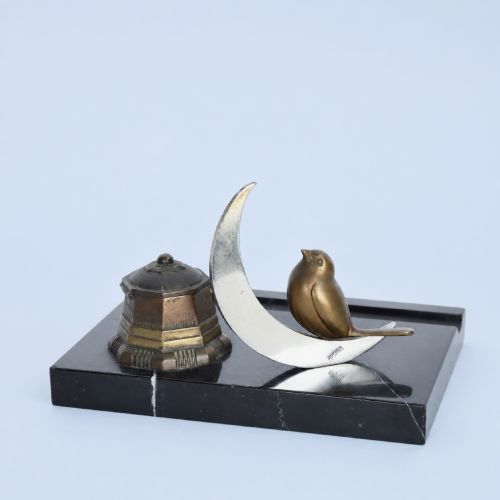
Art Nouveau items display flowing organic lines, whereas 1930s pieces favour geometric marble and onyx bases. Maker marks and hallmarked silver mounts also provide precise chronological reference points.
How were antique inkwells used?
Users dipped a metal nib or quill into the central glass reservoir to load ink before writing on paper. The surrounding tray or pen rest kept the wet pen elevated to prevent staining the desk surface.
Many designs included hinged lids to slow the evaporation of the ink. Separate compartments held blotting paper, powder, or wax seals.
Where should I place a desk set?
A desk set sits naturally on a writing table, bureau, or bookshelf where its materials can be appreciated visually. Placing it out of direct sunlight protects vulnerable organic elements like onyx, marble, and polished wood.
While functional, antique writing equipment is typically displayed as decorative art. Keeping the glass liners clean maintains the item's visual appeal.