


Vintage Indian Teak Table
A vintage indian teak table brings dense grain and dense carving straight from the colonial workshop into the modern room.
Vintage Indian Teak Table
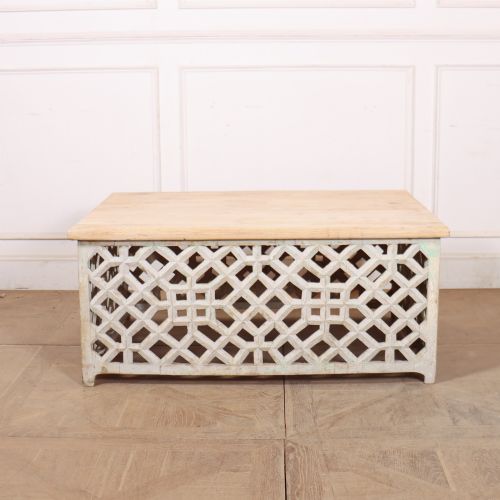
A vintage indian teak table unites dense tropical timber with intricate hand-carved ornamentation, spanning side tables, coffee tables, and occasional pieces. When buyers search for a vintage indian teak table, they encounter forms that range from low octagonal surfaces to folding campaign designs.
How they were made
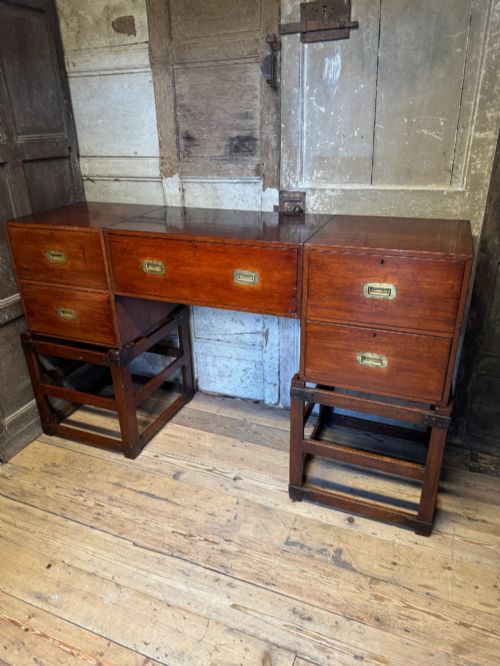
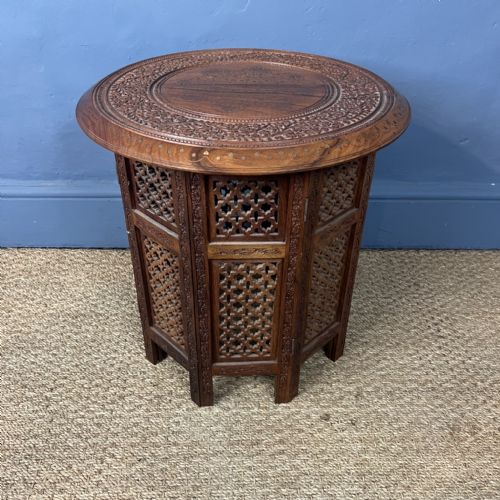
Workshops relied heavily on solid teak and dense hardwoods, selected for stability and responsiveness to deep relief carving. Artisans shaped structural elements by hand, joining panels with traditional woodworking joints suited to portable campaign items and folding frames.
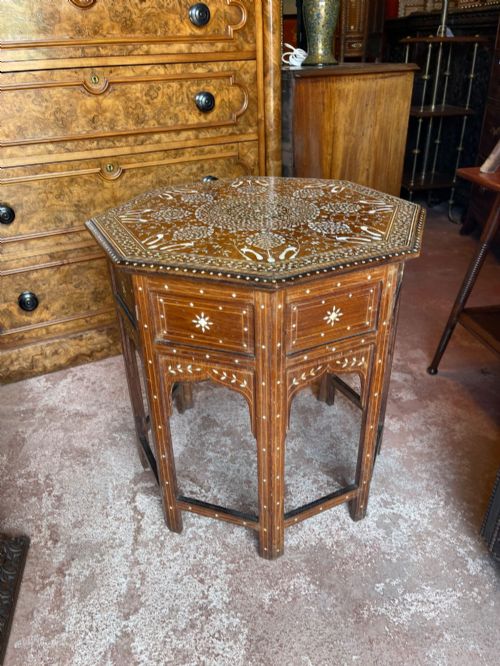
Surface ornamentation involved intricate chiselling and piercing into the timber. Many pieces incorporate contrasting materials, setting brass wire, white bone, or dark rosewood into the teak surface to create geometric and floral patterns.
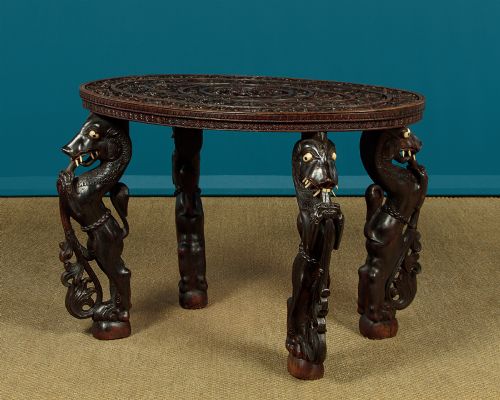
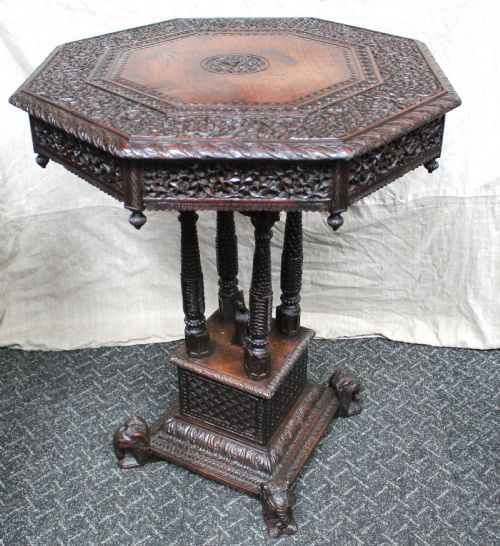
Several tables feature carved elephants acting as structural legs, proving that Victorian domestic life had a delightfully wild streak.
What varies in quality
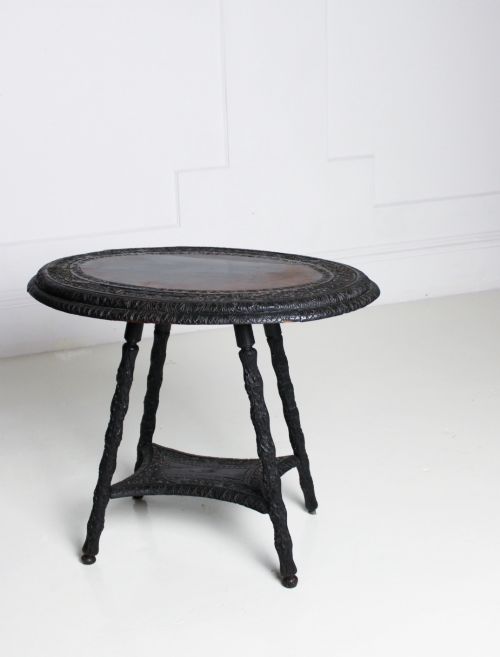
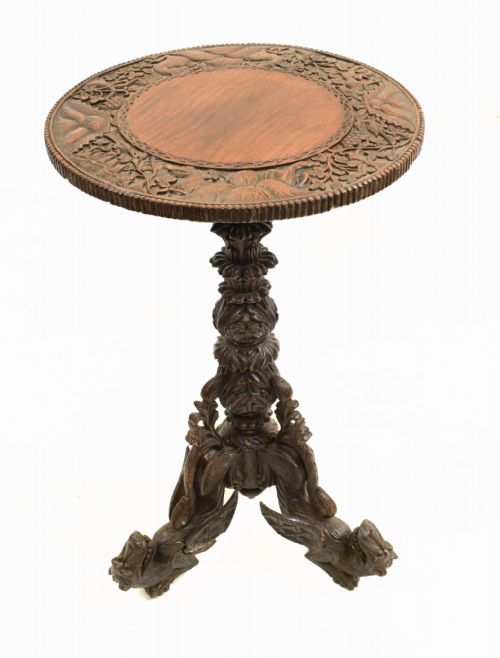
Quality rests in the crispness of the hand-carved detail and the depth of the relief work across the teak top and legs. Superior examples display sharp undercutting and tight joints, whereas lesser pieces show shallower, softer tooling.
The integrity of inlaid elements marks another distinction. Finely made tables retain all brass wire, bone sections, and contrasting wood inserts flush with the surrounding teak, while lower-grade items show shrinkage gaps and missing inlay fragments.
The Vintage Indian Teak Table Glossary
- Anglo-Indian
- A style describing furniture made in India during the British colonial period, blending local craftsmanship with European forms. These pieces often utilise native teak and rosewood.
- Hoshiarpur
- A North Indian city renowned for intricate woodwork, particularly tables and folding screens heavily inlaid with bone and brass. Artisans there mastered dense surface carving.
- Takhat
- A traditional low Indian platform or daybed adapted into coffee tables in later periods. They feature sturdy timber frames and low, robust legs.
- Campaign table
- Portable furniture constructed for British military officers on the move, designed with folding legs or removable tops. Teak served as the primary material for durability.
- Tripod table
- A small freestanding table supported by three legs, frequently seen in octagonal or circular formats from the colonial era. They balance portability with decorative presence.
Vintage Indian Teak Table: Frequently Asked Questions
How do I care for teak tables?
Dust the carved surfaces regularly with a soft, dry brush to prevent dirt settling in the deep recesses. Avoid placing the wood near direct heat sources to keep the timber stable.
Treat the surface occasionally with natural wax to nourish the grain without clogging fine inlay work. Keep moisture away from bone and brass sections to protect the surrounding wood.
Where were these tables made?
These pieces originate from various workshops across the Indian subcontinent and Burma during the colonial era. Regional centres like Hoshiarpur developed distinct carving traditions.
British officers and merchants commissioned pieces locally, combining traditional Indian motifs with European functional forms. This cross-cultural exchange shaped the distinct aesthetic found across the selection.
How do I date a teak table?
Examine the construction methods, secondary timbers, and metal fixings to determine the age of the piece. Nineteenth-century examples often display hand-cut joinery and heavy patination.
Stylistic shifts also provide clues, moving from Victorian gothic and floral carving to cleaner Art Deco lines by the early twentieth century. Check for wear patterns on feet and edges consistent with age.
Are these tables sturdy enough for daily use?
Solid teak and dense hardwoods provide strong structural frames capable of handling daily domestic requirements. Octagonal and pedestal designs distribute weight evenly across the base.
Folding campaign versions require careful handling of hinges and locking mechanisms during relocation. Regular use burnishes the timber, enhancing the deep colour of the grain.