

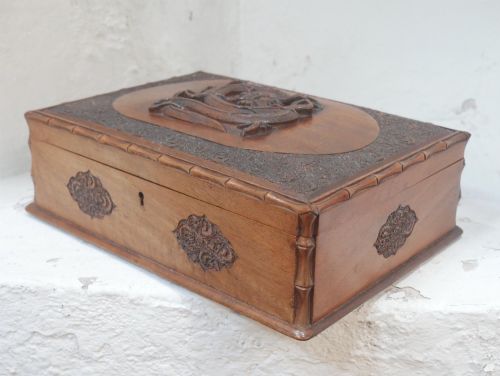
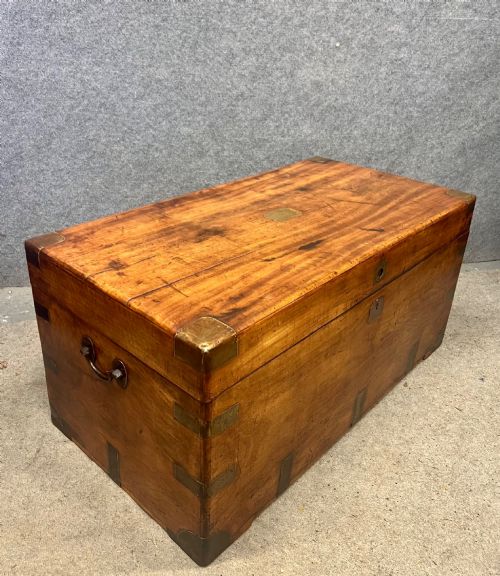
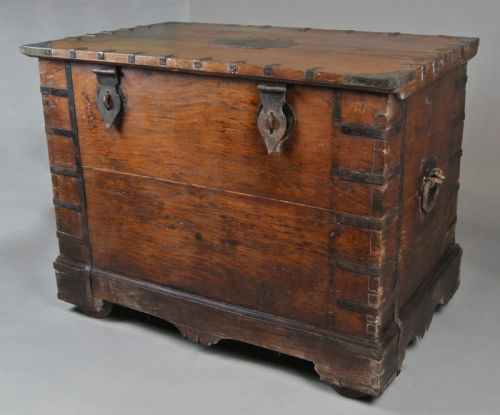
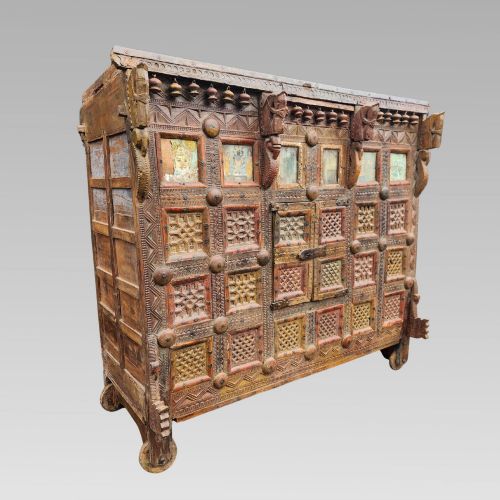
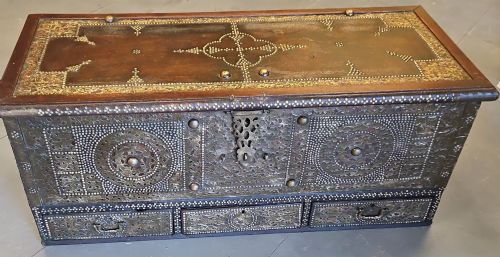


Vintage Indian Teak Box
A vintage indian teak box brings dense timber and heavy metal hardware into a room, offering robust storage with deep historical character.
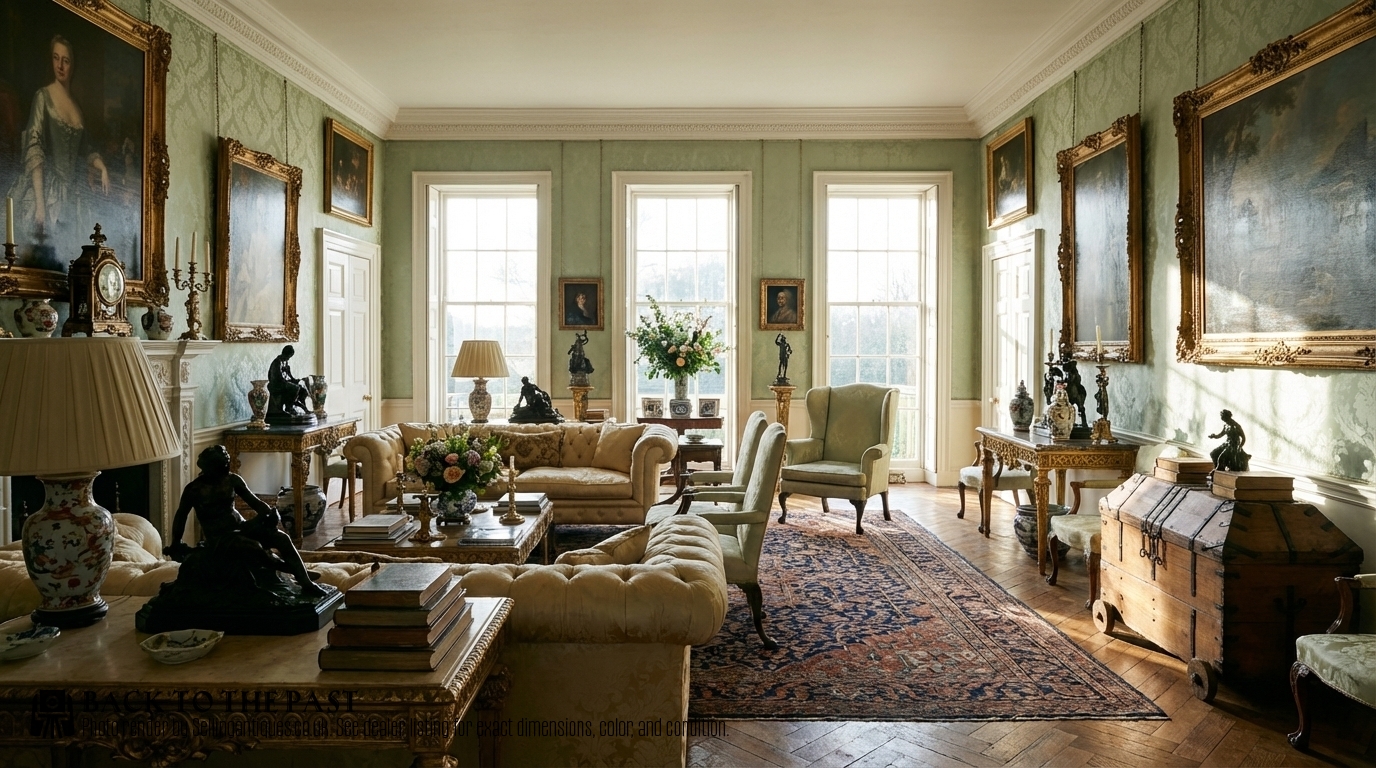
Vintage Indian Teak Box
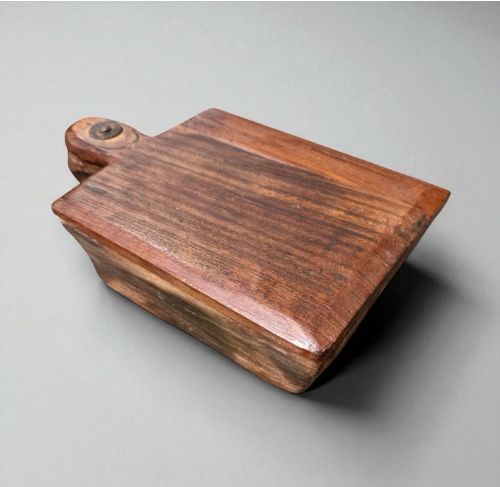
A vintage indian teak box encompasses a diverse range of sturdy storage containers, spanning small spice boxes and correspondence desks up to large dowry chests and campaign trunks. Buyers searching this phrase encounter substantial wooden vessels created for utility, travel, and domestic organisation across various historical periods.
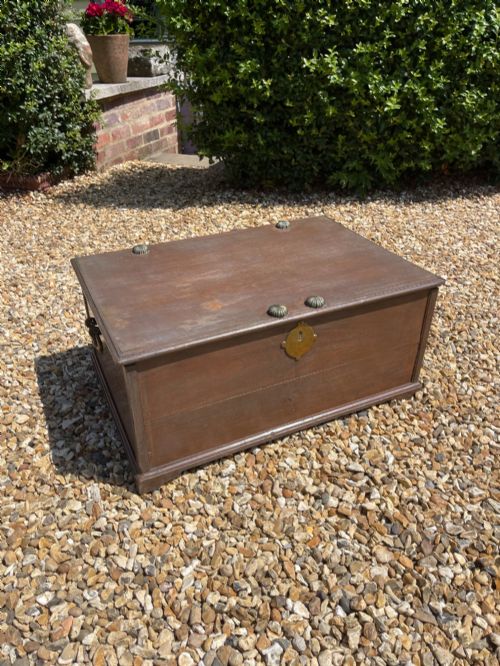
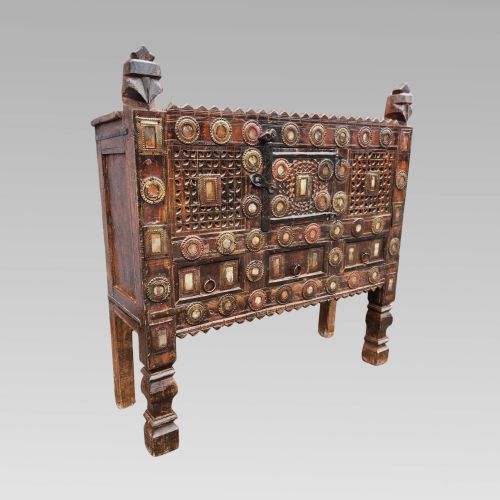
The selections available on this page lean heavily toward nineteenth-century examples, alongside pieces from the eighteenth century, the Edwardian era, and the early twentieth century. Common forms include damchiya storage cabinets, cellarettes on stands, blanket chests, and iron-bound coffers reflecting Anglo-Indian, colonial, and traditional vernacular styles.
Originating from regions influenced by trade and colonialism, these boxes often display a blend of local craftsmanship and British military or domestic requirements. Whether seeking a small tabletop container for powders or a monumental trunk for the floor, collectors find pieces built for endurance.
How they were made
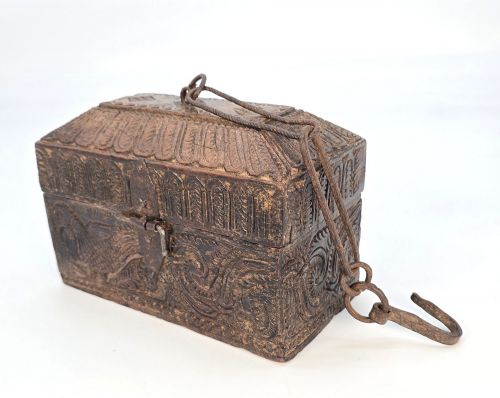
Makers constructed these items primarily using dense teak and assorted hardwoods, selected for their ability to withstand tropical climates and heavy handling. Carpenters reinforced the wooden carcasses with structural elements of brass, iron, and wrought iron, utilising straps, studs, and corner brackets to protect the joints.
Surface decoration frequently involves intricate hand carving, seen on dowry chests and spice containers, alongside flush brass mountings designed for travel efficiency on campaign trunks. Glass and additional secondary woods occasionally appear in specific components, demonstrating a pragmatic approach to material availability.
Vintage Indian Teak Box Retail Price Guide 2026
Typical asking prices for vintage indian teak box among the pieces listed under this phrase on Sellingantiques today, from the lower quarter to the upper quarter. They describe what is for sale here now, not the wider market.
Listings feature pieces spanning the 18th, 19th, and early 20th centuries, constructed from teak, hardwood, brass, and iron.
What varies in quality
Quality in these boxes rests on the integrity of the timber, the weight and fastening of the metal hardware, and the depth of the carving. Superior examples display dense, well-figured teak with tightly fitted joinery that has survived decades of movement and climate shift.
The execution of the decorative elements distinguishes standard utility trunks from exceptional pieces. Finely chased brass mounts, elaborate hand-carved panels on damchiyas, and intact original stands separate ordinary containers from those of distinguished provenance.
The Vintage Indian Teak Box Glossary
- Damchiya
- A traditional carved Indian storage cabinet or dowry chest, often featuring heavy doors or lids and intricate ornamentation. These low cabinets served as focal points in domestic interiors.
- Cellarette
- A lockable wine chest or container, sometimes mounted on a stand, designed to store bottles safely. In nineteenth-century contexts, these often incorporated robust internal divisions.
- Campaign trunk
- A portable storage chest designed for military officers or travellers on the move, typically fitted with flush brass handles and protective corner brackets. Their construction prioritized durability during transit.
- Zanzibar chest
- A distinct type of heavy wooden trunk adorned with elaborate brass studding and strapwork, reflecting East African and Indian trade routes. They frequently incorporate internal compartmentalised tills.
- Cofer
- A large traditional chest or box used for holding valuables, clothes, or documents, often bound in iron or brass for added security. These pieces usually feature sturdy carrying handles on the sides.
Vintage Indian Teak Box: Frequently Asked Questions
What is a damchiya chest?
A damchiya is a traditional carved storage cabinet or dowry chest originating from India, built to hold household valuables and textiles.
These pieces usually feature heavily ornamented panels and sturdy teak construction, serving both a functional storage role and a decorative purpose in the home.
How do I care for antique teak?
Antique teak requires minimal intervention, benefiting mostly from a stable indoor environment away from direct heat sources and dramatic humidity changes.
Applying a light coat of appropriate furniture wax occasionally helps nourish the dense wood without building up heavy residues on carved surfaces.
Where were spice boxes used?
Spice boxes were utilised in domestic kitchens or merchant quarters to organise culinary ingredients and precious powders securely.
Smaller tabletop examples often include multiple internal compartments and lids to preserve the aroma and quality of the contents.