

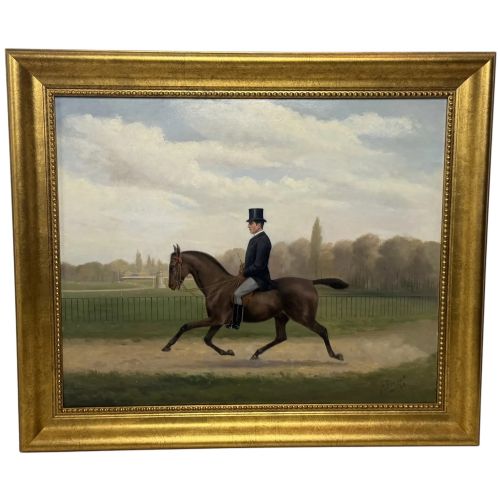
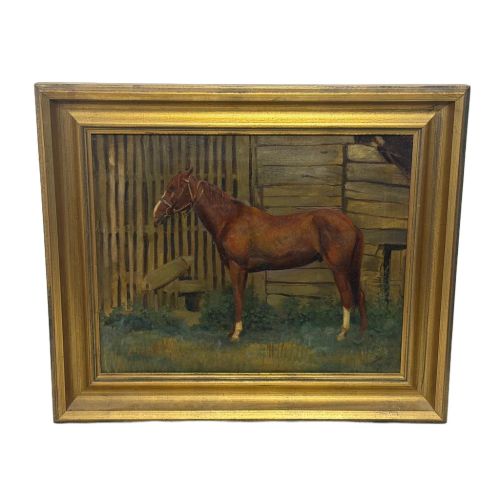
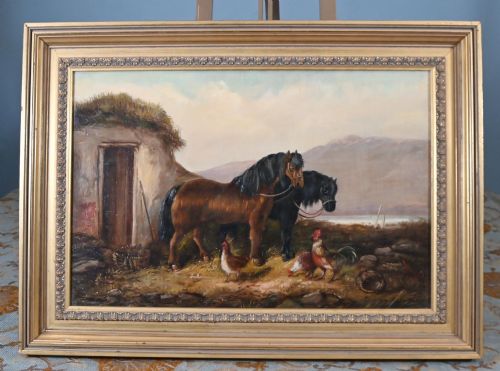
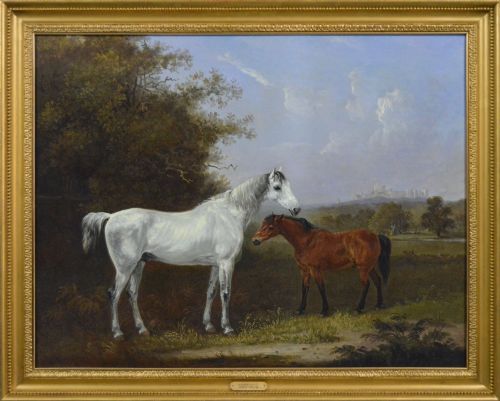
Vintage Horse Picture Frame
A vintage horse picture frame holds works ranging from nineteenth-century oil paintings to mid-century pastels, capturing the enduring appeal of equine art.
Vintage Horse Picture Frame
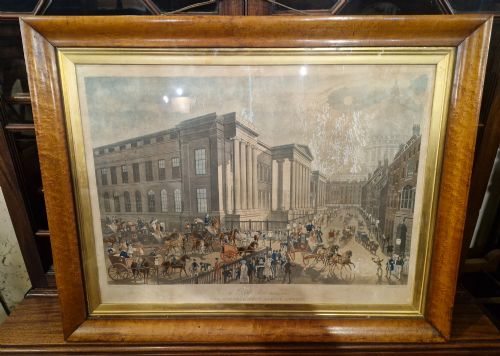
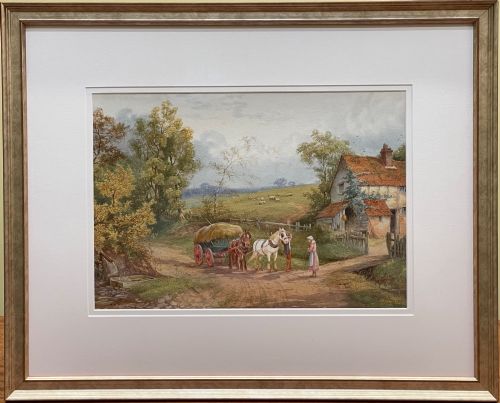
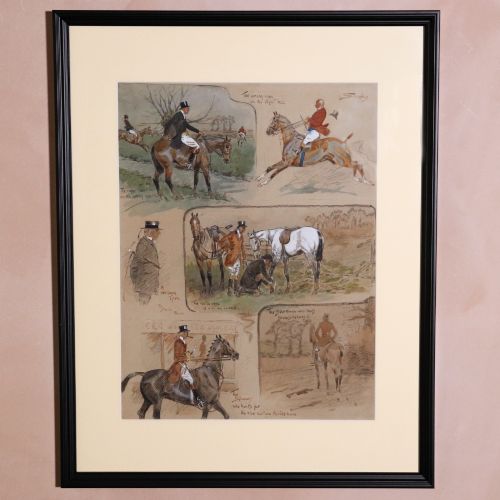
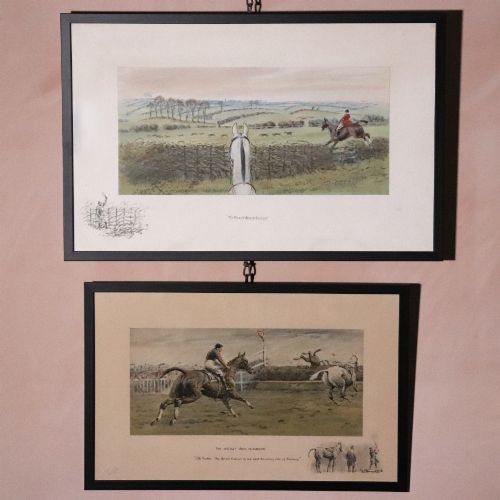
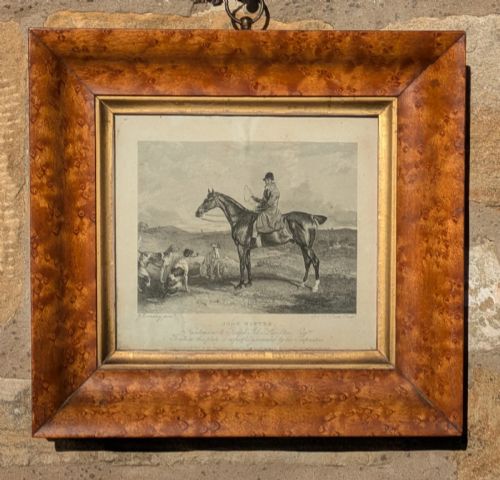
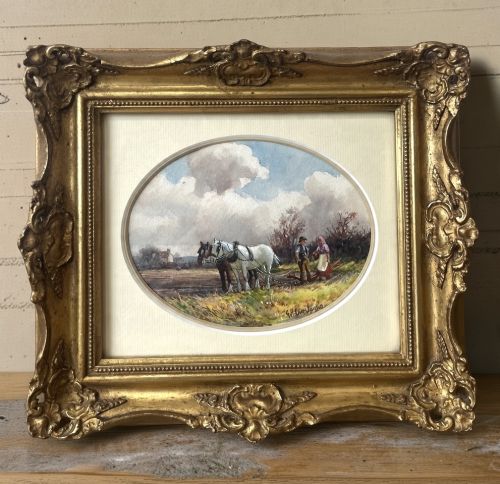
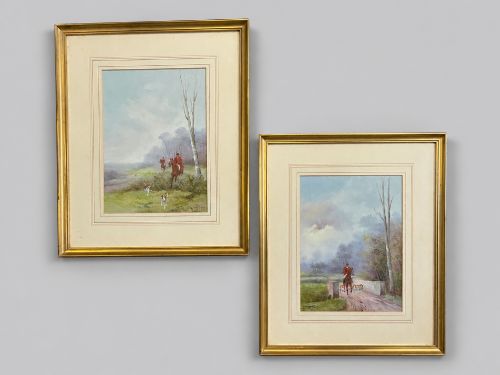
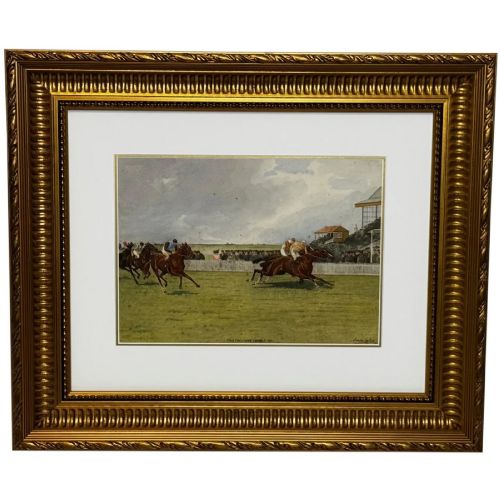
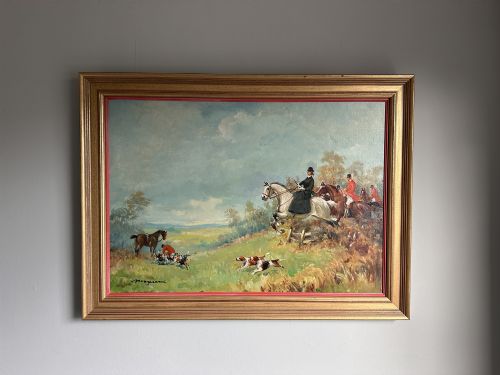
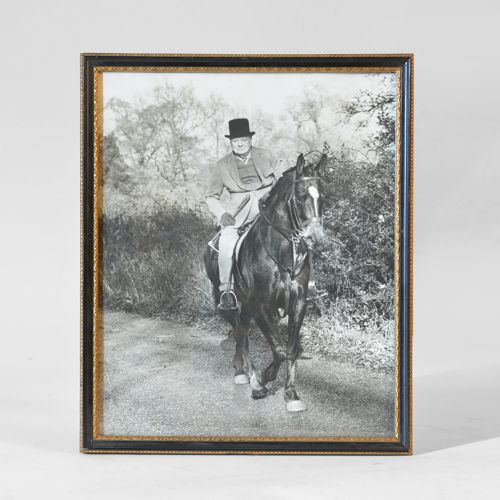
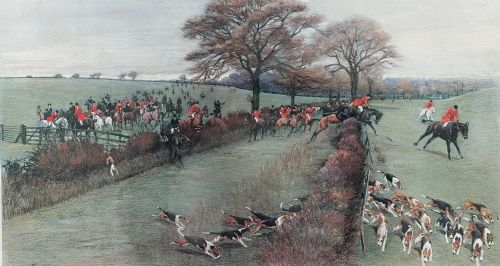
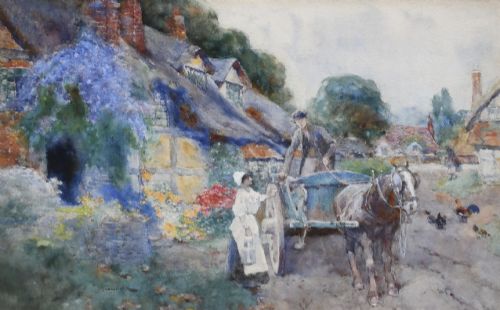
When you search for a vintage horse picture frame, you are looking at framed equestrian art spanning oil paintings, watercolours, pastels, lithographs, and engravings. The forms range from individual portraits of bay horses and grey mares to dynamic scenes of fox hunting, polo matches, and horse racing.
The versions you are most likely to meet on this page come from the nineteenth and twentieth centuries, encompassing Victorian sporting art, Edwardian works, and mid-century modern pieces. These works combine historical animal portraiture with period framing materials such as wood and glass.
Materials and technique
The construction of these pieces relies on traditional artistic media applied to canvas, paper, panel, and board. Artists utilised oil on canvas, watercolour, ink, pastel, gouache, and lithography to capture equine subjects with varied degrees of finish.
Surviving examples incorporate period mounting and glazing, using wood frames often finished with gilt details to enclose the paper or canvas works securely.
Vintage Horse Picture Frame Retail Price Guide 2026
Typical asking prices for vintage horse picture frame among the pieces listed under this phrase on Sellingantiques today, from the lower quarter to the upper quarter. They describe what is for sale here now, not the wider market.
Several horses captured in these historical frames retain their individual names, from race winners to trusty farmyard companions.
Assessing quality
Quality in these pieces depends upon the skill of the draughtsmanship and the accuracy of equine anatomy shown in the brushwork or lines. Works by recorded artists or those demonstrating superior handling of light and movement sit at the higher end of the range.
The integrity of the original medium and the preservation of the paper, canvas, or panel also distinguish finer examples from standard decorative prints and paintings.
David Woodlock·Cecil Charles Windsor Aldin·Lionel Ellis·Philip H Rideout·Edmund Bristow·Edward Charles Williams·William Shayer·William Powell Frith·George Finch Mason·William Albert Clarke·Fred Fitzpatrick·Snaffles·Edwin Henry Landseer·John Frederick Herring Snr·Albert Ludovici Jnr·Herman S Melville·Alfred Munnings·John Rattenbury Skeaping·Charles Walter Simpson·John Frederick Herring Jnr·Basil Nightingale·William Williams
The Vintage Horse Picture Frame Glossary
- Lithograph
- A printmaking method based on the repulsion of oil and water on a stone or metal plate. It allows for multiple reproductions of original drawings.
- Gouache
- An opaque water-based paint that dries to a matte finish. It provides stronger highlights than standard watercolour.
- Aquatint
- A variant of etching that produces tonal areas resembling watercolour washes. It was frequently used for sporting prints.
- Equestrian
- Pertaining to horses and horseback riding. This term defines the primary subject matter of the artworks.
- Gilt
- Covered thinly with gold leaf or gold paint. This finish frequently appears on the wooden mouldings enclosing the art.
Vintage Horse Picture Frame: Frequently Asked Questions
What periods do these pieces come from?
The selections span the eighteenth, nineteenth, and twentieth centuries, incorporating Georgian, Victorian, Edwardian, and mid-century modern eras.
Most items date from the Victorian period through to the nineteen-sixties, reflecting changing tastes in British sporting art.
How were these artworks displayed originally?
These framed works were traditionally hung in country houses, libraries, and sporting estates to celebrate prized thoroughbreds, hunting scenes, and racing triumphs.
They served as both personal mementos of notable animals and decorative elements reflecting the owner's sporting interests.
How do I distinguish oil paintings from prints?
Oil paintings display textured brushstrokes and pigment built up on canvas or wood panels, showing depth under close inspection.
Prints and lithographs present flat surfaces beneath glass, sometimes revealing dot patterns or plate marks depending on the printing technique.
How should I care for a vintage horse picture frame?
Keep the pieces away from direct sunlight to prevent the fading of watercolours, pastels, and coloured inks on paper.
Maintain stable room humidity levels to protect wooden frames and organic painting materials from warping or cracking over time.