






Vintage Hip Flask
A vintage hip flask offers a pocket-sized vessel for carrying spirits on field pursuits or travels.
Vintage Hip Flask
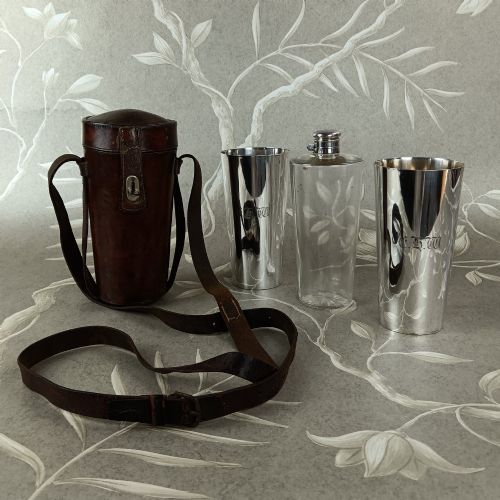
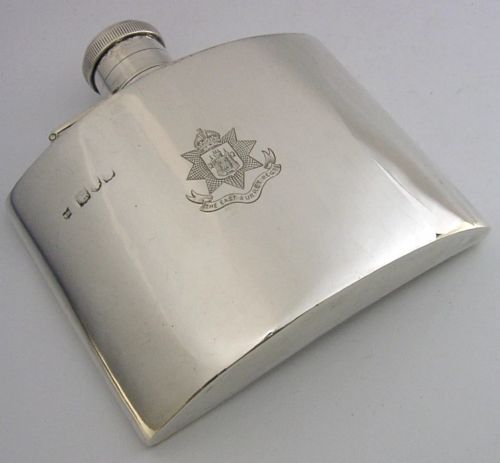
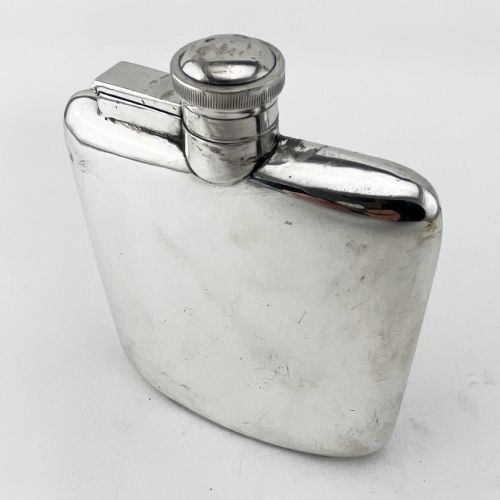
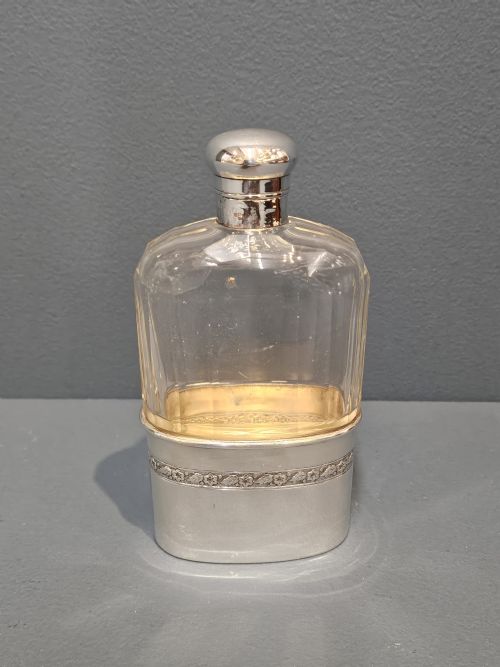
A vintage hip flask is a portable container designed to hold liquor, commonly encountered in curved forms that fit easily against the body. When searching for a vintage hip flask, buyers encounter pieces dating from the Victorian era through the Edwardian period and the Art Deco years up to the 1940s. These items range from plain silver styles to combination flasks featuring glass bodies with removable silver cups.
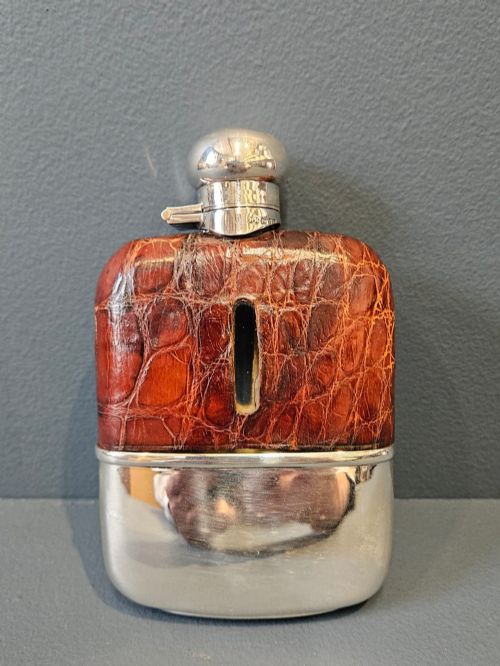
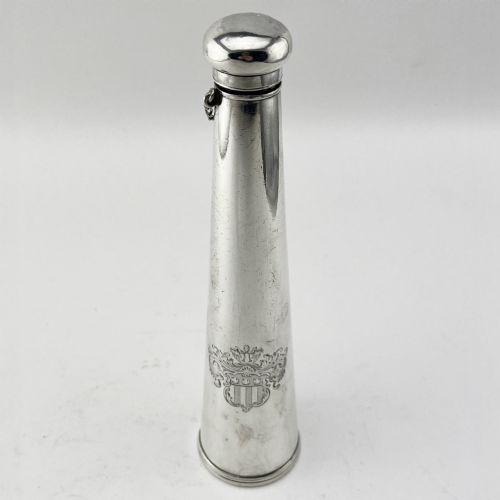
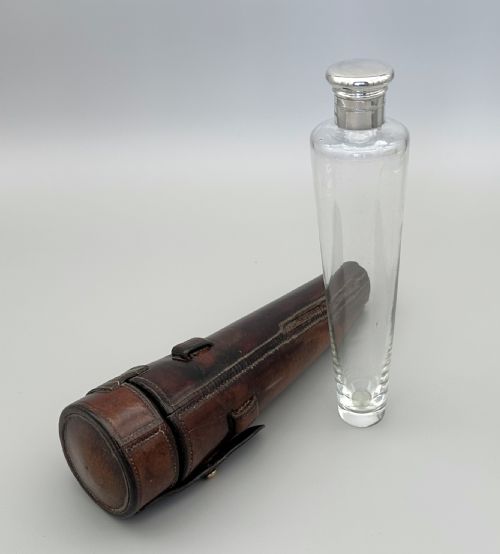
The selection includes field campaign spirit sets, hunting flasks housed in original cases, and large locking silver-plated spirit flasks. Many examples incorporate leather wrapping or crocodile skin covering over the metal or glass body. Makers from Sheffield and London produced these spirit flasks for outdoor pursuits, sporting events, and everyday use.
How they were made
Silversmiths utilised sterling silver and silver plate to shape the rigid bodies, often employing hammer finishes or clean plain surfaces. Glass and cut crystal formed the transparent reservoirs of combination flasks, allowing the contents to remain visible beneath silver mounts and hinged flip tops.
Organic materials such as crocodile leather, crocodile skin, and plain leather were wrapped around the central cylinders or secured with metal collars. Hallmarks stamped into the silver provide official records of the assay office, year, and silversmith.
Listings feature sterling silver, silver plate, cut glass, and crocodile leather across Victorian, Edwardian, and Art Deco styles.
What varies in quality
The distinction between standard production and superior craftsmanship lies in the weight of the metal and the precision of the mechanical joints. Thicker gauges of sterling silver resist denting during active field use, while finely fitted screw caps and secure hinged lids maintain a reliable seal against leaks.
Artisanal detail separates ordinary pieces from exceptional works, visible in hand-hammered surfaces, crisp hallmarks, and well-fitted leather or crocodile skin wraps. The inclusion of original accessories, such as matching removable cups or fitted leather cases, elevates the completeness of the piece.
James Dixon & Sons·Hukin & Heath·Asprey London·JB Chatterley & Sons·Mappin & Webb·Stokes & Ireland·Walker & Hall·Arthur & John Zimmerman·William Neale·W A Ellwick Ltd
The Vintage Hip Flask Glossary
- Hallmark
- A series of official marks stamped on precious metals indicating the maker, assay office, and year of testing. These stamps authenticate the material origin of silver flasks.
- Removable cup
- A metal base that slides off the bottom of the flask to double as a drinking vessel. This feature appears frequently on hunting and campaign designs.
- Campaign set
- A portable assemblage of spirit flasks and matching beakers packed in a fitted case. These kits were built for travel and outdoor expeditions.
- Sterling silver
- An alloy containing 92.5 percent silver by mass, with the remainder consisting of other metals for durability. It forms the primary metal body for finer flasks.
- Silver plate
- A layer of silver applied to a base metal core such as copper or brass. This technique offered an accessible alternative to solid silver production.
Vintage Hip Flask: Frequently Asked Questions
What is a captive cap?
A captive cap is a bottle lid attached to the flask by a small hinged arm or bracket. This design prevents the stopper from being misplaced while taking a drink outdoors.
Such mechanisms demonstrate practical engineering tailored for hunting fields and military campaigns where small loose parts could easily vanish.
How do I clean a silver flask?
Cleaning requires a soft cloth and a gentle silver polish formulated to remove tarnish without abrading the surface. Avoid harsh chemical dips that might damage leather sleeves or glass inserts.
For the interior, warm water and neutral soap rinse out old residues safely. Thorough drying prevents moisture retention inside the metal reservoir.
Were these flasks meant for daily use?
Victorian and Edwardian flasks served active roles during outdoor sports, equestrian hunts, and military campaigns. Gentlemen and officers carried them in pockets or fitted leather cases for sustenance during long journeys.
Modern owners continue to utilise them for similar leisure activities or display them within barware collections.
Why do some flasks have glass bodies?
Glass and crystal bodies allowed the owner to see the remaining volume of spirits at a glance. Metal plating or leather sleeves provided structural protection around the fragile transparent core.
Cut glass patterns also added decorative brilliance to Edwardian and Art Deco barware.