
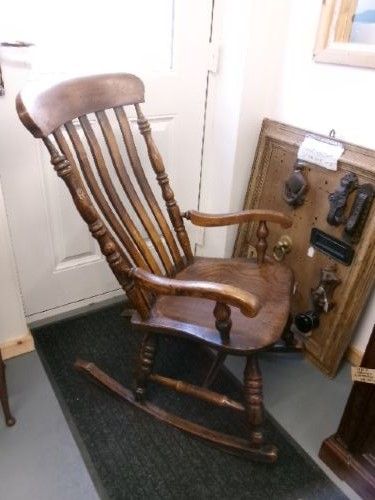
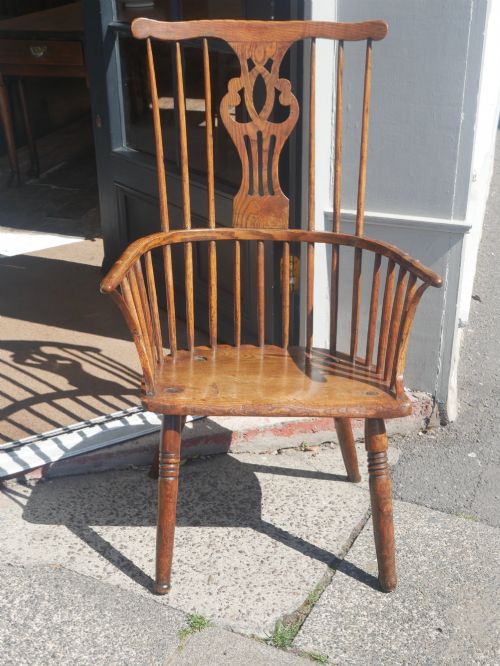


Vintage High Back Windsor
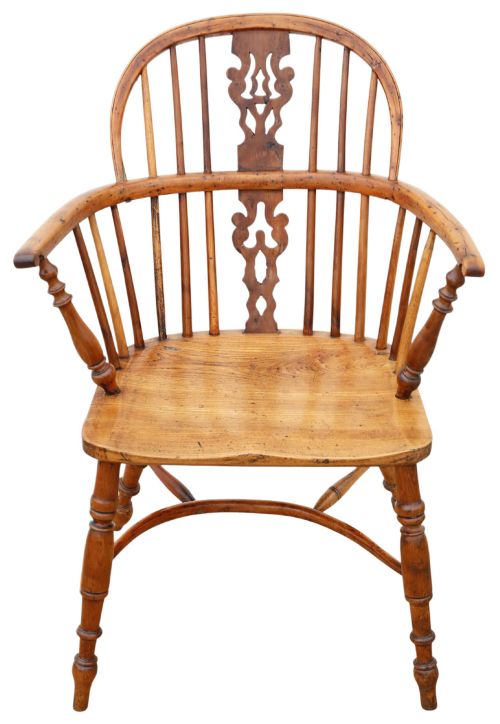
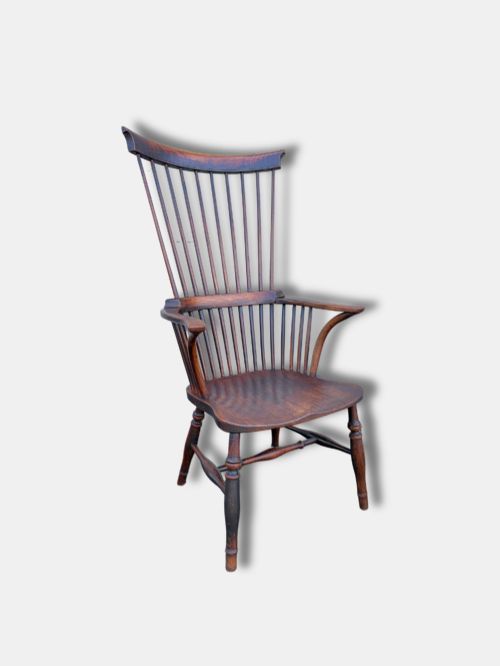
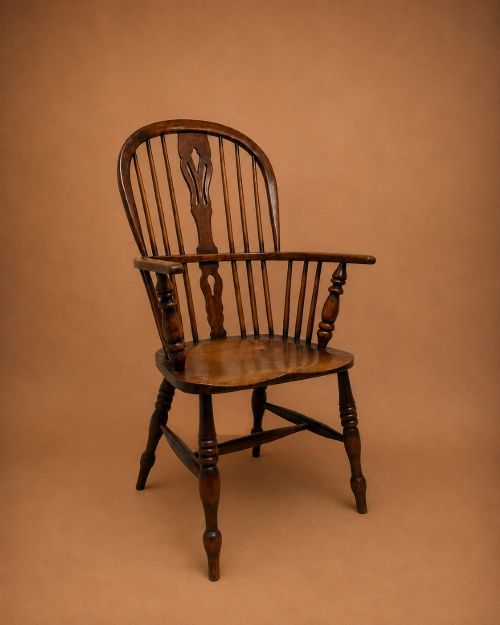
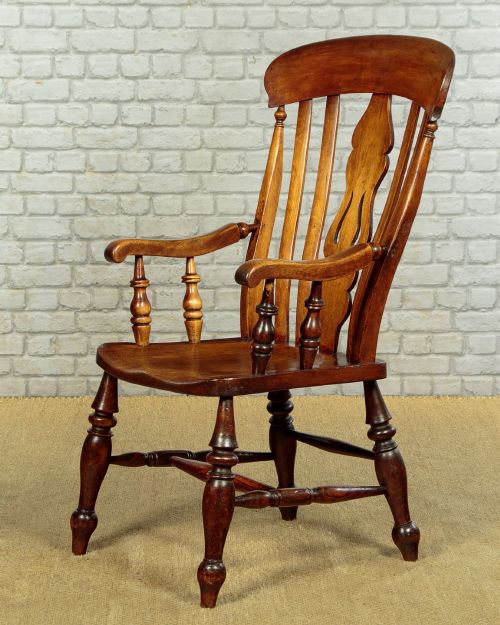
A vintage high back windsor brings sculptural vernacular timber and commanding stature into a room, offering robust seating shaped by generations of regional English joinery.
Vintage High Back Windsor
A vintage high back windsor is a sturdy wooden seat built around a thick solid timber saddle, into which turned legs and an elevated spindle back are wedged directly. These pieces emerge primarily from nineteenth century vernacular traditions, spanning Victorian farmhouse workshops and regional English styles such as Yorkshire and Thames Valley variants.
Buyers encounter numerous armchair formats alongside occasional rocking chairs, child variants, and high chairs. The most prevalent versions pair an elm seat with ash, beech, or yew uprights, creating tall combustible profiles designed for domestic hearth use.
Construction and timber combinations
Maker traditions relied on contrasting timbers for structural performance, pairing dense elm for carved saddle seats with flexible ash or fruitwood for bent spindles and steam-bent arched crests. Yew wood appears frequently in higher status examples, celebrated for its rich grain patterns and durability.
Joinery methods bypass traditional framing by utilising wedged tenons where leg and back spindles pass straight through the seat plank. Turned components take shape on pole lathes, while comb backs and hoop backs receive their curves through moisture and heat treatment.
A solitary Scottish Darvil chair hides within the records, proving that high back windsors travelled far beyond English farmhouse kitchens.
Distinctions in standard and craftsmanship
Quality separates mass vernacular production from ambitious regional craftsmanship through the selection of timber and the articulation of turnery. Superior examples display deeply sculpted saddle seats with generous proportions, balanced ear pieces, and tightly figured yew or richly grained elm.
The sophistication of the spindle turning and the grace of the back comb or hoop dictate the visual hierarchy. Chairs exhibiting stamped maker attributions or complex undercarriage stretchers occupy the upper tier of regional country seating.
Allsop Worksop·John Shadford
The Vintage High Back Windsor Glossary
- Comb back
- A high chair back featuring a horizontal top rail supported by vertical spindles, resembling the teeth of a comb.
- Hoop back
- A continuous bentwood bow forming the backrest and armrail in a single sweeping arc.
- Saddle seat
- A thick wooden seat base scooped out by hand with an adze to mirror the contours of the body.
- Stretcher
- A horizontal wooden rod connecting the legs beneath the seat to reinforce the structural rigidity of the frame.
- Carver
- An armchair variant traditionally positioned at the head of a dining table or used as a principal fireside seat.
Vintage High Back Windsor: Frequently Asked Questions
What makes a high back windsor comfortable?
The comfort stems from the deep excavation of the solid wooden seat combined with the rake of the tall spindle back, which supports the spine without rigid padding.
Craftsmen angled the back uprights slightly backward and flared the arm rests to create an ergonomic shelter suited for long hours by the hearth.
How do I distinguish regional windsor styles?
Regional differences appear in the profile of the comb, the shaping of the arm rests, and the choice of primary timber, such as Yorkshire chairs showing distinct crest rails.
Thames Valley examples often incorporate yew wood and fluid wheel-back motifs, whereas northern vernacular pieces favour unadorned ash and robust elm construction.
Where should I place a windsor chair?
These tall seats command attention in corners, hallways, or beside fireplaces where their sculptural silhouettes can be viewed in the round without obstruction.
They function well as reading chairs or desk seats, provided the seat height matches standard table clearances in the room.
Are children's windsor chairs rare?
Miniature variants and high chairs were produced for domestic nurseries using the exact same turning and wedging techniques as adult seating.
Their survival rate is lower due to heavy juvenile use, making small-scale examples sought after by collectors of vernacular woodwork.