







Vintage Harbour View Canvas
A vintage harbour view canvas captures the enduring allure of maritime life, bringing coastal atmosphere and historic ports straight into your interior.
Vintage Harbour View Canvas
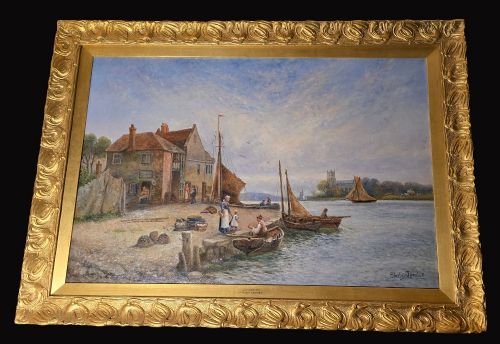
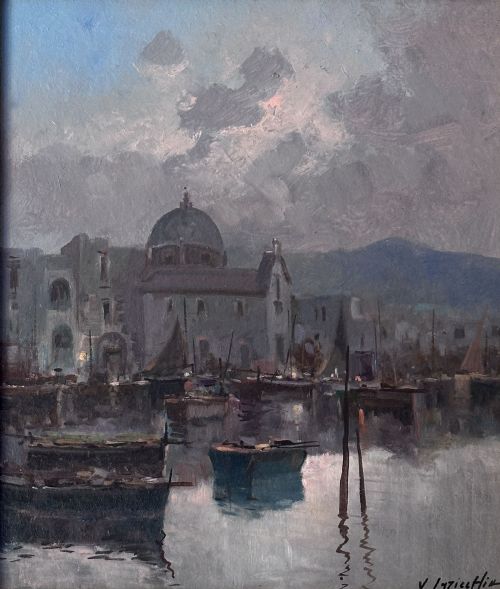
A vintage harbour view canvas presents maritime scenes, bustling ports, and coastal towns captured in oil paint by artists working across the nineteenth and twentieth centuries. These works record historic waterways, quaysides, and fishing ports from Britain, France, Scandinavia, and Canada, reflecting both local commerce and coastal leisure.
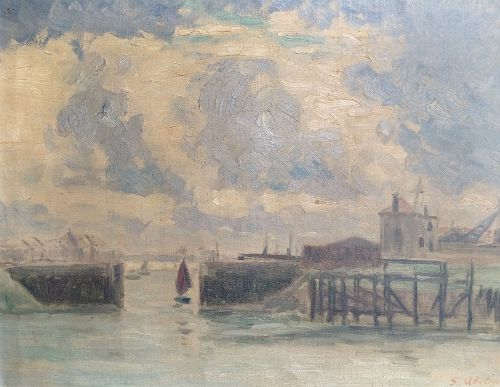
The pieces on this page span several distinct periods, including Victorian, Edwardian maritime, and mid twentieth century British and European schools. Buyers frequently encounter framed works displaying stylistic approaches from traditional marine painting to post-impressionism and impressionist studies of light.
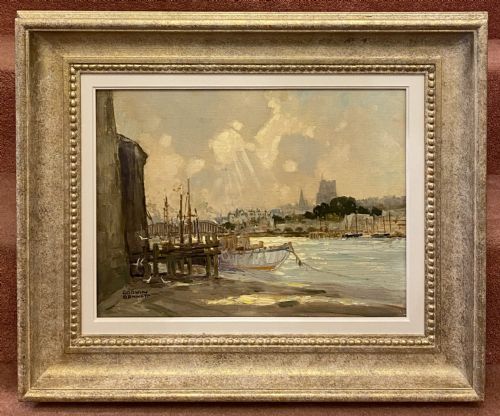
Subjects range from specific locations such as Cornish fishing villages, Scottish ports, and Mediterranean harbours to anonymous coastal inlets and London's historic reaches. This variety allows collectors to select works based on particular geographic locations, periods, or artistic movements.
Materials and technique
Artists utilise oil paint applied to woven canvas stretched over wooden frames, often securing the completed work within giltwood or plain wooden mouldings. This traditional method of construction provides a textured, durable surface that holds pigment securely over decades.
Brushwork varies from the tight, precise detail of nineteenth century marine painting to the looser, expressive strokes characteristic of twentieth century impressionism. The application of oil allows for subtle blending of light and water, particularly in depictions of changing coastal atmospheres.
Vintage Harbour View Canvas Retail Price Guide 2026
Typical asking prices for vintage harbour view canvas among the pieces listed under this phrase on Sellingantiques today, from the lower quarter to the upper quarter. They describe what is for sale here now, not the wider market.
Several canvases invite viewers to peer past historic quaysides into sunlit French towns and bustling Scottish fishing ports.
Assessing quality and merit
Quality rests upon the artist's ability to handle light, water, and atmospheric perspective within the composition. Stronger works demonstrate confident brushwork and a coherent palette that successfully conveys the specific mood of a coastal location.
Condition of both the canvas and the accompanying frame influences the overall integrity of the piece. Well preserved surfaces retain original pigment stability and appropriate framing, whereas later restorations or heavy cleaning can alter the visual balance.
Gyrth Russell·James Torrington Bell·Alfred Henry Vickers·Johan Jens Neumann·Augustus William Enness·Godwin Bennett
The Vintage Harbour View Canvas Glossary
- Canvas
- A heavy woven fabric used as a surface for oil painting. It is typically stretched tightly over a wooden frame before pigment is applied.
- Giltwood
- Wood that has been coated with a thin layer of gold leaf or gilt finish. Frames of this material frequently accompany traditional oil paintings.
- Post-Impressionism
- An art movement following impressionism that extends its use of vivid colours and thick brushwork. Artists focus on symbolic content and structural form rather than purely optical recording.
- Marine painting
- Artwork that depicts ships, harbours, coastal views, and the sea. This genre has a long history in British and European art.
Vintage Harbour View Canvas: Frequently Asked Questions
How do I hang a canvas safely?
Ensure your wall can support the weight of the framed canvas and use appropriate fixings matched to the wall type.
Hang the painting away from direct sunlight and damp environments to protect the oil paint and canvas over time.
How do I identify the period?
Examine the style of brushwork, clothing styles of any figures depicted, and the construction of the wooden stretcher frame behind the canvas.
Signature styles often align with particular decades such as Edwardian maritime or twentieth century British school aesthetics.
Can these paintings be cleaned?
Surface dust can be removed gently with a soft, dry brush by someone experienced in handling historic artwork.
Professional conservators should handle deeper cleaning or varnish removal to avoid damaging the original oil paint layer.
Where were these paintings produced?
The works originate from various artistic hubs across Britain, France, Scandinavia, and Canada, reflecting active coastal painting traditions.
Many capture specific named ports while others record anonymous European and British coastal views.