




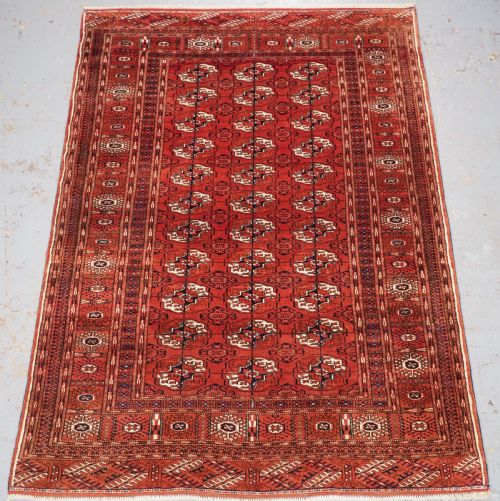
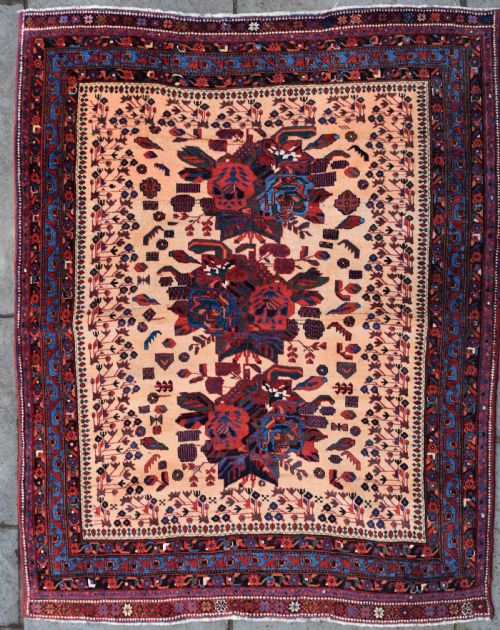
Vintage Handmade Oriental Rug
These vintage handmade oriental rugs bring geometric tribal designs and rich natural dyes directly onto the floor.
Vintage Handmade Oriental Rug
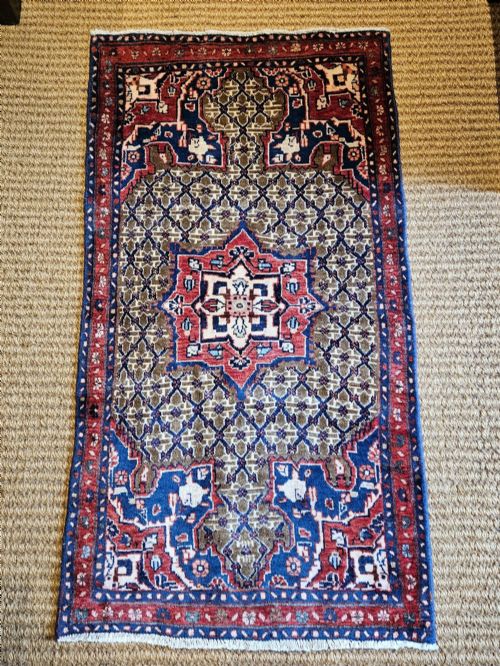
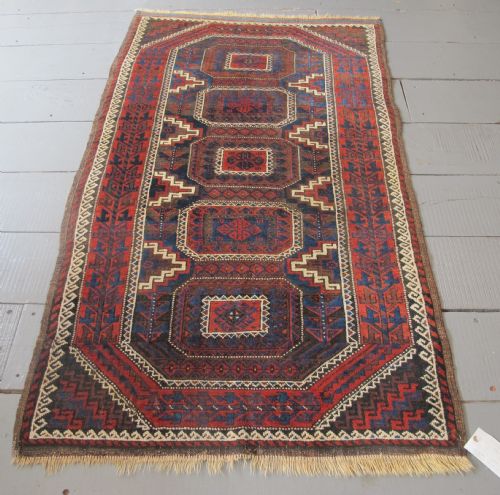
When you search for a vintage handmade oriental rug, you are looking at floor coverings woven by village and nomadic makers across Persia, Anatolia, and Turkmenistan. The pieces on this page span from the mid-nineteenth century through the early twentieth century, offering authentic tribal designs rather than mass-produced factory output.
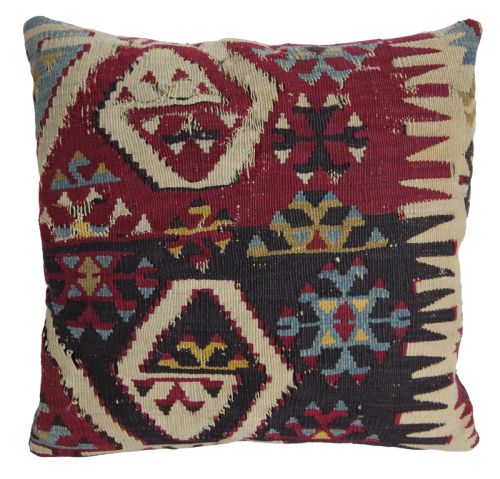
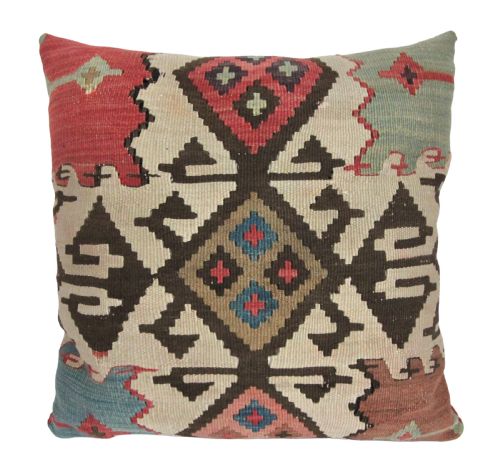
The selection here includes hearth-sized floor rugs, prayer rugs, and domestic cushions converted from flatwoven kilims. Tribal groups such as the Tekke Turkmen, Heriz, Karadja, Hamadan, Milas, and Afshar account for the distinct regional patterns visible across the inventory.
What varies in quality
Quality in these rugs depends on the crispness of the tribal design and the density of the knotting. Finer weaving allows for sharper geometric motifs and more intricate medallion work.
The depth and saturation of the colour palette also separate standard pieces from superior examples. Natural dyes that have mellowed evenly over time contribute significantly to the visual appeal of an older rug.
Nomadic weavers occasionally inserted deliberate small errors into geometric borders to ward off the evil eye.
The Vintage Handmade Oriental Rug Glossary
- Gul
- A repeating octagonal or gabled motif often found in Turkmen rugs. It acts as a tribal emblem passed down through generations of weavers.
- Abrash
- Variations of colour within a single field of wool caused by batches of dye applied at different times. It is a hallmark of hand-spun materials.
- Kilim
- A flatwoven textile produced without a pile, frequently repurposed into smaller decorative items such as cushions. These pieces rely on slit-weave techniques.
- Warp
- The vertical threads stretched across the loom that carry the structural foundation of the rug. Cotton warp threads provide strong dimensional stability.
- Medallion
- A central decorative ornament placed in the middle of the rug field. Heriz and Karadja weaving traditions frequently employ this geometric focal point.
Vintage Handmade Oriental Rug: Frequently Asked Questions
How do I clean an antique rug?
Vacuum gently without using a rotating brush roll that can pull at the wool pile. Professional specialist cleaning remains essential for removing deep grit without damaging natural dyes.
Avoid household chemical treatments entirely, as these strip the lanolin from the wool and alter the original tones permanently.
Can I put these rugs in high traffic areas?
Wool and cotton construction provides robust durability suitable for everyday domestic life. Placing a quality underlay beneath the rug prevents slipping and reduces fibre friction against hard floors.
Rotating the rug occasionally ensures even wear patterns across the pile over the years.
How do I date an older tribal rug?
Dating relies on wool quality, dye analysis, structural conventions, and specific tribal design shifts documented across the nineteenth and twentieth centuries. Exact years remain estimates based on stylistic evolution rather than stamped markers.
Hand-spun materials and specific structural characteristics usually point toward the earlier end of the nineteenth century.