


Vintage Hand Embroidered Throw
These Central Asian and South Asian textiles bring rich, historic needlework into modern rooms.
Vintage Hand Embroidered Throw
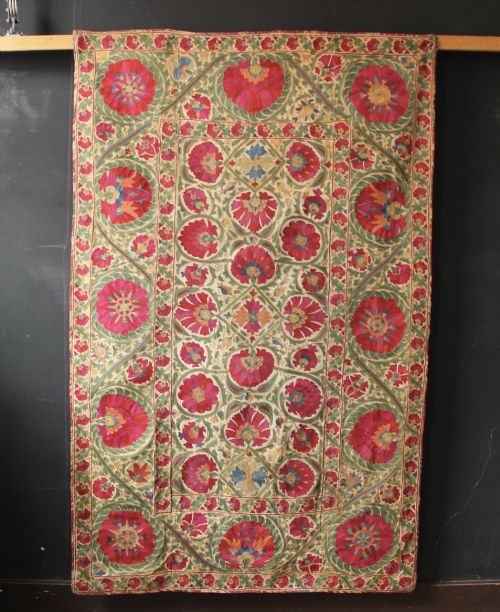
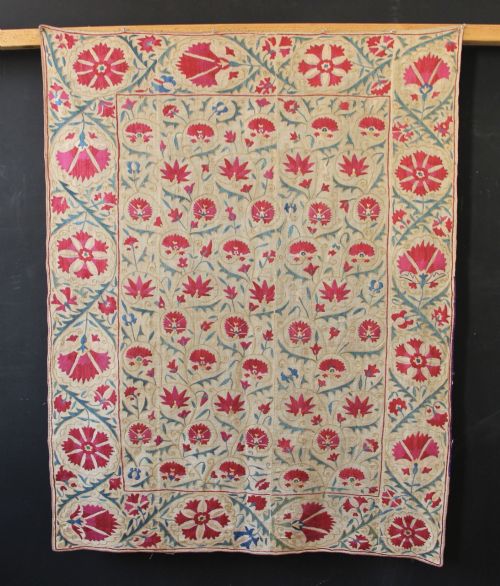
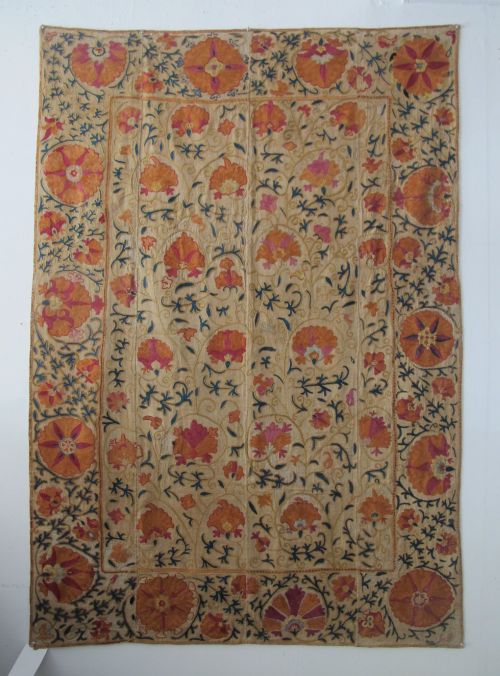
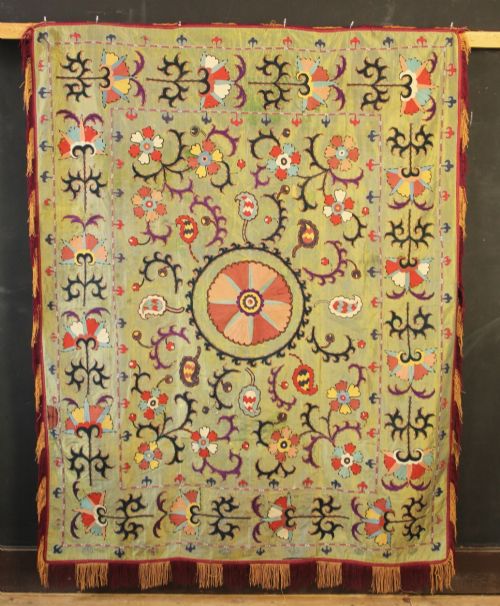
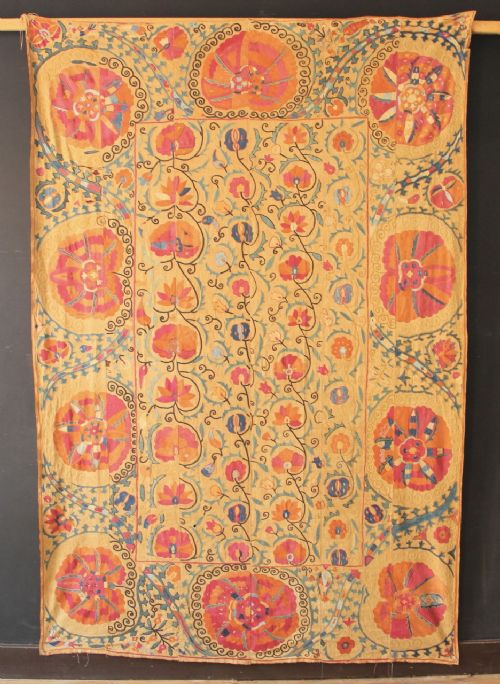
When searching for a vintage hand embroidered throw, collectors encounter Central Asian needlework, particularly traditional suzanis originating from regions such as Bokhara, Tashkent, Samarkand and Shahrisabz. These textiles span from the eighteenth century through to the early twentieth century, taking the form of wall hangings, bedcovers, wedding shawls and covers.
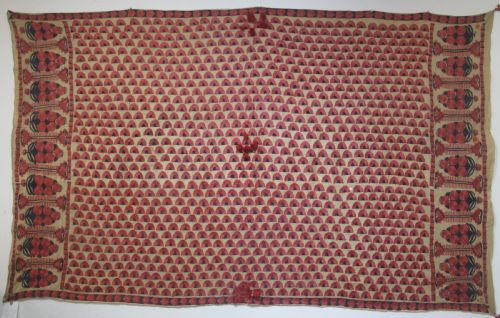
The most common examples on this page are nineteenth-century and early twentieth-century Uzbek suzanis alongside Kashmiri and Sindh embroidered shawls. Pieces range from full-work panels densely covered in needlework to smaller nim suzanis and tribal Lakai variants created on various ground fabrics.
What varies in quality
Quality rests primarily on the density of the needlework, the complexity of the design layout, and the preservation of the original ground fabric and threads. Full-work pieces that feature heavy silk embroidery across the entire surface demand significantly more labour than open compositions with exposed background cloth.
The vibrancy and saturation of the dye colours also separate standard examples from exceptional ones, particularly where older madder reds and rich silks retain their visual impact. Furthermore, the precision of regional motifs - such as central stars in palak designs or intricate medallion variants - reflects the skill of the original maker.
Many nineteenth-century bridal textiles were stitched in great haste by hopeful relatives who clearly lost track of geometry halfway through.
The Vintage Hand Embroidered Throw Glossary
- Suzani
- An embroidered tribal or urban textile from Central Asia, traditionally worked in silk on a cotton or linen foundation. These large decorative panels were often created as part of a bride's dowry.
- Nim Suzani
- A smaller variant of the standard suzani format, typically measuring roughly half the size. They serve well as smaller wall hangings or decorative covers.
- Palak
- A fully embroidered suzani type dominated by large central star motifs and dense field coverage. The ground fabric is often entirely concealed by heavy needlework.
- Adras
- A traditional hand-loomed ikat fabric woven from a mixture of silk and cotton yarns. It frequently serves as the supportive ground cloth for Central Asian embroidery.
- Dochala
- A traditional double-sided embroidered shawl originating from Kashmir. These pieces display fine needlework intended to be viewed from either side.
Vintage Hand Embroidered Throw: Frequently Asked Questions
How were antique suzanis originally used?
These textiles served primarily as ceremonial hangings, bedcovers and decorative elements within traditional Central Asian homes. They formed an essential component of a bride's dowry, prepared cooperatively by family members over several years.
Over time, families displayed them on interior walls or draped them over furniture during important household celebrations and weddings.
How should I care for a textile wall hanging?
Protect antique embroidery from direct, strong sunlight to prevent the natural silk and wool threads from fading over time. Professional mounting onto a padded, breathable support backing distributes the weight evenly if hung on a wall.
Avoid folding these textiles for long periods along the same crease lines to prevent stress on the historic ground fabrics and stitchwork.
How do I identify tribal Lakai embroidery?
Lakai pieces typically exhibit smaller formats, dynamic geometric layouts and distinct asymmetrical motifs rather than rigid, symmetrical floral arrangements. They often employ vibrant silk threads stitched onto red wool, cotton or adras grounds.
Their work reflects the nomadic artistic traditions of the Lakai people, separating them from the formal urban workshops of Bokhara or Tashkent.