

Vintage Tribal Silk Embroidery
Vintage tribal silk embroidery pieces bring vivid Central Asian geometry and rich needlework into modern rooms.
Vintage Tribal Silk Embroidery
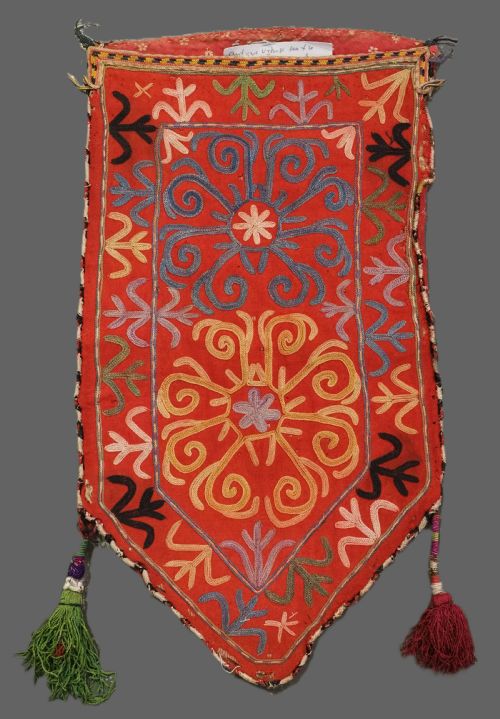
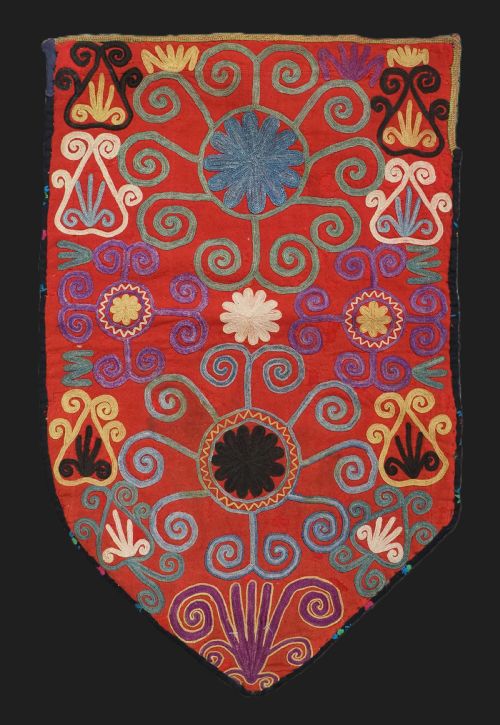
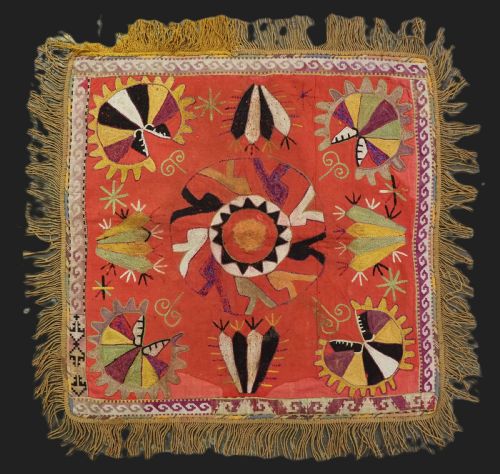
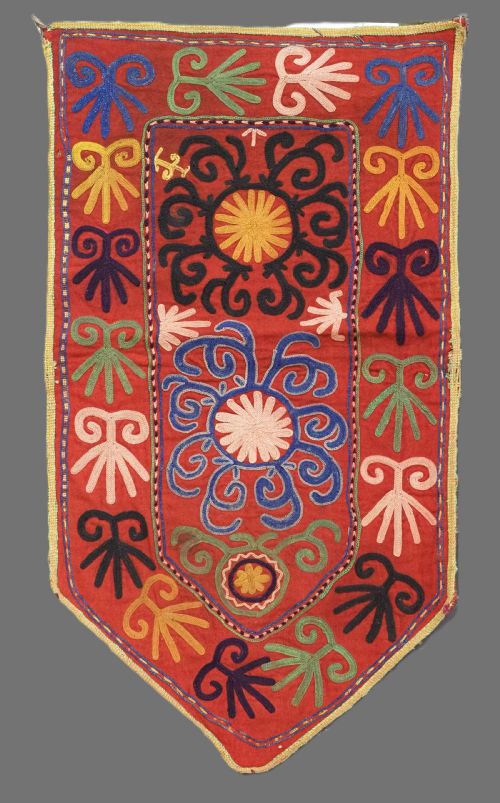
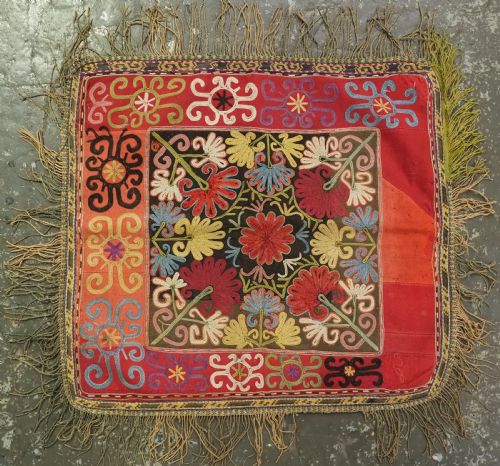
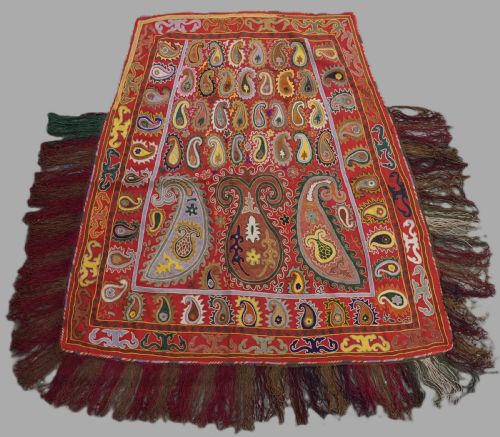
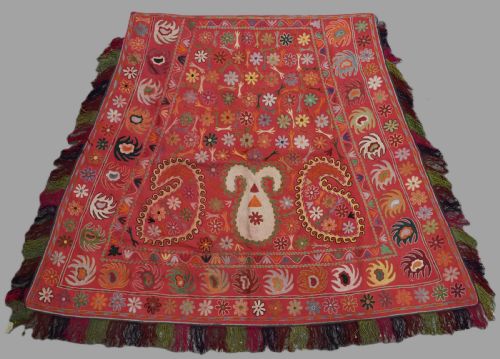
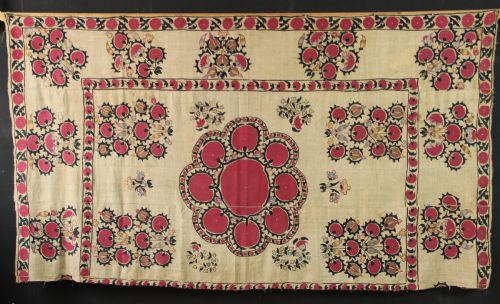
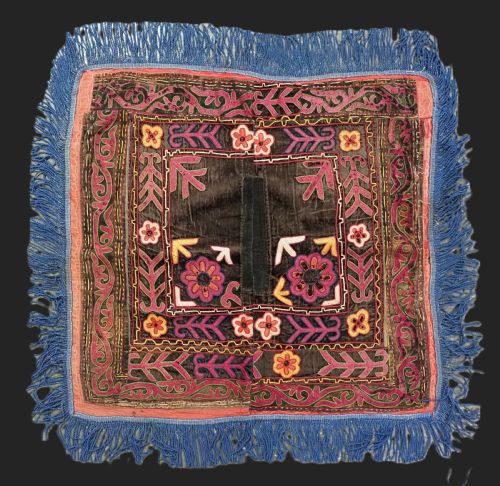
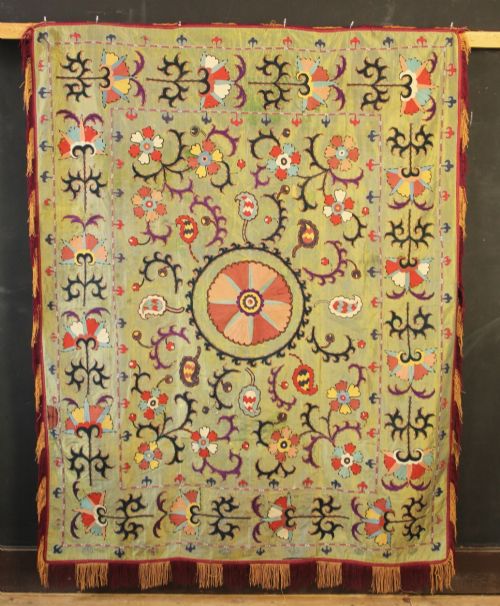
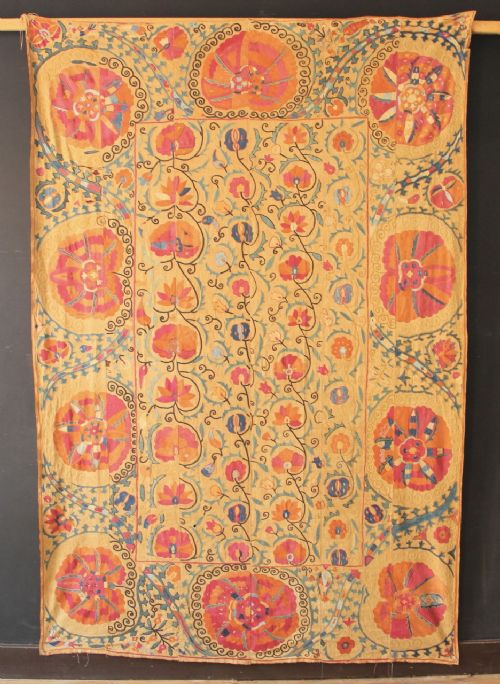
Vintage tribal silk embroidery encompasses striking textile art originating primarily from Central Asian regions such as Uzbekistan. These works include wall hangings, dowry items, horse covers, and ceremonial garments produced by nomadic groups like the Lakai tribe.
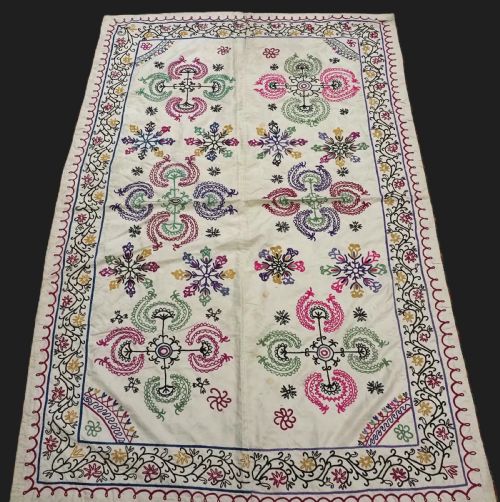
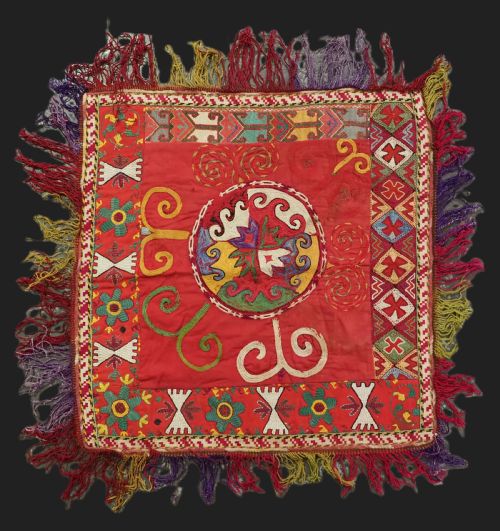
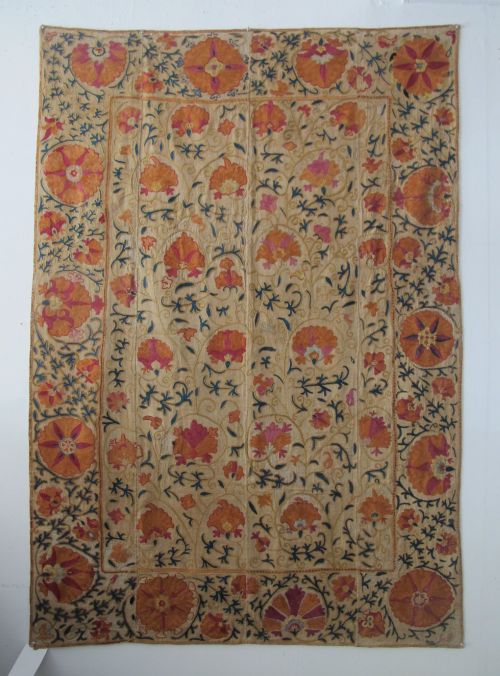
The objects take diverse forms, ranging from square yurt wall hangings and small panels to large suzanis and saddle rugs. Buyers frequently encounter nineteenth and early twentieth-century pieces worked in bold geometric or floral motifs.
Makers utilised traditional formats designed for domestic and ceremonial use within nomadic communities. The selection here reflects these diverse regional traditions, spanning pieces created across several decades.
Materials and construction
Artisans typically worked with vibrant silk thread applied to a foundation of cotton, wool, or velvet. Red wool grounds and dark cotton backings frequently support dense needlework in varied stitches.
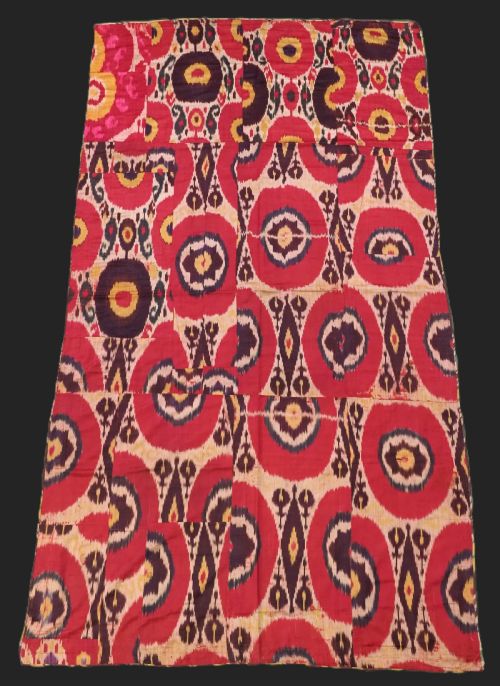
Surviving examples display meticulous hand embroidery executed across multiple panels joined together. The combination of silk thread on sturdy woven grounds ensures lasting structural integrity.
Common ground materials recorded in these pieces include woven cotton, dyed wool, and plush velvet.
Assessing quality and execution
Quality rests upon the density of the stitching and the complexity of the design layout. Full work panels displaying intricate, uninterrupted needlework stand apart from simpler compositions.
The vibrancy of the dye palette and the precision of geometric or floral execution determine the visual impact of each textile. Superior examples maintain balanced proportions and harmonious colour placement across the entire surface.
The Vintage Tribal Silk Embroidery Glossary
- Suzani
- A large embroidered tribal hanging from Central Asia, traditionally made as part of a bride's dowry. These textiles were typically stitched in panels and joined together before use.
- Ilgich
- A small embroidered wall hanging or dowry piece often associated with the Lakai tribe. These works frequently incorporate dynamic geometric motifs.
- Chyrpy
- A traditional ladies ceremonial coat heavily embroidered in silk, originating from Turkmen communities. They served as garments of status rather than everyday wear.
- Palak
- A fully embroidered suzani featuring a dense field of large medallions or star motifs, often set against a dark ground. The name derives from the Persian word for heaven or sky.
- Nim suzani
- A smaller variant of the standard suzani wall hanging, created in a reduced format. These compact textiles suit smaller wall spaces while retaining full embroidery techniques.
Vintage Tribal Silk Embroidery: Frequently Asked Questions
How were these embroideries originally used?
Nomadic families utilised these textiles to decorate yurt interiors, mark important rites of passage, and furnish domestic spaces. Many pieces functioned as dowry items created by brides and their families.
Other examples served as ceremonial horse covers or garments worn during community gatherings and weddings.
How should I hang a textile on the wall?
Mounting heavy embroideries requires distributing the weight evenly across the upper edge without puncturing the fabric. A professional conservator can attach a cotton sleeve to the back for a concealed support rod.
Alternatively, velcro attachment systems sewn onto a sturdy backing strip allow textiles to hang flat against a wall.
How do I clean and care for old silk embroidery?
Gentle surface dust removal using low-suction vacuuming through a protective mesh screen helps maintain the fabric safely. Direct sunlight causes natural dyes to fade, so placement away from bright windows is essential.
Professional textile conservators should handle any deeper cleaning or structural repairs to prevent thread loss.
How can I tell different regional styles apart?
Regional attribution relies on distinct combinations of colour, ground fabric, and motif geometry. Lakai pieces often feature lively, asymmetrical geometric appliques and bold silk stitching on wool grounds.
Urban centres like Tashkent or Bukhara produced larger, symmetrically composed suzanis with dense floral sprays on cotton foundations.