
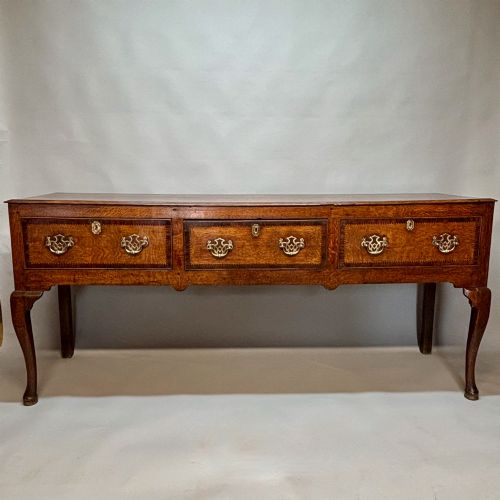
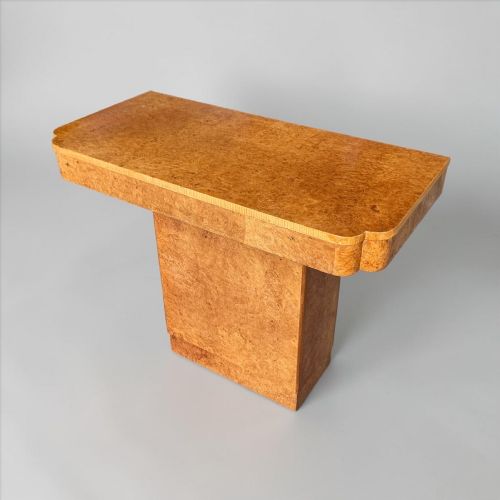
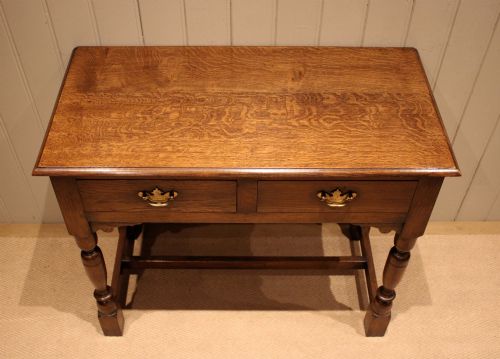
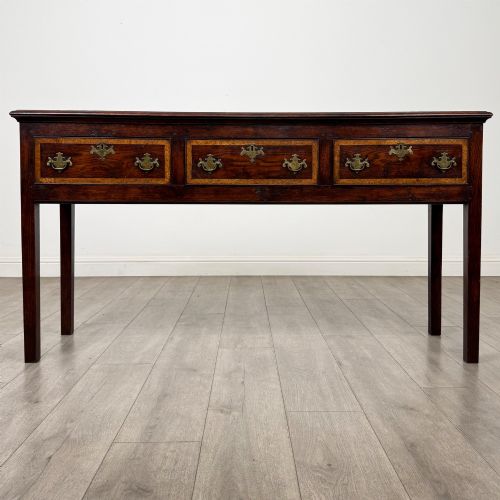
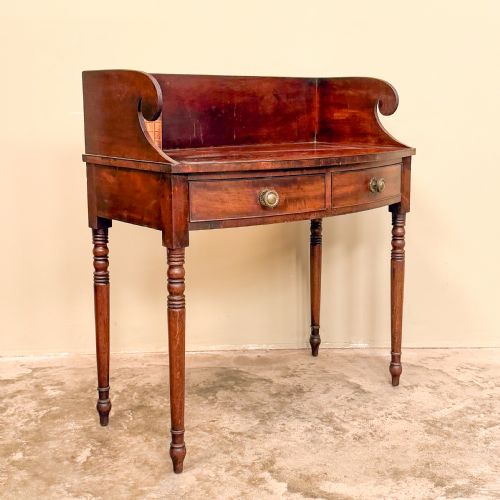
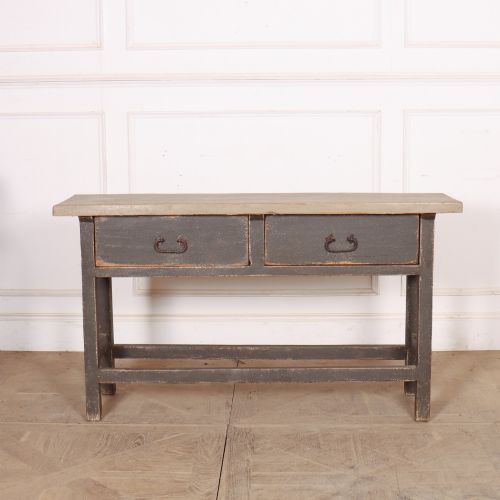
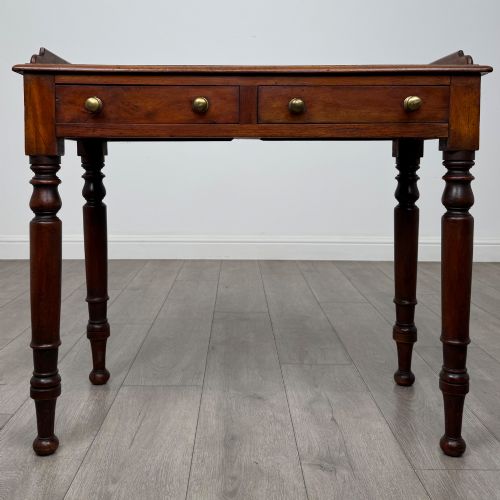
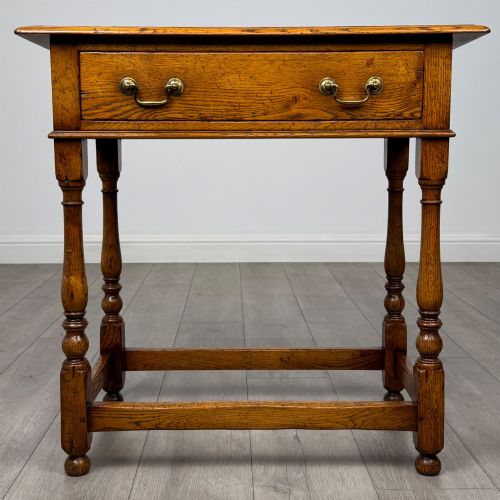
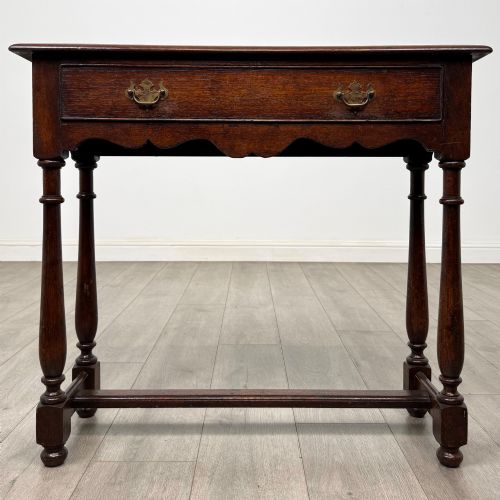
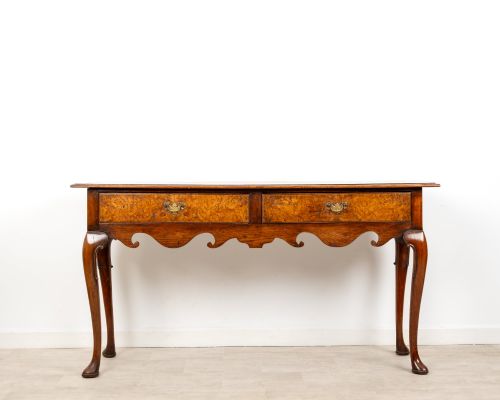
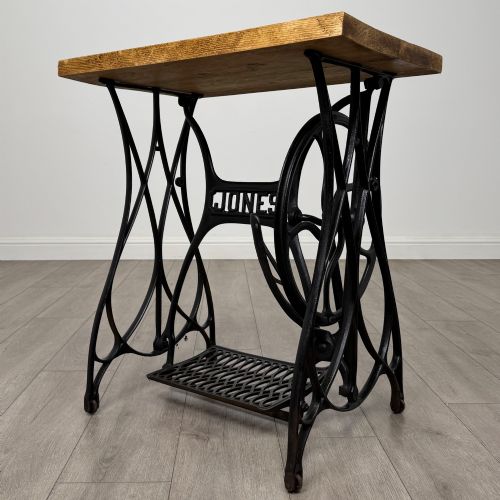
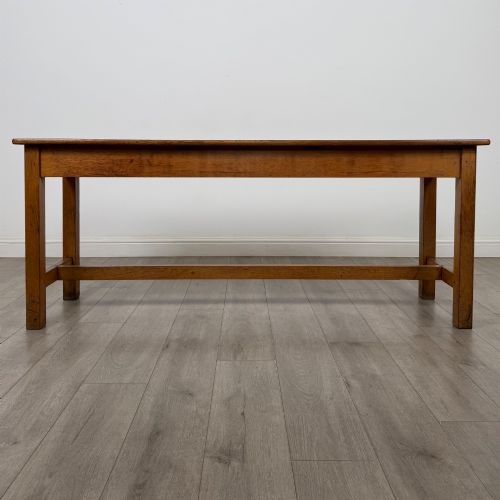
Vintage Hallway Console Table
A vintage hallway console table brings narrow surfaces and period character to a passage, offering a practical spot for post and keys.
Vintage Hallway Console Table
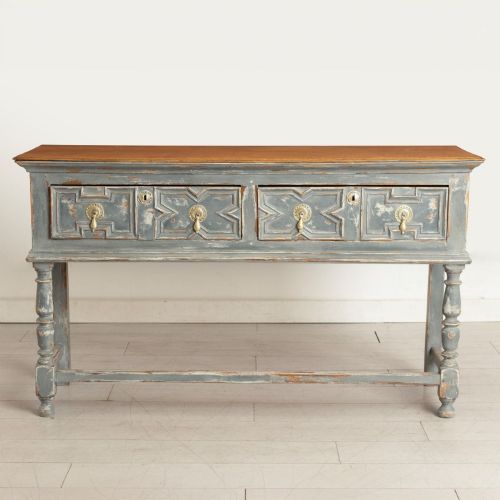
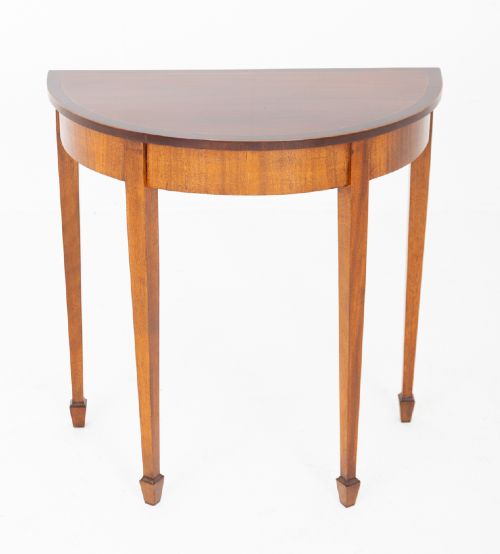
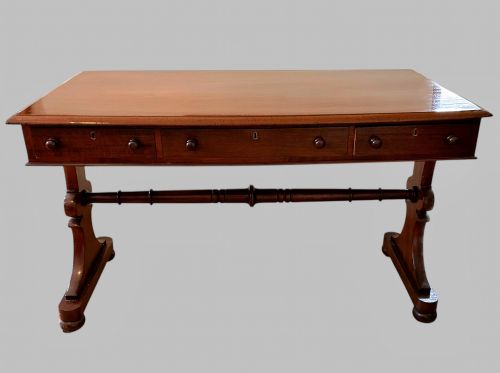
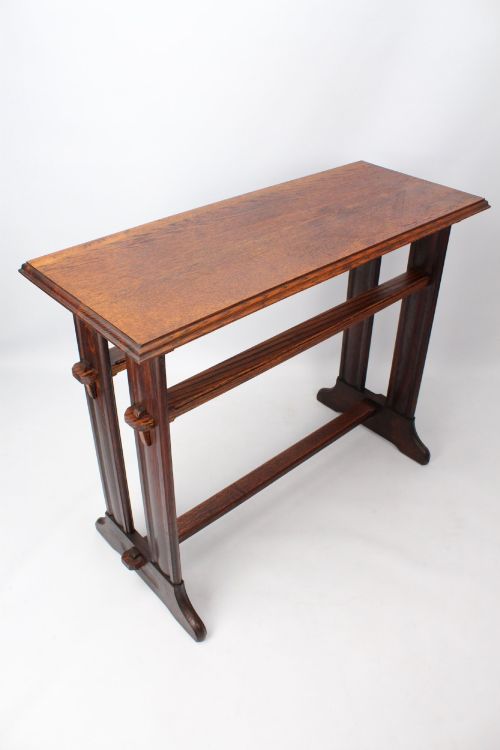
A vintage hallway console table comprises narrow surface furniture designed to sit against an entryway wall without blocking foot traffic. The pieces on this page span the nineteenth century, the Edwardian era, and the nineteen-thirties, drawing from forms such as side tables, desks, washstands, and dresser bases.
Most examples you will meet lean towards oak and mahogany builds, shaped in straightforward rectangular formats or half-moon demi-lune silhouettes. You will also find painted servers, rustic pine dairy tables, and burr walnut art deco designs that suit narrow transitional spaces.
Makers and origins stretch from English country workshops to French reception rooms, utilising styles that range from Victorian and Jacobean revival to clean-lined art deco. Selecting one means matching the depth of the passage to a surface that holds everyday essentials while displaying period grain.
How they were made
Makers relied on solid hardwoods like oak, mahogany, and walnut, alongside softer timbers such as pine and birch for painted or utility pieces. Surfaces often feature figured veneers, burr walnut patterns, or hand-painted finishes applied over timber carcases.
Construction techniques include traditional joinery for drawers and frames, sometimes supplemented by inlaid details, marble tops, or giltwood carvings. Iron work appears in industrial style pieces, while turned legs and bracket feet support the heavier timber bases.
Listings include nineteenth century pieces alongside Edwardian oak and nineteen-thirties art deco designs in mahogany, walnut, and pine.
What varies in quality
Quality rests in the selection of timber figures, such as matched burr walnut or golden oak grain, and the crispness of inlaid stringing or carved mouldings. Superior examples show thoughtful proportion in narrow depths and careful balance in demi-lune curves.
The integrity of the construction, from smooth-running drawer linings to solid timber framing without excessive modern alterations, separates standard utility furniture from finer architectural examples.
Hille·Fortnum and Mason·Hubert Simpson of Kendal
The Vintage Hallway Console Table Glossary
- Demi-lune
- A half-moon shape characteristic of console and side tables designed to sit flat against a hallway wall. This silhouette minimises floor obstruction in narrow entryways.
- Dresser base
- A low wooden sideboard featuring drawers and sometimes cupboards underneath, frequently utilised as a sturdy serving table in period halls. These pieces often employ solid oak construction.
- Washstand
- A wooden basin stand from the nineteenth or early twentieth century, adapted today as a narrow console or hall table. They frequently incorporate marble tops or tiled backs.
- Inlaid
- The technique of embedding contrasting strips of wood or other materials into the surface timber to create decorative borders. Edwardian pieces often display this detailing around the tabletop edge.
- Giltwood
- Timber treated with gold leaf or gold paint to produce a reflective metallic surface. This finish appears on neoclassical tables alongside marble tops.
Vintage Hallway Console Table: Frequently Asked Questions
What is a vintage hallway console table used for?
These tables provide a slim surface in narrow transition spaces to hold daily items like correspondence, keys, and decorative lamps without obstructing passage.
Their shallow profile makes them particularly suited to tight entranceways where standard furniture would block doors or walkways.
How do I choose the right size?
Measure the available wall space and the width of the corridor carefully, ensuring adequate clearance for foot traffic past the front edge.
Pay attention to the depth of the piece, as demi-lune and narrow side tables offer minimal projection while still providing a functional top surface.
Are these tables suitable for small entryways?
Many of these pieces are specifically built with shallow depths, making them ideal for compact hallways and landings where space is limited.
Designs like half-moon tables and narrow oak side tables tuck neatly against plaster walls while maintaining an open feel.
How do I tell Edwardian pieces from Victorian ones?
Victorian examples often employ heavy mahogany timbers, richer dark tones, and more robust proportions intended for formal reception rooms.
Edwardian and later pieces frequently showcase lighter golden oak, delicate inlaid mahogany, or painted finishes that reflect a shift towards brighter domestic interiors.