


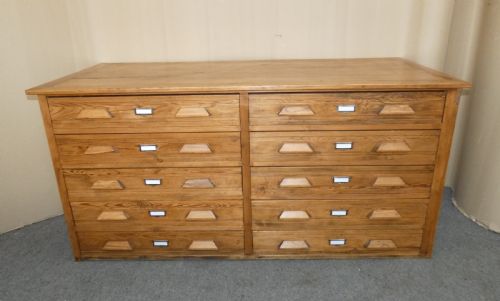


Vintage Haberdashery Shop Counter
A vintage haberdashery shop counter brings utilitarian charm into a modern interior, offering generous display space and deep compartmentalised storage.
Vintage Haberdashery Shop Counter
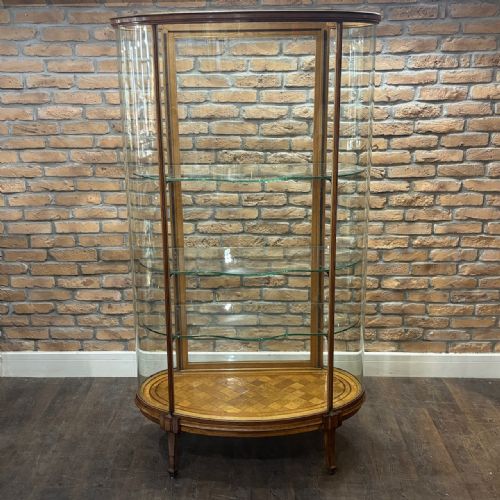
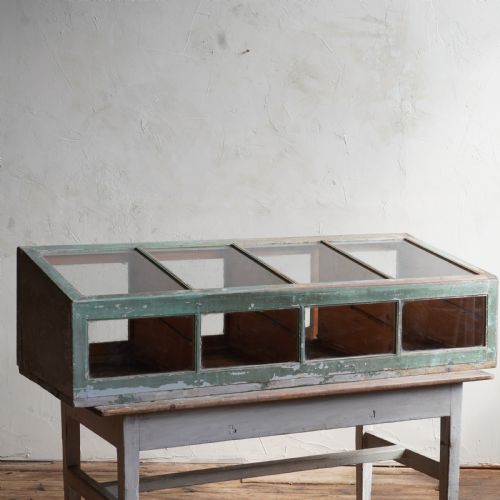
A vintage haberdashery shop counter functions as a sturdy retail fixture adapted for domestic use, frequently found in formats like banks of multi-drawer cabinets or glazed display units. These pieces originate from commercial spaces spanning the late nineteenth century through to the Art Deco period of the 1930s.
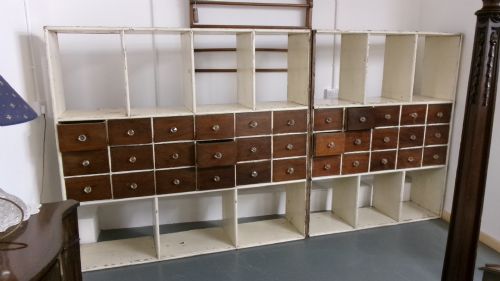
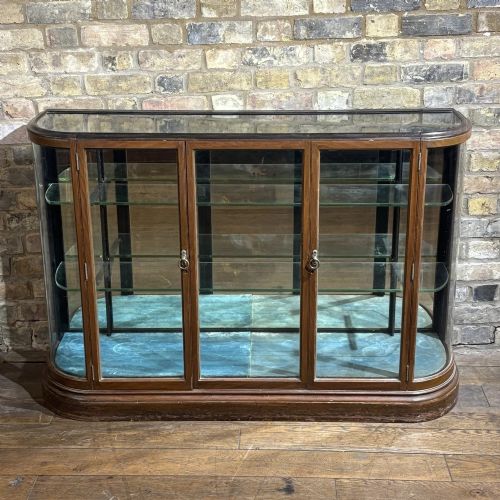
Buyers encountering this phrase most commonly discover large wooden counters featuring numerous small drawers, alongside glass-topped display tables and countertop display cabinets designed for merchants and drapers.
How They Were Made
Cabinet makers utilised dense hardwoods such as mahogany and oak for substantial framework and display cases, while pine served as the primary timber for multi-drawer shop fittings and utilitarian tables.
Metal elements including brass, cast iron, chrome, and aluminium reinforced structural corners, frames, and glazing bars, paired with extensive glass panes for product visibility.
Parisian lingerie advertising mannequins occasionally share the shop floor with haberdashery drawers.
What Varies in Quality
Superior examples derive from notable commercial workshop makers with robust internal drawer construction and original glazing, whereas lesser items show severe alterations or compromised timber integrity.
The finish dictates overall character, distinguishing pieces retaining their original painted surfaces or polished hardwood patination from those stripped or heavily reworked over decades of commercial service.
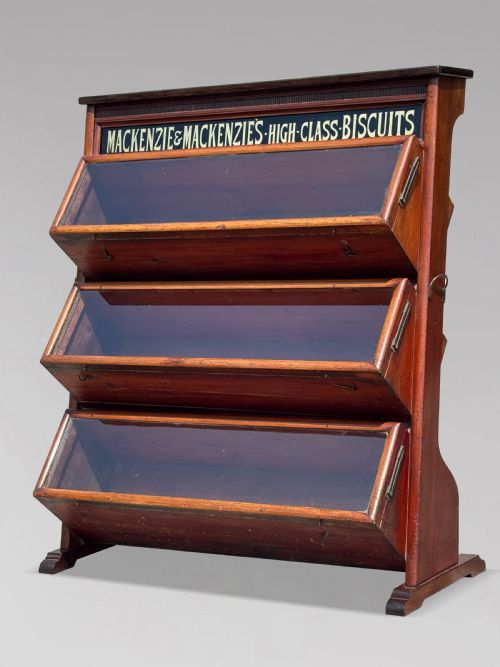
F. Sage & Co.·Dudley & Co·Saml. Elliott & Sons·Mackenzie's·Ermen & Roby·Charmereine
The Vintage Haberdashery Shop Counter Glossary
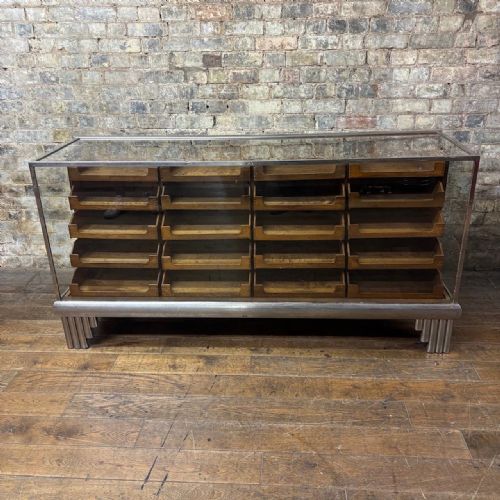
- Bank of Drawers
- An assembly of numerous small, uniform drawers housed within a single cabinetry frame designed for systematic stock organisation. Such configurations were essential for sorting cotton reels, buttons, and ribbons.
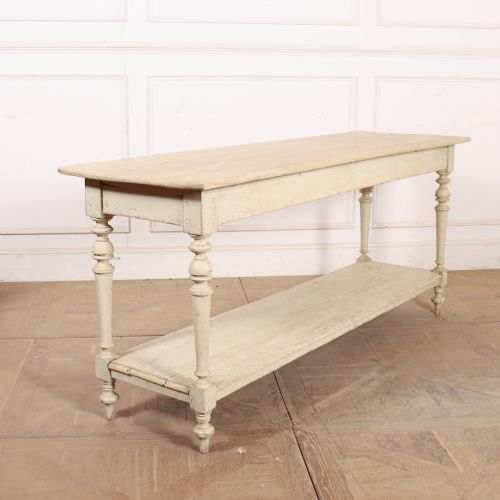
- Draper's Table
- A long, wide wooden table utilised in textile and clothing shops for measuring and cutting cloth. These tables often incorporate lower shelves or integrated drawers.
- Countertop Display Cabinet
- A smaller glazed showcase placed upon a main shop counter to highlight delicate or high-value merchandise securely. They frequently feature hinged rear doors for staff access.
- Bow End
- A curved cabinetry termination giving the end of a counter or display cabinet a rounded profile. This styling softens the geometric lines typical of commercial shop fittings.
- Shop Fitting
- Fixtures and furniture built specifically for commercial retail environments rather than domestic residential use. They prioritise durability, visibility, and ergonomic efficiency.
Vintage Haberdashery Shop Counter: Frequently Asked Questions
How were these counters used in shops?
Merchants used these fixtures to store small dry goods, ribbons, and sewing supplies in shallow drawers while displaying featured wares on glass surfaces.
Customers would stand at the front of the counter while staff measured textiles or retrieved stock from the tiered compartments behind or beneath the display top.
Can I use one as a kitchen island?
Many buyers adapt multi-drawer shop fittings and drapers tables for domestic kitchen use, benefiting from their generous proportions and deep storage.
Solid timber construction and heavy-duty frames allow these counters to support daily food preparation and modern countertop appliances.
How do I date a haberdashery counter?
Dating relies on identifying stylistic markers such as Victorian panel work, Edwardian brass trims, or streamlined 1930s Art Deco chrome and aluminium framing.
Maker plaques and structural timber choices also help narrow the manufacturing era between the late nineteenth century and the mid twentieth century.
What is the difference between oak and pine versions?
Oak counters were typically built for prominent display purposes in high-end emporiums, featuring polished wood grains and sophisticated glazed cabinetry.
Pine shop fittings served utilitarian storage roles, often finished with painted surfaces that developed a distinct patinated texture through decades of commercial wear.