
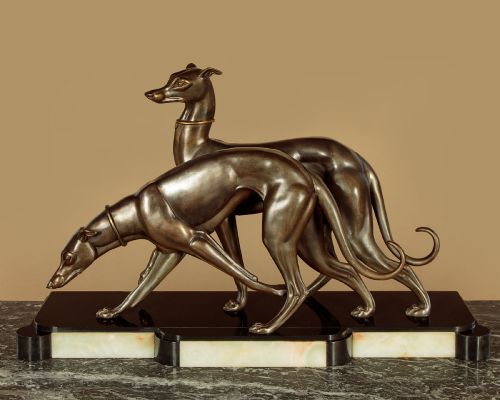


Vintage Greyhound Statue
These vintage greyhound statue pieces capture lean musculature and racing form in bronze, porcelain, and earthenware.
Vintage Greyhound Statue
A vintage greyhound statue captures the distinct streamlined silhouette and poised stance of the hound across several distinct eras of design. You encounter these forms primarily as sculptural figures, desk accessories, and functional desk pieces like quill holders.
The selection ranges from Victorian Staffordshire earthenware and porcelain pairs to French animalier bronzes and sleek Art Deco silvered bronze pieces. These works reflect the long-standing fascination with the breed's athletic form in both domestic interiors and automotive contexts.
Makers and designers from the nineteenth and twentieth centuries produced these hounds in varying scales, from monumental recumbent figures to miniature car mascots. The forms span realistic interpretations of resting dogs to dynamic representations of racing and leaping animals.
Materials and construction methods
Foundry workers cast many of the metal pieces in bronze, applying silvered or dark patinations to accentuate the muscular contours of the dogs. Other examples utilise traditional ceramic techniques, combining earthenware and porcelain with hand-applied glazes and enamel details.
Sculptors working in the French animalier tradition focused on anatomical precision, often mounting their bronze casts on heavy marble bases. Ceramic variants from Staffordshire and continental factories relied on moulded earthenware bodies finished with painted surface decoration.
Objects range from desk accessories and quill holders to large animalier sculptures and car mascots.
Assessing quality and execution
The choice of base materials, such as heavy decorative marble for bronze sculptures or fine porcelain bodies, separates standard production pieces from higher-tier works. Preserved surface finishes, whether original patinas on metal or intact enamel and glaze on ceramics, define the preservation standard.
Karl Hagenauer·Geo Maxim·Louis Lejeune·Christophe Fratin·Rosenthal
The Vintage Greyhound Statue Glossary
- Animalier
- A nineteenth-century artistic movement dedicated to the realistic depiction of animals, particularly in bronze. Sculptors in this tradition focused closely on anatomical accuracy.
- Art Deco
- A design style prevalent in the nineteen-twenties and nineteen-thirties characterised by streamlined forms and geometric styling. In these sculptures, the aesthetic translates the speed and grace of the hound into modern lines.
- Patina
- The surface coloration and sheen developed on bronze through age or chemical treatment. A well-preserved patina highlights the texture of the metal underneath.
- Automobilia
- Collectable items associated with motor vehicles, including mascots mounted on radiator caps. Greyhound figures frequently served as luxury car ornaments during the interwar period.
Vintage Greyhound Statue: Frequently Asked Questions
How do I date a greyhound statue?
Dating relies on identifying the prevailing material, style, and manufacturing techniques recorded across the piece. Victorian Staffordshire figures and French animalier bronzes carry distinct markers of nineteenth-century production, whereas geometric lines point to nineteen-thirties manufacturing.
Examining the underside, base materials, and signature marks helps narrow down the period. Comparing the style against documented works from known makers also aids in establishing chronology.
Where were these statues displayed?
Owners historically placed ceramic pairs on mantelpieces or used them as desk accessories like quill holders. Bronze animalier sculptures typically stood on library tables, sideboards, or heavy marble bases in studies.
Automotive mascots found their place mounted on the bonnets of luxury motor cars during the interwar period. Smaller figures also functioned simply as decorative ornaments within domestic interiors.
How do I care for bronze statues?
Bronze sculptures require minimal intervention beyond dusting with a soft, dry cloth to protect the surface patina. Avoid using commercial metal polishes or harsh chemical cleaners that can strip away the original finish.
Keeping the metal away from excessive moisture and direct sunlight helps maintain the stability of the patination over time. Marble bases benefit from gentle wiping with a damp cloth followed immediately by drying.
What is an animalier bronze?
An animalier bronze is a nineteenth-century sculpture focused specifically on the realistic portrayal of animals. Artists in this tradition studied live specimens closely to capture authentic movement and anatomy.
These works were typically cast using the lost-wax method and finished with patinas ranging from dark brown to green tones. Many were mounted on heavy stone or marble plinths for stability.
Are ceramic greyhound statues fragile?
Earthenware and porcelain figures require careful handling due to the brittle nature of fired ceramic materials. Glazed surfaces and enamel decorations can chip or scratch if subjected to impact.
Displaying them away from high-traffic edges and unstable surfaces prevents accidental tipping. Gentle cleaning with a soft brush ensures the painted details remain intact.