


Vintage Greyhound Sculpture
These vintage greyhound sculpture examples capture the lean agility of the breed in bronze, porcelain, and wood across several distinct periods.
Vintage Greyhound Sculpture
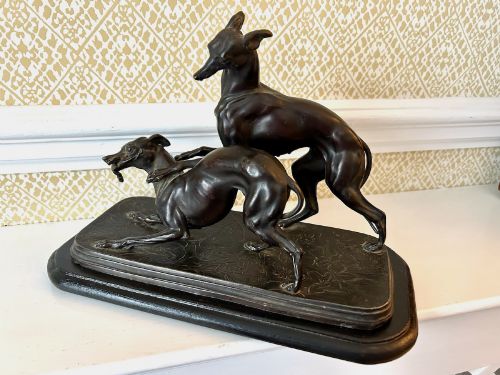
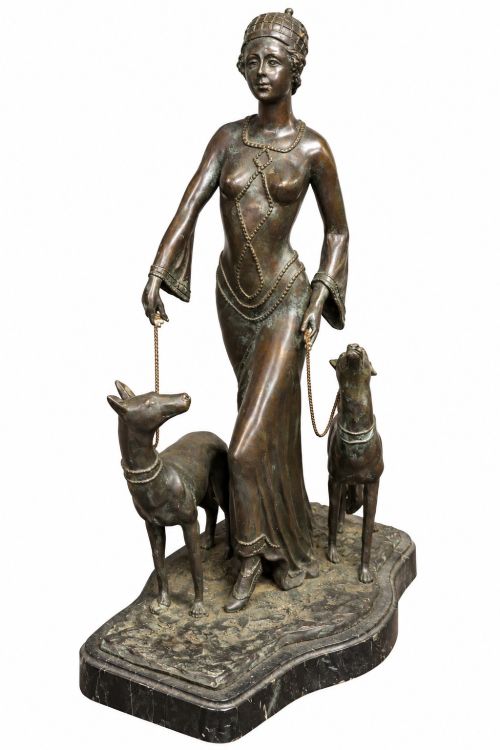
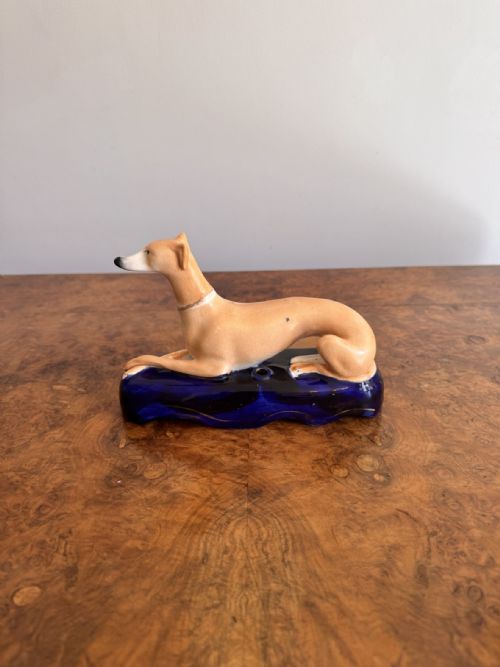
When you search for vintage greyhound sculpture, you encounter a selection of decorative pieces, figurines, and mascots spanning the Victorian era through the mid twentieth century. The forms range from recumbent hounds and paperweights to racing dogs and figures paired with young girls.
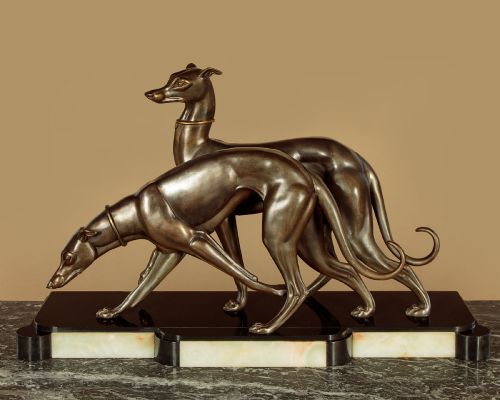
The versions you are most likely to meet on this page lean heavily towards the Art Deco period, often rendered in patinated or silvered bronze mounted upon stone bases. Pieces from the nineteen-thirties capture the dynamic movement of racing greyhounds and the sleek lines associated with speed and automotive culture.
Examples also draw upon the French Animalier tradition, reflecting meticulous attention to canine anatomy. Alongside metal castings, you will find porcelain interpretations and night lights that integrate utilitarian function with sculpture.
Materials and construction
Makers utilised bronze, silvered bronze, and porcelain to shape these figures, frequently mounting metal sculptures upon heavy marble or stone bases. Bronze casts utilise traditional foundry techniques to achieve the smooth musculature and textured coats characteristic of animalier bronzes.
Glazes and patination treatments were applied to metal and ceramic surfaces to enhance depth, while wood and porcelain offered alternative mediums for softer, matte finishes. Automobile mascots of the period required robust metal alloys to withstand outdoor exposure.
Listings feature works spanning the Victorian period, the nineteen-twenties, nineteen-thirties, and nineteen-forties, rendered in bronze, porcelain, and wood.
Judging quality in greyhound sculptures
The choice and finish of the base material, such as finely polished marble supporting a heavy bronze figure, contribute significantly to the overall presence of the piece. Signature placement and the quality of the patination further separate standard decorative items from masterworks of the period.
Karl Hagenauer·Geo Maxim·Louis Lejeune·Christophe Fratin·Rosenthal
The Vintage Greyhound Sculpture Glossary
- Animalier
- A nineteenth-century artistic movement dedicated to the realistic portrayal of animals, particularly predators and hounds. Sculptors in this tradition studied live specimens closely in menageries.
- Patinated Bronze
- Bronze treated with chemical solutions to produce a specific surface colour and tone. This finish protects the metal and accentuates sculptural contours.
- Automobilia
- Collectable items associated with motor cars, including mascot ornaments mounted on radiator caps. Racing greyhounds were a popular motif representing speed.
- Recumbent
- Lying down or resting with the limbs tucked beneath the body. This pose was frequently utilised for paperweights and desk ornaments.
Vintage Greyhound Sculpture: Frequently Asked Questions
What periods do these greyhound sculptures come from?
The pieces span from the Victorian era through the early twentieth century, including the nineteen-twenties, nineteen-thirties, and nineteen-forties. Art Deco aesthetics dominate the later twentieth-century selections.
Earlier works align more closely with nineteenth-century French Animalier traditions, reflecting a shift in sculptural style and material treatment over the decades.
What materials are common in these sculptures?
Bronze and silvered bronze are predominant, frequently paired with heavy marble or stone bases. Porcelain and wood also appear among the selections.
Patination treatments and glazes were applied to these base materials to achieve varied surface finishes and tonal depths.
How do I distinguish Art Deco pieces from Victorian ones?
Art Deco examples often emphasise stylised speed, sleek racing poses, and geometric stone bases typical of the nineteen-thirties. Victorian pieces tend toward naturalistic representations of resting hounds, functioning as traditional desk ornaments.
The casting techniques and signature styles also reflect the distinct artistic priorities of their respective eras.