

Vintage Green Necklace
A vintage green necklace brings together peridot, jade, emerald and enamel in gold and silver settings spanning the Edwardian and Art Deco decades.
Vintage Green Necklace
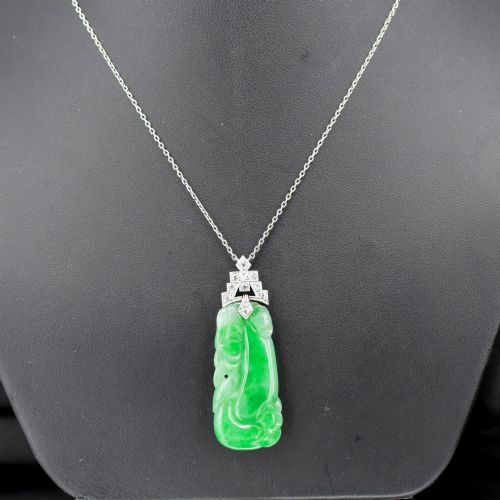
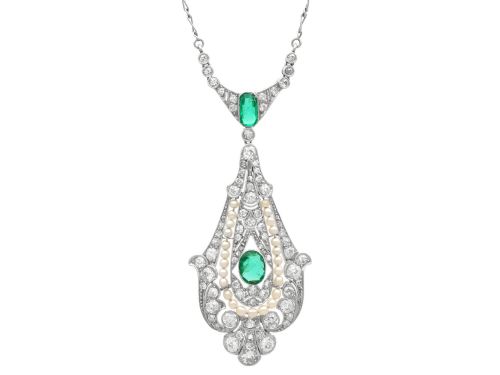
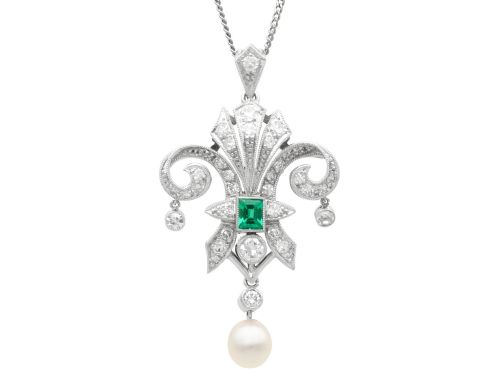
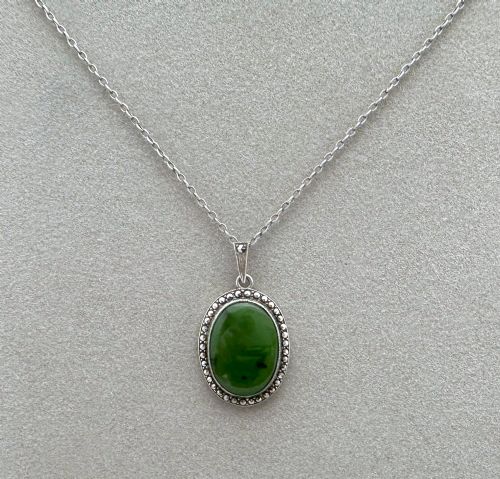
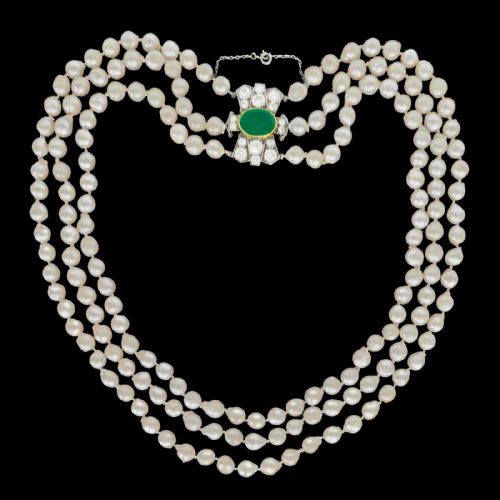
A vintage green necklace spans periods from the late nineteenth century through the mid-twentieth century, encompassing Victorian, Edwardian, Art Nouveau, Arts and Crafts and Art Deco designs. Pieces range from delicate silver lavaliers to platinum pendants set with diamonds and Colombian emeralds or carved jade.
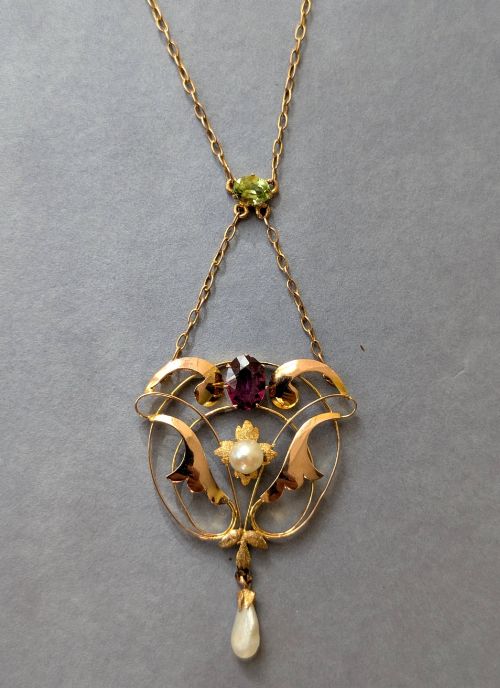
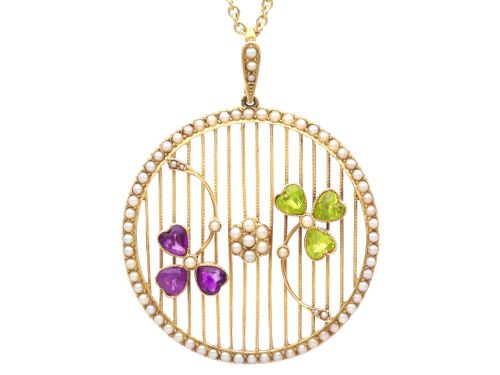
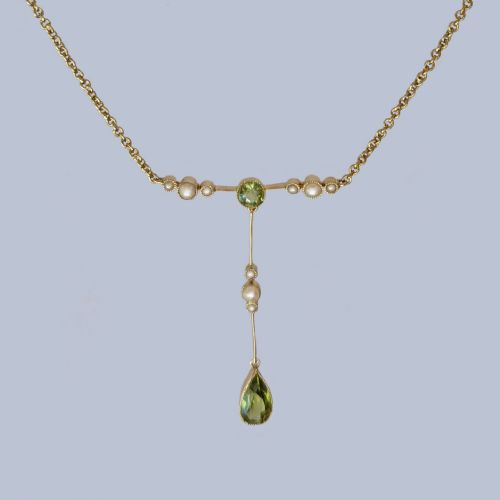
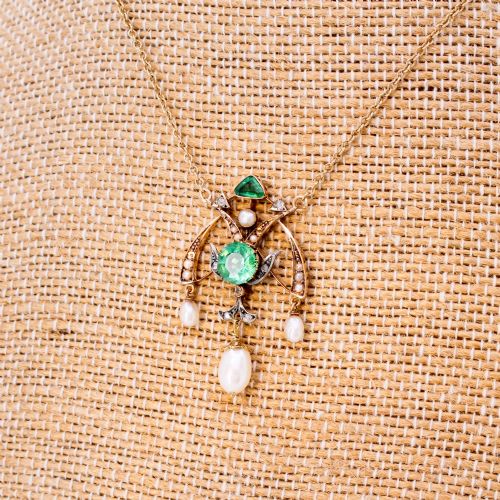
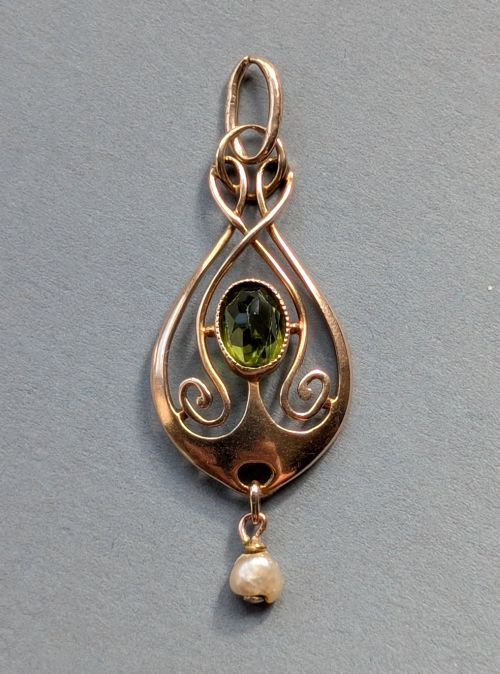
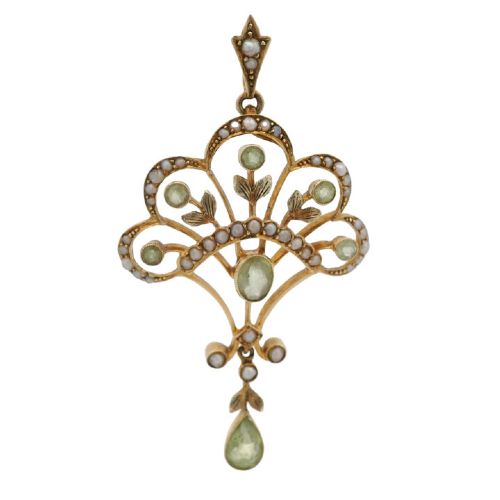
The version most commonly encountered on this page is an Edwardian or Art Nouveau gold pendant featuring peridot and seed pearls, often designed with garland motifs or flowing organic lines. Art Deco examples typically introduce geometric platinum settings alongside jade, emerald or chrysoprase.
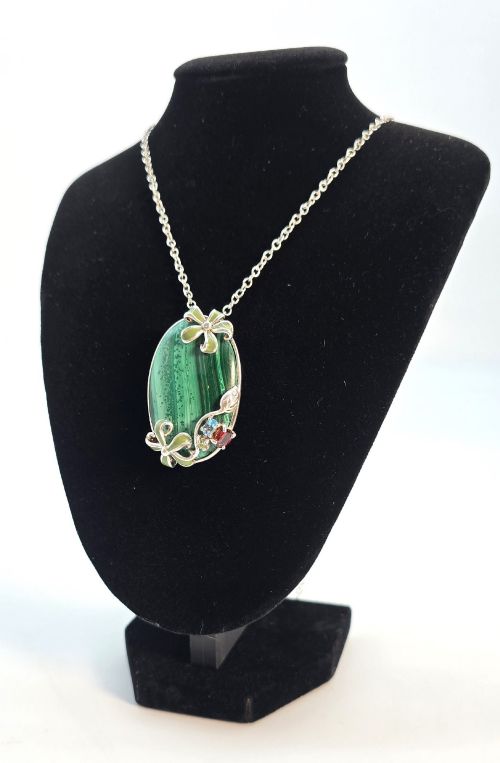
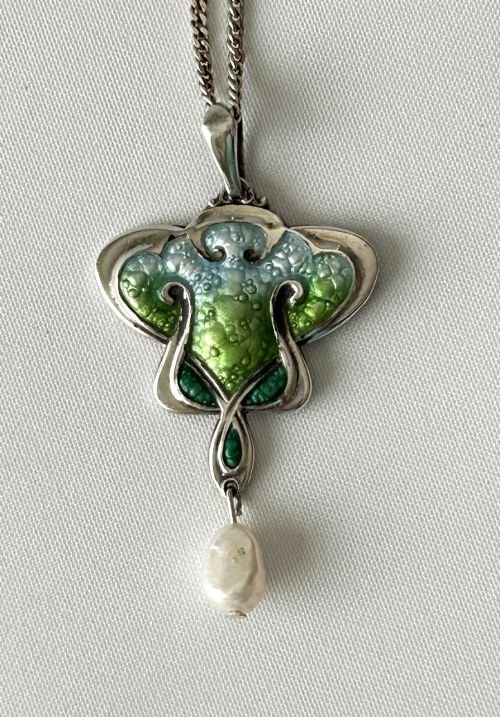
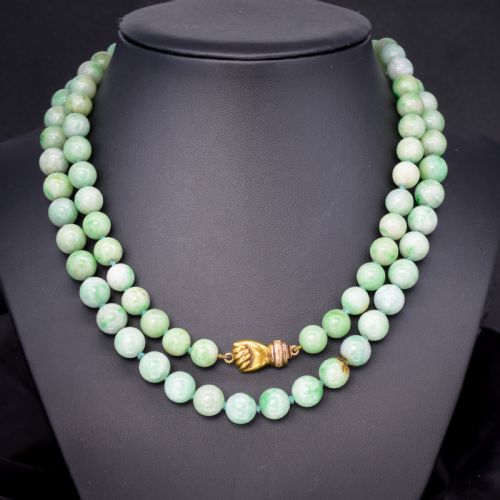
Necklace forms vary from single and multi-strand beaded jade and pearl configurations to drop pendants suspended from fine gold or platinum chains. Materials extend beyond faceted gemstones to include plique-à-jour enamel, amazonite, tourmaline and pate de verre glass.
Materials and technique
Goldsmiths and silversmiths utilised nine-carat, fifteen-carat and eighteen-carat yellow gold alongside platinum and sterling silver to mount green stones. Settings frequently incorporate old-cut diamonds, natural pearls and seed pearls to frame central peridots, emeralds and nephrite or jadeite jade.
Enamelling techniques such as plique-à-jour and pate de verre bring translucent colour to silver and gold frameworks, notably in Art Nouveau and Art Deco workshops. Stone-cutting methods include cabochon shaping for jade and turquoise matrix alongside faceted step cuts for emeralds and peridots.
Vintage Green Necklace Retail Price Guide 2026
Typical asking prices for vintage green necklace among the pieces listed under this phrase on Sellingantiques today, from the lower quarter to the upper quarter. They describe what is for sale here now, not the wider market.
Cicadas, dragonflies and butterflies frozen in glass and enamel share shelf space with fierce jade dragons and delicate flower garlands.
What separates the fine from the ordinary
The distinction between standard commercial production and finer work rests on the clarity and saturation of the green stones, alongside the complexity of the metalwork. Hand-pierced platinum settings and detailed granulation elevate a piece above simpler stamped mounts.
The integrity of enamel work and the matching of natural pearls or seed pearls dictate the standard of execution. Pieces bearing documented workshop marks demonstrate superior design cohesion and assembly.
Murrle Bennett·Gabriel Argy Rousseau·Amalric Walter·Liberty and Co·Heinrich Levinger
The Vintage Green Necklace Glossary
- Plique-à-jour
- An enamelling technique where enamel is applied to a cellular framework without a backing, allowing light to shine through the transparent colour like stained glass.
- Seed pearl
- Very small natural or cultured pearls, typically under two millimetres in diameter, used extensively in clusters and border arrangements on Edwardian jewellery.
- Peridot
- A yellowish-green gemstone of the olivine group that forms a primary green element in Edwardian and Arts and Crafts pendants.
- Pate de verre
- A glass-making method involving crushed glass packed into a mould and fused by heat, used to create sculptural pendants with textured surfaces.
- Jadeite
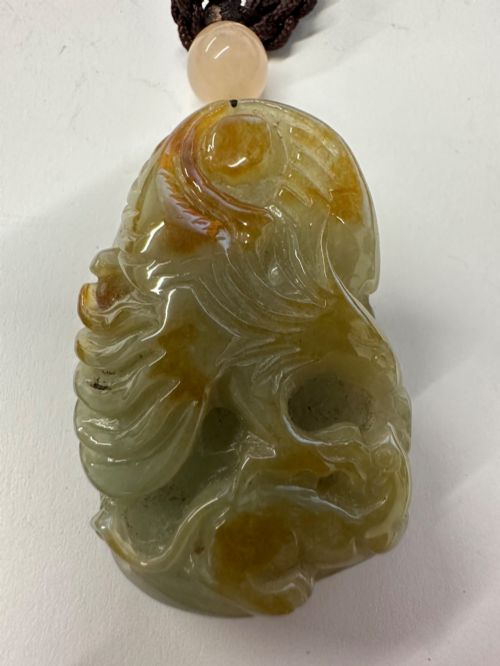
- A dense mineral species forming carved pendants and bead strands, distinguished by its range from pale green to deep russet tones.
Vintage Green Necklace: Frequently Asked Questions
What periods do these green necklaces cover?
The selections span from the nineteenth century through the Edwardian, Art Nouveau and Arts and Crafts eras into the Art Deco and mid-century periods. Each era brings distinct metal choices and gemstone cuts.
Early pieces lean toward yellow gold and delicate seed pearl drops, while later decades favour platinum, geometric lines and vibrant jade or emerald stones.
How do I care for jade and emerald jewellery?
Gems such as emerald and jade require gentle handling and should be kept away from ultrasonic cleaners and harsh chemical dips. Soft cloths and warm soapy water are best for cleaning metal mounts.
Store each necklace separately in a lined box to prevent scratching softer stones and pearls against harder diamonds or platinum chains.
Are the pearls on these pieces natural?
Many Edwardian and antique necklaces incorporate natural pearls or seed pearls, particularly in garland and fringe configurations. Documentation or gemological reports often confirm their origin.
Care should be taken with pearl strands to protect the silk thread from moisture, perfumes and cosmetics over time.
What is the difference between jadeite and nephrite?
Jadeite and nephrite are the two distinct mineral species classified as jade, each with different crystalline structures and visual properties. Jadeite often exhibits bright translucent greens, while nephrite tends toward muted olive and spinach tones.
Both materials appear across antique Chinese carvings and Western Art Deco mounts on this page.