
Vintage Green Lamp Table
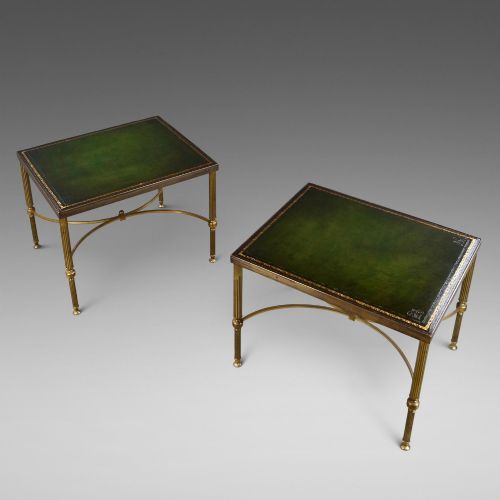
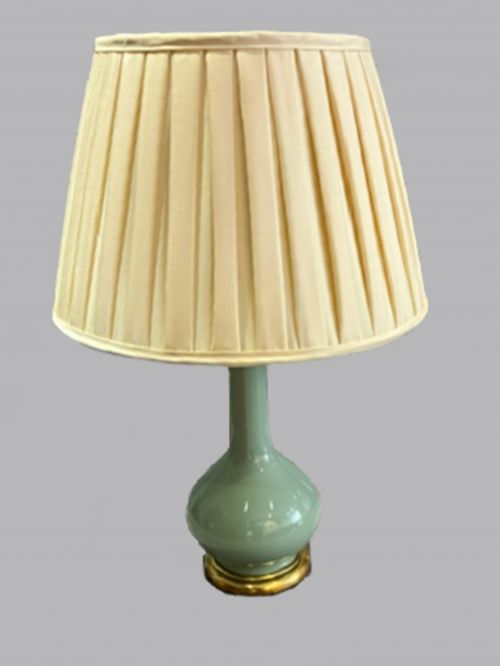
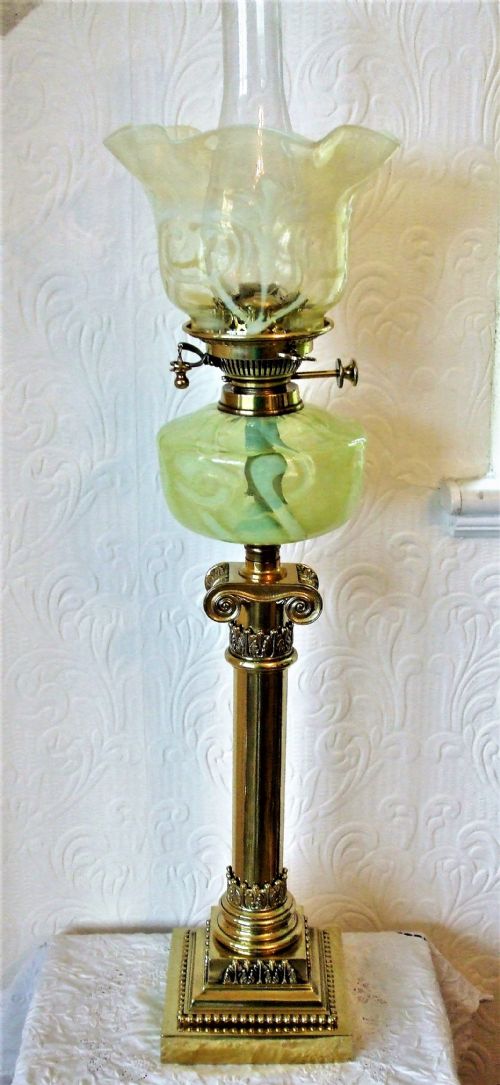
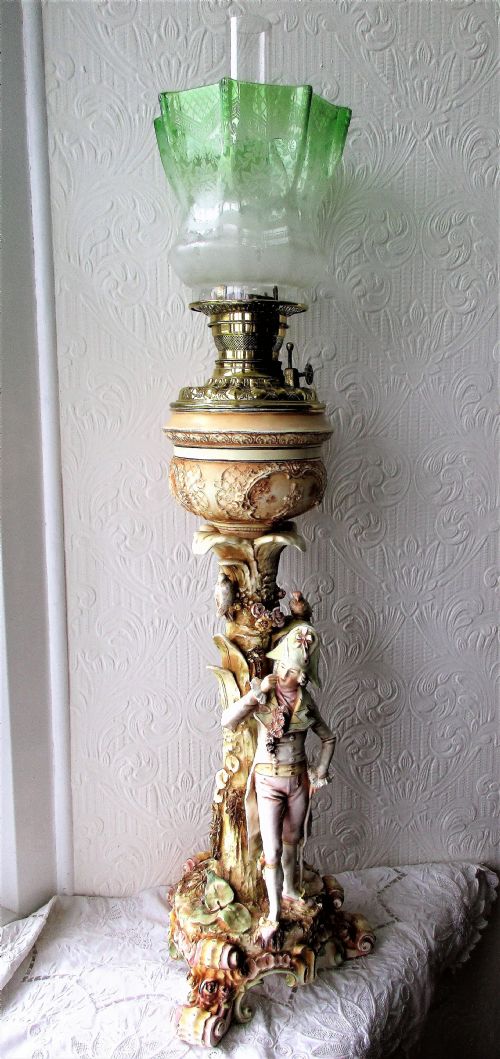
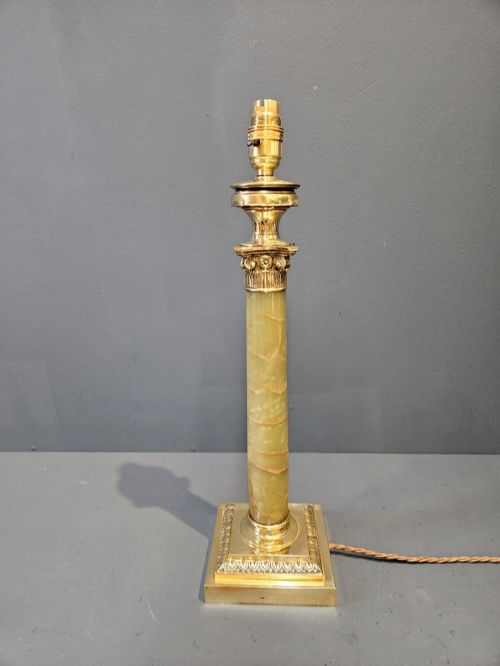
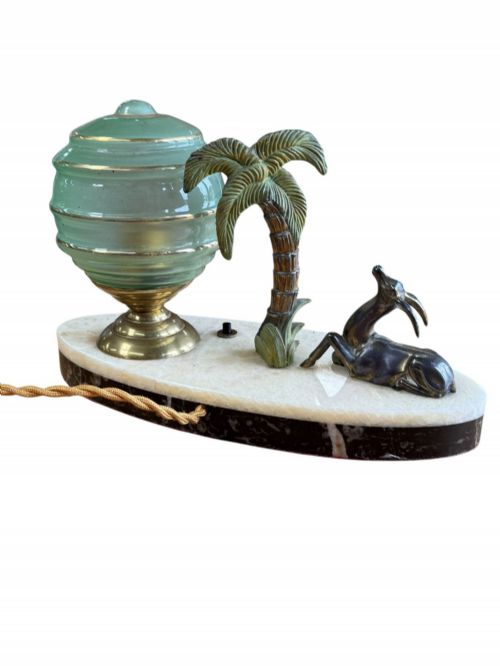
These vintage green lamp table pieces combine lighting and surface function, bringing coloured ceramic, toleware, and marble into nineteenth and twentieth-century interiors.
Vintage Green Lamp Table
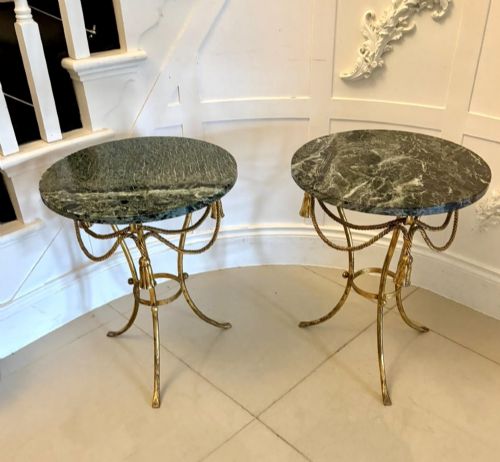
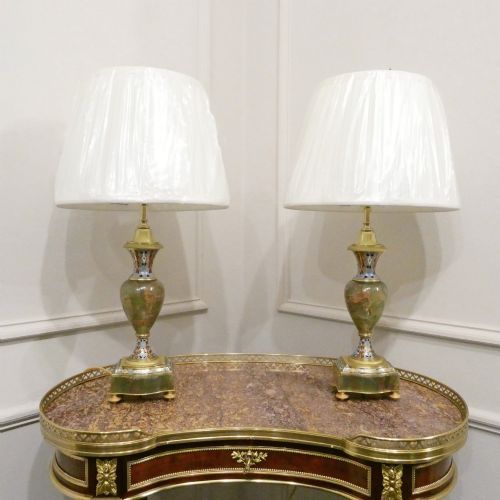
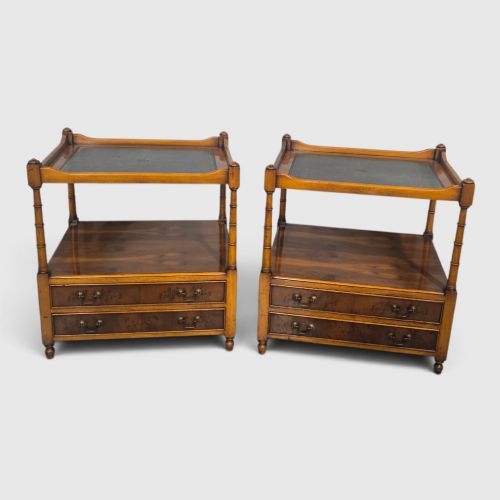
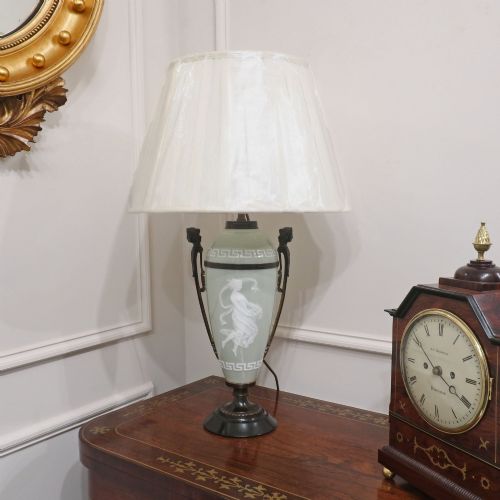
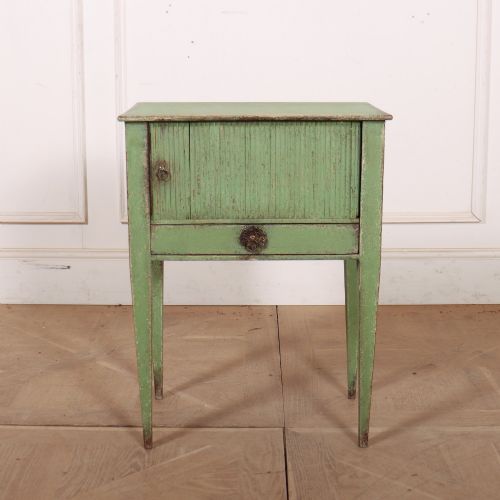
A vintage green lamp table brings together small occasional furniture and lighting pieces, spanning nineteenth-century examples and twentieth-century designs. You encounter wooden tables alongside toleware, ceramic, and marble lamps coloured in shades of green.
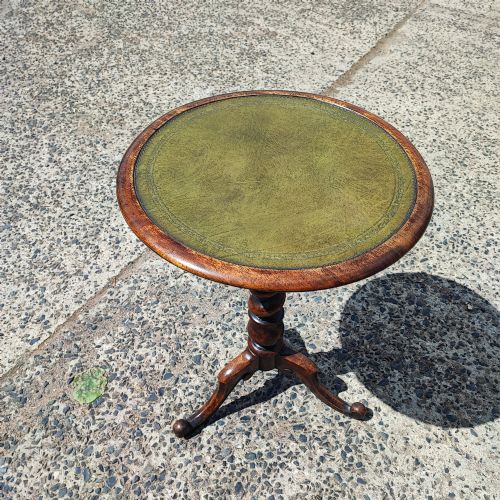
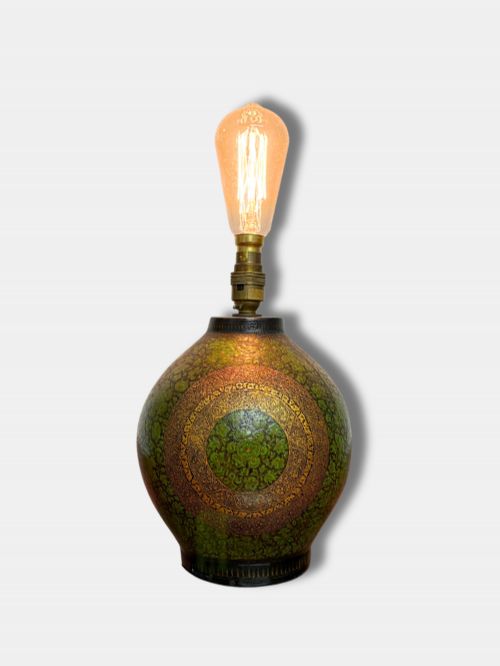
The selection ranges from Victorian mahogany and oak occasional tables to Art Deco marble and metal lighting fixtures. French styles and Kashmiri painted pieces appear frequently alongside English and continental designs.
Buyers look for these items to place beside seating or beds, using them to introduce functional surfaces and ambient illumination simultaneously. The green palette unites diverse materials from painted wood to patinated brass and jade marble.
Materials and construction methods
Brass, marble, and wood form the structural backbone of these items, shaped through casting, turning, and joinery. Makers utilised gilt metal, toleware, and bronze alongside porcelain and glass components.
Surface decoration relies on painted finishes, patination, and inlay work, particularly on French toleware and Kashmiri items. Stonework such as verde marble and onyx provides heavy, polished bases for twentieth-century lighting.
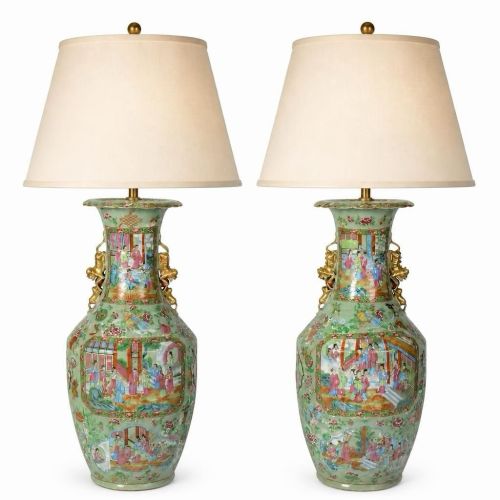
Fabric elements appear in silk baskets on occasional sewing tables, while ceramic bodies utilise pate sur pate and glazed earthenware techniques. Metal components feature hand-beaten copper, brass columns, and cast spelter.
Dogs and grapes make unexpected appearances, carved into French marble bases or blown in Murano glass.
Judging the range of quality
Quality rests upon the weight of the materials used, distinguishing heavy cast brass and solid marble from lighter plated substitutes. Finer examples show careful hand-finishing on patinated surfaces and painted toleware details.
Design execution separates standard production items from sculptural or signed pieces. The crispness of neoclassical mounts, inlaid mahogany borders, and champleve enamel work indicates the maker's skill level.
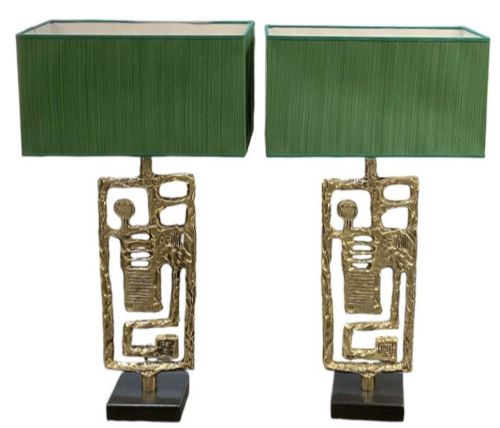
Angelo Brotto for Esperia·Hinks
The Vintage Green Lamp Table Glossary
- Toleware
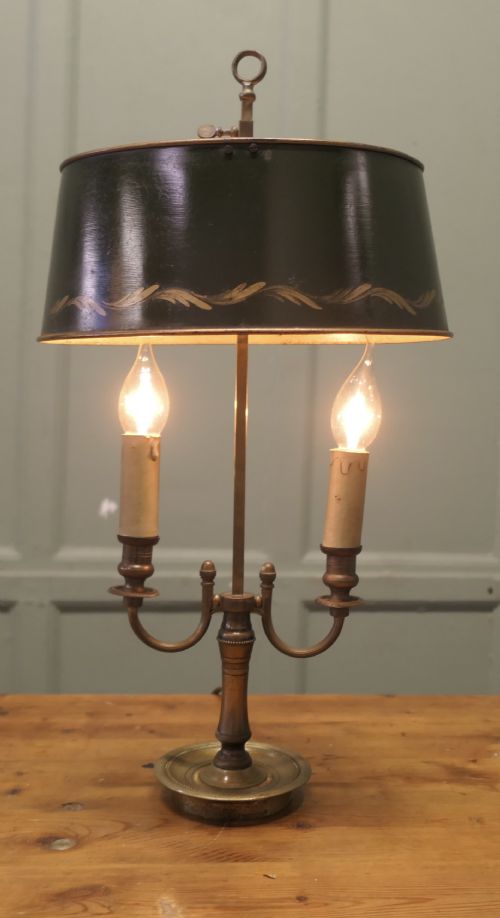
- Painted or lacquered metalware, typically tin or steel, often finished in dark green with gilt highlights. It appears frequently on nineteenth-century bouillotte lamps.
- Bouillotte lamp
- A traditional adjustable desk or table lamp with a central shaft and a painted metal shade. French examples often combine brass and green tole.
- Champleve
- An enamelling technique where depressions are carved into a metal surface and filled with vitreous enamel. It decorates nineteenth-century bronze and brass pieces.
Vintage Green Lamp Table: Frequently Asked Questions
What periods do these pieces cover?
The selection spans from the eighteenth century through the Victorian era and into the Art Deco period of the 1930s. Pieces reflect regional designs from England, France, Italy, and India.
Victorian and Edwardian items sit alongside mid-twentieth-century productions, showing shifting preferences in domestic lighting and occasional furniture over two hundred years.
How were bouillotte lamps used?
Bouillotte lamps served as card table and desk illumination in nineteenth-century French interiors. Their adjustable shades allowed users to direct light downwards onto the playing surface or paperwork.
The metal shades typically featured dark green painted exteriors to reduce glare, paired with candle sockets or electrical conversions in later decades.
Where should I place a lamp table?
These pieces function well beside armchairs, sofas, or as bedside tables where surface space and lighting are both required. Their compact footprints suit smaller reception rooms and reading corners.
Heavier marble and bronze models anchor larger spaces, while inlaid mahogany and painted wooden tables fit domestic living areas.
How do I identify French styles?
French pieces often incorporate neoclassical motifs, gilt bronze mounts, and painted toleware components. The use of onyx, champleve enamel, and specific marble types points towards continental workshops.
Stylistic markers include Louis XVI proportions and gueridon table forms dating from the nineteenth and early twentieth centuries.