



Vintage Graduated Pearls
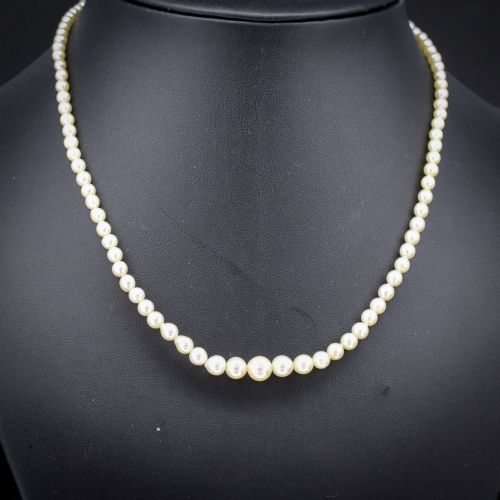
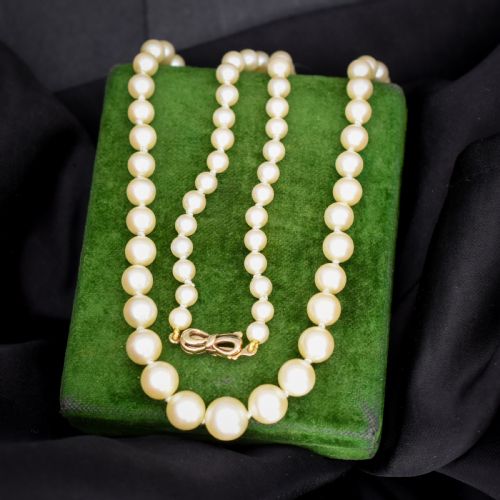
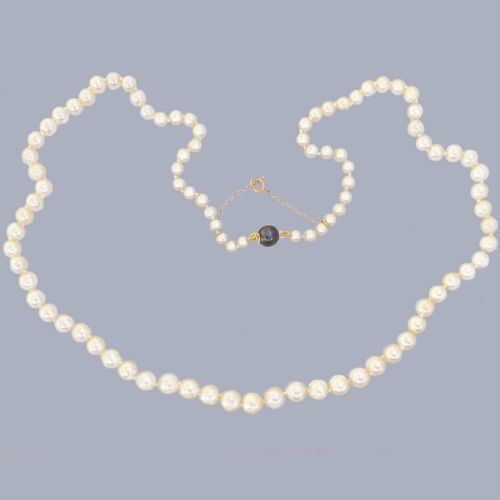
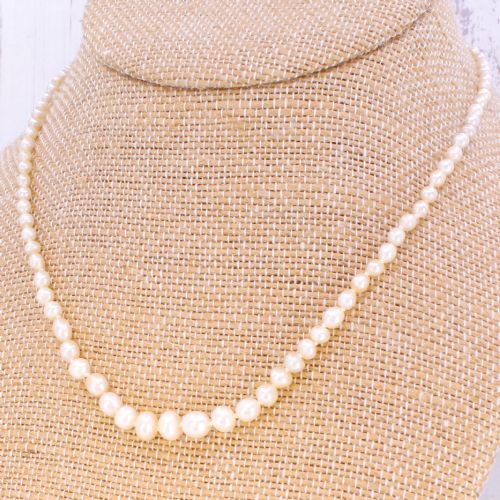
Vintage graduated pearls offer a classic profile of increasing bead sizes, highly sought after for traditional and period attire.
Vintage Graduated Pearls
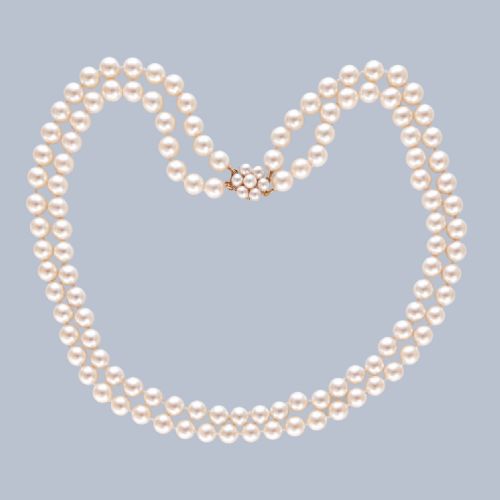
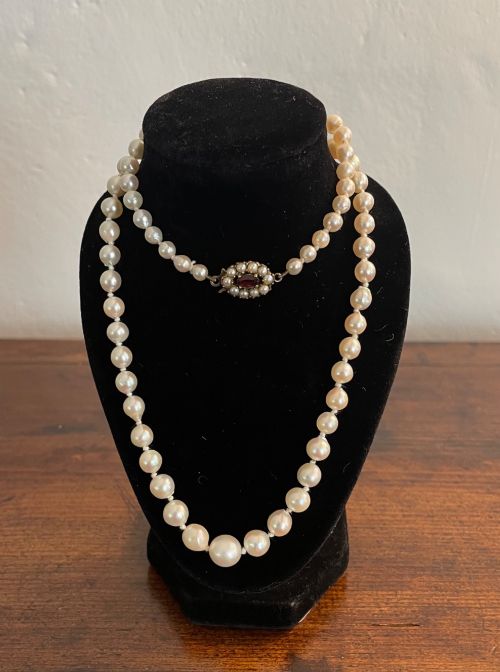
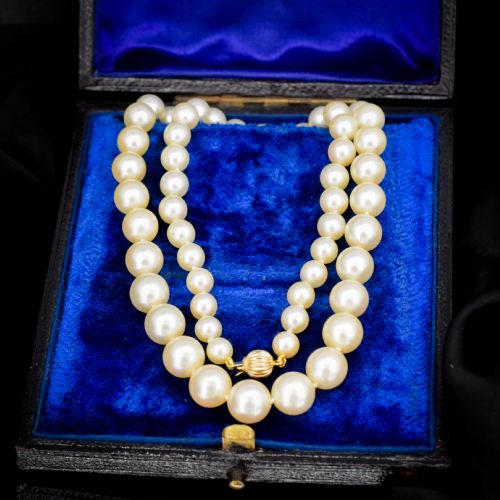
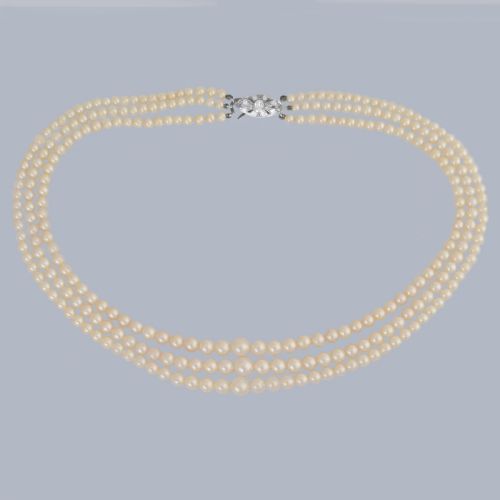
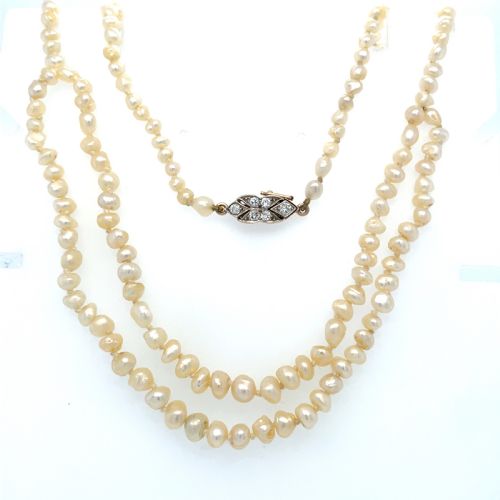
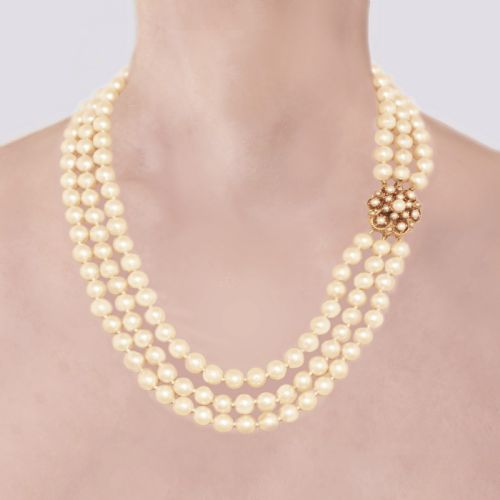
Vintage graduated pearls consist of necklaces and bracelets featuring beads that grow progressively larger toward the centre. When searching for vintage graduated pearls, buyers encounter single, double, and triple strand configurations spanning periods from the Georgian era through the Edwardian period, Art Deco, and the 1950s and 1960s Mid-Century styles. These pieces range from simple single strands to complex multi-row designs finished with decorative clasps.
The materials incorporated alongside the pearls include 9ct gold, 18ct white gold, 14ct gold, and silver, frequently set with diamonds, sapphires, rubies, emeralds, and garnets. Many examples utilise cultured pearls, while others comprise natural saltwater pearls or specific forms such as Tahitian black pearls. Lengths vary from short sixteen-inch necklaces up to longer rope and multi-strand formats.
Origin and period heavily influence the presentation, with Edwardian and Art Deco examples often displaying intricate metalwork on the clasp. Mid-century strands from the 1950s and 1960s frequently present robust double or triple rows secured by gold or diamond-accented fastenings. The selection bridges formal Edwardian elegance and structured Mid-Century Modern design.
How they were made
Construction relies on silk thread to string the pearls individually, allowing each bead to sit securely while maintaining flexibility along the strand. Jewellers knot the silk thread between individual pearls to prevent loss if the cord snaps and to protect the nacre from rubbing.
Clasps utilise precious metals including 9ct gold, 18ct white gold, and silver, formed into box clasps, barrel forms, or safety fastenings. These clasps frequently incorporate flush-set or claw-set diamonds, rubies, sapphires, emeralds, and garnets to anchor the ends of the necklace or bracelet securely.
Vintage Graduated Pearls Retail Price Guide 2026
Typical asking prices for vintage graduated pearls among the pieces listed under this phrase on Sellingantiques today, from the lower quarter to the upper quarter. They describe what is for sale here now, not the wider market.
Listings feature pearl necklaces spanning the Georgian, Edwardian, Art Deco, and Mid-Century periods, utilising silk thread, 9ct gold, 18ct white gold, and diamonds.
What varies in quality
Quality differences stem from the origin and lustre of the pearls themselves, distinguishing natural saltwater pearls and high-grade cultured pearls from standard commercial variants. The uniformity of the graduation, the depth of the nacre, and the cleanliness of the surface skin determine the refinement of the strand.
The complexity and material of the clasp elevate the standing of a piece, particularly when gold work incorporates old-cut diamonds, sapphires, or emeralds. Original boxes and documented reports from testing laboratories add contextual weight to specific strands.
Mikimoto
The Vintage Graduated Pearls Glossary
- Graduation
- The deliberate increase in pearl diameter from the ends of a necklace to the centre. This proportioning creates a balanced visual taper along the neckline.
- Cultured pearl
- A pearl formed with human intervention by placing a nucleus inside an oyster or mollusc. Cultured pearls form the majority of mid-century strands found in this category.
- Natural saltwater pearl
- A pearl formed organically in marine molluscs without human seeding. These pearls appear in Georgian, Edwardian, and Art Deco pieces.
- Silk thread
- The traditional cord material used for stringing fine pearls. Silk permits a natural drape and is knotted between pearls for security.
- Nacre
- The crystalline organic-inorganic substance secreted by molluscs that builds up the body of a pearl. Thick nacre contributes to durability and deep lustre.
Vintage Graduated Pearls: Frequently Asked Questions
How do I care for vintage pearls?
Wipe pearls gently with a soft, damp cloth after wearing to remove oils and cosmetic residue. Store them flat in a lined box away from hard jewellery that might scratch the nacre.
Avoid exposing silk-threaded strands to water, ultrasonic cleaners, or harsh chemicals. Have older strands restrung periodically if the silk shows stretching or fraying between the beads.
What length are most vintage pearl necklaces?
Most standard vintage necklaces measure between sixteen and eighteen inches, resting neatly near the collarbone. Longer rope variations and multi-strand designs provide alternative styling options for formal occasions.
Shorter lengths typically suit high necklines, while double and triple strands fill open necklines more substantially.
How can I tell Edwardian pearls from 1950s pearls?
Edwardian strands often feature delicate platinum or yellow gold settings with fine millegrain detailing around old-cut diamonds in the clasp. The mounting style reflects early twentieth-century lightness and lace-like metalwork.
Fifties pieces frequently employ bolder yellow or white gold clasps, sometimes featuring substantial ruby, sapphire, or emerald clusters alongside cultured pearls.
What is a barrel clasp?
A barrel clasp is a cylindrical fastener that screws or pushes together to secure the ends of a necklace. This form keeps the fastening mechanism discreetly integrated into the line of the jewellery.
Barrel clasps appear frequently on mid-century cultured pearl strands, offering a secure and streamlined closure.