


Vintage Gooseneck Lamp
These vintage gooseneck lamp pieces bring adjustable illumination and industrial character to a room, spanning Edwardian and Art Deco designs in brass and bronze.
Vintage Gooseneck Lamp
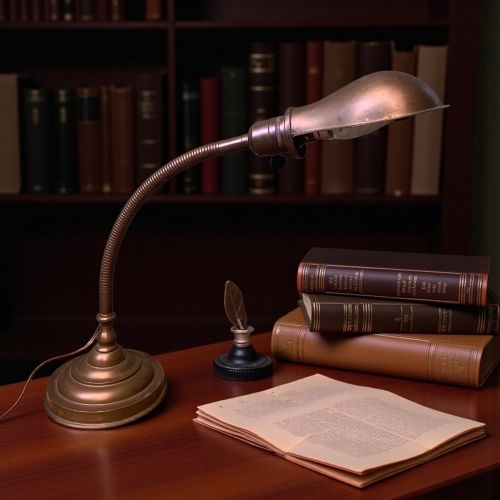
A vintage gooseneck lamp provides focused, adjustable light through a flexible or swivel arm, appearing frequently as a desk lamp or a reading lamp. These pieces originate across the nineteenth and twentieth centuries, encompassing Edwardian, Art Deco, and French Industrial styles.
The selections available here range from floor lamps and wall sconces to compact table lamps and desk lamps. Brass and bronze dominate the construction, often paired with cranberry glass or porcelain shades to create distinct utilitarian and decorative forms.
How they were made
Manufacturers utilised durable metals such as brass, bronze, and cast iron to form the weighted bases and articulated arms of these lamps. Patinated finishes and polished surfaces give the metal components their distinct industrial and period appearance.
Shades incorporate blown glass, including cranberry glass, alongside fabric, porcelain, and shell-shaped metal designs. Flexible tubing and mechanical joints allow the neck to bend and hold position without losing structural integrity.
Some models hide their flexible spines inside neatly stitched fabric sleeves, pretending to be remarkably stiff until you test them.
What varies in quality
Substantial weight in the base and robust articulation in the neck distinguish superior examples from lighter utilitarian iterations. The smoothness of the swivel action and the retention of original components, such as specialised shades, elevate a piece.
The refinement of the casting in bronze or brass elements and the depth of the metal patina separate standard production items from finer studio or workshop output.
Hawkins
The Vintage Gooseneck Lamp Glossary
- Gooseneck
- A flexible or articulated metal arm that bends into various positions to direct light. This mechanism defines the primary function of the lamp.
- Cranberry glass
- A rich pinkish-red glass created by adding gold chloride to the molten batch. It appears frequently in period reading lamp shades.
- Patinated brass
- Brass that has developed a darkened, aged surface finish over time through oxidation or chemical treatment. This finish adds depth to the metalwork.
- Swan neck
- A curved rigid or semi-flexible arm resembling the neck of a swan. It directs light downward over a desk or reading area.
- Torchere
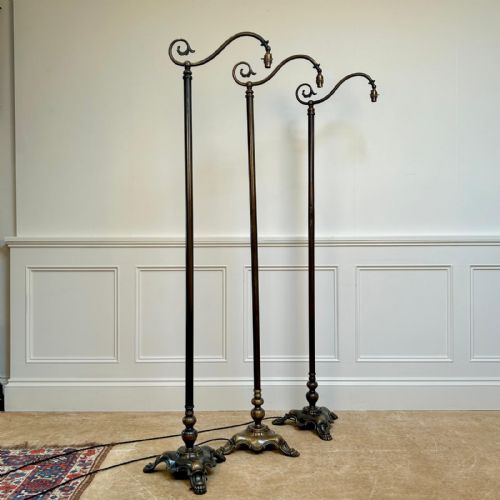
- A tall floor-standing lamp designed to direct light upward toward the ceiling. These fixtures often feature decorative shafts and heavy bases.
Vintage Gooseneck Lamp: Frequently Asked Questions
How do I identify an Edwardian gooseneck lamp?
Edwardian examples typically combine polished brass construction with heavy weighted bases designed for stability on office desks or reading tables. They often feature adjustable swan neck arms and occasionally incorporate cranberry glass or porcelain shades.
Examine the construction methods and metal patination to confirm the period. Genuine pieces from this era display traditional fixings and heavy-gauge metal tubing rather than modern lightweight alloys.
Can I use these lamps on a modern desk?
These lamps function effectively on modern desks because their adjustable arms allow you to direct light precisely where needed. Many are compact enough for everyday workspace use while adding distinct period character.
Ensure the electrical wiring meets current safety standards before plugging the lamp into a modern outlet. Some pieces arrive rewired by dealers for immediate domestic use.
What is the difference between a desk lamp and a floor lamp?
Desk lamps feature compact bases intended for placement on tables, secretaries, or reading surfaces to provide close task lighting. Floor lamps utilise taller standards to illuminate broader areas of a room from a standing position.
Both formats employ similar flexible gooseneck or swivel mechanisms to adjust the angle of the light source. The core materials of brass, bronze, and glass remain consistent across both types.
How should I clean a patinated brass lamp?
Dust the metal gently with a soft, dry cloth to remove surface particles without disturbing the aged surface finish. Avoid harsh chemical polishes that strip away historical patination.
Preserving the natural patina maintains the visual character and historical integrity of the piece. Glass shades can be removed and washed carefully in warm soapy water when necessary.