
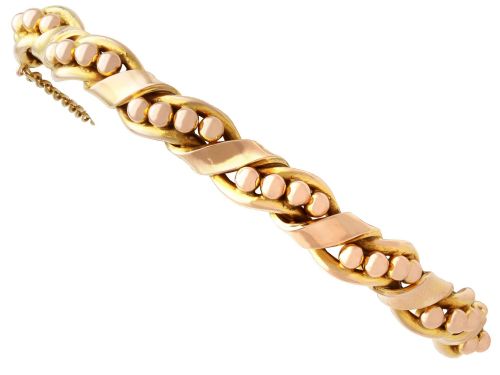
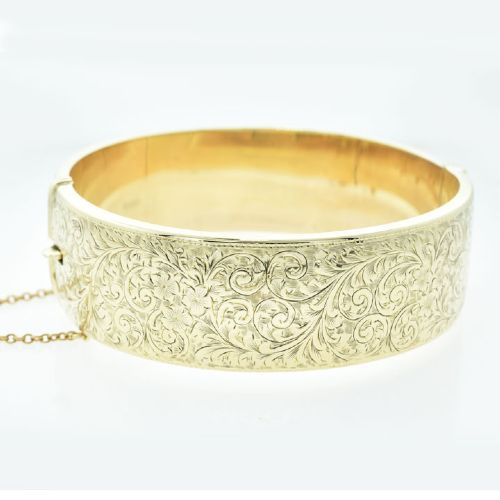
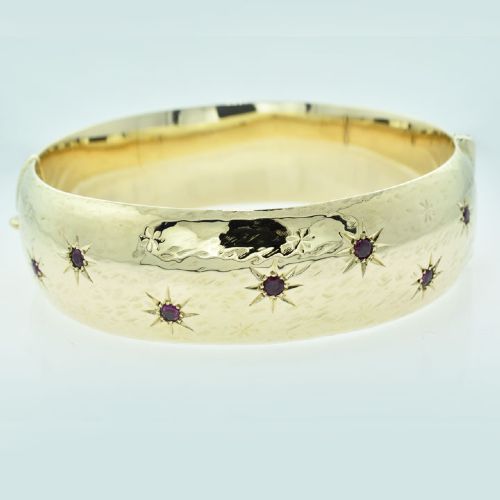
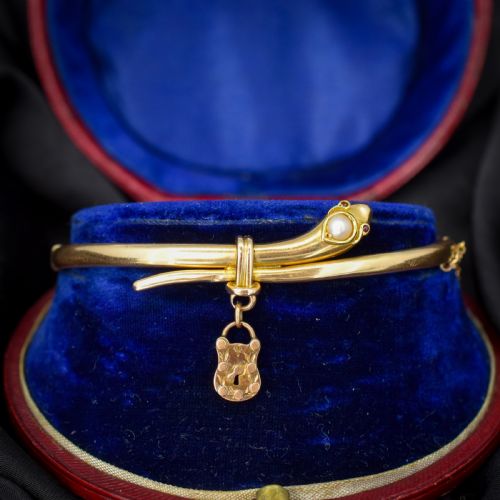
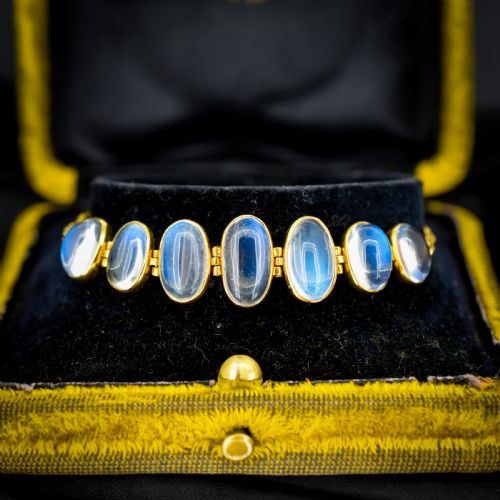

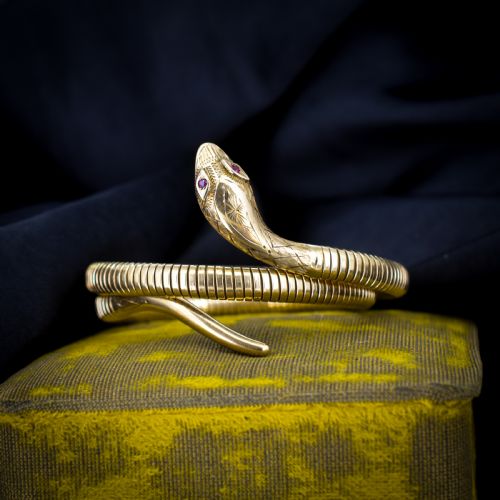


Vintage Gold Cuff
When you search for a vintage gold cuff, you enter a world of solid wristwear ranging from Victorian serpent bangles to mid-century textured links.
Vintage Gold Cuff
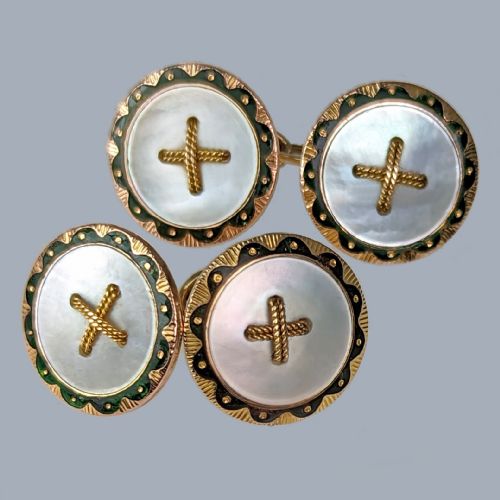
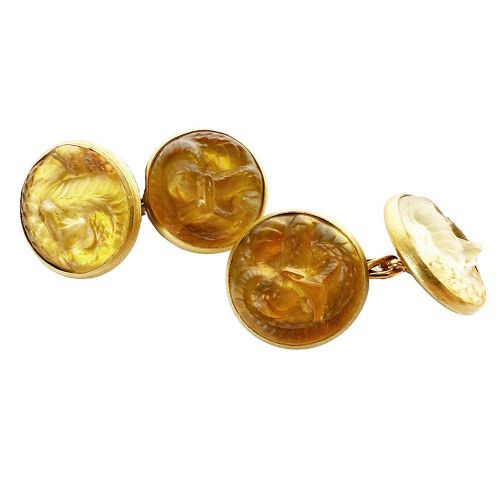
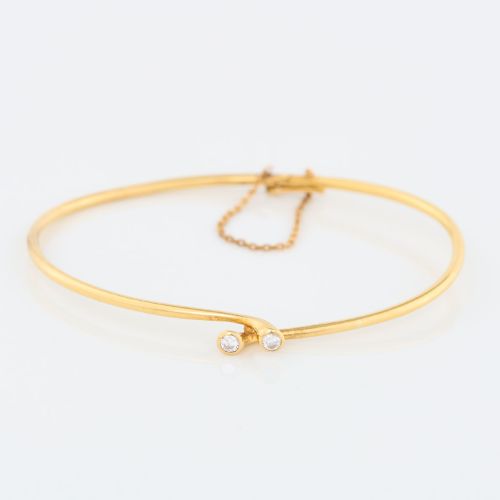
A vintage gold cuff encompasses solid wrist ornaments, primarily appearing on this page as hinged bangles, rigid bracelets, and double-sided shirt fastenings. The selection spans periods from the nineteenth century through the Victorian, Edwardian, and Art Deco eras into mid-century modernism.
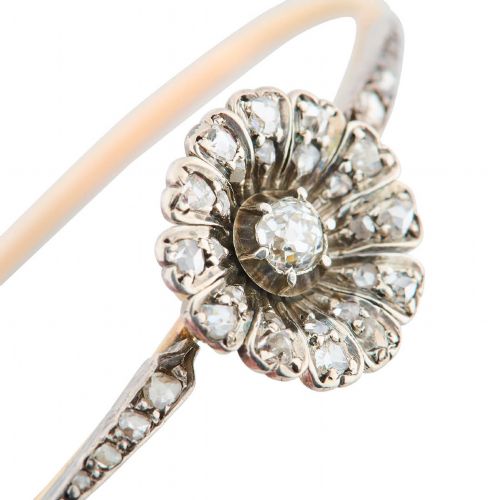
Buyers encounter substantial gold bangles set with diamonds, pearls, and rubies alongside intricate enamel and engraved shirt fixtures. Pieces originate from British makers in Birmingham and London as well as continental European workshops.
The term bridges wide cuff bracelets and smaller rigid bands, often incorporating motifs like serpents, floral clusters, and engine-turned geometric patterns.
Materials and construction
Goldsmiths utilised various purities including nine carat, fifteen carat, and eighteen carat yellow, rose, and white gold to construct these pieces. Stones such as diamonds, rubies, sapphires, moonstones, and seed pearls were flush-set, bezel-set, or mounted in delicate clusters.
Techniques range from hand engraving and engine turning to casting figurative serpent motifs and applying coloured enamel. Hallmarks stamped into the metal record the assay office, maker, and year of creation.
Several sneaky serpents coil around wrists here, keeping guard with ruby eyes and diamond heads since the nineteenth century.
Distinctions in quality
Quality rests on the weight of the metal and the precision of the goldsmith's hand, visible in crisp engine turning and secure stone settings. Maker attribution elevates a piece, particularly when bearing marks from established firms.
The complexity of the design, such as articulated serpent scales or multi-gem arrangements, separates standard production items from exceptional workshop creations.
Smith and Pepper·Solomon Blanckensee Son·R Lalique·Ilias Lalaounis·Taye Kenning and Spencer·Henry Griffiths·Roy King·Cartier·Kutchinsky·Henry Hobson
The Vintage Gold Cuff Glossary
- Bangle
- A rigid bracelet that slips over the hand or opens via a hinged clasp. Most examples in this selection secure with a tongue fastener and safety chain.
- Engine turned
- A decorative technique where geometric patterns are mechanically engraved into the metal surface. This finish appears frequently on mid-century accessories.
- Hallmark
- An official stamp indicating metal purity, origin, and assay office date. British examples display symbols like crowns and anchor marks.
- Snake motif
- A symbolic design shaped like a coiled serpent, often set with gemstone eyes or diamond heads. Victorian makers utilised this form extensively in bracelet production.
- Rose cut
- An antique diamond faceting style featuring a domed top and flat base. This cut produces a softer shimmer than modern brilliant cuts.
Vintage Gold Cuff: Frequently Asked Questions
How do I know my bangle size?
Measure the inner diameter of a well-fitting rigid bracelet you already own and compare it against the millimeter dimensions provided in the listing.
Consider the opening mechanism and shape, as oval bangles fit closer to the wrist than circular ones.
Are these pieces solid gold?
The listings comprise solid gold items marked with standard purity standards like nine, fifteen, or eighteen carat gold. Hallmarks stamped into the metal confirm the exact composition.
Read the description to verify whether a piece is solid metal throughout or filled with a base metal core.
How should I clean antique gold?
Clean your jewellery gently using warm water, mild soap, and a soft brush to remove accumulated everyday oils. Avoid harsh chemical dips, particularly on pieces containing pearls or soft gems.
Store each item in a separate velvet-lined box to prevent scratching against other pieces.
What does a Birmingham hallmark mean?
A Birmingham hallmark indicates that the item was tested and marked at the assay office in that English city. The associated date letter helps pinpoint the exact year of manufacture.
British hallmarking laws provide a reliable method for dating historic jewellery.