


Vintage Gold Cross
These vintage gold cross pieces span Victorian, Edwardian, and mid-century eras, offering enduring devotional and decorative appeal.
Vintage Gold Cross
The selection includes pieces from the Victorian and Edwardian periods alongside Art Deco and mid-century examples. Many take the form of traditional Latin crosses, Maltese crosses, or sunburst medals.
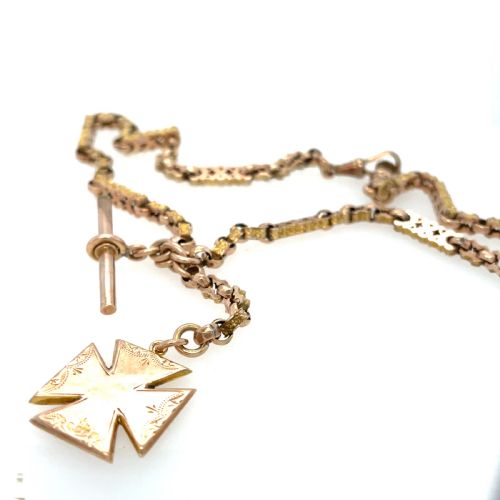
Origins span British provincial workshops, notably Birmingham, as well as French ateliers and Italian makers. Pendants frequently pair with chains or serve as standalone charms for Albert chains.
How they were made
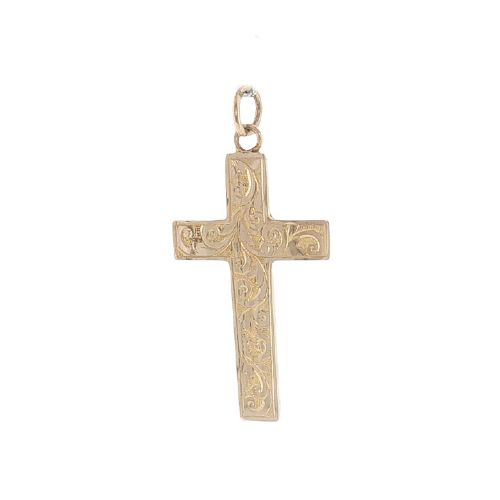
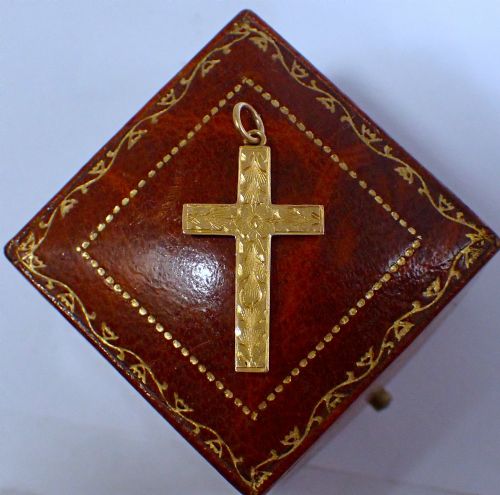
Maker's workshops utilised nine-carat and eighteen-carat yellow, rose, and white gold, often casting or stamping the precious metal to form the structural body of the cross. Engraving, piercing, and chased decoration frequently finish the surfaces of earlier Victorian and Edwardian pieces.
Listings feature yellow gold, rose gold, and white gold alongside platinum, with periods ranging from the Victorian era through the mid-century.
What varies in quality
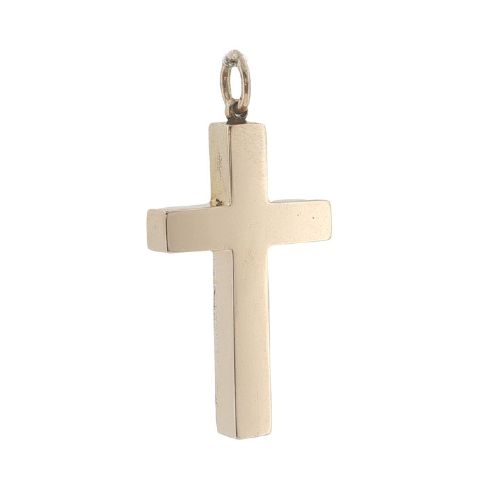
The finesse of hand-engraving and the crispness of chased detailing set finer examples apart from simpler production. Superior pieces display precise geometry and clean lines, particularly in Art Deco and mid-century multi-gem settings.
Gemstone selection and setting security dictate the upper tier of the range. Master jewellers matched diamonds and coloured stones for uniformity, securing them in robust gold mounts designed to withstand daily wear.
The Vintage Gold Cross Glossary
- Cross-over
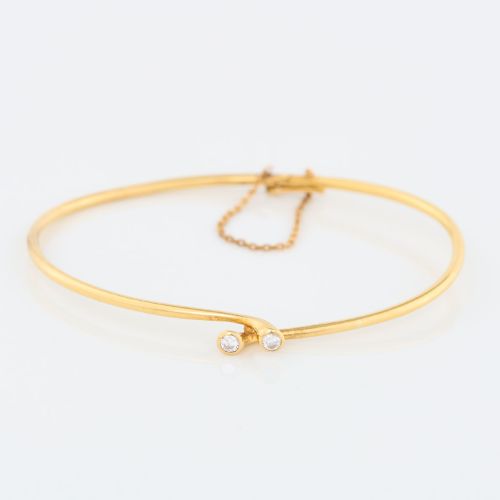
- A ring style where two bands or gemstone terminals cross each other on the finger.
- Maltese cross
- A four-pointed cross with V-shaped arms widening towards the tips.
- Hallmark
- An official stamp applied to precious metals indicating purity, origin, and assay office.
- Albert chain
- A pocket watch chain often secured with a T-bar and used to suspend charms or pendants.
- Sunburst
- A decorative motif featuring rays radiating outwards from a central point.
Vintage Gold Cross: Frequently Asked Questions
How do I date a vintage gold cross?
Examination of hallmarks, metal carats, and mounting techniques reveals the era of manufacture. Birmingham assay marks and specific stylistic traits help narrow down production years.
Victorian and Edwardian pieces often display hand-engraved scrollwork, whereas mid-century examples favour cleaner geometric lines or pavé-set gemstones.
What gold carats are most common?
Nine-carat and eighteen-carat gold appear frequently across the available inventory in yellow, rose, and white variations. Fifteen-carat gold also surfaces in earlier Victorian items before the legal standards changed.
Carat stamps and hallmarks provide definitive confirmation of the gold purity used in each individual cross pendant or charm.
Can I wear a cross pendant daily?
Solid gold crosses without delicate gemstones withstand regular daily wear comfortably when paired with a secure chain. Pieces set with pearls or softer stones require more mindful handling.
Checking the jump rings and bale attachments periodically ensures the pendant remains secure during everyday use.