
Vintage Glassware
These vintage glassware pieces bring tactile weight and historic clarity to the table, spanning centuries of blown, cut, and moulded forms.
Vintage Glassware
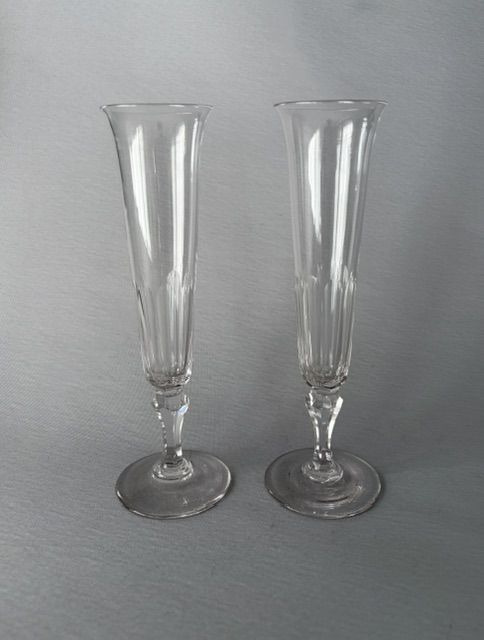
When you search for vintage glassware, you encounter drinking vessels, vases, and decanters spanning the eighteenth century through to late twentieth-century studio pieces. The selection on this page ranges from early Georgian opaque twist wine glasses and rummers to robust Victorian cut glass champagne flutes and decanters.
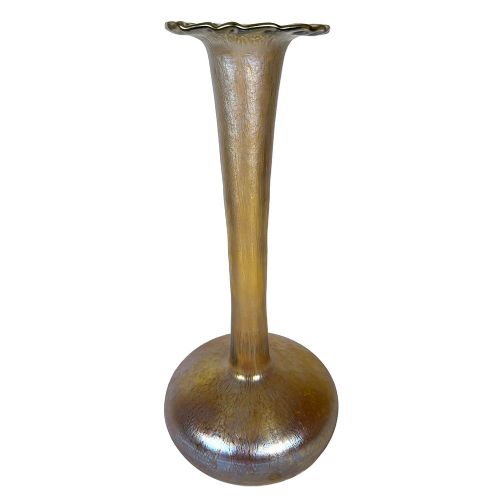
You will also find distinctive Continental production, including Art Nouveau iridescent vases and Art Deco opalescent pieces from makers such as René Lalique. Forms extend from practical jugs and water pitchers to decorative epergnes, celery vases, and specific wine glassware.
The assortment relies heavily on British, French, and Bohemian origins, moving through Edwardian table services down to mid-century Welsh studio glass. Most items serve a functional domestic role, whether intended for ale, beer, wine, or display.
How vintage glassware was made
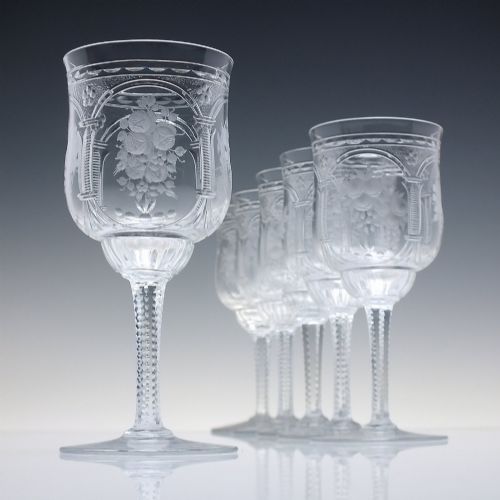
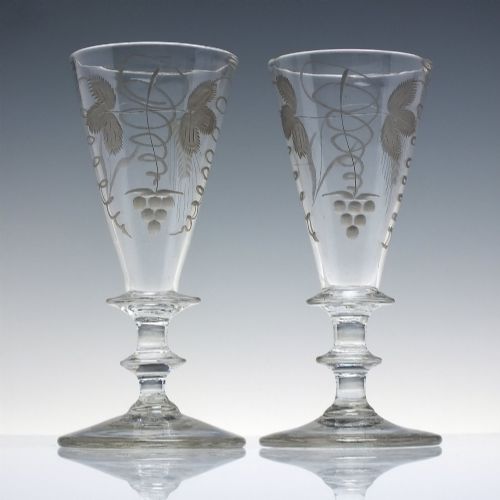
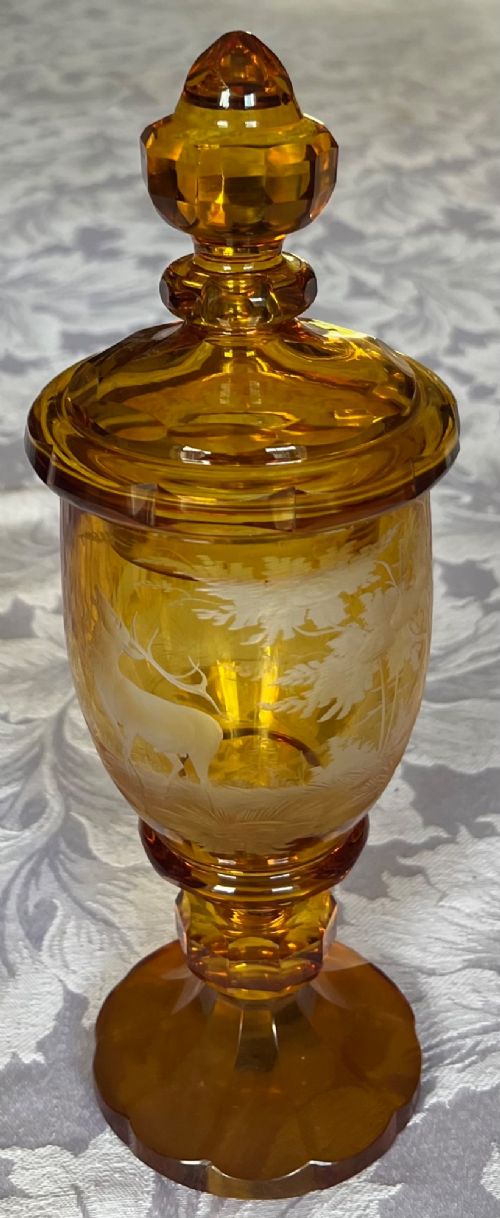
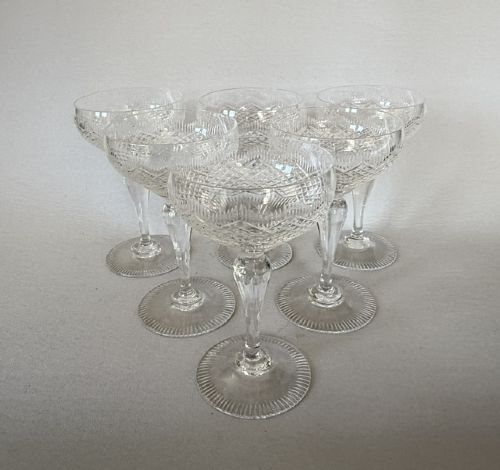
Makers shaped these objects through hand-blowing, moulding, and free-forming hot metal before applying decorative techniques like wheel-cutting, engraving, and acid-etching. Lead crystal and standard glass received surface treatment through polishing, while some forms incorporate applied handles or silver-plated stands.
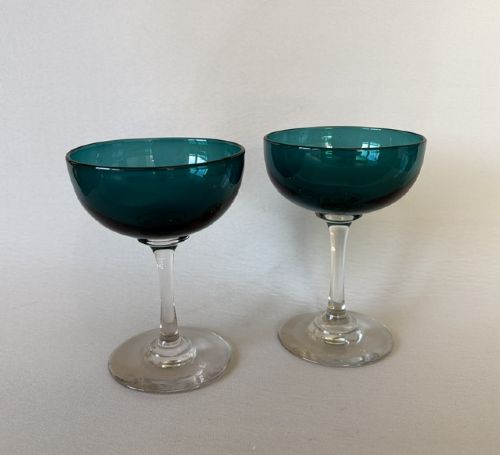
Colour comes from chemical additions in the molten state, producing deep cranberry hues, vibrant green, opaque whites, cobalt, and uranium glow. Enamel decoration and applied silver overlay complete the surface work on specific Edwardian and Art Deco pieces.
Victorian households once owned tall, flared glass vessels designed exclusively for standing celery upright at the dinner table.
What varies in quality
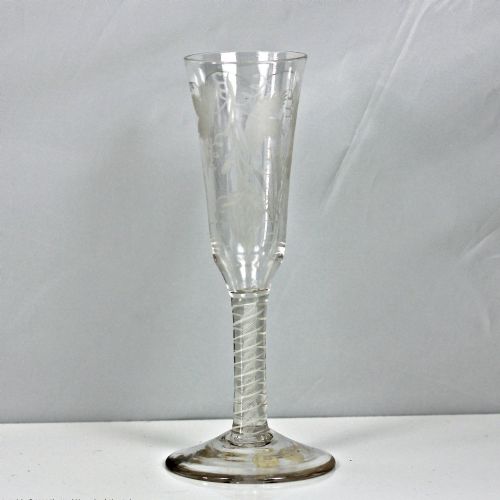
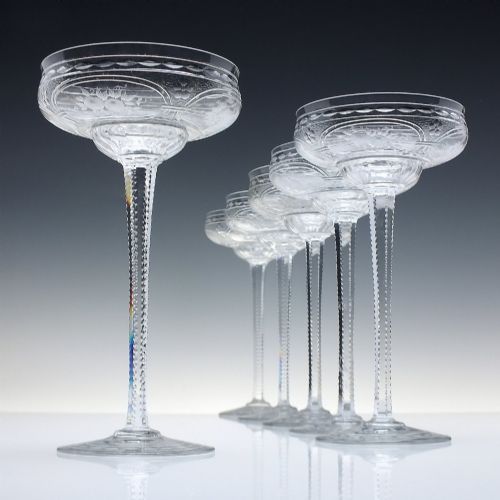
Execution separates standard utility vessels from superior examples, visible in the sharpness of wheel-cut facets, the crispness of hop and barley engravings, and the depth of surface iridescence. Weight, balance, and the thinness of drawn glass stems indicate the maker's technical command.
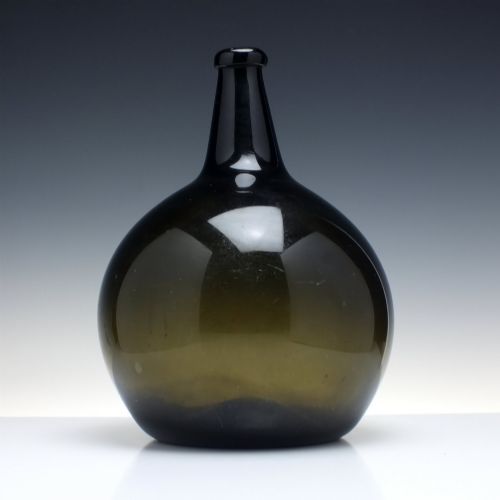
Design ambition dictates the upper tier of the range, seen in complex opalescent mouldings, precise double series opaque twists, and well-executed metal mounts. The integrity of hand-blown bubbles and the smoothness of pontil marks further distinguish standard production from exceptional studio work.
Baccarat Vallee·Loetz·Stevens and Williams·Rene Lalique·Libochovice
The Vintage Glassware Glossary
- Pontil mark
- The rough scar left on the base of a vessel where the punty rod was snapped off after blowing. Hand-blown antique pieces generally retain this tactile indicator.
- Opaque twist
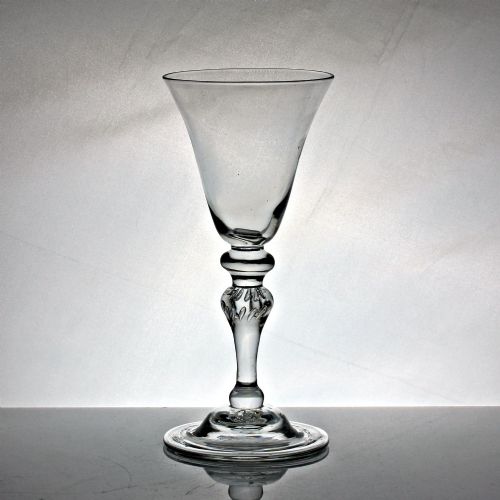
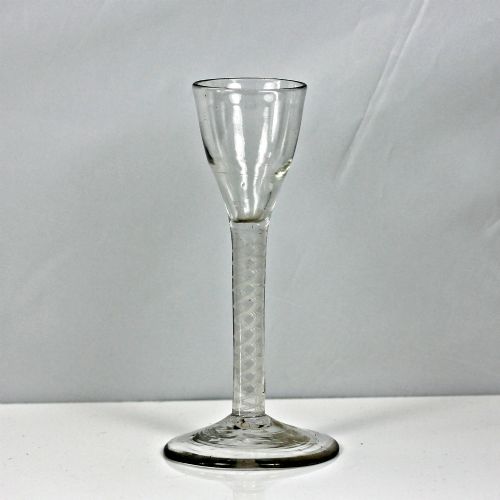
- A method of decorating glass stems using internal threads of white or coloured enamel glass twisted within the clear metal. It appears frequently in eighteenth-century drinking glasses.
- Opalescent glass
- A type of glass that appears milky-blue in transmitted light and warm amber or orange in reflected light. This effect defines many Art Deco decorative objects.
- Cranberry glass
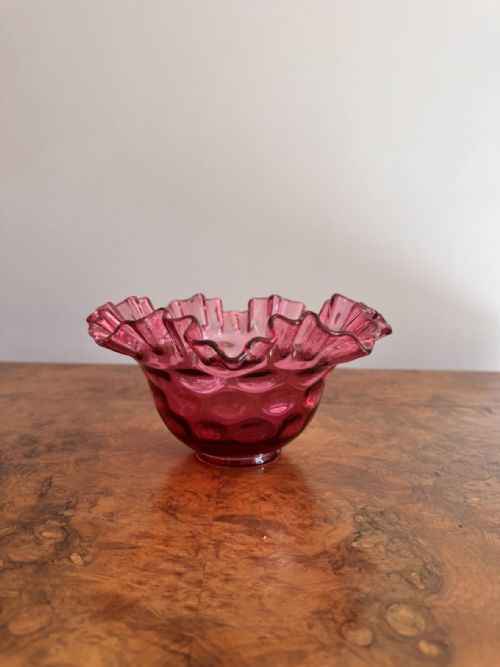
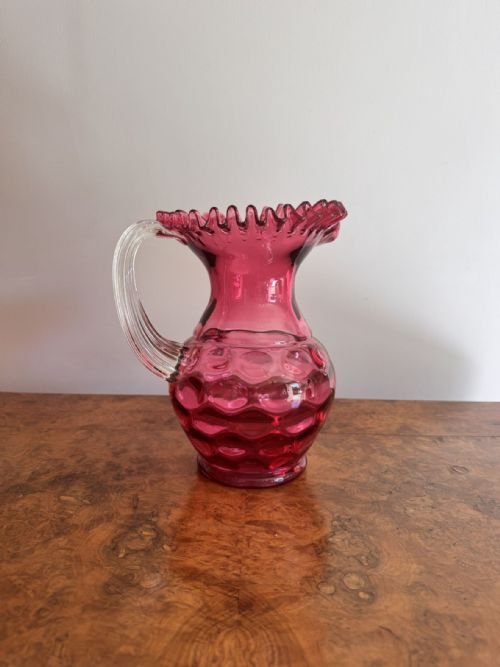
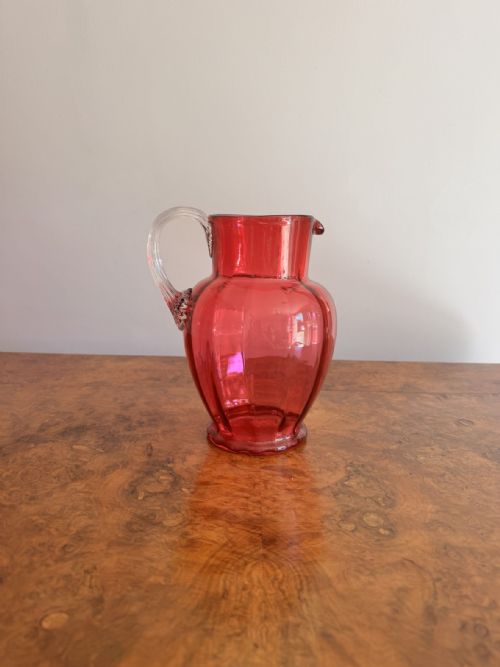
- A rich red-pink glass coloured with gold chloride, popular during the Victorian era for jugs, decanters, and table sets. It is sometimes overlaid with clear crystal.
- Celery vase
- A tall vessel created in the nineteenth century to hold and display stalks of celery upright on the dining table. They frequently feature heavy cut or etched decoration.
Vintage Glassware: Frequently Asked Questions
How do I date old wine glasses?
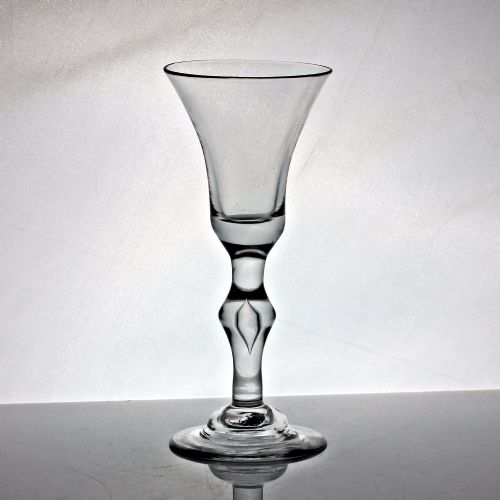
Dating relies on bowl shapes, stem construction, and foot configurations. Eighteenth-century examples often feature heavier metal with baluster profiles or opaque twists, while Victorian pieces lean toward cut patterns and coloured bowls.
Foot form also offers clues, moving from domed and folded bases on early glasses to flat, polished pontil bases on later nineteenth-century tableware.
What is cranberry glass?
Cranberry glass is a pinkish-red decorative material created by adding gold to the molten batch. It gained immense popularity during the Victorian period for jugs, carafes, and dessert services.
Makers often combined it with clear crystal layers or applied clear handles to contrast the intense body colour.
Are these glasses safe for daily use?
Many antique drinking vessels remain structurally sound for gentle daily use or special occasions. However, delicate nineteenth-century blown stems and eighteenth-century lead glass require careful hand washing rather than dishwasher cycles.
Valuable collector pieces or items with delicate enamelling are generally reserved for display or careful handling.
How is opalescent glass identified?
Opalescent glass shows a milky, semi-translucent quality that catches light with blue or white highlights along raised moulded reliefs. It is particularly common in French Art Deco decorative objects and vases.
Turning the piece in the light reveals the characteristic play between milky highlights and clear body tones.