



Vintage Glass Wall Cabinet
A vintage glass wall cabinet brings a disciplined display to a compact room, holding small collections without taking floor space.
Vintage Glass Wall Cabinet
A vintage glass wall cabinet is essentially a display case or cupboard designed to be mounted on a wall, saving floor space while keeping contents visible. These pieces serve as practical storage for small collections, keys, or books, often featuring glazed doors to protect items from dust.
Makers utilised specific woods like mahogany, oak, walnut, and pine to build these frames, sometimes incorporating velvet linings or mirrored interiors. The range encompasses designs from austere rustic country pieces to inlaid Edwardian items and French shop fixtures.
How they were made
Cabinet makers constructed the primary framework using traditional timber joinery in hardwoods such as mahogany, oak, and walnut, alongside softer pines. Glass panels were fitted into doors to allow visibility into the interior, occasionally backed by mirrors to reflect light through the displayed objects.
Surface treatments involved polishing timber to reveal the grain, applying paint finishes, or incorporating decorative inlays. Some pieces feature brass hardware, such as hinges and latches, which secured the glazed or panelled doors.
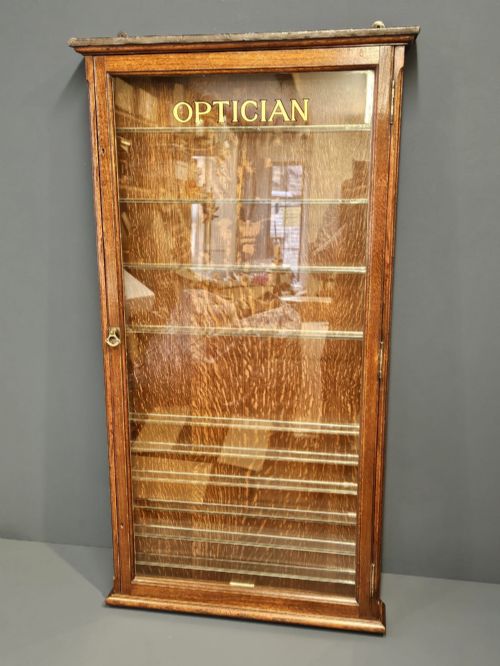
Interiors were occasionally lined with velvet or fabric to cushion displayed items, while specific examples bore hand-painted sign writing for commercial advertising. Construction methods varied from robust workshop joinery to commercial shop display manufacturing.
Vintage Glass Wall Cabinet Retail Price Guide 2026
Typical asking prices for vintage glass wall cabinet among the pieces listed under this phrase on Sellingantiques today, from the lower quarter to the upper quarter. They describe what is for sale here now, not the wider market.
A night porter's key cupboard stands ready to organise keys that vanished decades ago.
What varies in quality
The standard of a cabinet rests on the selection of timber and the precision of the joinery used in the frame. Higher-grade pieces employ stable hardwoods and refined inlay work, whereas simpler utilitarian cupboards rely on basic pine and straightforward construction.
The quality of the glazing and the condition of the mirrored interiors or fabric linings also dictate the overall finish. Finer examples retain original brass hardware and well-fitted doors that hang true without sagging.
Siegel·Fry·Hovis
The Vintage Glass Wall Cabinet Glossary
- Glazed
- Fitted with glass panels. This term describes doors or sides designed to let light into the cabinet while protecting the contents.
- Inlaid
- Decorated by embedding thin pieces of contrasting material into the wood surface. This technique creates patterns flush with the timber.
- Vitreen
- A variant spelling of vitrine, meaning a glass display cabinet. It refers specifically to wall-hanging or freestanding glass-fronted cases.
- Overmantel
- A mirror or cabinet designed to be placed directly above a fireplace mantelpiece. These pieces often feature integrated shelving or glazed compartments.
Vintage Glass Wall Cabinet: Frequently Asked Questions
How do I hang a heavy cabinet?
Mounting a wall cabinet requires locating secure wall studs or using appropriate masonry fixings to support the combined weight of the timber and glass.
Distributing the load evenly across solid structural points ensures the piece remains stable and secure over time.
Were these always meant for homes?
Many cabinets served commercial purposes in shops or hotels before entering domestic spaces. Examples include shop display units and key cupboards originally utilised by night porters.
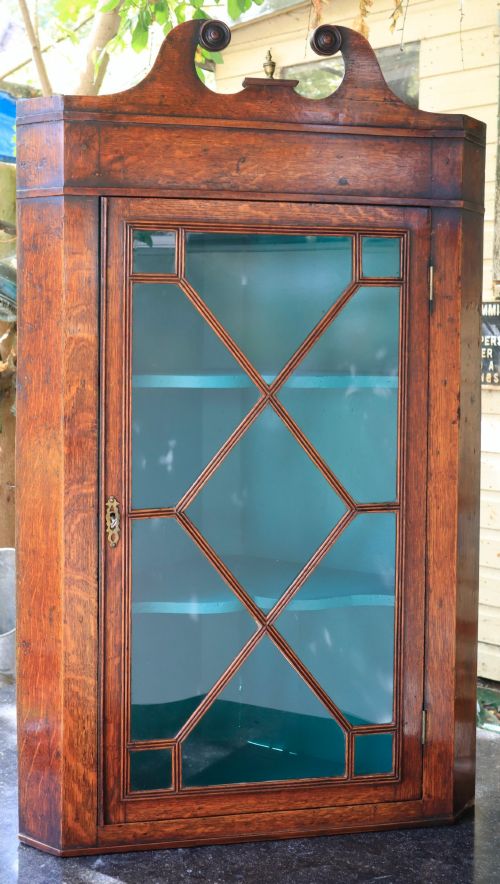
Other formats were built specifically for household display, such as corner cupboards and overmantel units.
How should I clean the glass?
Wipe the glass panes with a soft cloth and a mild cleaning solution applied to the cloth rather than sprayed directly onto the cabinet. This prevents moisture from seeping into aged timber or damaging fabric linings and painted surfaces.
Take care around old brass fittings and delicate wood finishes during maintenance.
Can I adjust the internal shelves?
Most older wall cabinets feature fixed wooden shelving integral to the internal structure rather than adjustable tracks. Display planning involves accommodating the static shelf heights.
Contents should be arranged to fit the specific vertical clearance provided by each compartment.