


Vintage Glass Prism Lighting
Vintage glass prism lighting catches the light through cut crystal drops, bringing nineteenth-century and early twentieth-century elegance to any room.

Vintage Glass Prism Lighting
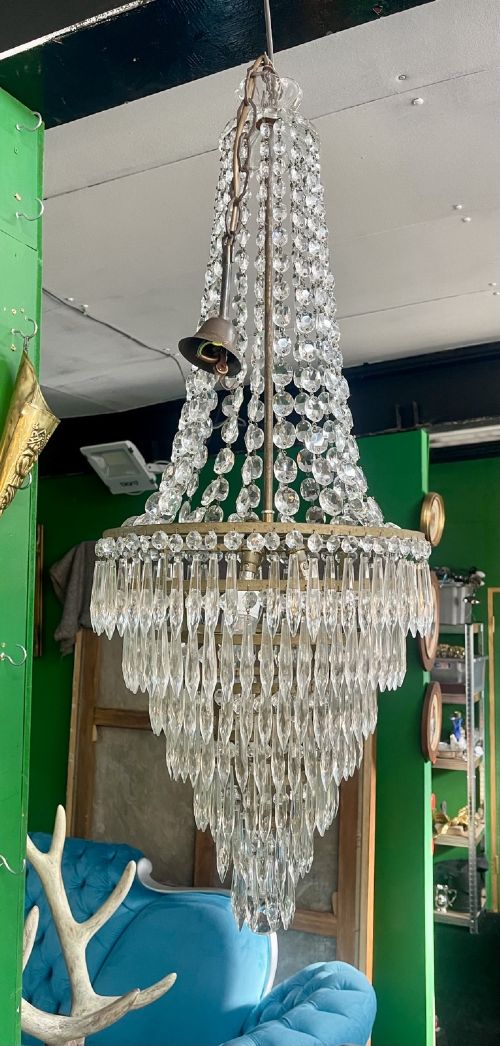
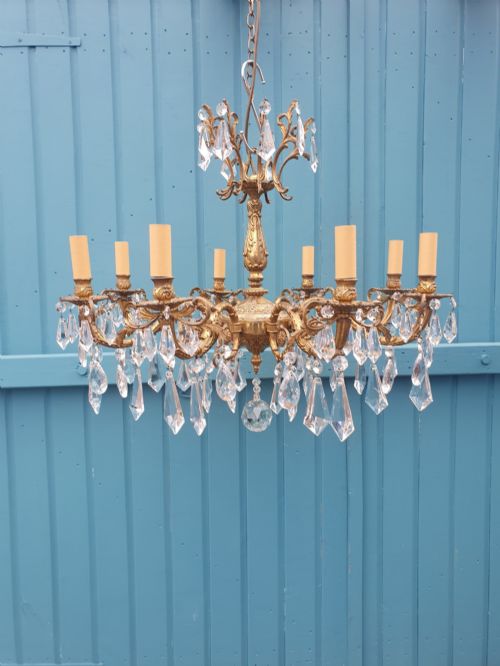
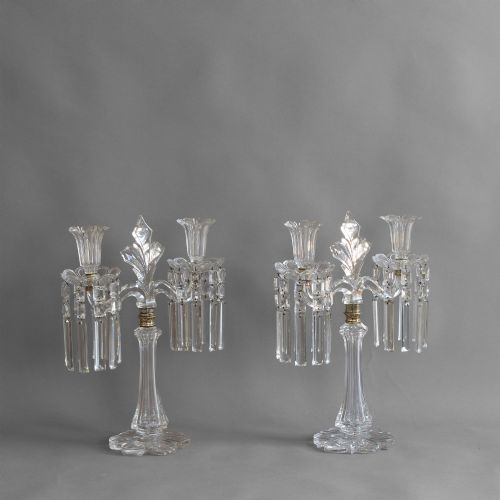
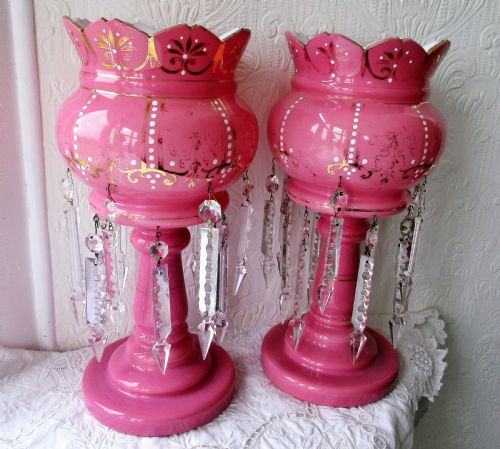
Vintage glass prism lighting encompasses chandeliers, ceiling lights, lustres, and wall lights decorated with hanging crystals and drops. These pieces range from Victorian mantel lustres and nineteenth-century French chandeliers to early twentieth-century spike and waterfall fixtures.
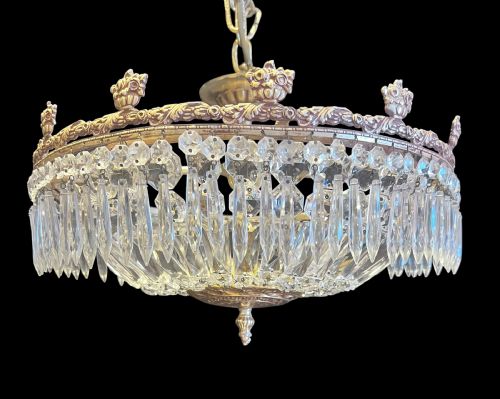
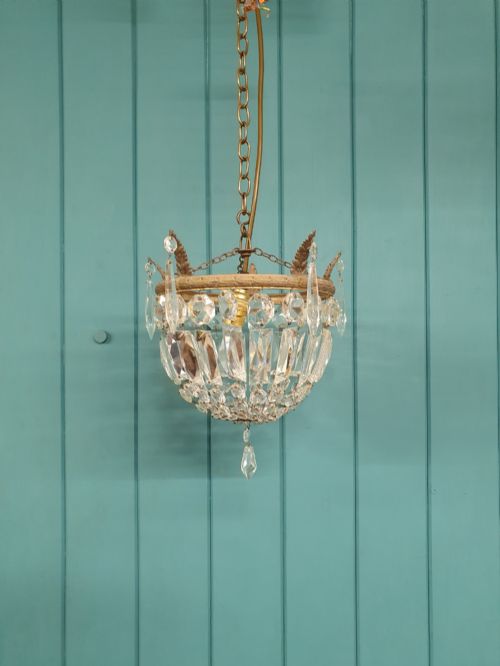
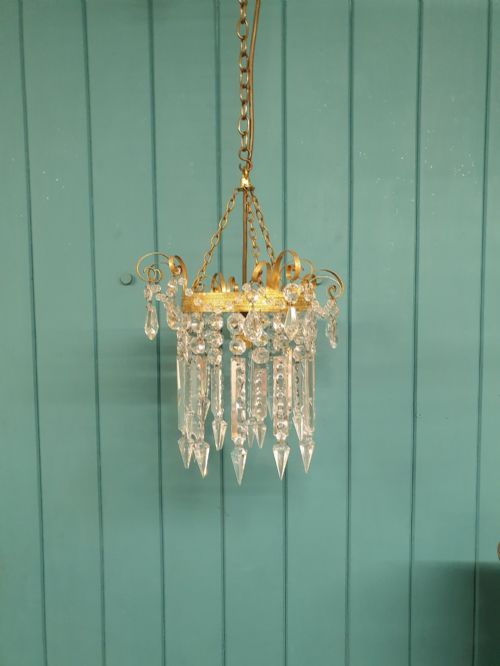
Buyers seeking vintage glass prism lighting most frequently encounter early twentieth-century and Edwardian chandeliers featuring brass or gilt metal frames paired with cut glass drops. These smaller ceiling lights and multi-tier fixtures appear alongside nineteenth-century pairs of table lustres.
The styles span French Empire, Victorian, Regency Revival, and French Rococo designs, incorporating brass, crystal glass, and gilt bronze. Items such as basket chandeliers, plafonieres, and wall lights demonstrate the diverse forms available within this category.
Materials and construction
Frames are constructed from brass, gilt metal, gilt brass, and gilded bronze, providing sturdy support for heavier glass components. These metal structures often feature cast details like lion masks or elaborate French bronze mounts.
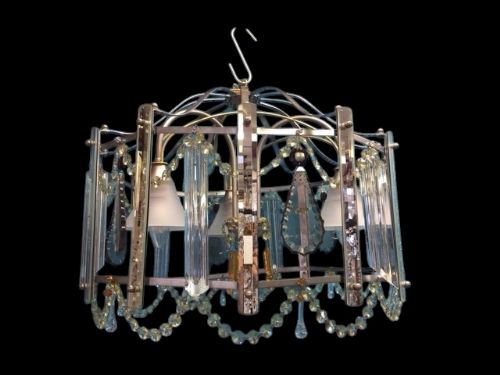
Hanging elements utilise glass, crystal, cut glass, and cut crystal shaped into coffin prisms, spikes, beads, swags, and oblong drips. These glass drops are suspended from the metal armatures to refract light across the room.
Materials span brass, gilt brass, gilt metal, glass, crystal, cut glass, cut crystal, and Gilt Bronze across multiple historic styles.
Evaluating quality and craftsmanship
Quality rests in the precision of the glass cutting and the clarity of the crystal components. Finer pieces display sharp facets on cut glass drops that catch and disperse light effectively.
The weight and detail of the metalwork distinguish standard production from superior examples. Cast bronze frames with intricate ornamentation indicate higher craftsmanship than simpler folded metal mounts.
The Vintage Glass Prism Lighting Glossary
- Prism
- A cut glass pendant designed to refract light. These hang from chandeliers and lustres in various shapes including spikes and coffins.
- Lustre
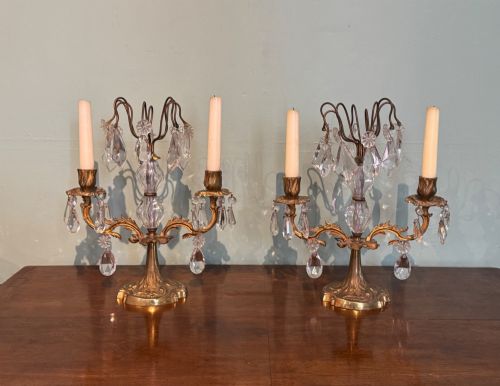
- An ornamental tabletop vase or candlestick hung with crystal drops. Victorian examples often feature coloured glass such as pink or green.
- Chandelier
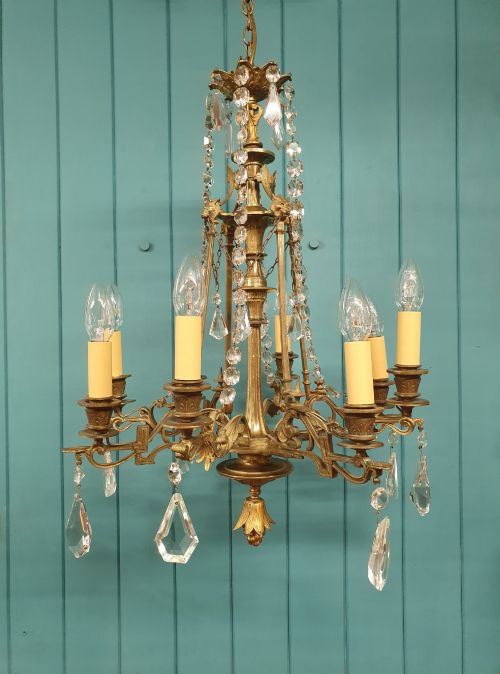
- A branched ceiling light designed to hold multiple bulbs or candles. Many vintage examples incorporate glass drops arranged in tiers or cascades.
- Plafoniere
- A shallow ceiling light mounted close to the surface. These fixtures often combine a brass frame with crystal drops and glass shades.
- Mantel lustre
- A decorative pair of ornamental candle holders placed on a mantelpiece. They feature hanging crystal prisms that surround the central stem.
Vintage Glass Prism Lighting: Frequently Asked Questions
What is vintage glass prism lighting?
Vintage glass prism lighting refers to historic light fixtures and decorative objects adorned with cut glass drops and crystals. These pieces include chandeliers, wall lights, and tabletop lustres.
Originating primarily from the nineteenth and early twentieth centuries, they utilise glass or crystal suspended from brass, bronze, or gilt metal frames.
How do I clean vintage glass prism lighting?
Cleaning requires removing the delicate glass drops individually to wash them in warm soapy water. Metal frames should be wiped gently with a dry or slightly damp cloth.
Harsh chemical cleaners are avoided to protect the historic gilt or brass finishes on the metal armatures.
Where were these glass prism fixtures made?
Many surviving pieces originate from English and French workshops. French examples frequently showcase Rococo, Empire, or Beaux-Arts styling with gilded bronze.
English pieces from the Victorian and Edwardian eras often feature classic brass framing paired with cut crystal drops.
How do I date a glass prism chandelier?
Dating relies on examining the metal composition, drop shapes, and overall construction style. Victorian and nineteenth-century pieces tend to feature heavy cast brass or bronze frames with hand-cut crystals.
Early twentieth-century and Edwardian examples often introduce lighter brass frames, basket designs, and standardised spike or coffin prisms.