

Edwardian Cut Glass Chandelier
An edwardian cut glass chandelier combines brass framing and intricate glass drops to bring bright, reflective overhead lighting to a room.

Edwardian Cut Glass Chandelier
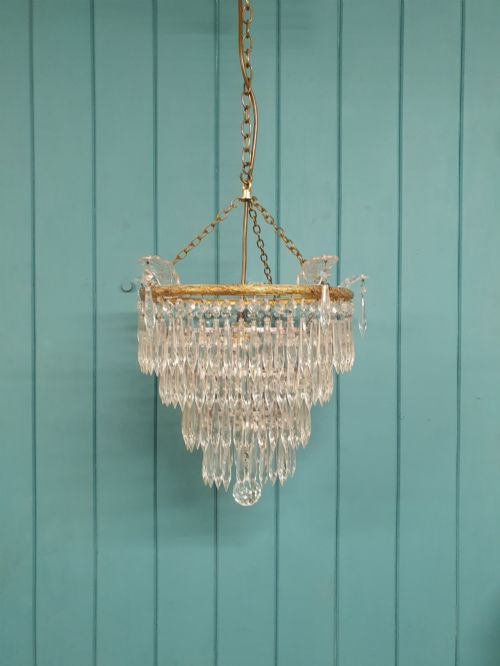
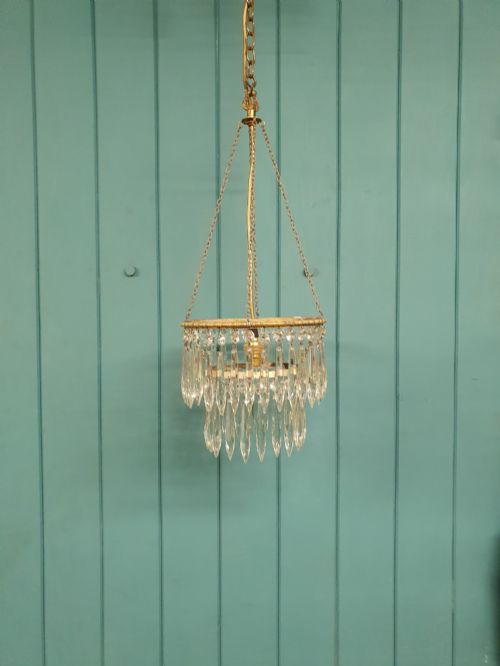
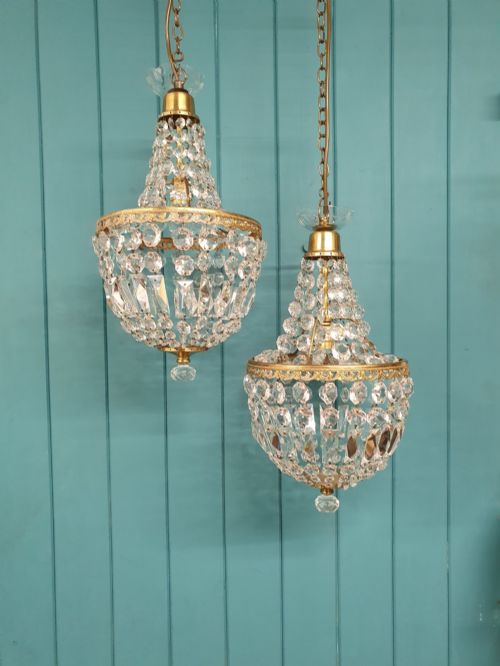
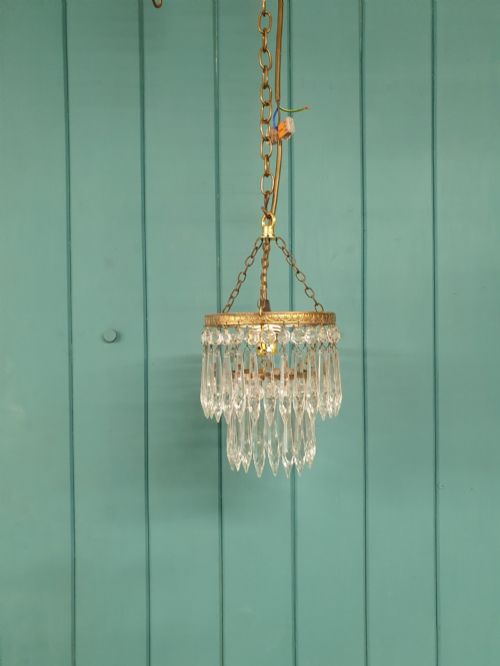
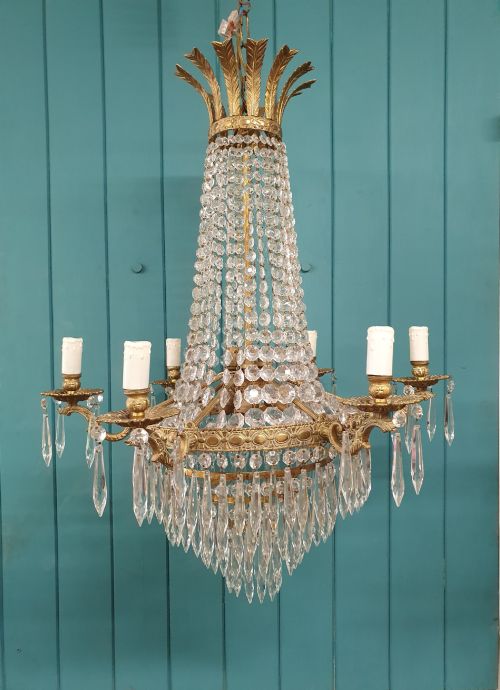
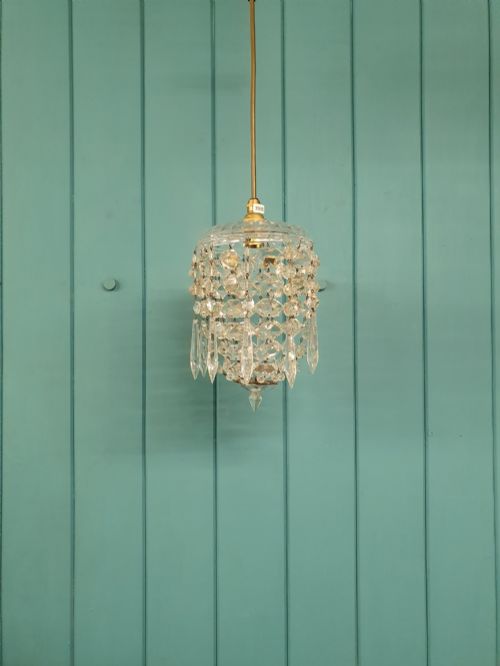
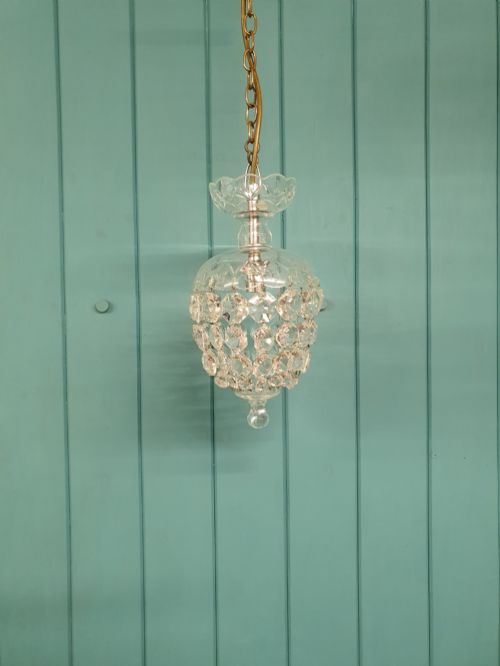
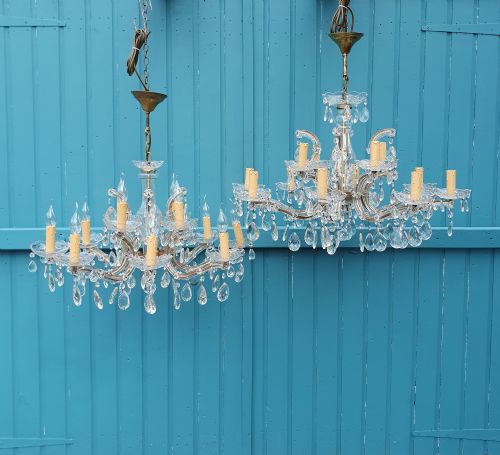
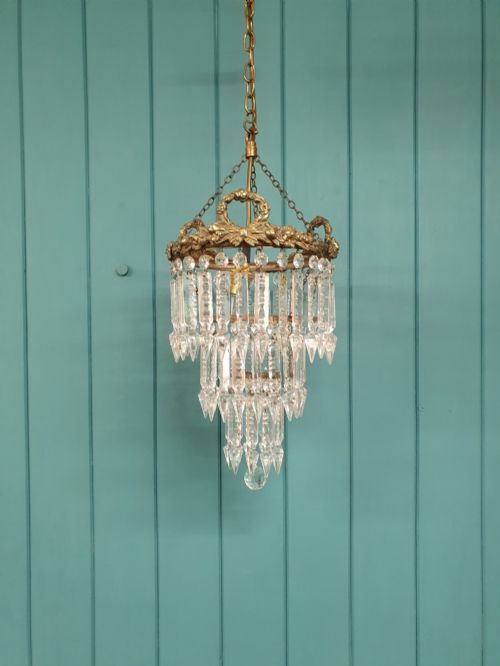
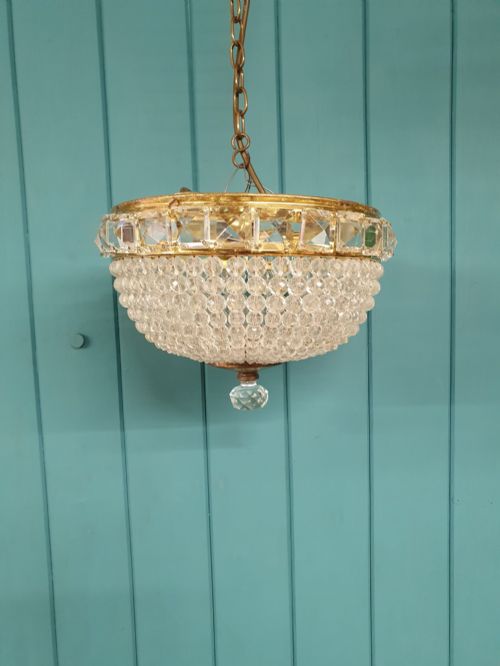
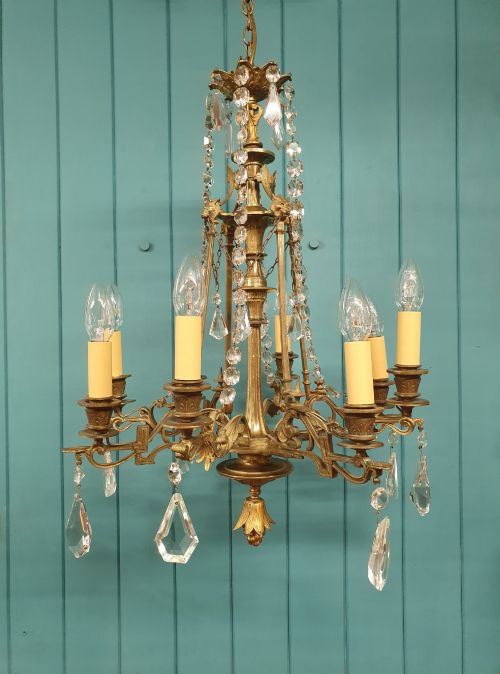
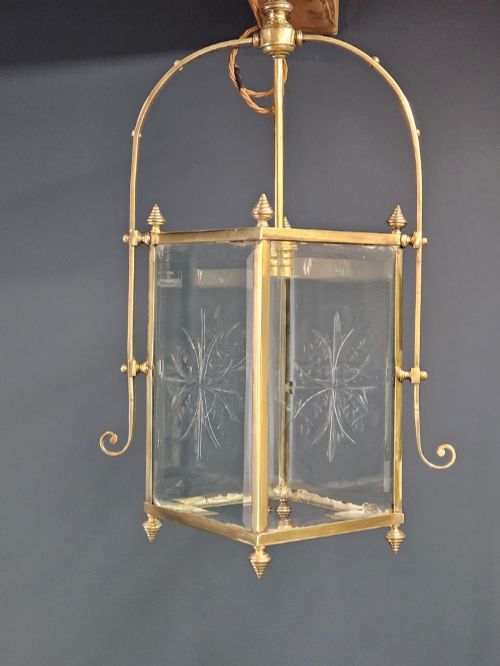
When searching for an edwardian cut glass chandelier, a buyer encounters ceiling fixtures predominantly originating from the Edwardian period alongside pieces from the late Victorian era up to the 1930s. The selection includes various forms such as bag chandeliers, tent chandeliers, dome top lights, and hall lanterns.
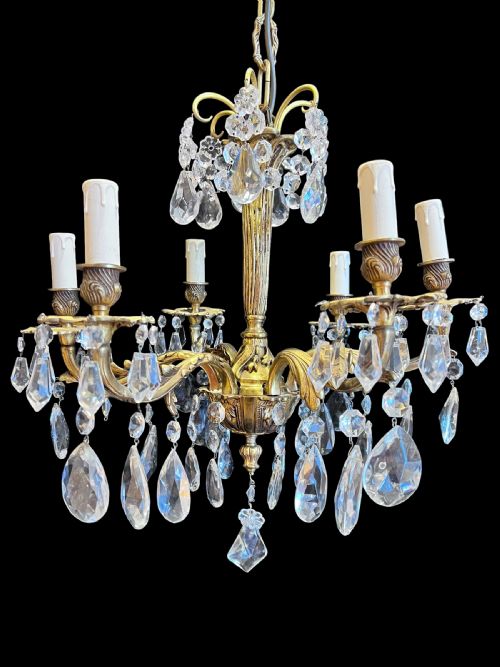
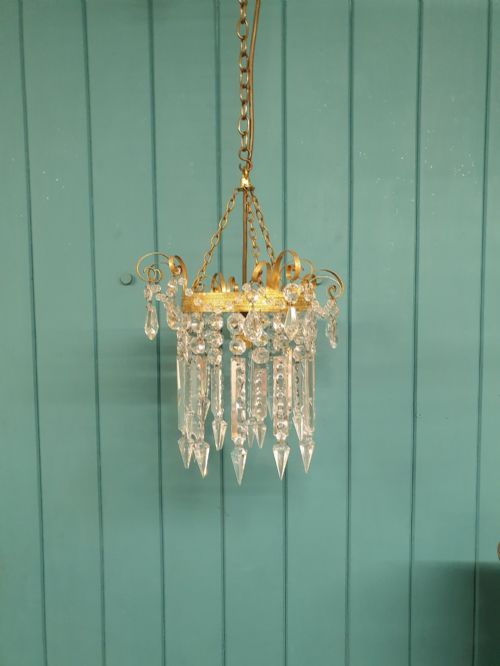
The most common versions met here pair a brass, bronze, or silver plate frame with cut glass, lead crystal drops, and glass beads. These fixtures range from small single-light pendants and spike chandeliers to large twelve-arm multi-light arrangements.
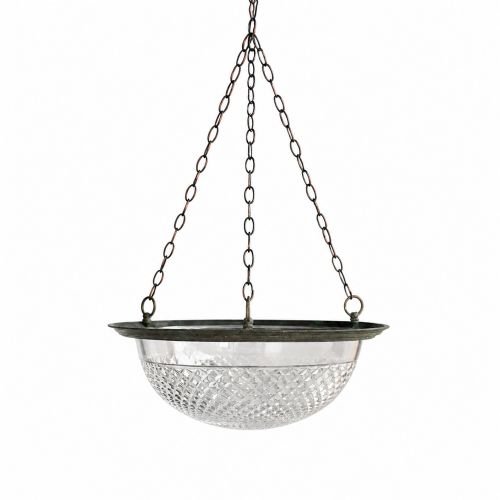
Beyond standard chandeliers, the selection occasionally encompasses related ceiling lighting types including plafonniers, dish lights, and hanging lanterns. These pieces demonstrate styles spanning from Neoclassical and French Empire to Arts and Crafts and French Chateau.
How They Were Made
Frameworks rely on cast and spun brass, gilt brass, bronze, or silver plate to support the heavy glass components. Metal mounts often incorporate decorative elements such as lion masks, leaf motifs, or beaded arms.
Glass elements are formed from cut glass, lead crystal, or plain glass, shaped into prisms, beads, drops, spikes, and draped swags. These prismatic components refract light through precise wheel-cut facets and hanging arrangements attached to the central frame.
Some Edwardian chandeliers include subtle red glass drip accents hidden among the crystal drops to add a dash of unexpected colour.
What Varies in Quality
Quality rests in the precision of the glass cutting and the clarity of the lead crystal. Superior pieces display deep, crisp facets that catch and scatter light effectively, whereas lesser examples use plain moulded glass with softer edges.
Construction methods also divide the range, distinguishing sturdy cast brass frames with integrated decorative detailing from simpler stamped metal alternatives. The integrity of the wiring channels and the completeness of original prismatic drops and bead strands determine the structural coherence of a fixture.
F&C Osler
The Edwardian Cut Glass Chandelier Glossary
- Bag chandelier
- A lighting fixture featuring a flattened lower bag or basket shape constructed from strings of glass beads hanging from a metal rim. This form became popular for concentrating light downwards through dense crystal drops.
- Tent chandelier
- A design characterised by rows of glass beads strung from a top crown down to a wider metal ring, forming a tent-like canopy over the central lights. Prisms and drops typically suspend beneath this upper canopy.
- Plafonnier
- A ceiling-mounted bowl light or flush-fitting fixture positioned close to the plasterwork. These items distribute ambient light across a room without dropping low on a chain or cord.
- Prism
- A geometric piece of cut glass designed to refract light into spectral colours. Prisms hang from the arms and bowls of chandeliers to enhance visual brilliance.
- Spike chandelier
- A vertical fixture featuring a central spiked or tapering stem surrounded by glass drops and radiating arms. This compact form suits rooms with lower ceiling heights.
Edwardian Cut Glass Chandelier: Frequently Asked Questions
What rooms suit these antique chandeliers?
Smaller spike and bag chandeliers fit well in hallways, bedrooms, or dining nooks where ceiling clearance is limited. Larger multi-arm fixtures suit high-ceilinged reception rooms and drawing rooms.
Matching pairs provide balanced illumination when hung across double reception spaces or grand entrance halls.
How are glass chandeliers cleaned properly?
Remove dust gently using a soft feather duster or microfiber cloth while the fixture hangs in place. For deeper cleaning, wipe individual glass drops with a mild solution of warm water and a gentle cleaner.
Support each drop from beneath while cleaning to prevent strain on the delicate wire loops connecting them to the frame.
How do I identify an Edwardian period fixture?
Examine the metalwork for brass casting styles, screw thread types, and mounting hardware typical of the early twentieth century. Edwardian pieces often combine lighter brass frames with crisp cut glass drops compared to heavier Victorian predecessors.
Look for design influences like Neoclassical revival motifs and refined proportioning characteristic of the era.