
Waterfall Glass Chandelier
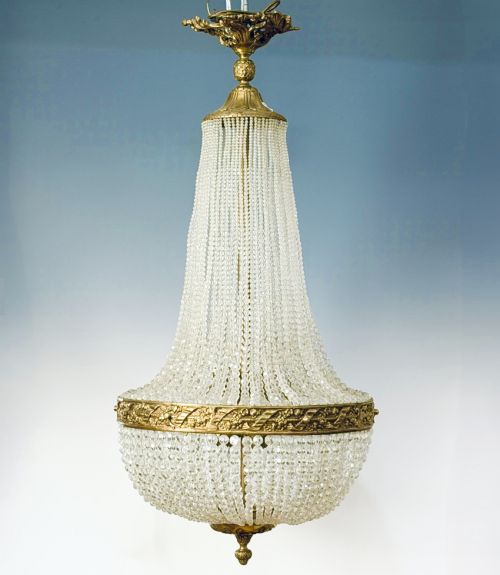
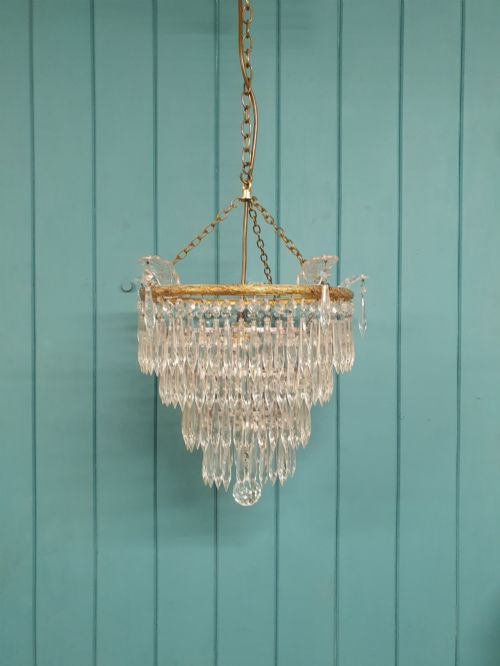
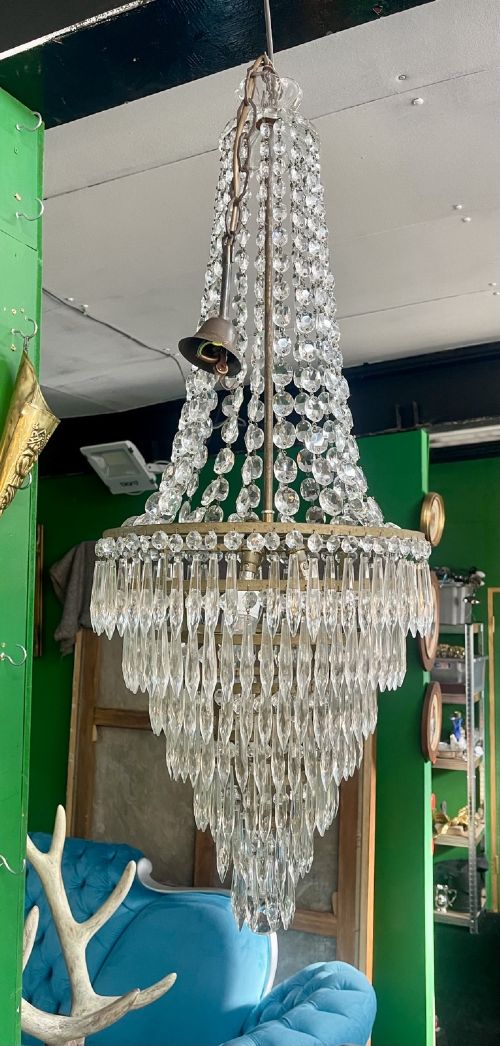
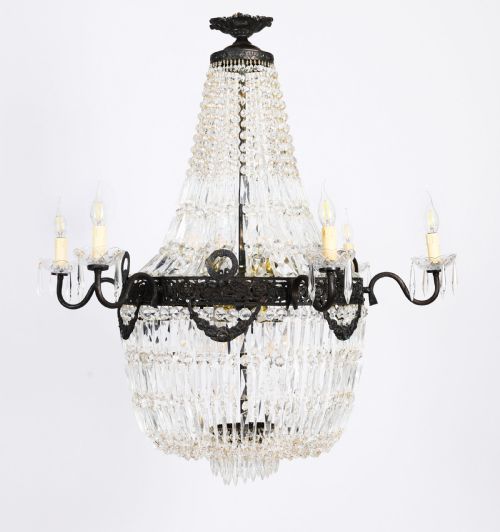
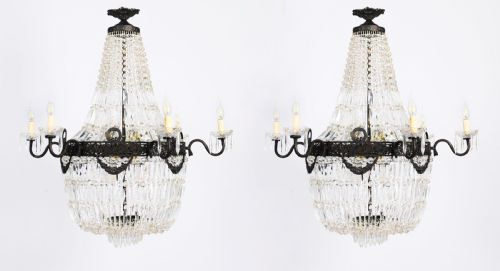
A waterfall glass chandelier catches the light with cascading crystals and tiered brass or bronze mounts, bringing dramatic French Empire and Edwardian elegance to any room.
Waterfall Glass Chandelier
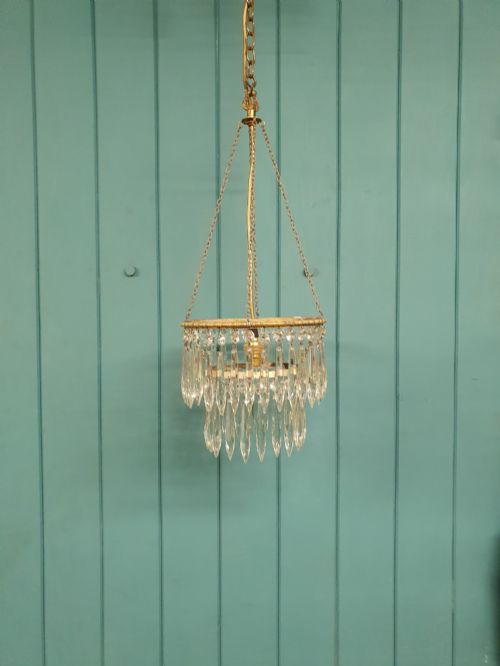
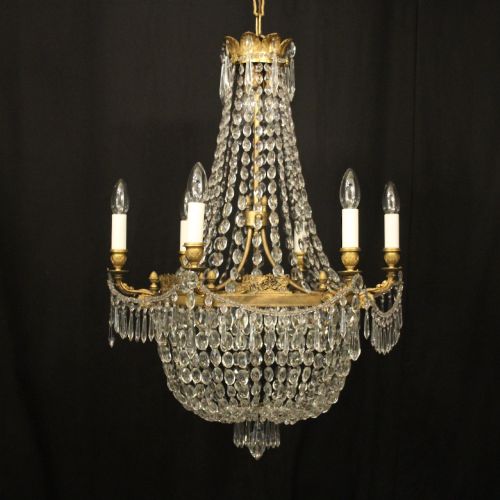
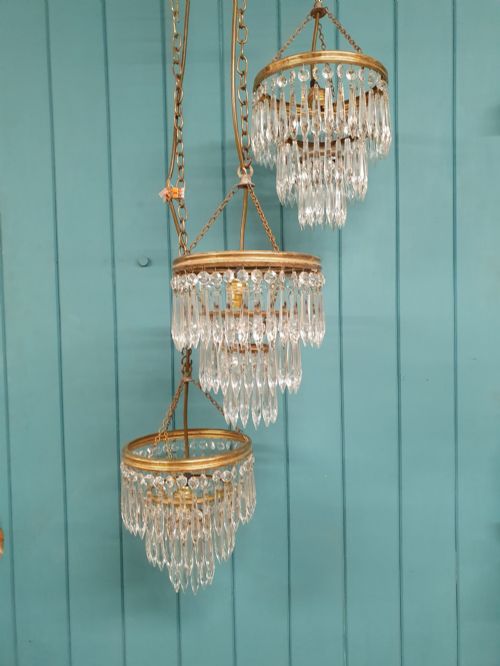
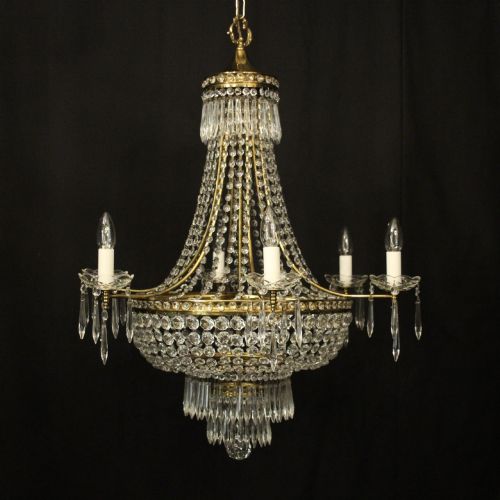
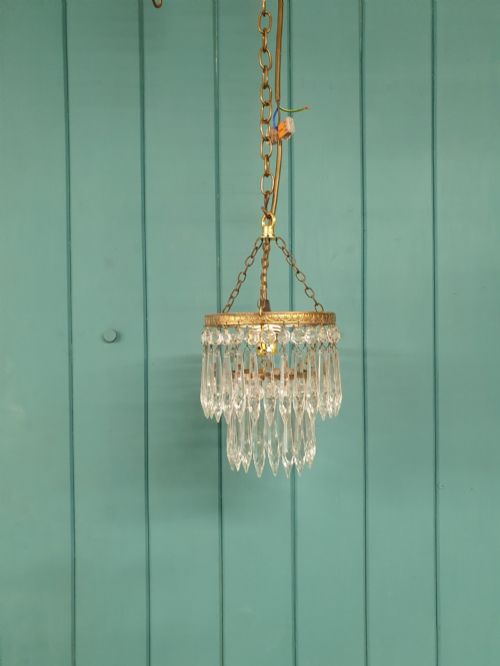
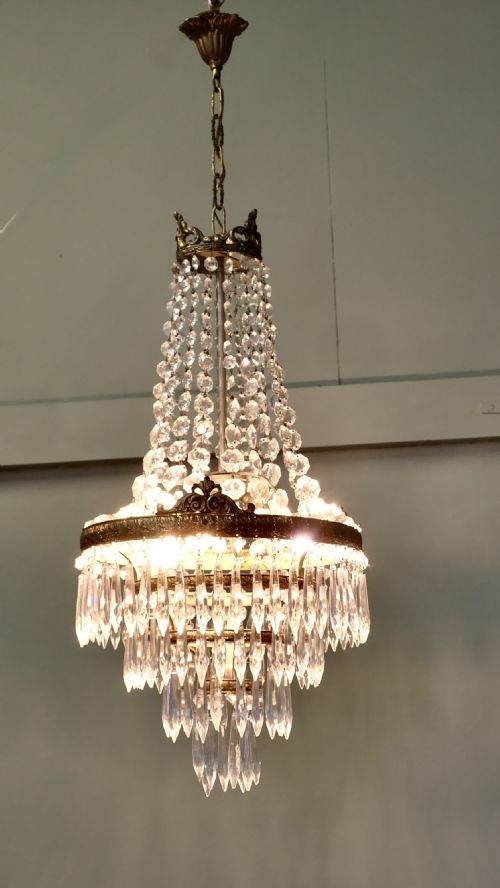
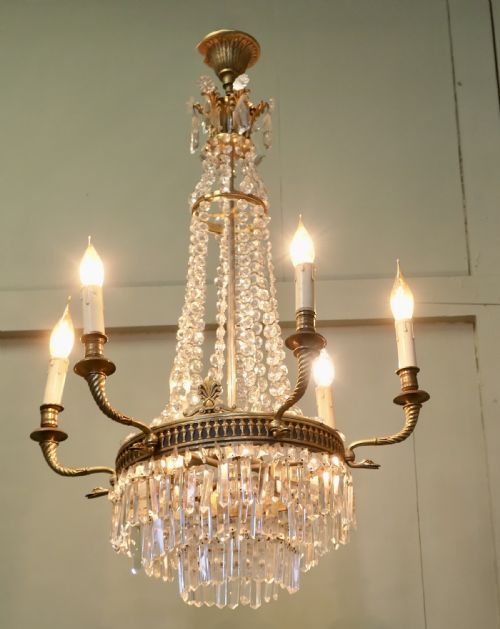
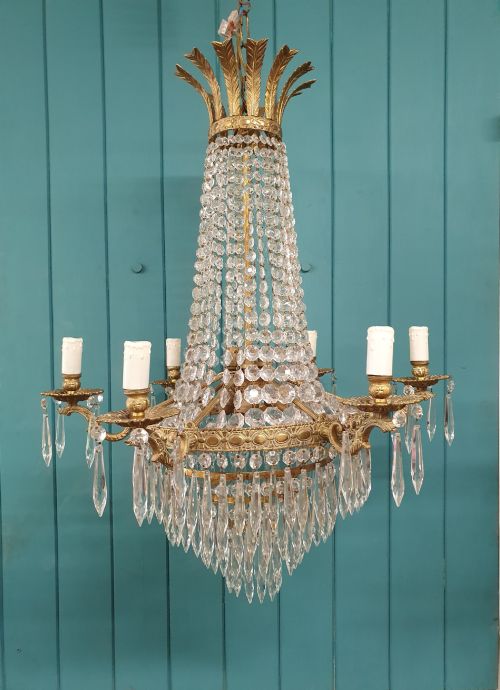
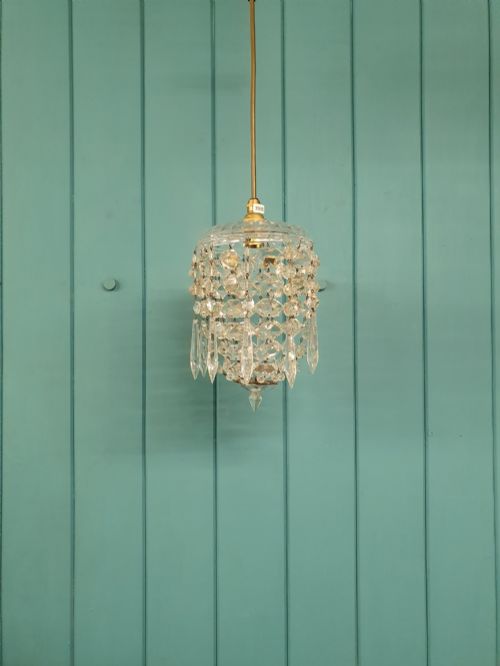
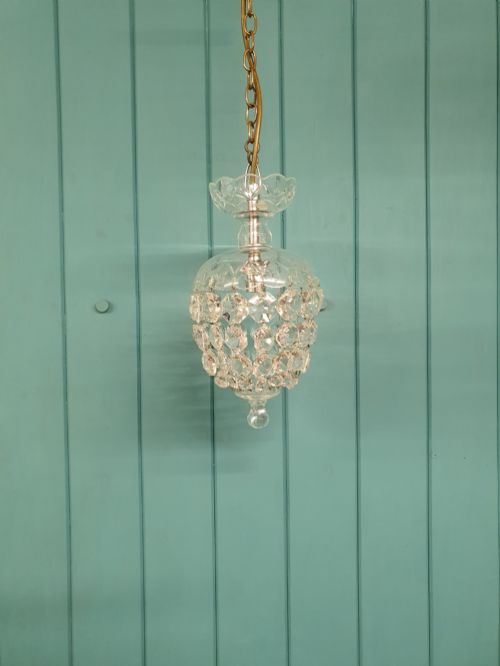
When searching for a waterfall glass chandelier, buyers encounter cascading tiers of glass drops, icicles, and beads suspended from brass or gilt frames. These fixtures bridge the nineteenth century and the Art Deco period, spanning French Empire styles, Louis Revival designs, and Edwardian bag or spike forms.
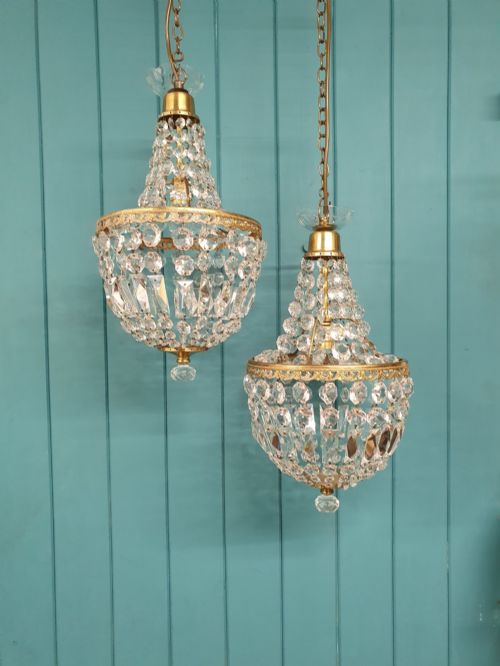
The versions most commonly met on this page range from small single-light plafonieres and bag chandeliers measuring a modest few inches to large multi-arm ballroom centrepieces. French chateau and Empire designs dominate the offerings, frequently incorporating tent-and-bag configurations alongside structured tiers of cut crystal.
How they were made
The construction relies heavily on combinations of brass, gilt brass, bronze, and glass frames that support intricate cascades of cut crystal, lustres, and glass drops. Metalwork forms the underlying skeletal armature, often shaped into circular crowns, tiered bands, or basket frames from which thousands of individual glass elements suspend.
Craftsmen utilised precise cutting techniques on crystal glass and standard clear glass to create sharp facets that maximise light refraction. Individual drops, icicles, and prisms connect via delicate wire loops to build up the dense tent-and-bag or multi-tier silhouettes characteristic of the period.
Listings feature pieces spanning from the nineteenth century through the Edwardian era, 1920, and 1930, constructed from brass, bronze, and cut crystal.
What varies in quality
Quality in these chandeliers is determined by the clarity and weight of the crystal components, alongside the precision of the metal casting in the brass or bronze mounts. Superior pieces feature hand-cut crystal with deep, crisp facets that catch illumination sharply, contrasting with simpler moulded glass drops found on standard examples.
The architectural cohesion of the frame also separates the exceptional from the ordinary, where well-balanced proportions in the tent, bag, and waterfall tiers create a harmonious silhouette. Heavy gilt brass or finely chased bronze frames indicate superior manufacturing standards compared to lighter, plain wire frameworks.
The Waterfall Glass Chandelier Glossary
- Tent and bag chandelier
- A lighting fixture featuring an upper conical section of strings of beads resembling a tent, descending into a gathered bag-like arrangement of crystals below.
- Lustre
- A cut glass pendant, prism, or drop suspended from a chandelier to refract and enhance light distribution.
- Plafoniere
- A ceiling light fixture mounted flush or very close to the ceiling surface, often utilising a single central light source behind glass elements.
- Spike chandelier
- A vertical lighting design featuring a central protruding spindle or spike surrounded by tiers of glass drops and branching arms.
- Louis Revival
- A decorative style popular in the late nineteenth and early twentieth centuries that draws heavily upon French rococo and neoclassical motifs from the reigns of Louis XIV, XV, and XVI.
Waterfall Glass Chandelier: Frequently Asked Questions
What is a waterfall glass chandelier?
A waterfall glass chandelier is an overhead lighting fixture characterised by a cascading arrangement of glass drops, beads, and crystals that resemble falling water. These pieces typically combine metal frames of brass, gilt brass, or bronze with faceted crystal components.
Originating largely from French Empire, Edwardian, and Louis Revival traditions, they utilise tiered structures to maximise light reflection throughout a space.
How do I hang a heavy chandelier safely?
Hanging these chandeliers securely requires anchoring directly into the ceiling joists or utilising a heavy-duty ceiling brace capable of supporting the combined weight of the metal frame and dense crystal droplets. Professional electrical installation is strongly recommended due to the delicate nature of the antique wiring and glass elements.
Height placement depends on room proportions, ensuring the fixture clears head height while remaining a focal point within the space.
How do I clean a crystal chandelier?
Cleaning requires removing dust gently with a soft feather duster or microfiber cloth, followed by targeted wiping using a mild solution of warm water and isopropyl alcohol applied to a cloth rather than sprayed directly onto the fixture. Keeping the power disconnected during maintenance prevents moisture damage to vintage lamp holders and metal mounts.
Individual crystal drops can sometimes be unhooked for thorough washing, provided they are dried completely before reattachment to their brass frames.
How do I distinguish Edwardian from French Empire styles?
Edwardian chandeliers on this page often appear as compact bag, dome, or spike lights featuring delicate brass mounts suited to smaller spaces. French Empire and Louis Revival examples tend to be larger, incorporating grand tent-and-bag configurations, elaborate leaf decoration, and heavier bronze or gilt brass structures.
Examining the metal casting quality and the density of the cut glass prisms helps identify the specific period and regional aesthetic.