

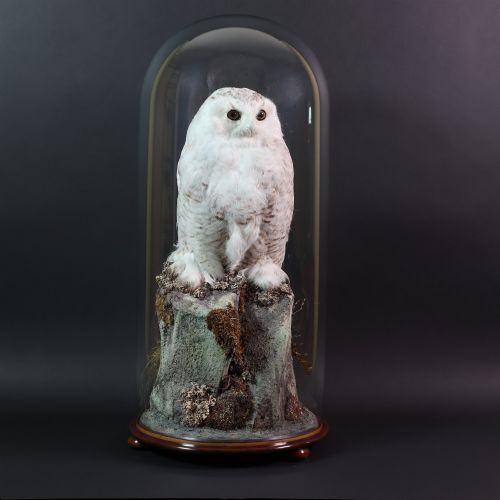



Vintage Glass Display Cloche
These vintage glass display cloche pieces offer a clear, protective cover for botanical specimens, taxidermy, and ornaments.
Vintage Glass Display Cloche
A vintage glass display cloche serves as a protective cover for precious objects, botanical specimens, and stuffed birds.
The selections on this page span the Victorian and Edwardian periods, featuring tall and wide formats designed for table or shelf placement.
Most examples originate from English workshops, frequently housing taxidermy specimens, still life arrangements, and carriage clocks beneath clear glass.
How they were made
Makers fashioned the protective covers from blown glass, shaping clear domes to sit flush upon timber bases.
Wooden bases utilise materials such as ebonised wood, beech, oak, and pine, often finished with textile linings including velvet, felt, or fabric.
Interior mounts support specimens and decorative objects securely within the enclosed glass space.
Vintage Glass Display Cloche Retail Price Guide 2026
Typical asking prices for vintage glass display cloche among the pieces listed under this phrase on Sellingantiques today, from the lower quarter to the upper quarter. They describe what is for sale here now, not the wider market.
London taxidermy firms occasionally imported exotic stuffed birds from India to inhabit these glass domes.
What varies in quality
The clarity and weight of the blown glass distinguish finer examples from standard production items.
The choice of timber for the base and the presence of specialist interior linings such as velvet or felt contribute to the overall refinement of the piece.
Proportions between the height of the dome and the depth of the wooden base dictate the visual balance of the object.
James Gardner
The Vintage Glass Display Cloche Glossary
- Cloche
- A bell-shaped glass cover used to protect delicate items from dust and damage. These items originated as garden covers before moving indoors for display purposes.
- Taxidermy dome
- A glass cover specifically designed to house preserved animal specimens. These pieces often include internal wooden mounts and botanical elements.
- Collector's dome
- An enclosed glass showcase intended for displaying small natural history specimens or curiosities. They frequently feature turned wooden bases in oak or pine.
- Ebonised wood
- Timber treated to resemble ebony through staining or painting. This dark finish appears frequently on Victorian display bases.
- Carriage clock dome
- A specialised glass cover shaped to protect portable mechanical timepieces. These examples tend to have smaller, oval or rectangular footprints.
Vintage Glass Display Cloche: Frequently Asked Questions
What fits inside a glass display cloche?
Historically, makers designed these glass covers to protect taxidermy specimens, still life fruit arrangements, botanical collections, and carriage clocks.
Today, collectors use them to display similar curiosities, small sculptures, and natural history specimens safely on tables and shelves.
How do I date a Victorian display dome?
Victorian and Edwardian domes are dated by examining the thickness and bubble formation of the glass, alongside the timber used for the base.
Earlier examples often feature heavier hand-blown glass and ebonised or pine bases, while later Edwardian pieces may use lighter oak or beech mountings.
Can the glass be separated from the base?
In most cases, the glass dome lifts away freely from the wooden base to allow access to the interior display.
Care must be taken when lifting the glass, as many antique domes sit within a shallow groove on the timber without mechanical fasteners.
Were these domes always used for taxidermy?
While taxidermy specimens represent a significant portion of surviving examples, many houses protected clocks, botanical specimens, and decorative ornaments.
Oval and round formats accommodated different types of collections, from clocks to artificial fruit arrangements.