
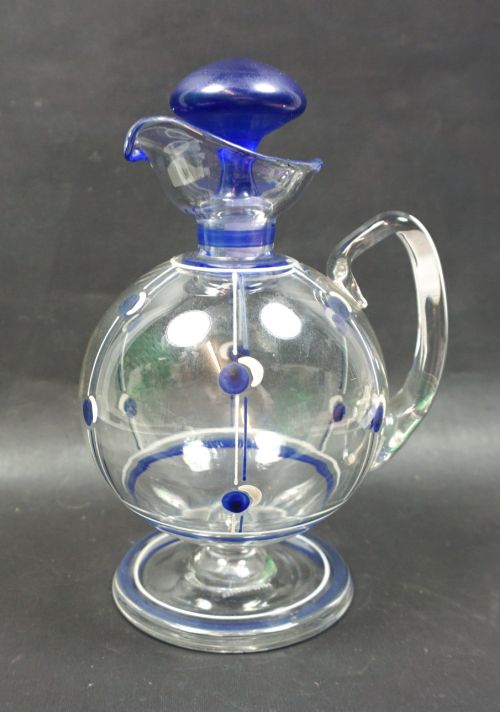
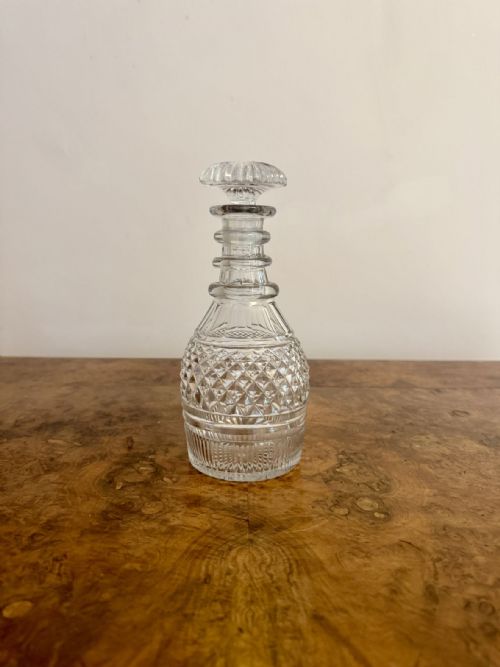
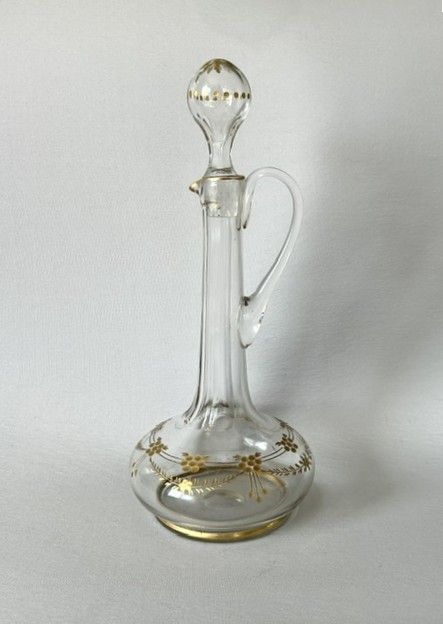

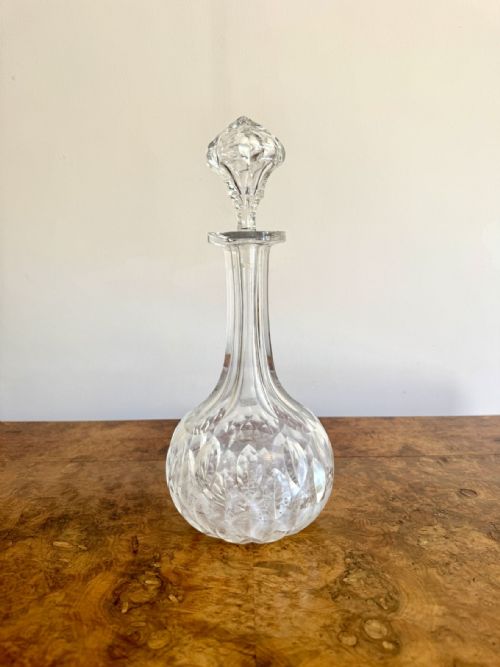


Vintage Glass Decanter Stopper
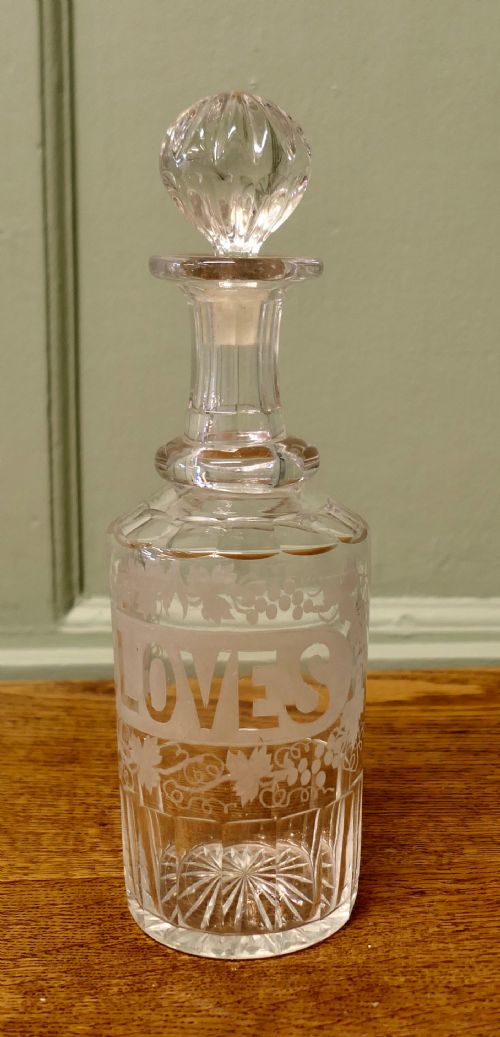
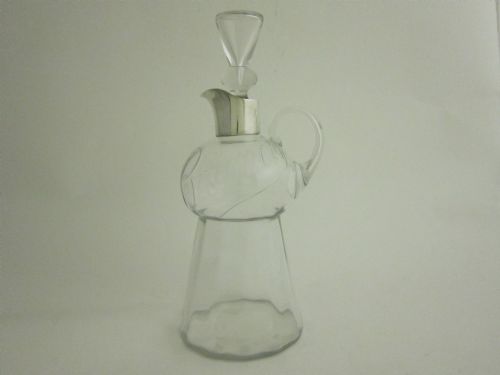
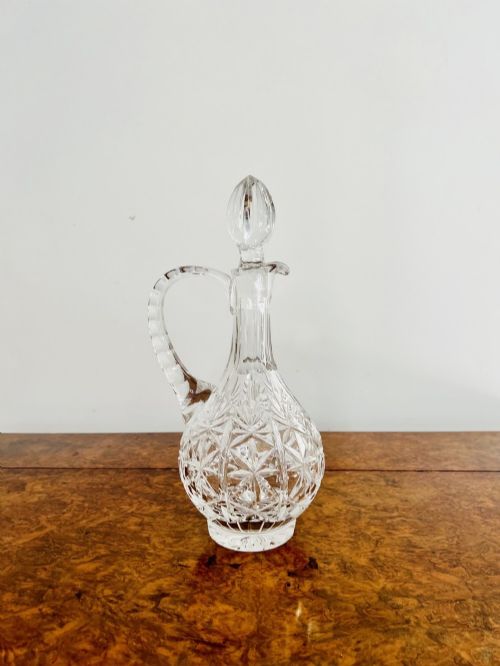
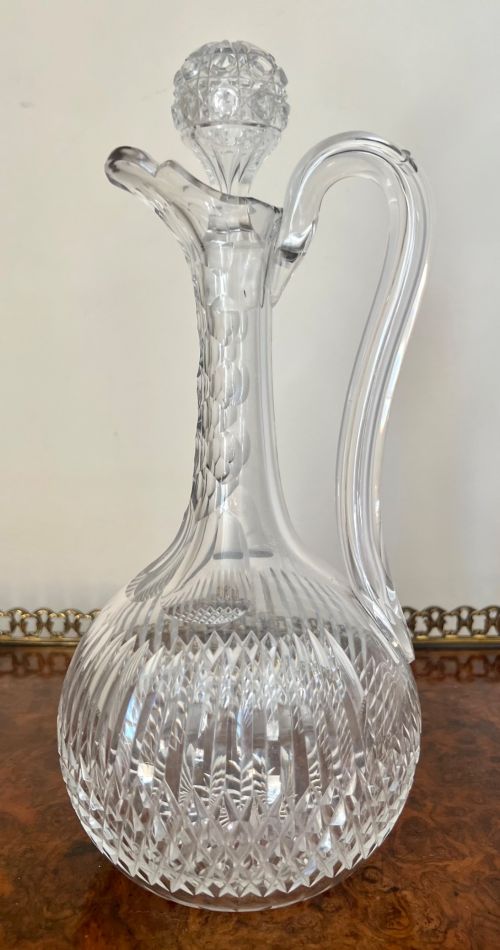
A vintage glass decanter stopper secures the spirit of the bottle while completing vessels from the Victorian era onward.
Vintage Glass Decanter Stopper
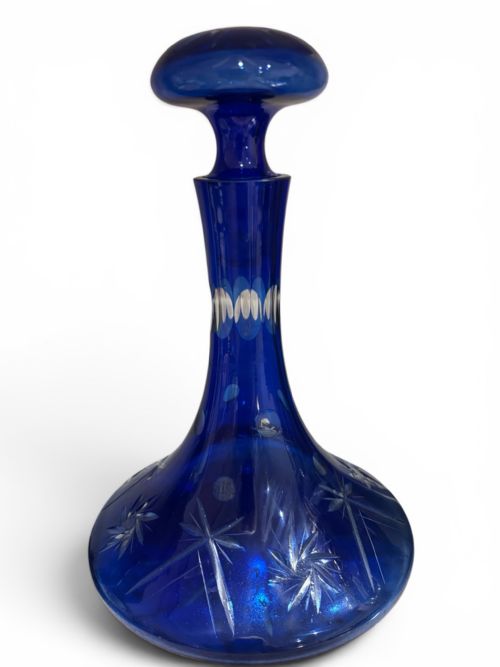
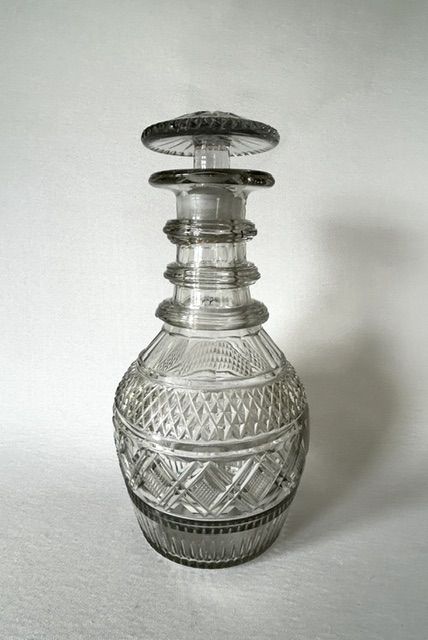
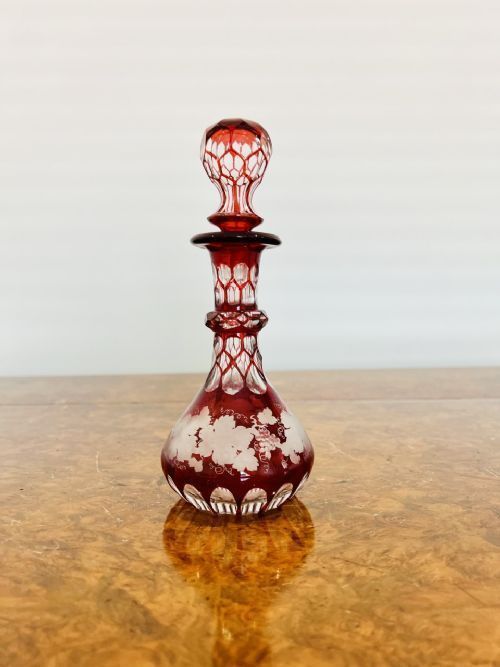
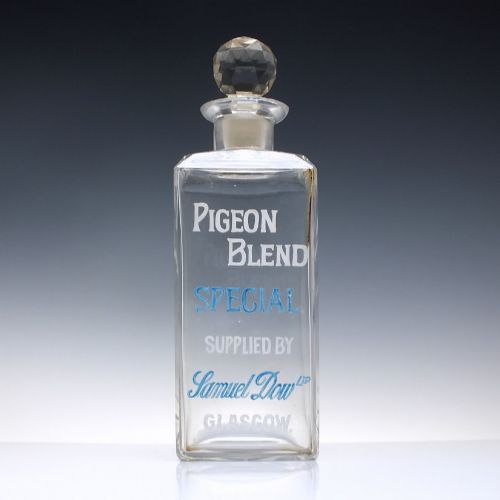
A vintage glass decanter stopper serves as the crowning closure for vessels designed to hold wine, whisky, brandy, and sherry. Buyers searching this phrase look for individual replacement closures or complete matched bottles originating from the nineteenth and early twentieth centuries.
The selections on this page predominantly span the Victorian and Edwardian periods, alongside George V and Art Deco examples. Forms range from heavy spirit decanters and claret jugs to delicate scent and perfume bottles.
Origins include English, Scottish, Bohemian, and Venetian workshops, reflecting diverse table and bar traditions. Many items pair clear or coloured glass with sterling silver collars, silverplate, or enamel decoration.
Materials and technique
Makers utilised clear glass, lead crystal, and cut crystal, often shaping pieces through blowing and heavy cutting. Surfaces received intricate wheel-engraving, etching, or gilding to catch the light.
Colour appears in ruby, amber, green, and cobalt hues, sometimes enhanced by painted enamel or latticinio bands. Collars and mounts incorporated sterling silver and silverplate, frequently bearing hallmarks.
Whisky decanters often required distinct labels to prevent spirited confusion at the Victorian dinner table.
Assessing quality
Superior examples demonstrate crisp, deep cutting in the crystal and precise matching between the stopper and the neck of the vessel. The weight and clarity of the lead crystal indicate the standard of the glasshouse.
Detailing such as hand-painting, gilding, and the presence of hallmarked sterling silver collars elevate the piece. The integrity of the glass, free from heavy wear on the ground fitments, distinguishes finer specimens.
Stevens and Williams·Pauly and Co
The Vintage Glass Decanter Stopper Glossary
- Lead crystal
- Glass containing lead oxide to increase brilliance, weight, and resonance. This material allows for deeper and sharper facet-cutting.
- Latticinio
- A glassblowing technique involving opaque white or coloured glass threads twisted within clear glass. It creates delicate web-like patterns inside the vessel wall.
- Finial
- The decorative upper portion of a decanter stopper. It provides a grip for lifting the closure from the bottle neck.
- Claret jug
- A pouring vessel specifically for red wine, often mounted with silver or silverplate hinged lids and handles. They frequently accompany matching cut glass stoppers or spirit bottles.
- Shaft and globe
- A traditional decanter silhouette featuring a long slender neck above a rounded globular body. Victorian makers produced these heavily engraved for spirits.
Vintage Glass Decanter Stopper: Frequently Asked Questions
How do I match a replacement stopper?
Examine the ground portion of the stopper stem and compare its diameter and taper to the inside of the decanter neck. Variations in hand-ground glass mean stoppers are rarely interchangeable without checking measurements.
Look at the period style and glass weight of your decanter to find a contemporaneous match in cut crystal or plain glass.
What is the difference between crystal and glass?
Crystal contains a proportion of lead oxide, which adds weight, refractive clarity, and a resonant ring when struck. Standard glass lacks this lead content and feels lighter.
Victorian and Edwardian makers utilised both materials extensively for decanters, ewers, and perfume bottles.
How should I clean antique glass decanters?
Wash glass gently in warm water using mild soap, avoiding sudden temperature changes that can crack nineteenth-century material. Use a soft bottle brush to reach interior residue without scratching.
Dry the vessel thoroughly and store the stopper separately to prevent sticking over time.
How do I date an antique decanter?
Inspect the base for a polished pontil mark, which indicates hand-blown manufacturing techniques typical of the nineteenth century. Hallmarks on silver collars provide exact assay office years for Edwardian and Victorian pieces.
Stylistic cues such as heavy wheel-cutting point to the Victorian era, while geometric motifs suggest Art Deco design.