


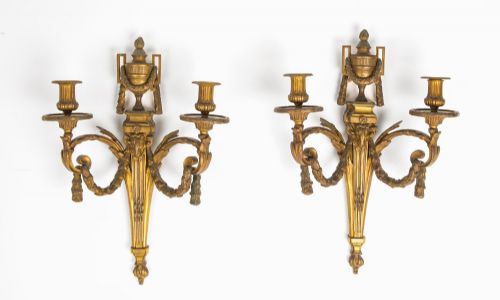

Vintage Gilt Metal Sconces
These vintage gilt metal sconces bring warmth and decorative illumination to interiors, and pairs dominate the selection.
Vintage Gilt Metal Sconces
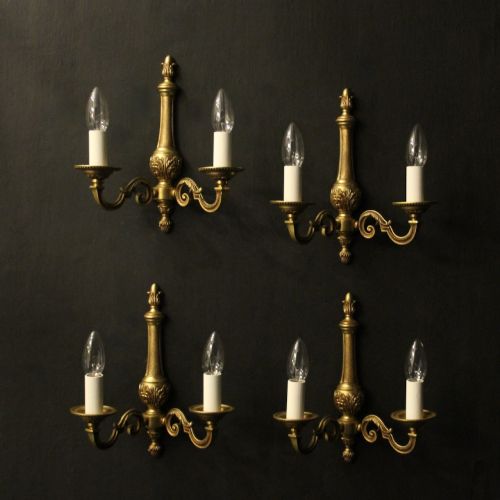
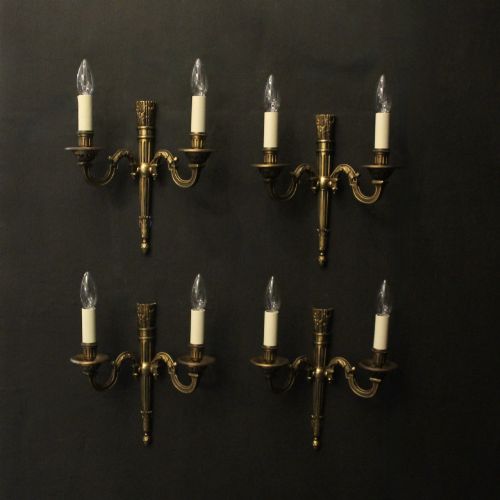
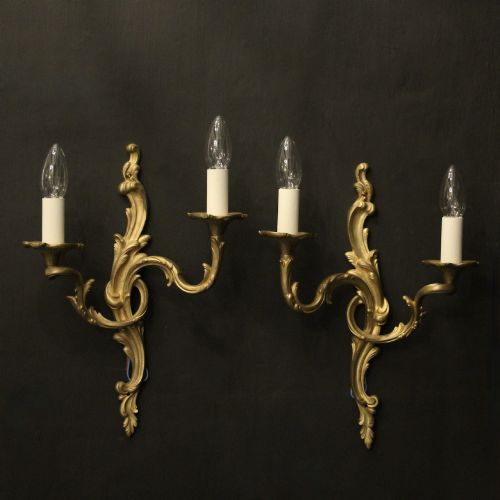
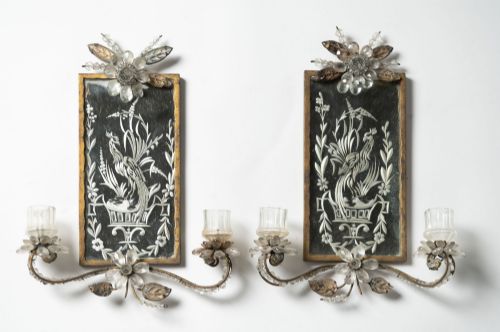
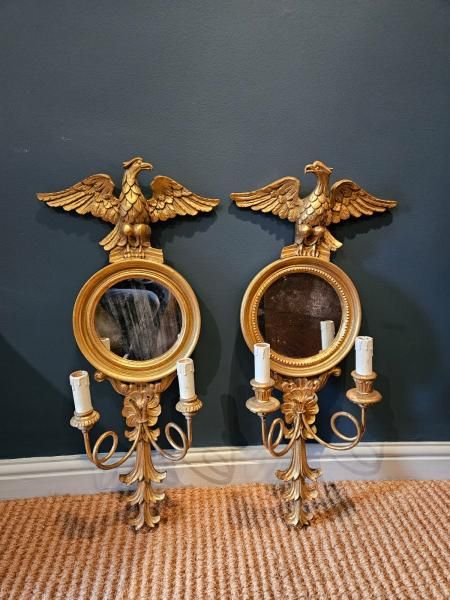
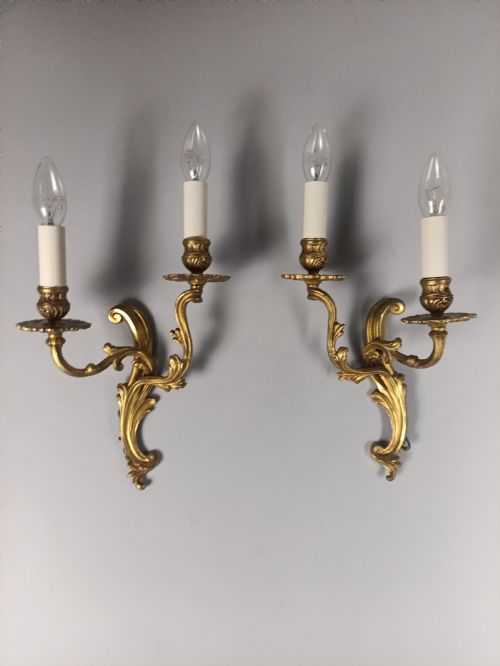
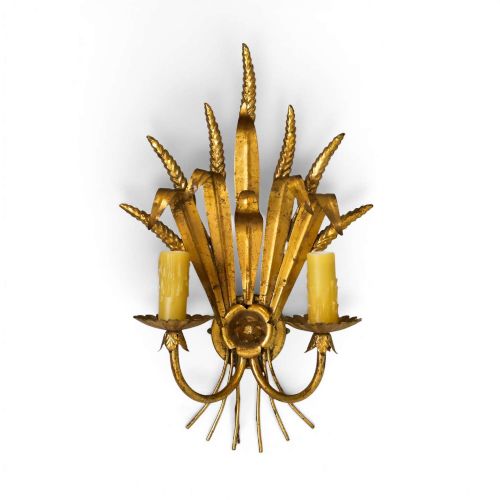
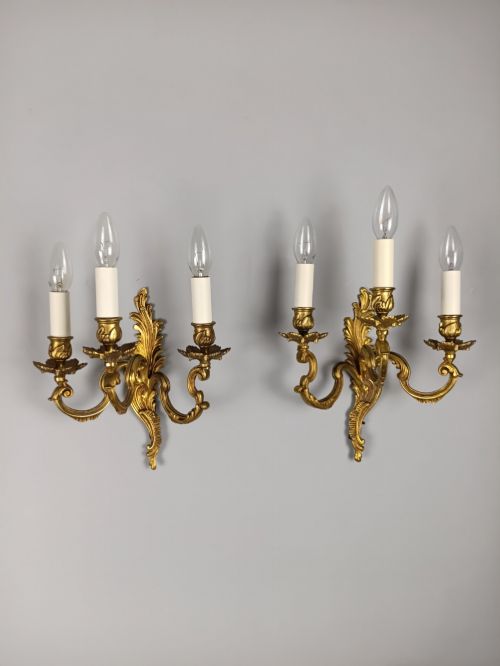
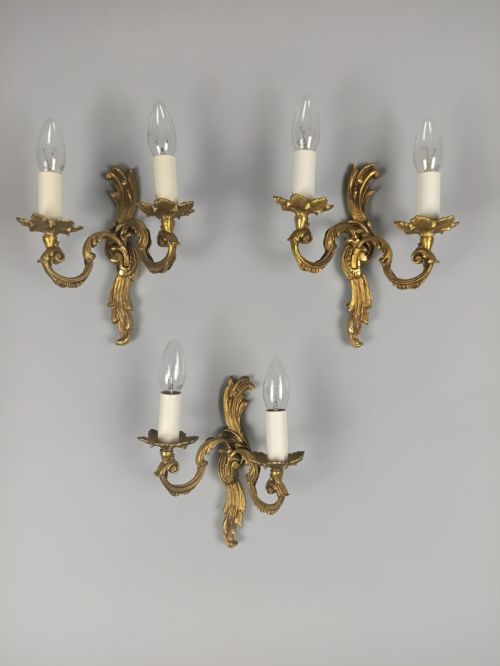
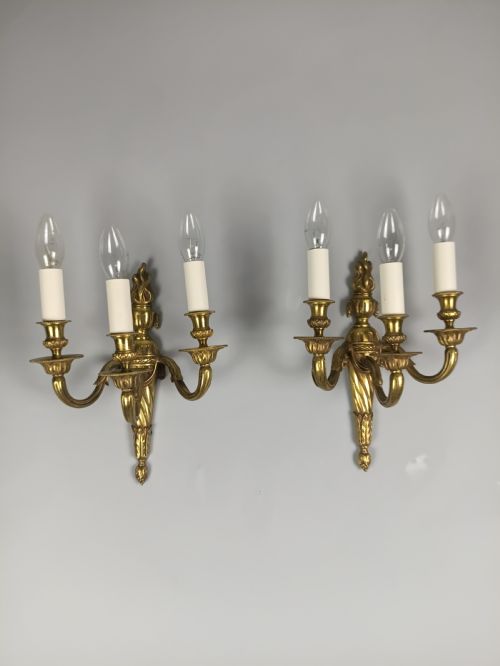
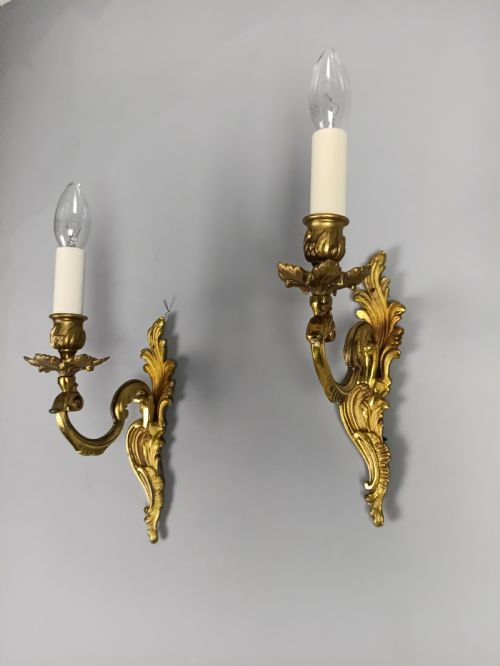
Forms range from simple single-arm brackets to elaborate multi-armed fixtures with twin or triple branches, often accompanied by matching wall mirrors or glass components. Makers frequently utilised classical ornamentation such as cherubs, ram's head masks, and foliate scrolls derived from rococo and neoclassical design traditions.
How they were made
Artisans constructed these lighting fixtures using base metals such as brass, bronze, and toleware, applying gold-coloured finishes through methods like gilding or ormolu. Cast metal components allowed for intricate detailing, capturing the fluid curves of French rococo and the formal symmetry of empire styles.
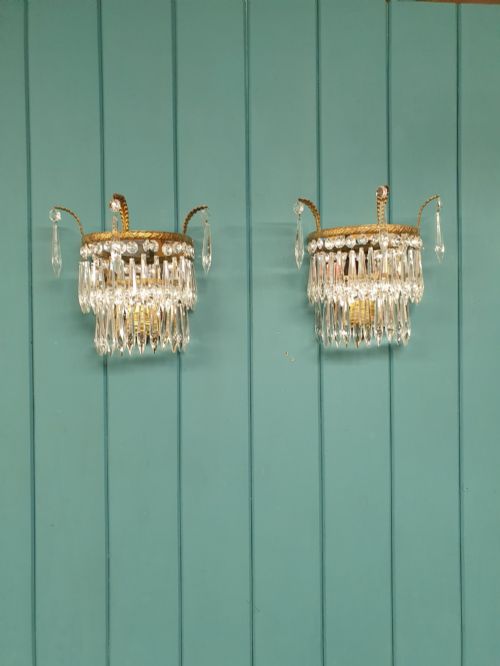
Many surviving examples incorporate glass elements, fabric shades, or mirrored backplates that reflect candle or electric light to brighten dark wall spaces.
What varies in quality
Quality in vintage gilt metal sconces rests primarily on the crispness of the casting and the depth of the metal finish. Finer pieces display sharply rendered details in motifs like cherubs and acanthus leaves, whereas lesser examples show softer, smoothed-over contours from worn moulds.
Heavier bronze and brass foundations provide greater structural integrity than thinner pressed metals, while original mercury gilding or well-preserved ormolu retains its lustre far better than crude modern respray treatments.
Maison Baguès
The Vintage Gilt Metal Sconces Glossary
- Ormolu
- A technique of applying finely ground high-carat gold to a bronze object using a mercury amalgam. This historic process creates a rich, durable surface finish common on eighteenth and nineteenth-century luxury lighting.
- Girandole
- An ornamental branched wall light or sconce, frequently incorporating a mirror backplate to multiply the illumination. These pieces often feature elaborate gilded frames and multiple candle arms.
- Toleware
- Painted or lacquered sheet metal items produced in various European centres. These pieces bring colourful polychrome accents to wall lighting fixtures.
- Rococo
- An ornate design style characterised by asymmetry, scrollwork, and naturalistic plant motifs. It heavily influences the curved arms and backplates of many vintage wall lights.
Vintage Gilt Metal Sconces: Frequently Asked Questions
How do I wire antique wall sconces?
Most twentieth-century gilt metal sconces accept standard internal wiring routed through the mounting bracket by a qualified electrician. Surface-mounted cords or hardwired configurations depend on whether the particular pair was originally manufactured for electricity or converted from candles.
Working with historic brass and bronze requires care to protect the gilded surface from tools and solder. Professional installation ensures safety while preserving the structural integrity of the antique fixture.
Where should I place wall sconces?
Pairs of sconces work effectively flanking fireplaces, doorways, or large wall mirrors to create balanced ambient illumination. Placing them at eye level provides flattering vertical light in hallways, living rooms, and bedrooms.
Mirror-backed girandoles amplify natural daylight during the day and warm up corners when lit at night. Ensure the weight of heavier bronze or brass models is supported by appropriate wall anchors.
How do I clean gilt metal?
Dust gilt metal sconces gently with a soft, dry cloth or a feather duster to remove surface particles. Avoid chemical cleaners, abrasive polishes, and excessive water, which can strip away delicate gold leaf or ormolu finishes.
If deeper cleaning is necessary, use a damp cloth with mild soap, testing a small hidden area first. Pat the metal completely dry immediately afterward to prevent corrosion.
How do I date these wall lights?
Dating relies on stylistic clues, manufacturing techniques, and materials such as heavy cast bronze versus thin pressed brass. Early twentieth-century pieces from the 1920s and 1930s often reflect neoclassical revival or art deco influences, whereas nineteenth-century examples display heavier rococo and empire characteristics.
Examining screw types, backplate construction, and wiring channels also helps establish the era of manufacture. Comparing pieces with documented period catalogue designs confirms precise origins.