


Vintage Gemstone Bangle
These vintage gemstone bangle and bracelet designs combine coloured stones with gold, silver, and platinum across periods from the Victorian era to the mid-twentieth century.

Vintage Gemstone Bangle
A vintage gemstone bangle or bracelet brings together colourful minerals and precious metals in forms shaped by decades of design, from the Victorian era through Art Deco and mid-century modernism.
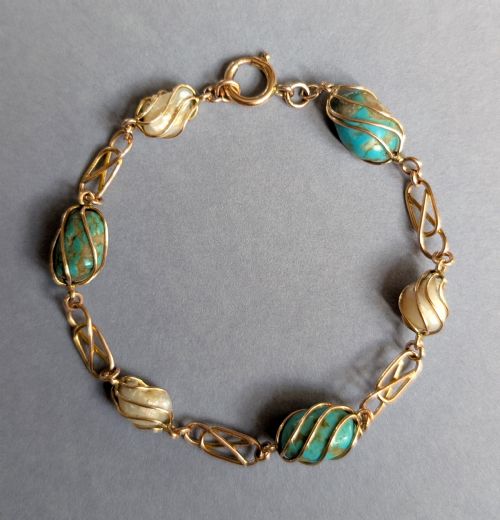
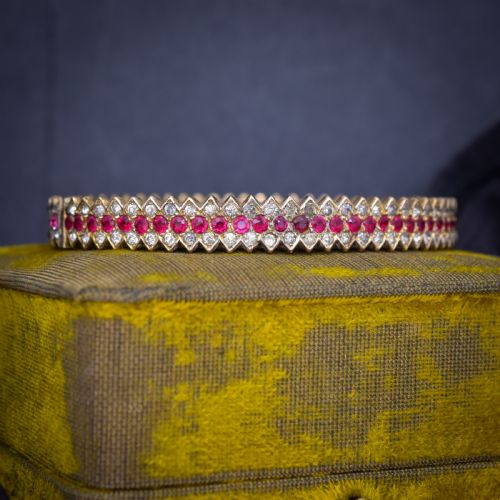
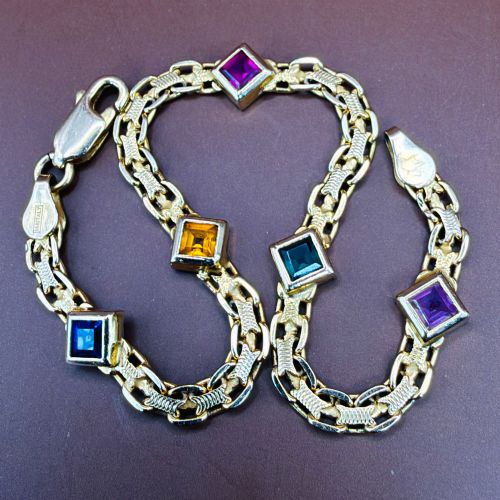
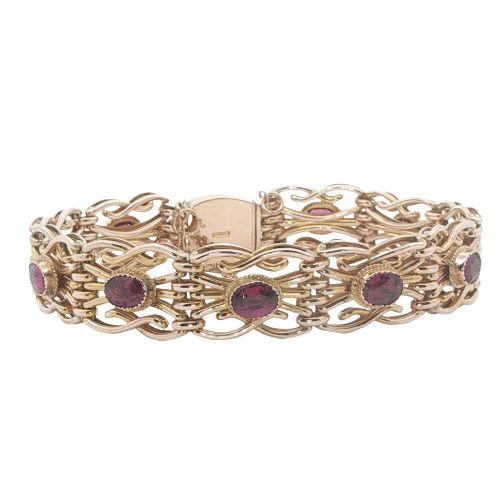
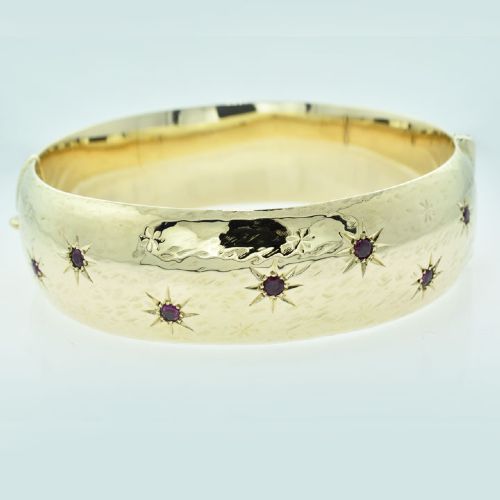
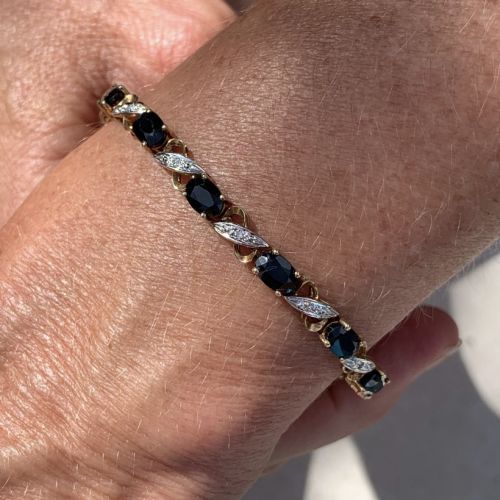
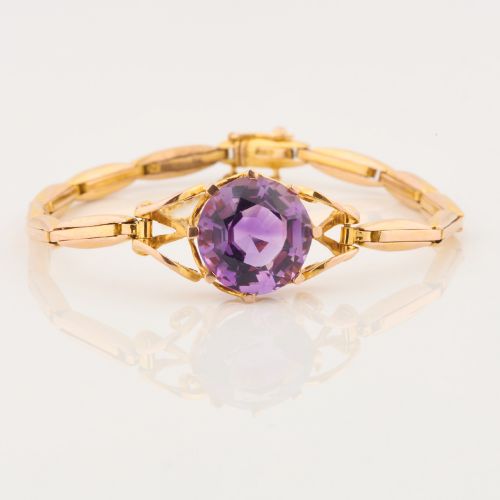
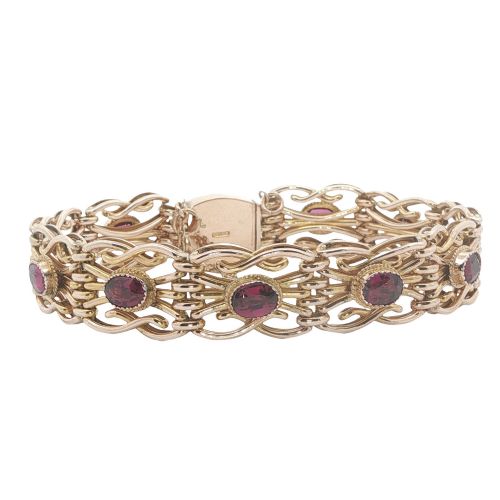
The pieces on this page span the 1900s, Edwardian period, 1920s, 1930s, 1940s, and 1960s, appearing as hinged bangles, gate links, and flexible gemstone lines.
Most examples combine gold in various carats with stones like sapphire, ruby, diamond, amethyst, garnet, and aquamarine, often accompanied by pearls or paste.
Materials and construction
Makers set stones into mounts of nine-carat, fifteen-carat, and eighteen-carat yellow, rose, and white gold, alongside platinum and silver settings.
Construction techniques range from pierced filigree and closed-back settings in older items to channel and prong settings in later twentieth-century pieces, incorporating emeralds, peridots, zircons, and opals.
Listings feature items dated across the Victorian, Edwardian, Art Deco, 1940s Retro, and mid-century periods in gold, silver, and platinum.
Evaluating the work
Quality rests on the weight and purity of the metal, the saturation and clarity of the gemstones, and the precision of the setting work.
The refinement of the mounting, whether an intricate Victorian gate link or a geometric Art Deco platinum frame, dictates the standard of the piece.
The Vintage Gemstone Bangle Glossary
- Bangle
- A rigid circular or oval bracelet that slips over the hand or opens with a hinge and clasp. Many examples from the Victorian and mid-century periods utilise this closed or hinged form.
- Filigree
- Ornamental work of fine wire formed into open lace-like patterns. This technique appears frequently in silver and gold settings from the twentieth century.
- Paste
- Hand-cut glass used to simulate gemstones in historic jewellery. Art Deco pieces often incorporate coloured paste alongside silver or base metals.
- Carat
- A unit of weight for gemstones and a measure of purity for gold. Listings record precise carats for diamonds and coloured stones alongside nine, fourteen, fifteen, and eighteen carat gold standards.
- Almandine
- A dark red variety of garnet commonly found in Edwardian and Victorian jewellery. It provides deep colour in rose gold cluster and line settings.
Vintage Gemstone Bangle: Frequently Asked Questions
How do I date a vintage gemstone bangle?
Dating relies on the combination of metal marks, stone cuts, and prevailing design styles. Pieces reflect distinct eras from Victorian gate links to Art Deco geometric motifs and 1960s forms.
Examining the clasp type, the mount construction, and any accompanying hallmarks helps narrow down the decade of production.
What metals are common in these bracelets?
Yellow and rose gold dominate the earlier Victorian and Edwardian periods, appearing in nine, fifteen, and eighteen carat standards. Platinum and white gold emerge more prominently during the Art Deco era.
Silver also appears alongside amber, onyx, chalcedony, and paste in specific mid-century designs.
Are these pieces suitable for daily wear?
Many sturdy gold bangles and heavier link bracelets handle regular wear quite well, provided the clasps and safety chains remain secure. Lighter filigree settings or softer stones require more mindful handling.
Assessing the thickness of the band and the security of each stone setting determines how often a piece should be worn.
How should I clean my gemstone bracelet?
Most gold and platinum pieces with hard gemstones tolerate gentle cleaning with warm water, mild soap, and a soft brush. Softer organic materials like pearls require specialist care without harsh immersion.
Avoiding ultrasonic cleaners prevents damage to vulnerable stones such as opals, emeralds, and amber.