


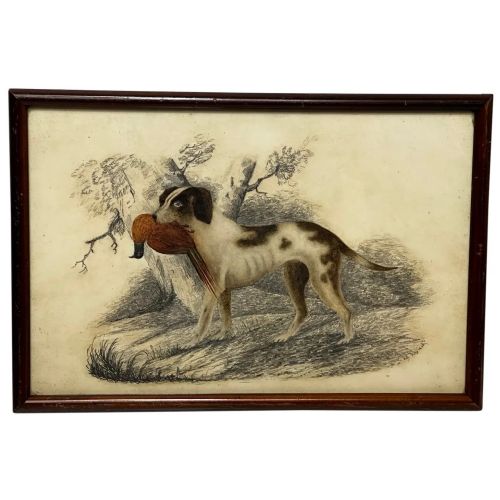


Vintage Game Bird Painting
A vintage game bird painting brings the field and the covert indoors, offering a rich study in natural history and traditional sporting art.
Vintage Game Bird Painting
A vintage game bird painting encompasses framed watercolours and oils on canvas depicting pheasants, grouse, and woodcock across various periods. Buyers seek these works to bring classic sporting heritage into domestic interiors.
The selections span from Victorian hunting scenes to mid-century depictions, showing both detailed naturalism and impressionist interpretations. Watercolours and oils dominate the works found in this category.
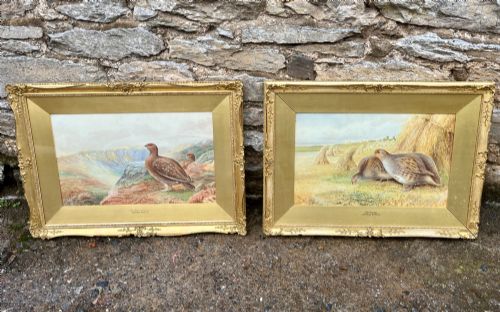
Subject matter ranges from solitary birds in Highland landscapes to larder views and cabinet plates. The pieces reflect the enduring popularity of field sports in British and European art traditions.
Materials and methods
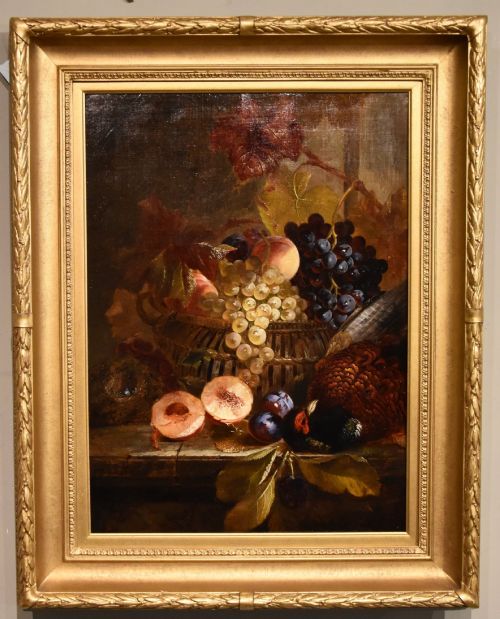
Artists deployed oil paint on canvas and watercolour paint on paper to capture the intricate feather patterns of each species. These traditional mediums were often protected beneath glass within wood or gilded frames.
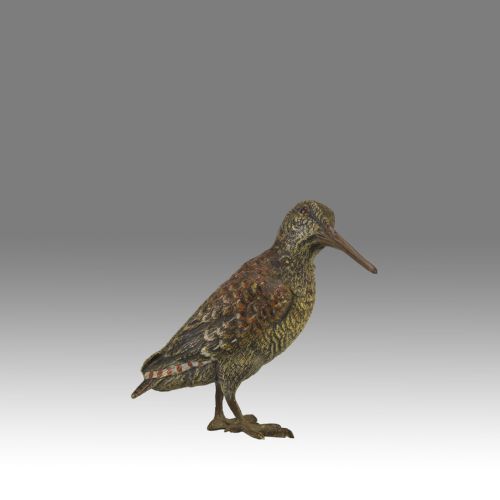
Pottery chargers and plates utilise hand-painted glazes fired to preserve vivid colours over decades of display. Cold-painted bronze provides three-dimensional sculptural alternatives to two-dimensional wall art.
An unexpected monkey makes a brief appearance among the feathers and firearms.
Distinctions in quality
Quality rests upon the artist's anatomical accuracy in rendering the bird and the handling of light within the landscape. Master painters capture feather iridescence and texture with precise brushwork.
The condition of the pigment, paper, or canvas dictates longevity, alongside the originality of the frame. Works carrying documented provenance or signatures from notable painters command greater attention from collectors.
Franz Bergman·William Henry Ward·George Rankin·Henri Joseph Pauwels·Stephen Elmer·Arthur E Gonne·Archibald Thorburn
The Vintage Game Bird Painting Glossary
- Sporting Art
- Artworks depicting fields, covert pursuits, and wildlife associated with country sports. This genre has a long history in British painting.
- Watercolour Paint
- Pigments suspended in a water-based solution applied to paper. It creates transparent washes well-suited to delicate bird studies.
- Oil Paint
- Pigment mixed with a drying oil that provides rich colour depth and durability on canvas. It allows for layered textures and subtle blending.
- Cold-Painted Bronze
- Bronze sculpture painted without heat firing, a technique prominent in late nineteenth and early twentieth-century Austrian studios.
- Cabinet Plate
- A decorative ceramic plate intended for display in a cabinet or on a wall rather than for dining.
Vintage Game Bird Painting: Frequently Asked Questions
What periods do these paintings come from?
The works span from the Victorian era through the early twentieth century and into the mid-century decades. This timeline includes Edwardian examples and later twentieth-century interpretations.
Collectors encounter various styles reflecting the artistic preferences of each specific decade, from strict naturalism to impressionism.
How should I hang watercolour paintings?
Watercolours require protection from direct sunlight to prevent the pigments from fading over time. Professional framing with acid-free mounts helps preserve the paper.
Positioning works away from moisture-heavy rooms ensures the paper and wooden frames remain stable for years.
What is a larder view?
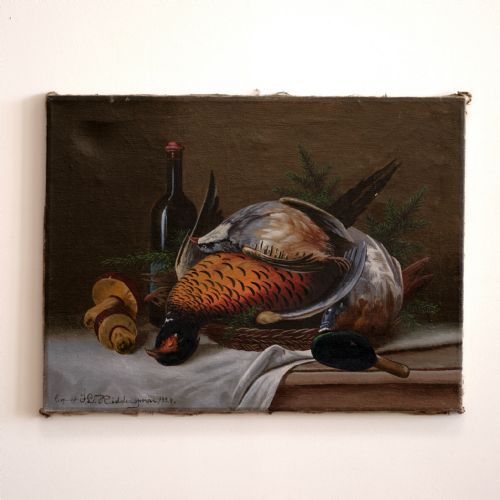
A larder view typically depicts game birds and other hunted produce arranged within a kitchen or larder setting. This traditional genre highlights the harvest of the field.
Artists used these compositions to showcase textures of feathers alongside domestic kitchen implements.
Are bronze sculptures included here?
Sculptures in cold-painted bronze appear alongside flat paintings in this category. These three-dimensional figures depict specific birds such as grouse and woodcock.
Austrian workshops produced many of these detailed metal pieces during the early twentieth century.