





Antique Hunting Lodge Art
Antique hunting lodge art brings the heavy atmosphere of nineteenth-century field sports and wooded estates directly into a room.
Antique Hunting Lodge Art
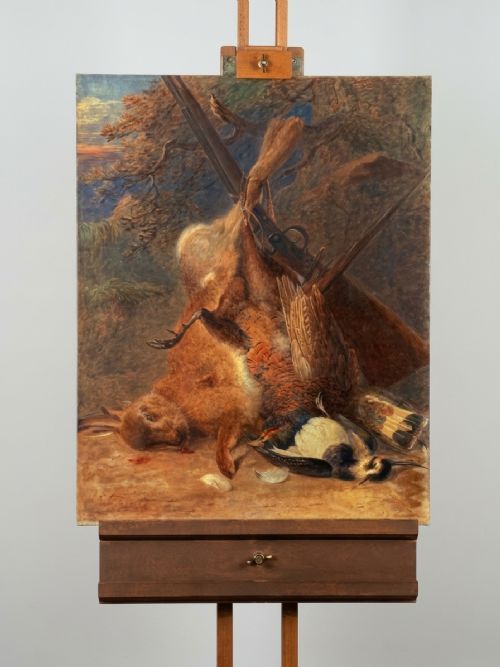
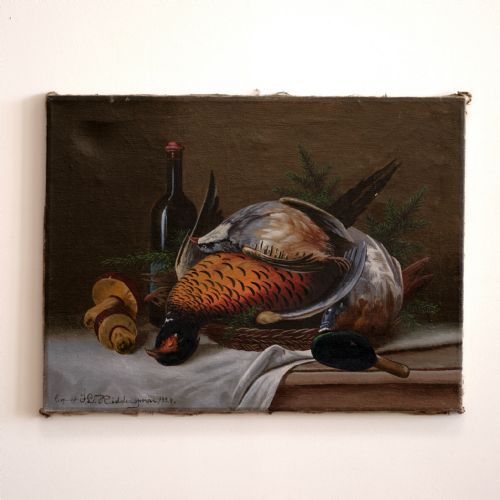
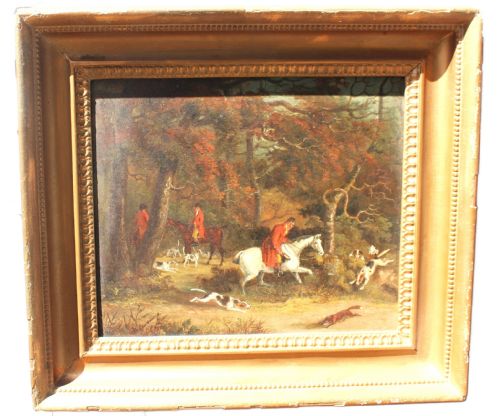
When you search for antique hunting lodge art, you look at paintings and carvings depicting game birds, hounds, sporting dogs, and game scenes intended for country houses and rural retreats.
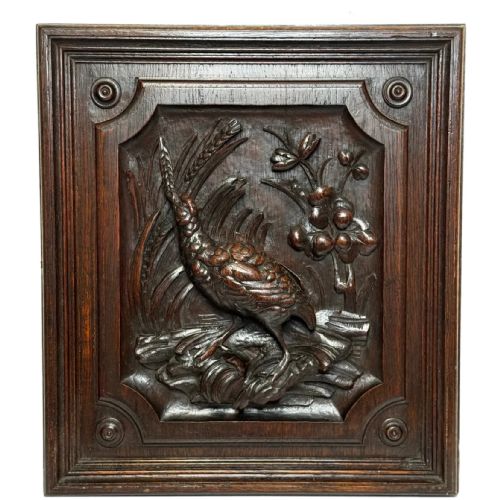
The versions most commonly met on this page are oil paintings on canvas and board alongside carved oak wall panels dating from the nineteenth century and the Victorian era.
These works capture the traditional pursuits of the landed gentry, featuring subjects such as setters, spaniels, dead game, and foxes in wooded settings.
How they were made
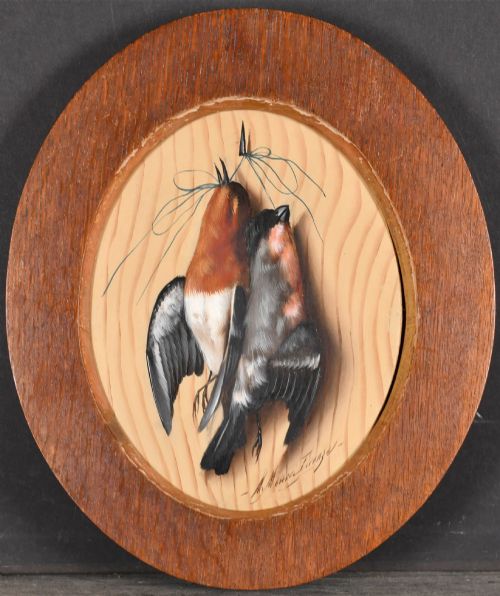
Artists applied oil paint and watercolour to canvas, board, and paper, often capturing fine detail in animal fur and plumage.
Woodworkers carved heavy oak panels in high relief to create architectural wall sculptures for interior decoration.
Listings feature works in oil paint, watercolour, canvas, paper, and carved oak wood panels.
What varies in quality
Quality rests in the anatomical accuracy of the animals and the confident handling of brushwork or wood carving.
Stronger pieces show distinct character in the subjects, whereas weaker examples rely on rigid formula and stiff composition.
George Sydney Shepherd·Michelangelo Meucci·Colin Graeme Roe·Robert Cleminson·Herbert Dicksee·Sir Edwin Henry Landseer·Dean Wolstenholme·Archibald Thorburn
The Antique Hunting Lodge Art Glossary
- Oil painting
- A work created using pigments bound in a medium of drying oil, typically applied to canvas or wood board.
- Bodycolour
- An opaque water-based medium, similar to gouache, used to add solid highlights and depth to watercolours.
- Trompe l'oeil
- An artistic technique that uses realistic imagery to create the optical illusion that the depicted objects exist in three dimensions.
- Etching
- A printmaking process where lines are incised into a metal plate with acid before being transferred to paper.
Antique Hunting Lodge Art: Frequently Asked Questions
What subjects appear in these works?
The subjects focus primarily on game birds like pheasants and grouse, hunting dogs such as setters and spaniels, and scenes of foxes, ponies, and game.
These motifs reflect the traditional pursuits and country house aesthetics of the nineteenth century.
Are these pieces painted on canvas?
Many examples are executed in oil paint upon canvas or wooden boards, though watercolours and carved oak panels also appear.
Support mediums vary according to whether the piece was intended as a framed picture or an architectural wall panel.
How do I date a carving?
Carvings from the Victorian period often utilise dense tiger oak and feature deep relief work following Gothic revival designs like Pugin's.
Examining the depth of the carving and the preparation of the timber helps determine the era.
How should I hang large canvases?
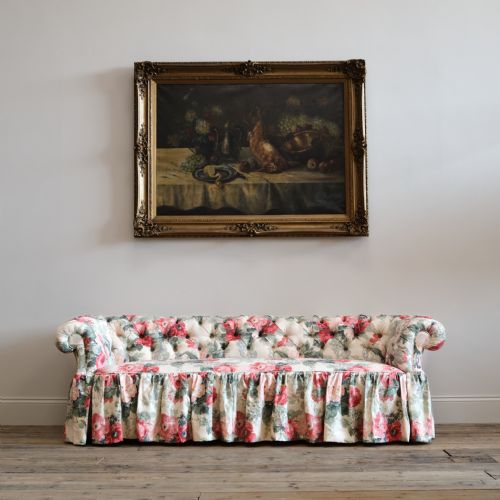
Extra large oil paintings require secure wall fixings and appropriate weight-bearing brackets to support heavy wooden stretchers.
Positioning them away from direct sunlight preserves the oil paint and canvas over time.