
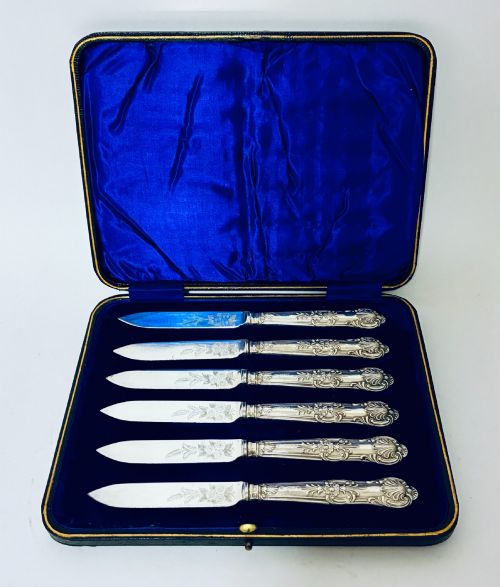


Vintage Fruit Knife
A vintage fruit knife is a portable dining implement in silver, steel or gold, prized for its natural handle materials and period craftsmanship.
Vintage Fruit Knife
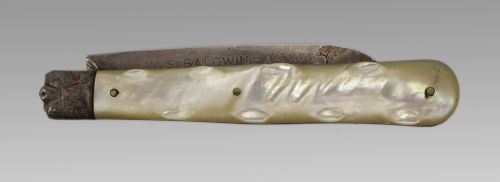
When you search for a vintage fruit knife, you find pocket pieces and table cutlery designed for slicing fruit without tarnishing the blade.
The selections here span the Victorian, Edwardian and George V periods, alongside nineteenth century continental examples.
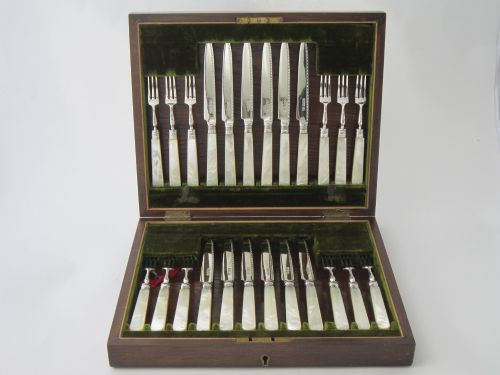
You meet single folding pocket pieces alongside cased dessert sets and larger fruit serving knives.
How they were made
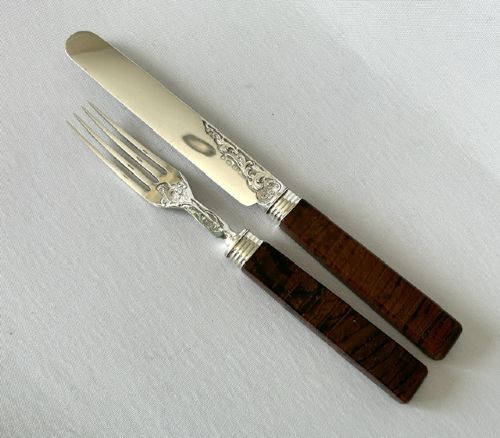
Handles combine carved mother of pearl, banded agate and polished wood fitted to sterling silver, gold or steel blades.
Some pieces feature solid silver gilt construction or cast silver blades, while cased sets pair metal cutlery with lined velvet presentation boxes.
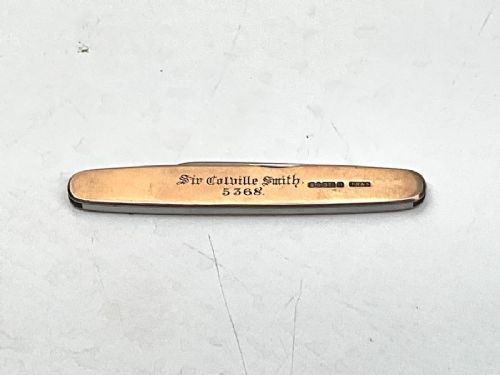
One pocket knife carries a masonic inscription for Sir Colville Smith, proving that even fruit preparation had its secret societies.
What varies in quality
Quality rests in the harmony between natural handle materials and the metalwork of the blade.
Finely chased silver and crisp mother of pearl carving distinguish the upper tier from plainer utilitarian cutlery.
Sir Colville Smith
The Vintage Fruit Knife Glossary
- Mother of pearl
- The iridescent internal layer of mollusc shells, commonly carved for knife handles. It provides a luminous surface that resists the acids in fruit.
- Silver gilt
- Silver that has been coated with a thin layer of gold. This technique protects the metal underneath and adds a rich warm tone.
- Agate
- A fine-grained quartz displaying coloured bands, used for decorative knife and fork handles. Each piece shows distinct natural patterning.
- Cast silver
- Molten silver poured into a mould to form the blade or handle. This method allows for greater sculptural detail than hammering alone.
Vintage Fruit Knife: Frequently Asked Questions
What is a vintage fruit knife used for?
These pieces were originally carried or placed on the table for slicing fresh fruit during dessert courses.
The non-reactive materials prevented the metallic taste that standard steel cutlery often left on acidic fruits.
How do I date a fruit knife?
Dating relies on hallmark stamps, style characteristics and the materials popular in specific eras like the Victorian or Edwardian periods.
Maker marks and silver assay office symbols provide the most precise indication of origin and age.
How should I store these knives?
Keep them in fitted wooden cased sets or lined boxes to protect delicate mother of pearl and agate handles from impact.
Stable humidity levels prevent the organic handle materials from drying out or warping over time.
Are these knives made of solid silver?
Many feature sterling silver blades and handles, though some examples utilise steel, silver gilt or gold components.
Checking the hallmarks stamped on the metal reveals the specific standard of silver used in the construction.