

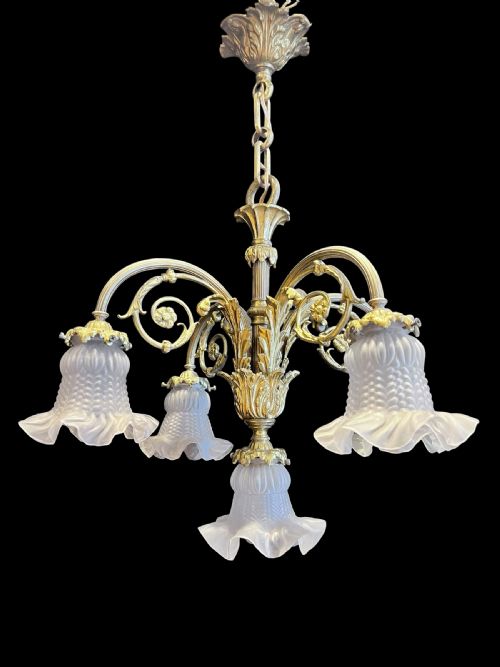
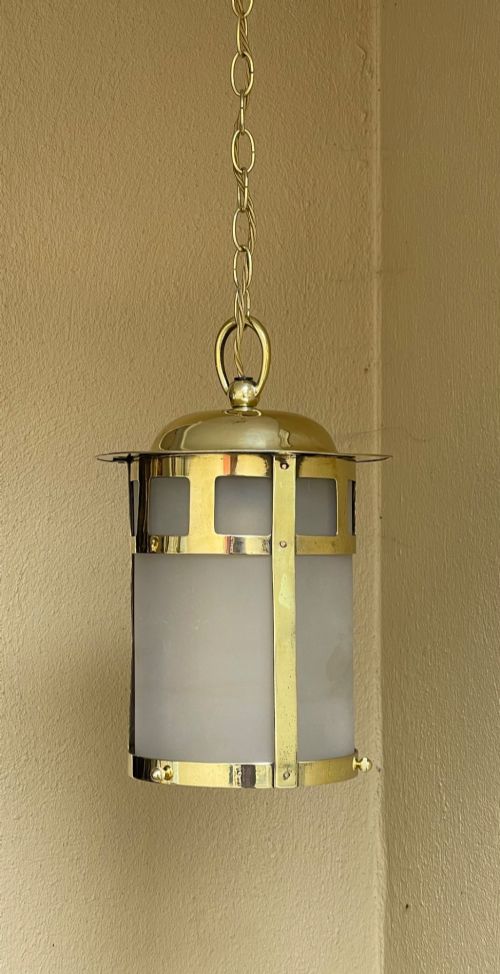
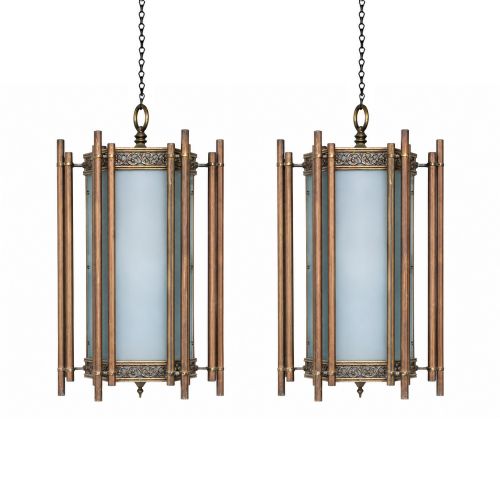
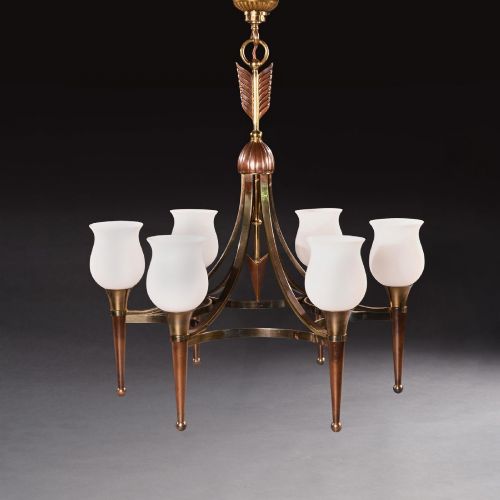
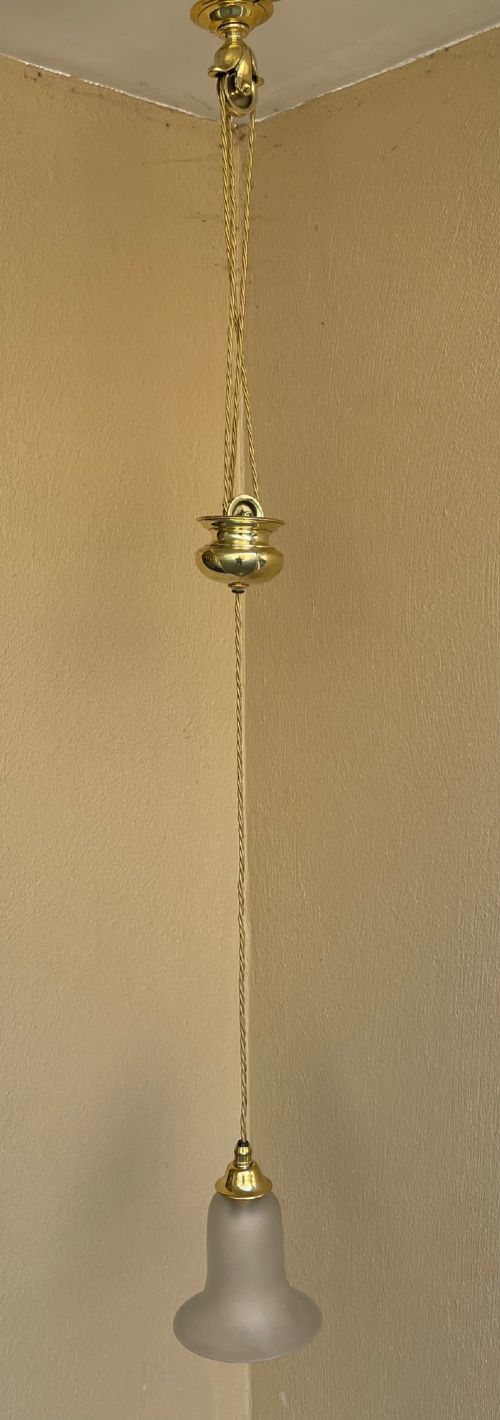
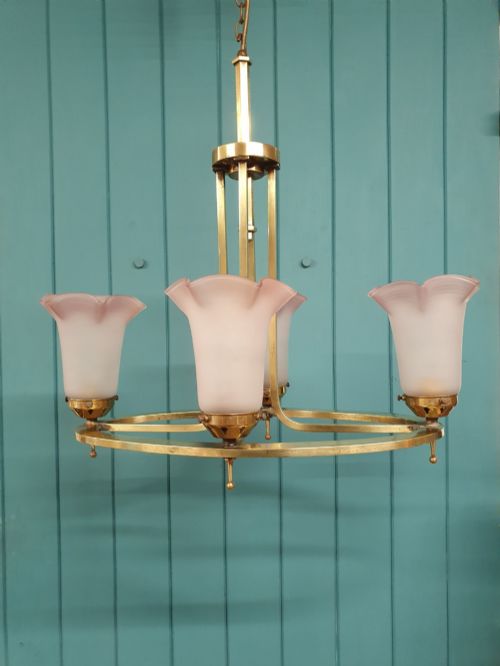
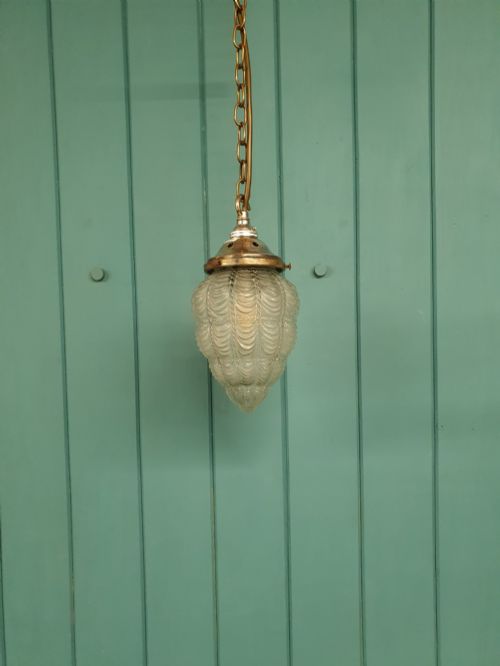


Vintage Frosted Glass Pendant
Vintage frosted glass pendant lights bring diffused illumination and geometric elegance to a room, spanning the Victorian era through the Art Deco period.
Vintage Frosted Glass Pendant
A vintage frosted glass pendant is a ceiling-hung light fixture designed to soften harsh glare through acid-etched, sandblasted or moulded glass diffusers. These pieces operate as functional overhead illumination while providing decorative character to hallways, living spaces and dining rooms.
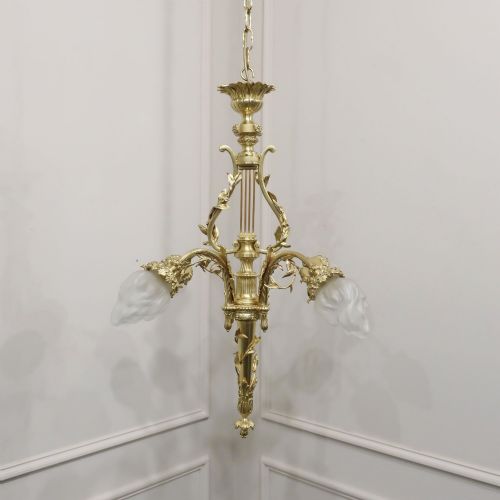
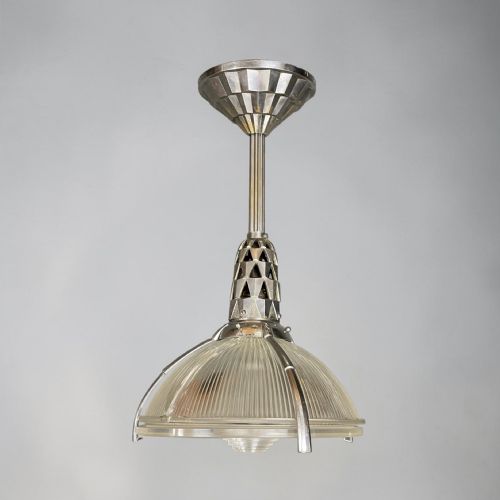
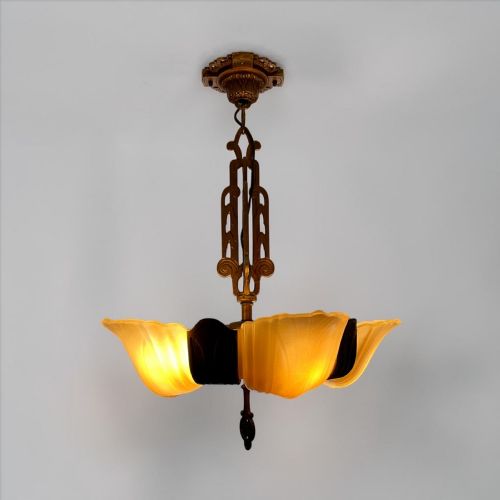
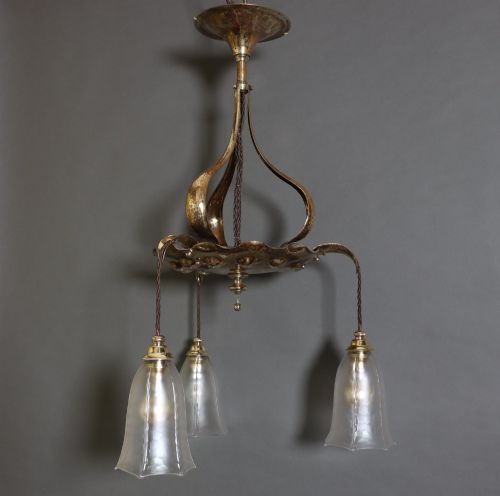
The selections available here range from early twentieth century Arts and Crafts lanterns to geometric Art Deco slip shade designs and streamlined opalescent shades. Buyers encounter hanging lights shaped as bowls, clamshells and multi-tiered fixtures suspended from metal chains or rods.
Origins span English, French and American workshops, encompassing styles from Edwardian simplicity to French Neoclassical ornamentation. The core of the selection relies heavily on nineteen-twenties production, where frosted and moulded glass became central to modern interior lighting.
How they were made
Makers formed the characteristic shades using press-moulded or blow-moulded glass, subsequently applying acid treatment or mechanical abrasion to achieve the signature translucent frosted finish. This process allowed workshops to produce repeating decorative motifs like chevrons, floral patterns and ribbed surfaces.
The structural frames and suspension hardware combine cast bronze, spun brass, copper and chrome-plated metal components. Metalworkers joined these elements using threaded screws, galleries and suspension chains designed to support the weight of thick decorative glass bowls and slip shades.
Early twentieth-century entrance halls once relied on these glass lanterns to greet visitors before electricity replaced candle power.
What varies in quality
The distinction between standard commercial lighting and high workshop output lies in the weight and purity of the glass, alongside the crispness of the cast metal mounts. Superior pieces display deep, uniform frosting and cleanly articulated bronze or brass castings without surface pitting.
Makers known for exceptional production utilised heavier gauge metals and integrated complex mechanical elements, such as internal counterweights in rise-and-fall suspensions or intricate hand-chased relief work on the metal collars and shade rings.
F&C Osler·Émile-Jacques Ruhlmann·Maison Jansen·Andre Arbus
The Vintage Frosted Glass Pendant Glossary
- Slip shade
- A moulded glass shade designed to slide directly into a metal frame or basket without requiring screws through the glass. These components define many American and European ceiling fixtures from the nineteen-twenties.
- Plafonnier
- A ceiling light fixture mounted flush or semi-flush against the ceiling surface, often utilising a shallow frosted glass bowl held by a decorative metal rim. The term originates from French interior design vocabulary.
- Opalescent glass
- Glass containing mineral additives that create a milky, translucent appearance with subtle shifts in colour tone when illuminated from within. This material scatters light evenly across the room.
- Hall lantern
- An enclosed hanging light fixture designed primarily for narrow entries and corridors, typically featuring glass panes set into a metal framework of brass, bronze or copper.
- Etched glass
- Glass decorated by applying acid to eat away exposed areas, leaving a permanent design with a frosted texture. This technique produces fine botanical or geometric patterns on the shade surface.
Vintage Frosted Glass Pendant: Frequently Asked Questions
How do I hang a heavy pendant light safely?
Pendant lights require direct anchoring to a ceiling joist or a heavy-duty pattress box capable of supporting the combined weight of the metal frame and thick glass shade. Professional installation ensures the electrical wiring and suspension chains bear the load securely without straining the ceiling plaster.
Heavier fixtures, particularly multi-bulb chandeliers and large bronze lanterns, often demand supplementary ceiling hooks or toggle bolts distributed across the structural framework of the room.
What rooms suit a frosted glass pendant?
These fixtures work well in spaces requiring downward task illumination balanced by ambient, glare-free side light, such as above a dining table or within a high-ceilinged hallway. The diffused quality of frosted glass softens the output of multiple bulbs.
Smaller single-bulb versions fit lower-ceilinged bedrooms or studies, while monumental multi-light bowls and slip shade chandeliers suit grander reception spaces and period stairwells.
How do I clean frosted glass safely?
Dust the glass and metal components regularly with a soft, dry microfibre cloth to prevent particulate buildup in the textured surface of the frosting. For deeper cleaning, remove the shade if possible and wash it in lukewarm water using mild, non-abrasive dish soap.
Avoid harsh chemical solvents or abrasive scouring pads that can damage acid-etched surfaces or strip protective lacquers from vintage brass, bronze and copper frames.